Immunology & Human Disease
 Call Kai
 Learn
 Practice Test
 Spaced Repetition
 Match
 Flashcards
 Knowt Play
1/84

Earn XP
Description and Tags
Lecture 1, 2, 3, 4, 5, and 6.
85 Terms
Define: Immunology
Study of how an organism responds to microbes & allergens
What are the three “barriers” of the immune response
Physical barriers - skin and mucosal tissues
Innate immune response - broad response, includes: granulocytes, phagocytes, and proteins
Adaptive immune response - specific response, includes: T Cells, B Cells, and antibodies
What are the main physical barriers of the immune system?
Eyes
Skin
Waldeyer Ring (tonsils, etc.)
Urogenital System
GI Tract
Airway System
Does the immune system respond/produced in broad or distinct anatomical locations?
Distinct
Where are immune cells produced?
Primary lymphoid tissues
Where are adaptive immune cells localized with antigen?
Secondary tissues
What part does the lymphatic system play in the immune system?
The lymphatic system is essential for immune surveillance by monitoring lymph fluid.
What is hematopoiesis?
The process of a hematopoietic stem cell differentiating into a immune cell
What bodily tissue produces the majority of immune cells?
Bone marrow
How do secondary lymphoid tissues contribute to the activation of the adaptive immune response?
Lymph nodes collect cells and fluid from tissues via lymphatic system
Spleen collects cells and fluids from the bloodstream via the circulatory system
MALT collects cells and fluids from mucosal surfaces in intestinal tract
Secondary lymphoid tissues localize rare antigen-specific T cells and B cells to respond to foreign antigens
What is a cytokine?
They are proteins released by cells that participate in the immune response - communicators of the immune system. They can either be released or presented on the surface of the cell.
How are cytokines recognized?
They are recognized by surface receptors. Activation of cytokine receptors cause immune cells to change their function.
What are the three classes of small molecule regulators alter the immune response?
Sterioids
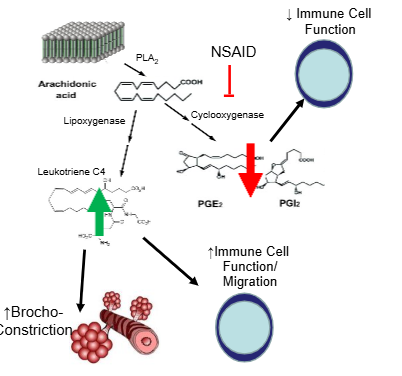
Prostaglandins/Leukotrienes
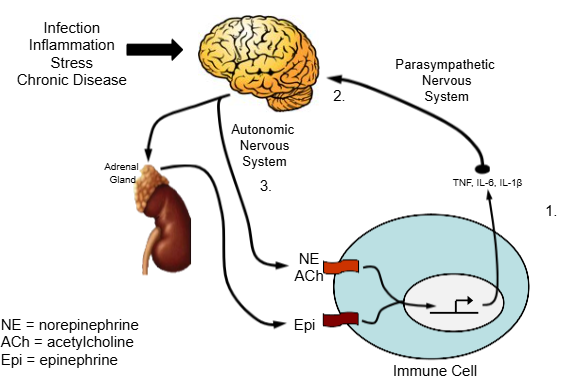
Neurotransmitters
What are the roles of cytokines and small molecules in the immune response?
Hematopoiesis (development)
Chemotaxis (movement)
Inflammation
Anti-Viral Responses
Immune Cell Activation
Suppression
What is the difference between autocrine, paracrine, and endocrine?
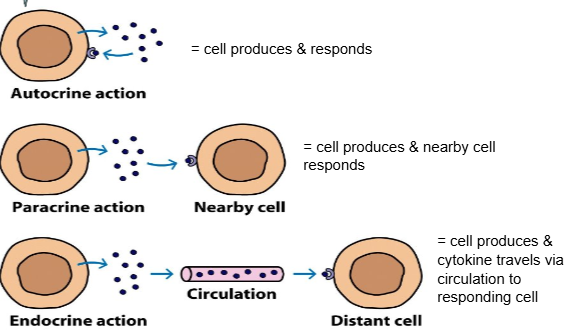
Can a cytokine act on one cell or multiple cells?
A single cytokine can act on multiple cells and cause different functional changes.
What are the characteristics of IL-6?
It is a pleiotropic cytokine. All dimers (hetero or homo). Use a common co-receptor gp130.
What does it mean for cytokines to be: redundant, synergy, or antagonism?

What different kinds of signals must cytokines integrate to decide cellular fate?
Integrates: concentration, timing, length of signal, other signals, gradients.
Improper regulation of cytokines can lead to what kinds of pathological disorders?
Pro-inflammatory: Productive immune response
Anti-inflammatory: Autoimmune diseases, allergy, neurological diseases, cancer, metabolic disorders, sepsis, cardiovascular disease
How does a cytokine storm occur?
A cytokine storm occurs when the body releases too many cytokines into the blood too quickly causing a severe immune reaction. This can cause inflammatory cell death, creating a positive feedback loop between cytokine release and cell death. Leads to systemic inflammation.
What are the seven main families of cytokines?
Growth Factor Family
TGF-β Family
IL-1 Family
TNF Family
IL-17 Family
Chemokine Family
“Classical” Cytokine Family
Describe the Growth Factor Family of cytokines?
> 50 receptors
Ligand binding stimulates tyrosine phosphorylation
This families receptors have tyrosine kinase domains
Small number of these receptors regulate immune cell differentiation (often found in hematopoietic cancers)
Antibodies targeting the receptor and tyrosine kinase inhibitors are FDA approved
Describe the TGF-β Family of cytokines?
This family uses receptors with intrinsic serine/threonine kinase domains
Ligand binding causes phosphorylation of SMAD proteins (transcription factors)
TGF-β inhibits immune cell function, drive T cell differentiation, stimulates antibody proliferation, and promotes tissue repair
Describe the IL-1 Family of Cytokines?
Uses receptors that contain TIR domains. Homologous to TLR receptors
Ligand binding dimerizes the IL-1 receptor, resulting in the binding of MyD88.
MyD88 then induces downstream signaling, especially NF-κB activation.
IL-1 Family are generally highly inflammatory, however, IL-1Ra (aka Anakinra) is an inhibitor of IL-1 function
Describe the TNF Family of Cytokines?
Uses trimeric receptor that bind to TRAF and TRADD adaptor proteins
Depending on the receptor, ligand binding results in the formation of TRAF complexes, which enhance immune function, or TRADD complexes, which induce apoptosis.
This family increases inflammation, suppress immune function and regulate the differentiation and function of numerous cell types.
Describe the IL-17 Family of Cytokines?
This family uses dimeric or trimeric receptors
Ligand binding induces ACT1 binding to the receptor. ACT1 induces NF-κB activation and production of inflammatory cytokines.
This family drives inflammation and enhances the immune response by numerous cell types → neutrophil recruitment
Describe the chemokine family of cytokines?
Binds to 7 transmembrane G protein coupled receptors
Ligand binding results in the activation of small, trimeric G-proteins
Chemokines control the migration of immune cells
Describe “classical” cytokine family?
they bind to hetero-dimeric or trimeric receptors that signal through JAK/STAT proteins
Ligand binding results in the activation of JAK tyrosine kinases and the phosphorylation of STAT factors
cytokines control a myriad of functions in the immune response → pro/anti inflammatory proliferation, antiviral
What is the result of having a deficiency of “classical” cytokine family?
Deficiency of common signaling chains causes severe immunodeficiencies. (i.e. Boy in the Bubble)
What role do steroids play in the immune system?
Steroids generally suppress immune cell function. Steroids are anti-inflammatory agents. Glucocorticoids are steroids that suppress inflammation or activate anti-inflammatory cells (Tregs or M2 macrophages)
How do prostaglandins alter immune cell function?

What do NSAIDs inhibit?

How do leukotrienes impact the immune system?
They alter immune and somatic cell function.

What is N-ERD and why does it occur?
It is NSAID-Exacerbated respiratory disease.
Symptoms: Swelling of face and throat, hives, chest tightness, shortness of breath, diarrhea, and cramping.
Rare, however, common among asthmatics.
How do neurotransmitters play a role in the immune system?
They alter immune cell function.
How can recombinant cytokines or their receptors be used to treat various diseases?
~15 recombinant cytokines or their receptors are FDA approved for treatment of human disease.
The majority are cytokines that enhance immune function, including interferons-α, -β, and –γ, erythropoietin IL-2, IL-11, G-CSF and GM-CSF.
The exception is Anakinra, A.K.A IL-1Ra, which inhibits IL-1 function, and Enbrel, A.K.A TNFR2, which inhibits TNF-α.
These drugs have substantial side effects.
How can antibodies targeting cytokines be used to treat human disease?
Antibodies targeting human cytokines have been FDA approved, all for the treatment of rheumatic diseases (inflammation).
These include antibodies that target IL-2, IL-5, IL-6, IL-12, IL-17, IL-23, TSLP, and TNF-α pathways.
These drugs are generally well tolerated but do carry increased risks of infection.
Since these are monoclonal antibodies used in relatively high quantities, these drugs are typically expensive.
How can inhibitors of signaling proteins be used to treat human disease?
Several classes of drugs inhibit or altersignaling pathways downstream ofprostaglandins and neurotransmitters.
These drugs inhibit the synthesis,activation of receptors or signalingpathways for prostaglandins andneurotransmitters
There are several FDA approvedinhibitors of JAK kinase signaling.
These drugs carry increased risks ofinfection, cancer and thrombocytopenia.
What are the physical barriers in the immune response?
Hair
Skin
Respiratory tract - sinuses, trachea, lungs
Nails
Urogenital Tract - kidneys, bladder, vagina
Mammary glands
Eyes
Oral cavity
GI Tract - esophagus, stomach, intestines
How does the skin provide a physical barrier?
Physical: multiple layers ofcells and tight junctionsbetween cells.
Mechanical: continualshedding of skin cells and perspiration.
Chemical: skin is dry, cool,salty and acidic (pH ~5.0). Skin haslysozyme and sebum.
How do mucus membranes act as barrier in the immune system?
Physical: Tight cellular junctions, Goblet cells of the mucus membranes.
Mechanical: Tears, blinking, urination, defecation, coughing, sneezing and vomiting. Cilia of respiratory tract.
Chemical: Stomach and vagina have low pH, release of antibodies and antimicrobial peptides, and saliva and tears have lysozyme.
How does the normal microbial flora act as a barrier in the immune response?
A) Competing for nutrients
B) Producing toxic substances
C) Altering growth conditions
D) Taking up space
What is infectious colitis?
Caused commonly by Clostridium difficile (aka C. diff).
Typically occurs after use of antibiotics.
Watery diarrhea with distinct odor, abdominal pain and cramping, fever, nausea, weight loss and dehydration.
Difficult to treat with antibiotics due to resistance of C. diff (spore-forming). Treated with high doses of antibiotics, probiotics and potentially surgery.
What are some examples of failed physical barriers?
Defective membranes
Wounds
Obesity
Malnutrition
Insect Bites
Pathogenicity
What responds if physical barriers fail?
The innate immune system reacts to the pathogen. Has a rapid and constitutive response to conserved features of pathogens.
A) Detect and kill pathogens
B) Sound the alarm → what types of proteins do they make to sound the alarm?
C) Activate the adaptive immune response
How are pattern recognition receptors are activated?
PRRs are activated by conserved features of microbes. There are many different classes of receptors that recognize pathogen and endogenous ligands. These receptors are called pattern recognition receptors and are critical for sensing infection from a wide range of microbes.
What is the role of TLRs in the immune system?
Toll-like receptors (TLRs) recognized conserved features of bacteria, fungi and viruses.
Activate MyD88 and/or TRIF Pathways
These receptors can also recognize human derived ligands.
Cell surface TLRs recognize bacterial and fungal cell wall components.
Intracellular TLRs recognize nucleic acids (bacterial and viral)
Inappropriate TLR activation leads to chronic inflammation that drives many human diseases.
What are NLRs?
Large family of conserved intracellular sensors of infection.
Humans express 22 NLRs that are expressed in the cytoplasm. Each has conserved domains important for ligand binding, oligomerization and signaling molecules that induce the activation of NF-κB, driving the production of inflammatory cytokines and chemokines.
NLRs are activated by a wide range of molecules. These include bacterial, viral and fungal products, ion efflux, ATP, non- biological compounds and human proteins.
Inflammasome NLRs drive IL-1β release.
How do inflammasome NLRs work?
Inflammasome NLRs drive IL-1β release.
NLRP1, NLRP3, NLRC4 and NLRP6 induce the inflammasome. Priming via the activation of TLRs or other NLRs induces the production of pro-IL-1β. The subsequent presence of ROS, PAMPs, DAMPS, non-biological molecules or ion efflux results in formation of the inflammasome, the inflammasome then cleaves pro-IL-1β, releasing mature IL-1β
What is the phenotype of inflammasome activation?
Inflammasome activation leads to autoimmunity via IL-1 & anakinra is used to limit IL-1.
What is the role of RIG-I receptors?
They recognize viral RNA.
The helicase domain/DExD/H Box binds to viral RNA ligands.
The regulatory domain (RD) controls RIG-I receptor function by an unknown mechanism.
CARD domains bind to intracellular signaling proteins.
RIG-I binds short viral RNA with 5’ triphosphates. MDA5 prefers large RNA molecules. Ligand binding results in oligomerization of MDA5.
TF of RIG-I Signaling → IPS1 activates IRF3 and NF-κB to promote the transcription of Type I Interferons
How do viruses suppress the function of RIG-I receptors?
1) Activation of RIG-I receptors induces interferon release and antiviral responses.
2) Many viruses have evolved methods for inhibiting RIG-I family signaling.
3) Viral inhibition of the RIG-I pathway leads to increased pathogenesis and chronic viral infections.
What is the role of the STING pathway?
The STING pathway senses the presence of cytoplasmic DNA
1) Two mechanisms of activation: Lysed mitochondria or dicyclic nucleotides (bacteria derived).
2) Activates STING & type IIFNs
What are the major steps of inflammation?
1) Tissue damage or infection results in the release of inflammatory molecules.
2) This leads to vasodilation, whichincreases blood flow to the damagedarea and allows immune cells and fluidinto the tissues.
3) Blood clots at the site of damage localizes the infection. This focus of infection is called an abscess.
4) Inflammation is critical for repair of the wound. The absence of immune cells leads to decreased wound healing.
How do mast cells and macrophages initiate early activation of inflammation?
1) Recognition of the pathogens by resident mast cells and macrophages induces the release of inflammatory molecules.
2) These inflammatory molecules include cytokines, chemokines, and lipid mediators.
3) The release of these proteins and lipids
stimulates local blood vessels
recruit immune cells
activate immune cells
What happens when inflammatory mediators (e.g., TNF-α, IL-1, Histamine) activate venous endothelial cells?
The endothelial cells switch from a resting state to an active, inflamed state to allow white blood cells to exit the bloodstream and enter injured tissue. Cells display surface "sticky tags" (selectins, chemokines, or integrins) to catch passing leukocytes.
What happens when selectins bind carbohydrate structures?
Selectins have lectin domains that bind to carbohydrates on membrane proteins.
E-selectin and P-selectin regulate migration to barriers and sites of inflammation.
L-selectin regulates migration of lymphocytes to secondary lymphoid tissues.
What are integrins? What controls their binding to ligands?
Integrins have multiple conformations that control their binding to ligands.
1) Integrins are cell surface proteins composed of an alpha and beta chain that bind to extracellular matrix proteins, complement proteins, and specific ligands.
2) Integrins have massive changes in structure driven by intracellular signaling.
How do inflammatory cytokines promote immunity?
IL-6 stimulates the liver to release acute phase proteins.
TNF stimulates adipose to release energy
IL-1 and IL-6 stimulate immune cell production from thebone marrow.
IL-1, IL-6 and TNF drives prostaglandin production in thebrain leading to sickness syndrome.
Why is localized inflammation good?
1) Localized inflammation is good.
2) Low to moderate fever is beneficial → inhibits pathogen growth, increases immune function
Why can systemic inflammation can be fatal?
Systemic inflammation can lead to the collapse of blood vessels, multiple organ failure and death.
High fever can cause respiratory and cardiovascular disease. High fever can be fatal.
How is inflammation controlled by positive and negative feedback?
1) TLR and NLR activation leads to the release of inflammatory cytokines and chemokines.
2) Cytokines further activate the immune cell and surrounding tissues.
3) Later, the immune cell releases inhibitors of inflammatory cytokines and inhibitory cytokines.
How do Type I Interferons Influence Immune and Non-Immune Cell Types?
Type I interferons induce the infected cell and nearby cells to upregulate interferon stimulated genes (ISGs),which suppress viral function.
Type I interferons stimulate antigen presenting cells to produce inflammatory cytokines, differentiate/activated and present antigens to T cells.
Type I interferons enhance the cytotoxic functions of NK cells and T cells and increase antibody production in B cells.
What molecules form pores in pathogen membranes?
Defensins and cathelicidins.

What is the role of collectins and ficolins in the innate immune system?
Antimicrobial proteins in the innate immune system.
Humans have ficolins (3), surfactants (2), mannose-binding lectin (1), and non-classical collectins (6)
Collectins and Ficolins form trimers and then higher order complexes.
Collectins and Ficolins bind to carbohydrates found on pathogens but not human cells
The binding of these proteins leads to increased phagocytosis or complement binding.
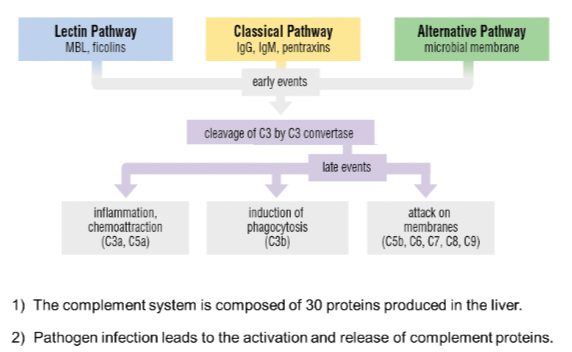
What are the three pathways of the complement system?
What is the role of MAC in the immune system?
MAC leads to the cytolysis of pathogens.
1) The membrane attack complex is formed by the polymerization of C9.
2) Formation of the membrane attack complex leads to the bursting of pathogen cells.
3) The MAC is effective against gram-negative bacteria and enveloped viruses. Gram-positive bacteria are immune to the MAC.
What happens when C3 is spontaneously activated?
Complement protein C3 spontaneously reacts with water to form C3b. It then degrades or binds to the surface of a pathogen.
C3 is stabilized by binding complement factor B. Complement factor B is then cleaved by complement factor D, producing a C3 converting complex.
The purpose of alternative pathway is antibody-independent activation of complement and the amplification of the complement system
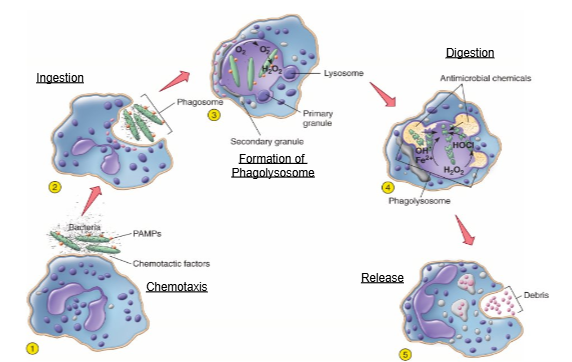
What is the purpose of phagocytosis?
Remove and kill pathogens. Induce inflammation. Activate the adaptive immune response.
What are the phagocytic cells of the innate immune system?
Neutrophils (aka PMNs):
Neutrophils are abundant in the blood and inflamed tissues.
Short-lived and rapidly migrate to the site of inflammation.
Phagocytose and kill microbes.
Neutrophils die by apoptosis after only a few killing events. They are a major component of pus.
Macrophages:
Long-lived phagocytes that reside in all tissues
Act as sentinel cells, ingest pathogens and apoptotic cells, activate T cells, and promote wound healing
Dendritic Cells:
Dendritic cells are derived from myeloid stem cells and reside in various tissues.
The major function of dendritic cells is to present antigen to T cells.
Draw the Diagram of Phagocytic Cells that Predominate Throughout An Infection:

Draw the steps of neutrophil phagocytosis:
Innate VS Opsonin Receptors
Innate Receptors → bind directly to pathogen, microbe-derived, ligands = carbohydrates and cell wall components.
Opsonin Receptors → bind indirectly to pathogen, host-derived, ligands = complement factors, antibodies, and lectins.
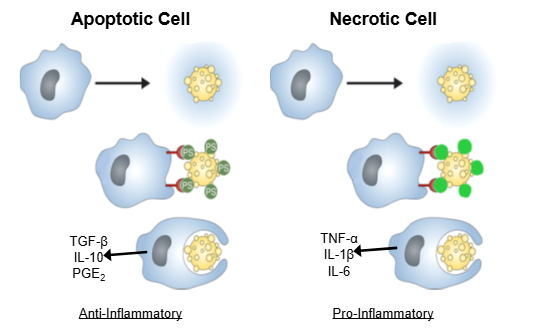
Apoptosis VS Necrosis
Apoptosis: Controlled suicide. Needs ATP. Cell shrinks. Not inflammatory. Single cells
Necrosis: Accidental trauma. Passive. Cell swells/bursts. Inflammatory. Tissue areas
What is the role of phagocyte granules?
Some phagocytes contain cytotoxic granules that cause the degradation of microbes and apoptotic cells.
Primary granules resemble lysosomes and contain anti-microbial proteins.
Secondary granules are critical for the activation of NADPH oxidase.
Neutrophils have preformed granules. Macrophages have to be activated by interferon-γ to have functional granules.
Describe the role of other granulocytes: Eosinophil, Basophil, and Mast Cell

How are mast cells activated?
B cell recognizes allergen
B cell makes IgE
IgE binds to cells with IgE receptors
Upon second encounter, cells with bound IgE, cells get activated
Activated cells (mast cells & basophils)produce allergic mediators (histamine, etc.)
How are eosinophils activated?
A lot of overlap with basophils
Activation by IL-5, complement, TLRs, IgA, Prostaglandin, proteases
Can reside in tissue
Downstream processes quite similar
How do granulocytic cells fight multicellular and mucosal pathogens?
Activation of mast cells, basophils, and eosinophils drives the non-selective release of granules into the environment.
These granules contain inflammatory mediators such as histamine, cytokines, lipid mediators, and proteases.
Granulocytes are important for fighting mucosal pathogens and helminthic worms.
The inflammatory mediators:
create a hostile environment
directly kill the pathogen
further activate the immune response.
Where are innate lymphoid cells derived from?
They are derived from lymphocyte precursors in bone marrow
What other cell type do innate lymphoid cells similar to.
They are morphologically and functionally similar to CD4 T-cells. However, they do not have a TCR.
What are the three subsets of ILCs?
ILC1: T-bet, makes IFN-γ, defense against viruses
ILC2: GATA-3, makes IL-15, IL-13, helminths, allergic inflammation
ILC3: Ror-γT, makes IL-17, IL-22, mucosal immunity, development of lymphoid tissue
What are/the role of NK Cells? How are they activated?
ILCs that recognize and kill virally infected or injured cells via mechanisms similar to CD8 cytotoxic T cells.
NK cells are activated by antibodies. NK cell activation is controlled by the balance between inhibitory and activating receptors. Inhibitory receptors keep it inactivated; self-class I MHC. Detects virus-infected cells → no MHC I expression, no more inhibition.
How are NK cells activated by antibodies?
NK cells recognize antibody-bound cells and kill them in a process calledantibody-dependent cellular cytotoxicity (ADCC).
ADCC may be the clinical mechanism for the effects of monoclonal antibodies.
