Vet SA Anatomy Test 4
 Call Kai
 Learn
 Practice Test
 Spaced Repetition
 Match
 Flashcards
 Knowt Play
1/127

There's no tags or description
Looks like no tags are added yet.
128 Terms
occipital bone

foramen magnum

Occipital condyles
on either side of foramen magnum

paracondylar processes
lateral to occipital condyles

nuchal crest

external occipital protuberance
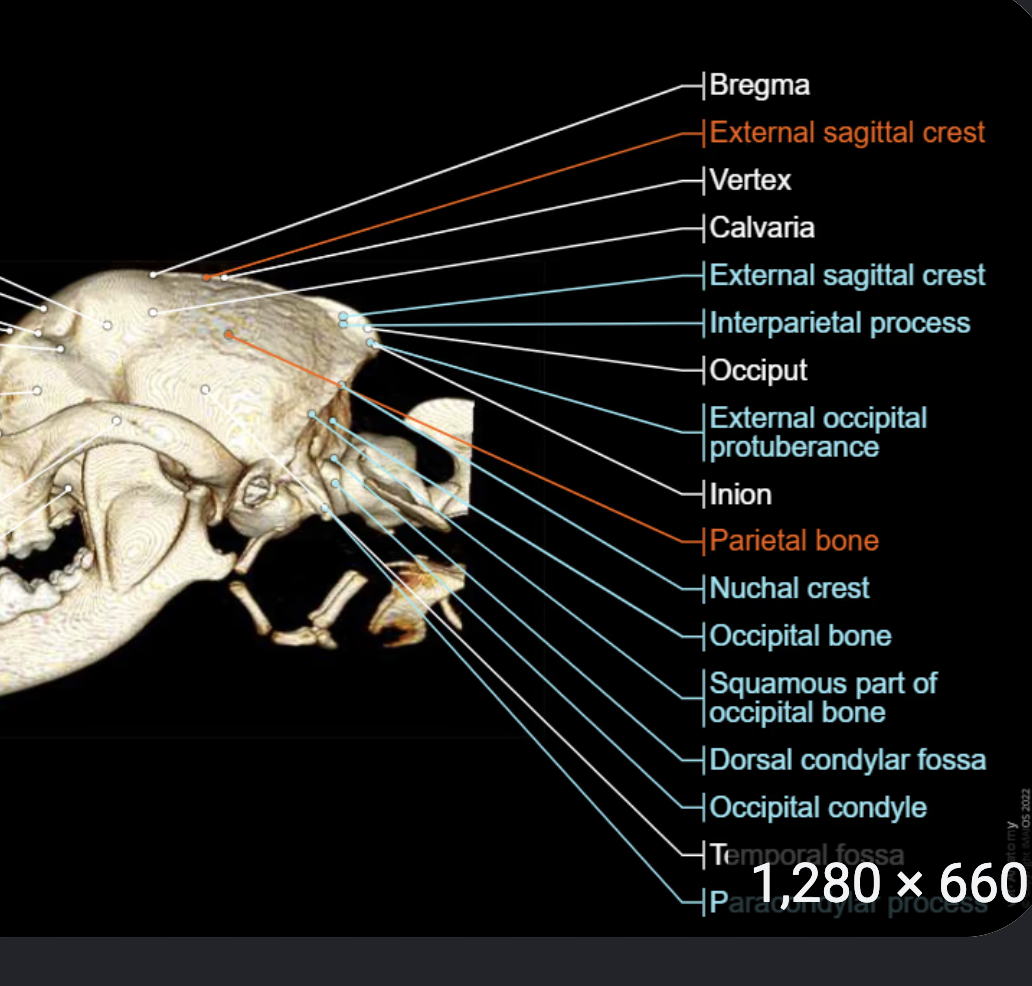
sagittal crest

parietal bone

frontal bone

zygomatic process of the frontal bone

temporal lines
??
dorsal surface of braincase marked by these
temporal fossa

temporal bones

tympanic bullae

external acoustic meatus

tympano-occipital fissures

hypoglossal canal
transmits hypoglossal n. (CN XII)

stylomastoid foramen
opening for CNVII (facial n.)

mastoid process

zygomatic process of the temporal bone

mandibular fossa

sphenoid bone
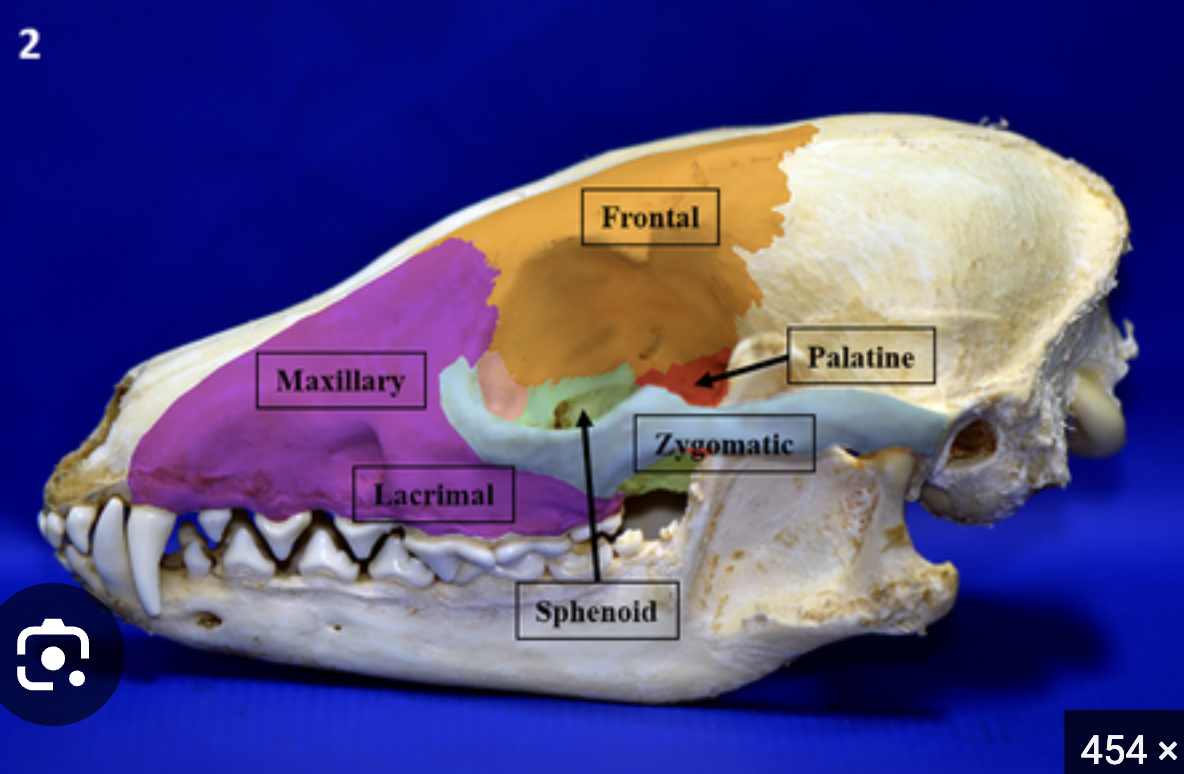
oval foramen
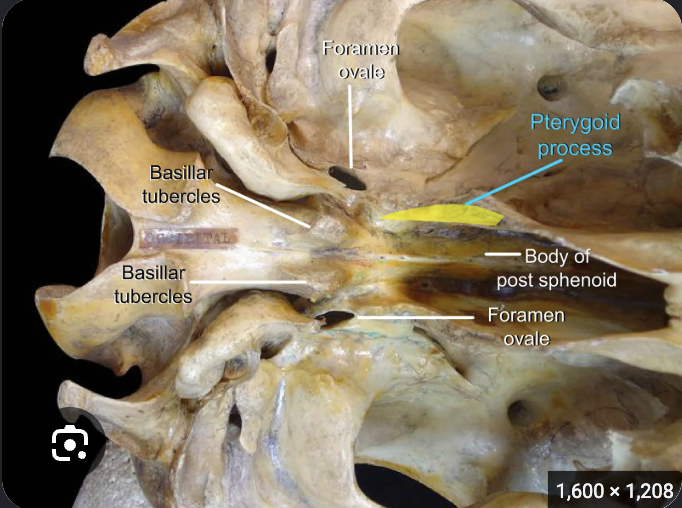
caudal alar foramen

alar canal

rostral alar foramen

round foramen

orbital fissure

optical canal

pterygoid bones

palatine bones

choanae
1

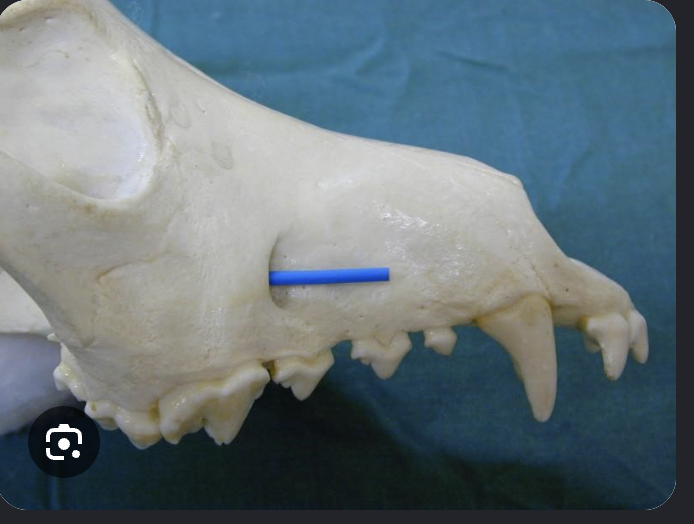
maxillary foramen

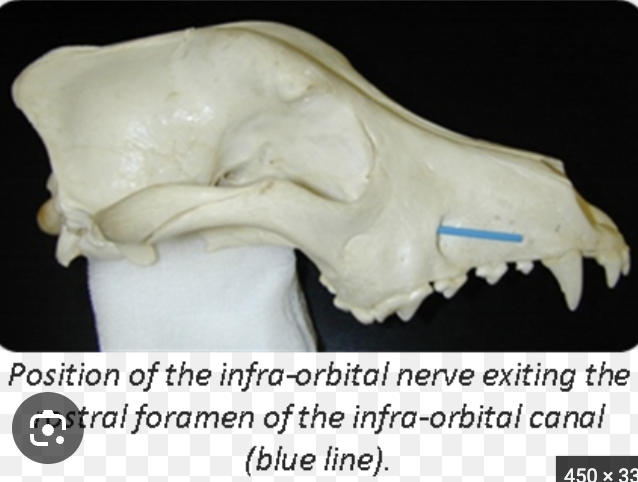
infraorbital canal
ethmoid bone

cribriform plate of ethmoid bone

conchae of the ethmoid bone
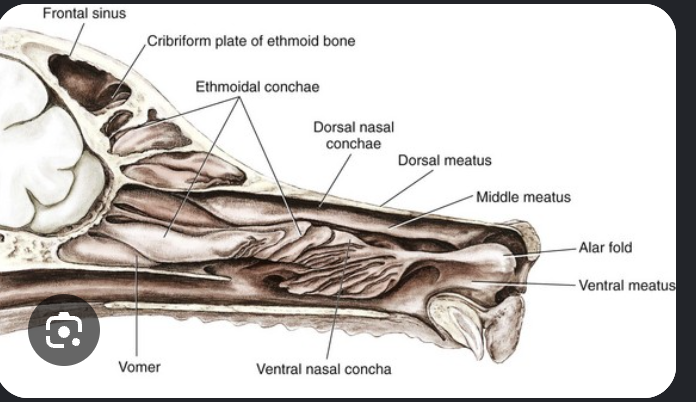
nasal bones

incisive bones

palatine fissures
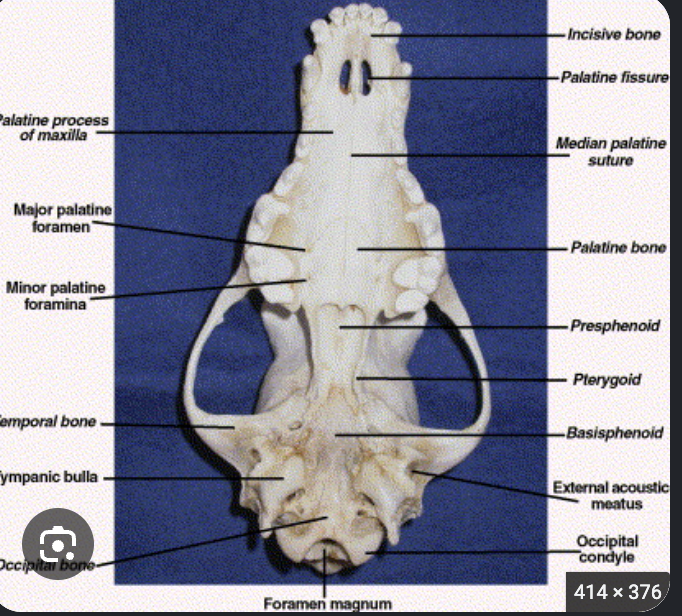
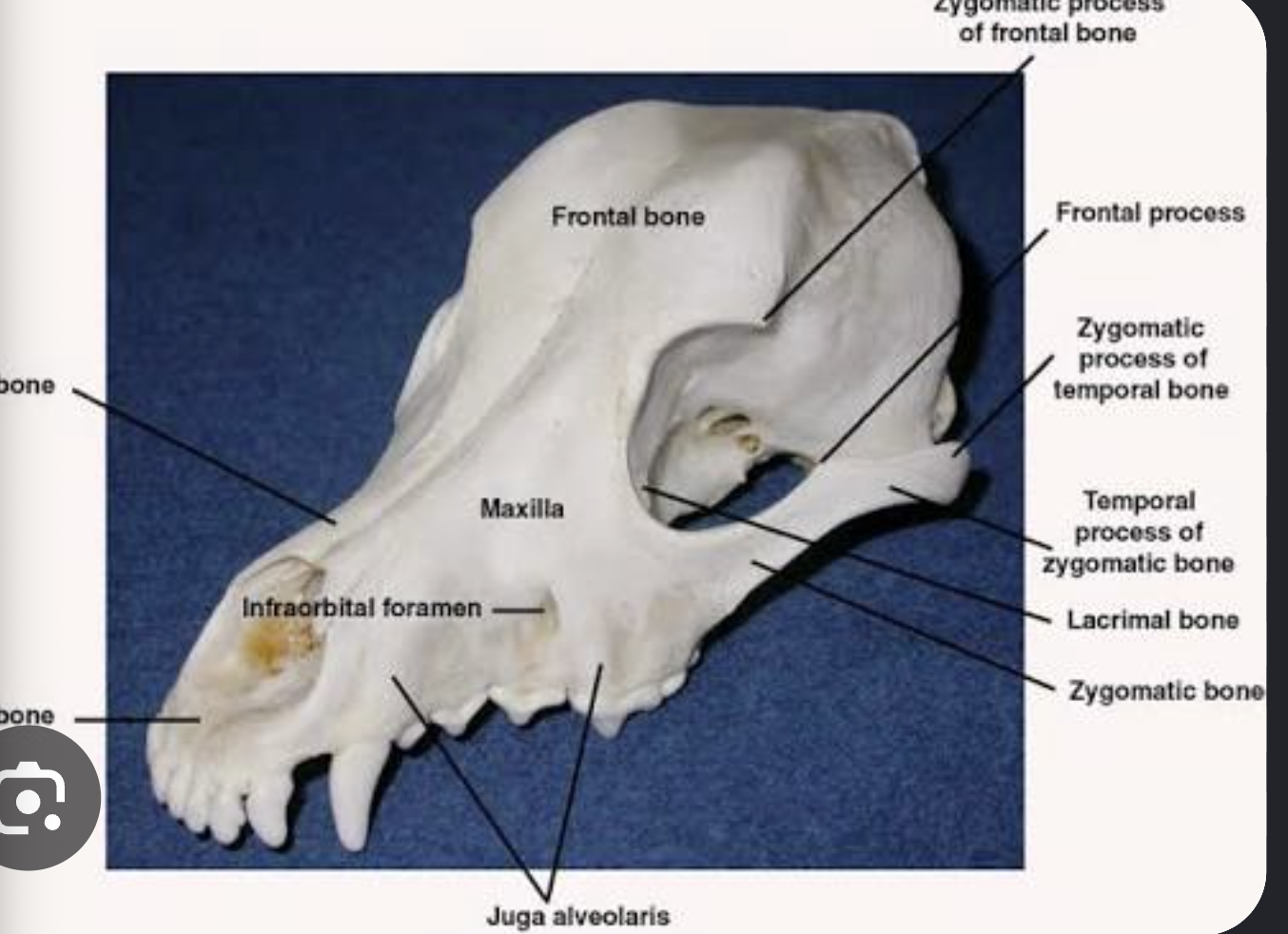
maxilla

hard palate
7

infraorbital foramen
connects with maxillary foramen
nasal passage
??
nasal aperture
??
zygomatic bone

zygomatic arch

frontal process of the zygomatic bone
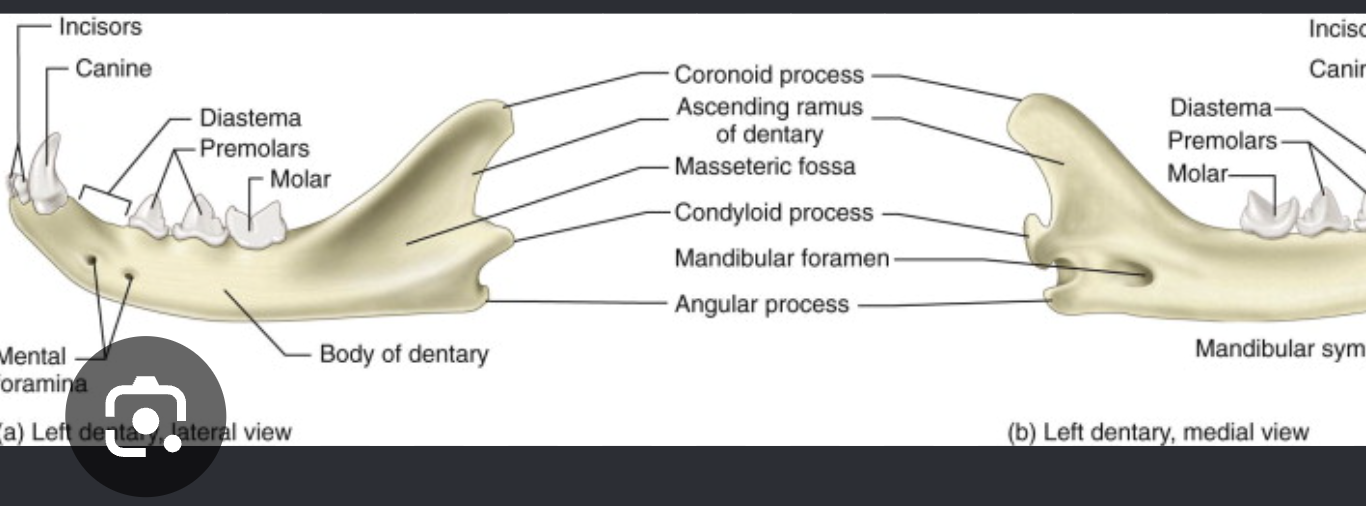
madibles

mandibular symphysis

body of mandible

ramus of mandible

masseteric fossa
??
coronoid process

condylar process

temporomandibular joint

angular process
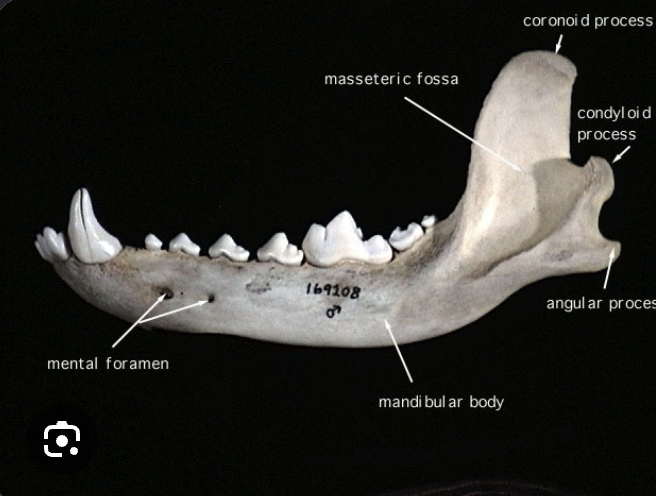
mandibular foramen

mandibular canal
goes from mandibular foramen to mental foramina

mental foramina
Cat difference: The nuchal crest is a more prominent feature of the skull. The tympanic bulla is incompletely divided by a septum. This can be seen on radiographs. The cat _ have an alar canal. Does or doesn’t?
does NOT
jugular foramen

sinuses
air filled spaces within the bones of the skull
frontal sinus

maxillary recess

Cat difference: The maxillary recess is small and the cat has a _
sphenoid sinus

incisors

canine teeth

cheek teeth
teeth caudal to the canines
premolars

molars

carnassial or sectorial (shearing) tooth
largest of the cheek teeth
upper jaw: fourth premolar
lower jaw: first molar

Clinical note: The _ is a landmark sometimes used to determine the depth of intranasal tube placement for oxygen therapy. It is also a common origin for tooth root abscesses which may cause pain when opening the mouth.
upper fourth PM
deciduous dental formula for the dog
2( dI 3/3 dC 1/1 dP 3/3) = 28
permanent dental formula
2( I 3/3 C 1/1 P 4/4 M 2/3) = 42
crown and root of tooth
junction of crown and root = neck

Clinical note: The number of teeth present in an individual animal may vary from this formula. Occasionally, an animal may have supernumerary, or extra, teeth. More commonly, baby teeth are retained or teeth may be missing. Especially in _
brachycephalic breeds
deciduous dental formula for the cat
2 (dI 3/3 dC 1/1 dP 3/2) =26
permanent dental formula for the cat
2 (I 3/3 C 1/1 P 3/2 M1/1) = 30
Cats are missing PM1 on both upper and lower jaws so first PM is PM2 (upper) or PM3 (lower)
Roots: All incisors and canines have 1 root, upper PM2- one root, upper PM4- three roots, all other PM- two roots. Upper M1- 1 root, lower M1- 2 roots
muscles of the face are innervated by facial n. (CN VII)
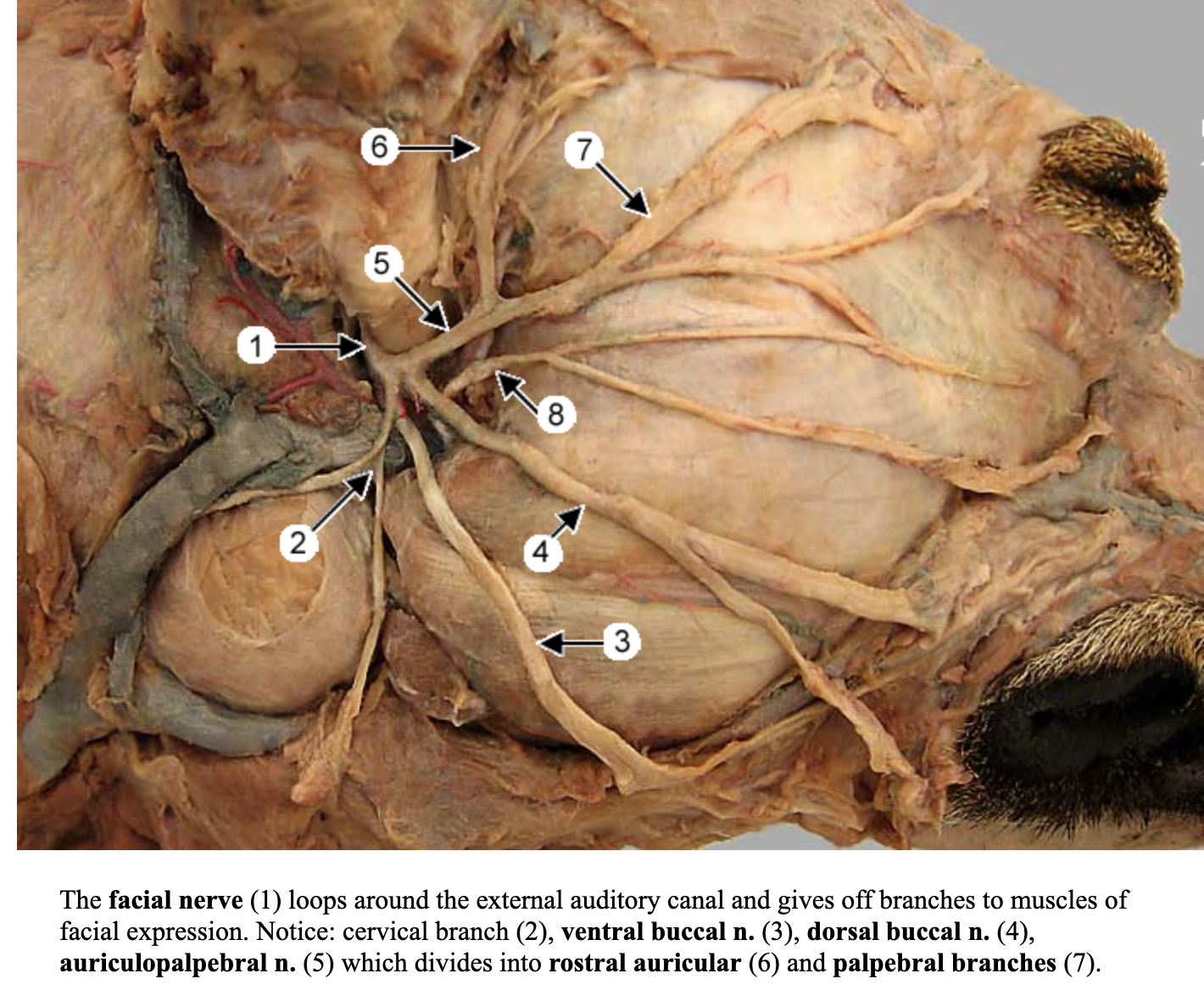
platysma m.
1

buccinator m.
1

levator nasolabialis m.
3

orbicularis oculi m.
4

ear pinna

marginal cutaneous pouch

vertical ear canal
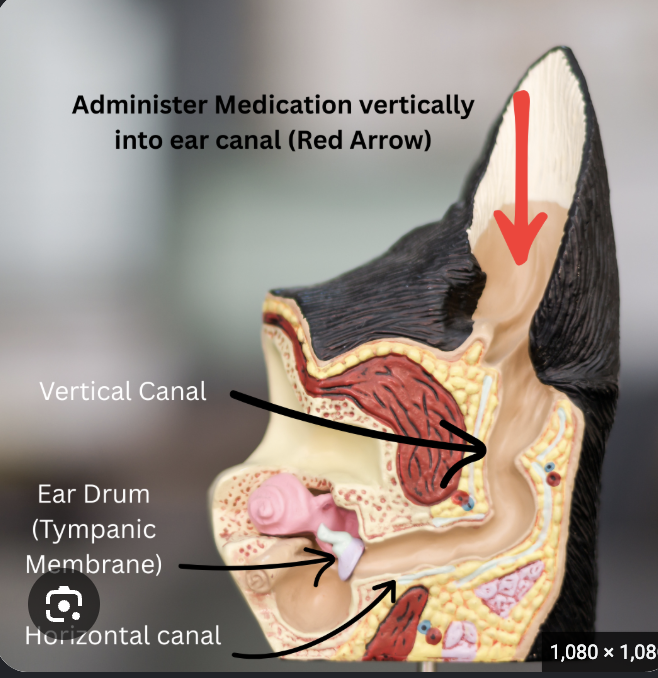
horizontal ear canal

tympanic membrane

nasal cavity
runs from external nares to choanae
nasal septum
NS

dorsal concha

ventral concha

dorsal meatus
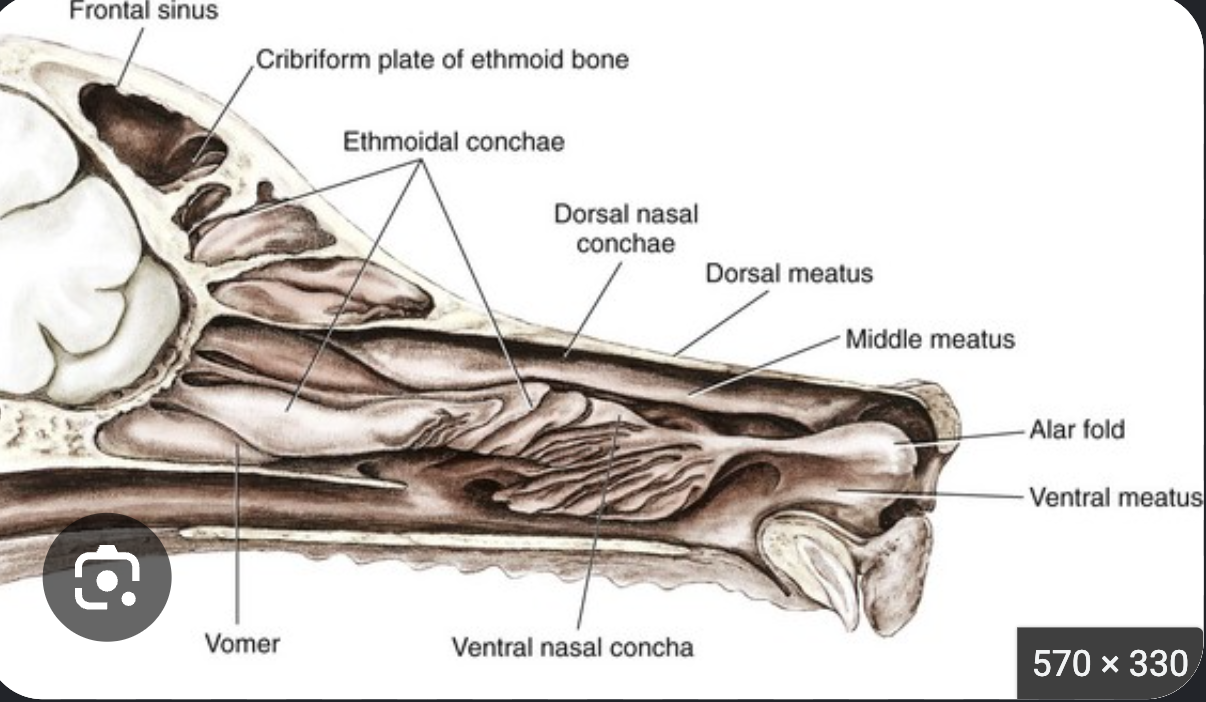
middle meatus
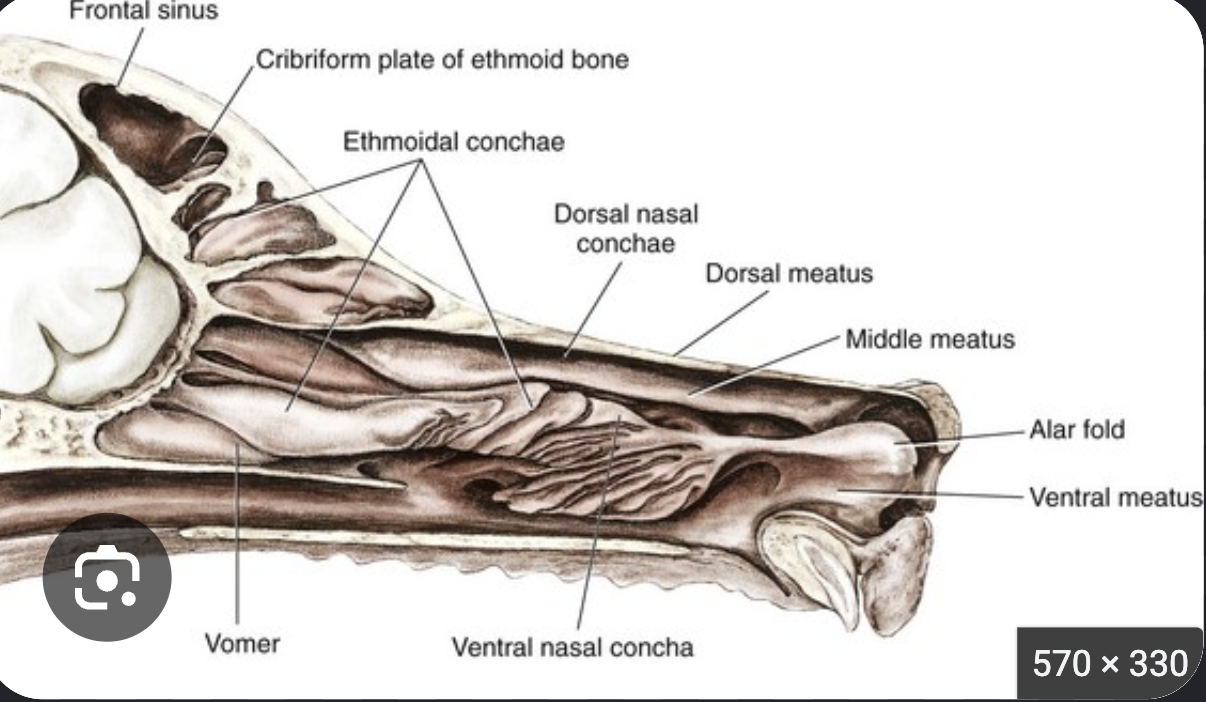
ventral meatus
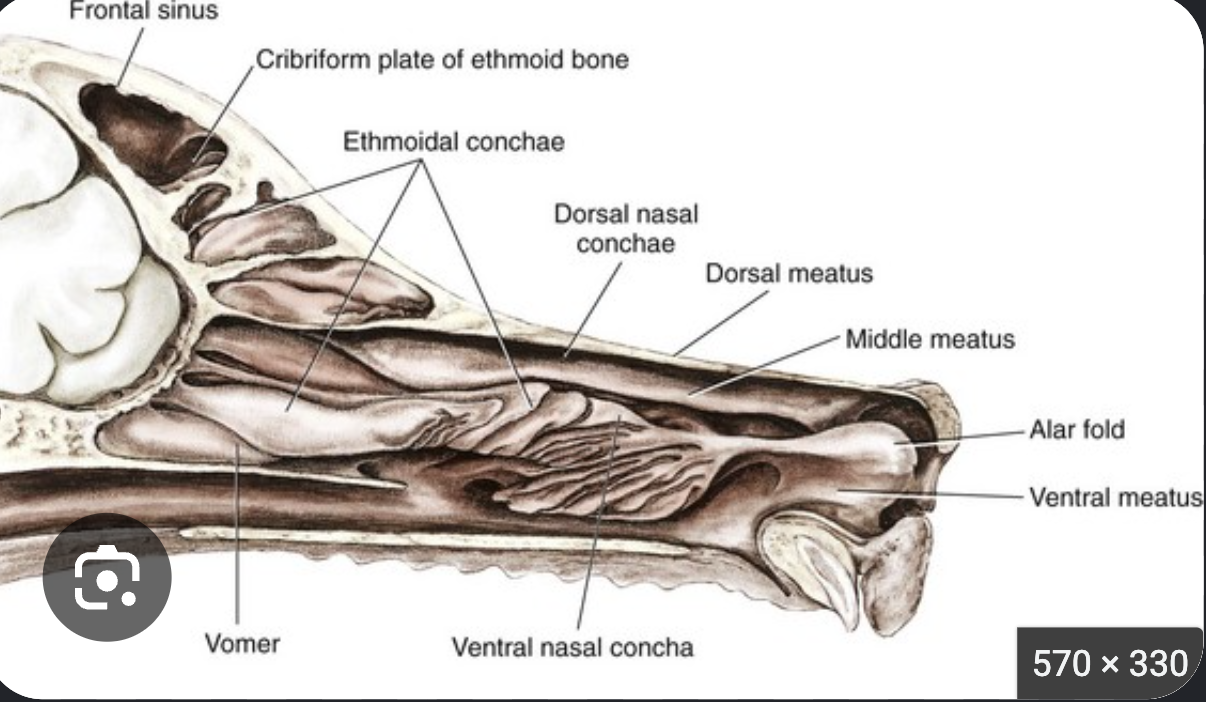
ethmoid conchae

nasolacrimal duct

Clinical note: Nasogastric tubes should be placed in the _
ventral nasal meatus
oral cavity
divided into vestibule and oral cavity proper
