Lecture 7: Short term decisions
 Call Kai
 Learn
 Practice Test
 Spaced Repetition
 Match
 Flashcards
 Knowt Play
1/14

There's no tags or description
Looks like no tags are added yet.
15 Terms
what are the steps of the decision-making framework
define problem/objective
identify solution space(scope)
identify viable alternatives
collect relevant information
identify costs and benefits of each option
identify highest net benefit option, consider qualitative components here too
revaluate decision in hindsight.
What are short term and long term decisions
Short term decisions:
decisions made under some constraint eg. some costs and inputs are locked in eg. factory size, equipment lease
rarely implicate future: limited effect on future profitability
eg.special orders, make or buy, product mix
Long term decisions:
decisions made under little to no constraint. pretty much all costs and inputs can be varied.
likely to implicate the future and have major effect on future profitability
eg. long term pricing, outsourcing, activity based management
What are the 2 ways to increase short term profit
increase CM by either increasing SP or decreasing VC
increasing sp too much could reduce demand. could reduce vc by negoitiating raw mat costs or buying in a component
generally assume fc are comitted in short term so not included in lever
Increase quantity produced by increasing capacity utilisation
can’t change max capacity in short term but can change % utilisation
BE CAREFUL
don’t scarifice quality by reducing VC. our buy too much stuff externally that you end up creating a new competitor
What are irrelevant costs
sunk costs: alr incurred and unavoidable
comitted costs: costs in future that have been alr locked in and can’t be changed
revenues already earned or promised
costs that remain identical over multiple alternatives
opportunity cost
value of the next best option not chosen
eg. if you take time of work to study. accounting will consider student fees, textbooks etc. but doesn’t consider the foregone salary which is opp cost
note: the profit cm foregone by selecting one alternative over another. it is the net return that could be reliased if a resource were put to its next best use.
What are qualitative factors that could tip the decision/could influence short term decisions
Quality of gs
Strategy implications
Creating future competition
Reputation
Customer relationships ie. trust
Employee morale.
Accepting or rejecting a special order
if spare capacity exists, you can do both and not consider fc cuz extra capacity absorbs it.
if there’s no idle capacity consider estra fixed costs and opp cost
EXCESS CAPACITY
lowest price you accept is when lowest price= relevant VC
NO EXCESS CAPACITY
lowest price you accept is relevant VC/unit + extra FC/opp costs
lowest actual price u accept= VC/unit + cm/unit foregone(as least profitable order) (+extra fc incurred)
QUAL FACTORS TO CONSIDER
reputational upside
customer relationship list
if you need to stop serving a normal customer to do special order
MAKE OR BUY DECISION-refers to short term
only vc are relevant
have to consider capacity issues business currently has(ie. will buying extrnal free up capacity that generates more CM)
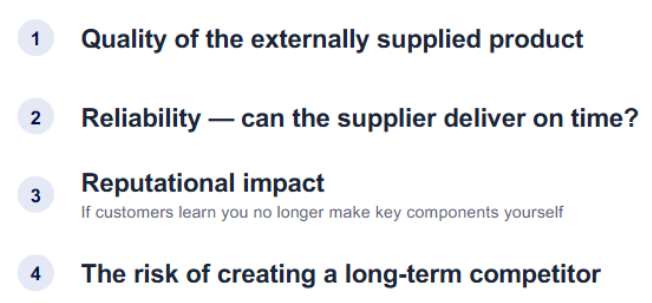
QUALITATIVE FACTORS
Quality of external supplied produced
Reliability of supplier
Rep impact (what will customers think of you using external supplier)
Risk of creating competitor
PRODUCT MIX
Which products should be prioritised eg. cuz limited constraint
NO CONSTRAINT
Choose one that gives highest CM/unit
use relevant vc
CONSTRAINT
Choose the one that gives you highest CM/unit of the constraint (ie. scarce resource)
use relevant vc
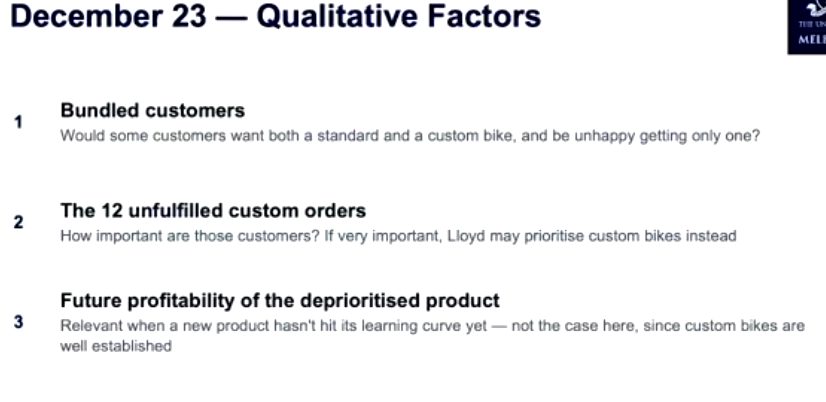
QUALITATIVE FACTORS
How important are deprioritised products
Will customers stop buying other products from you too
Could less profitable product become more profitable in future
risks from trying to increase profit
you may be sacrificing quality which can erode reputation, customer trust, future sales etc
by outsourcing production to get a lower vc, you may be inadvertently creating a new compeitor
are fc relevant for special orders
no, cuz generally excess capacity absorbs extra costs, but if order costs incremental fixed costs then it becomes relevant
qual factors to consider when accepting a special order

qual factors to consider when considering make or buy
qual factors to consider when considering product mix

why are ppl willing to pay more for long term outsourcing
bc. if you outsource you are able to get rid of some of the fc in the long run
