OCHEM 1 FINAL REVIEWa
 Call Kai
 Learn
 Practice Test
 Spaced Repetition
 Match
 Flashcards
 Knowt Play
1/66

There's no tags or description
Looks like no tags are added yet.
67 Terms
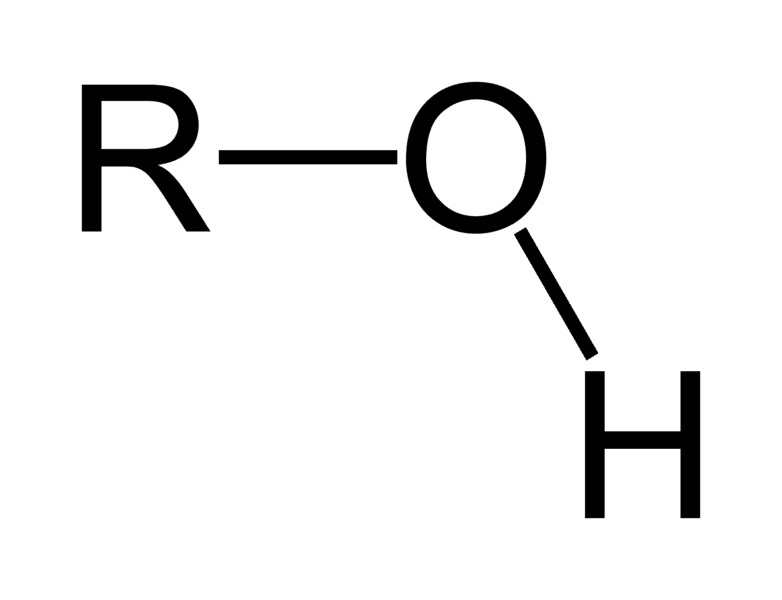
Alcohol
Ether

Aldehyde

Ketone

Ester

Carboxylic Acid

Alkene

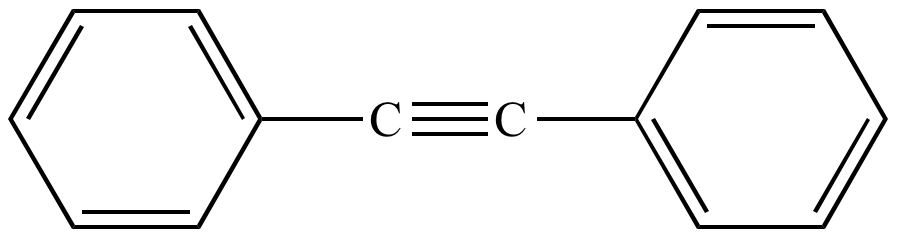
Alkyne
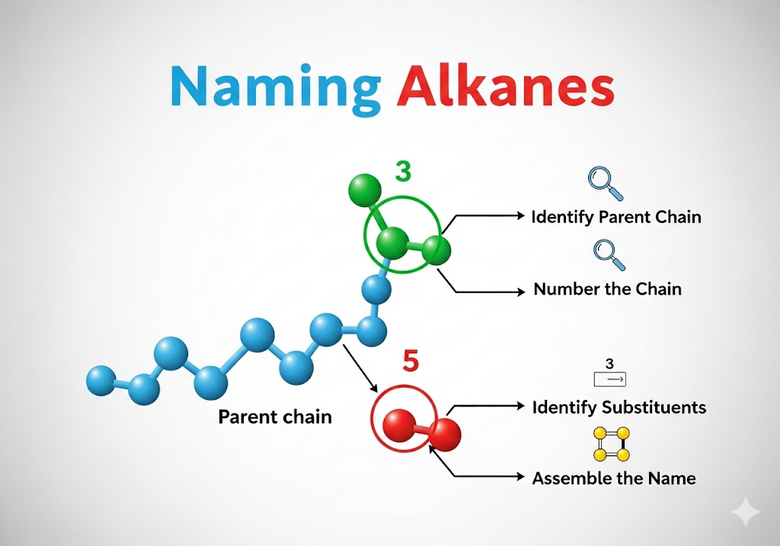
Alkane
Haloalkane
Alkane where a hydrogen is replaced by a halogen
haloalkene
Alkene where a hydrogen is replaced by a halogen
Amide

Amine

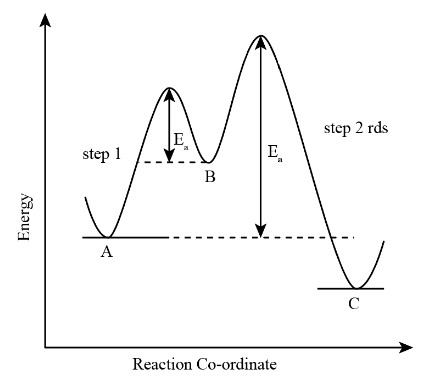
Reactants
A
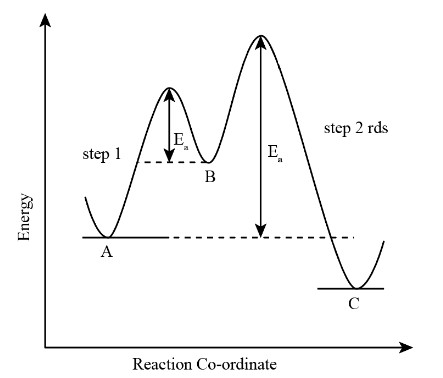
Products
C

Carbocation intermediate
B

Activation energy of Rate-determining (Rate-limiting) Step
E

Transition state for the formation of carbocation
First peak

Transition state for the formation of the final product
Second peak
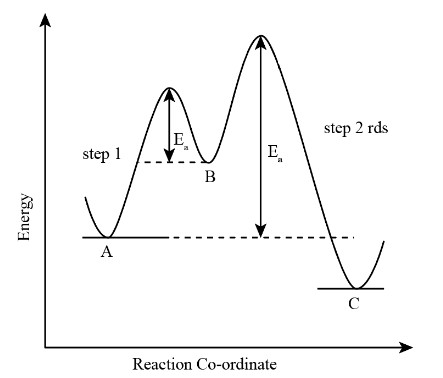
The overall ΔG of the reaction. Including label of exergonic or endergonic
From A-C
This graph is exergonic
if C was higher than A, it would be endergonic
IUPAC Rules
Alphabetical, Smaller numbers first, count carbon chain
Bronsted–Lowry base - Bronsted and Lowry base is proton acceptor
First half of equation that loses
Bronsted - Lowry acid - Bronsted Lowry acid is proton donor
First half of equation that gains
Lewis Acid
Electrophile (Acids Accept electron pairs; arrow points TO it)
Lewis Acid Charge
Negative Charge, lone pair or pi electrons
Lewis Base
Nucleophile (Bases Bestow/donate electron pairs; arrow starts AT it)
Lewis Base Charge
Positive charge, partial positive, or incomplete octet
Both Equatorial Chair Conformation
The most stable conformation for a disubstituted cyclohexane; Rule (Odd = Cis, Even = Trans)
Boiling Point Ranking: Alcohol vs. Carbonyl vs. Ether
Stronger IMFs = Higher Boiling Point (for similar molecular weights):
Alcohol (–OH): Hydrogen bonding (Strongest)
Carbonyl (C=O): Strong dipole–dipole (Very polar)
Ether (C–O–C): Weak dipole–dipole (Slightly polar)
Exam Rule: Pick the molecule with the most –OH groups first; break ties by picking C=O over C–O–C.
Resonance Contributors
Valid Lewis structures of the same molecule differing only in the placement of pi bonds and lone pairs
Basically bonds move
Factors Increasing Acidity & Nitro-Substituted Phenols
More -NO2 groups + conjugated resonance = stronger acid (stabilizes the phenoxide conjugate base).
Trend: 3 -NO2 > 2 -NO2 > 1 -NO2 > Phenol > Alcohol
More numbers the better
Strongest nucleophile/base

Nucleophile
"Nucleus-loving" — an electron-rich species (Lewis base) that donates an electron pair to an electrophile to form a new covalent bond.
Carbon Substitution Classification
Count how many other carbons are directly bonded to the target carbon (for valid 4-bond alkane carbons):
Methyl: 0 carbons
Primary (1°): 1 carbon
Secondary (2°): 2 carbons
Tertiary (3°): 3 carbons
Quaternary (4°): 4 carbons
Zero (DNE): Carbon in the formula exceeds 4 total bonds (invalid structure).
Carbocation Stability Trend
More alkyl groups = more stable
a conjugated diene what two products can form reaction with 1 equivalent of HBr
Know which liked the heat and what the products are

Identifying Enantiomers in Fischer Projections
Mirror image flipped
Kinetic Product: C2-Alkyl Conjugated Diene + HCl
1,2-Addition: H adds to C1, and Cl adds directly to C2 (the same carbon holding the alkyl group), leaving C3=C4 intact.
Why: Protonating C1 puts the
+charge on C2 to form the most stable 3° allylic carbocation, which Cl⁻ attacks fastest.
geminal dihalide (Alkyne + 2 Equivalents of Haloacid)

Electrophile from Curved Arrows
the reactant that the curved arrow points TO
Bicyclic alkene
3 sites of unsaturation a) CnH2n–4
Alkane
0 sites of unsaturation d) CnH2n+2
Alkene
1sites of unsaturation d) CnH2n
Alkyne
2 sites of unsaturation b) CnH2n–2
intermolecular forces that can be exhibited by a given molecule
C & H only = 1 (Dispersion)
O, N, or Halogen (no H on it) = 2 (Dispersion + Dipole)
H–F, H–O, or H–N = 3 (Dispersion + Dipole + H-Bond)
Tetrahedral
I

Bent
II

Trigonal
III

Non polar (no dipole)
All C & H
Identical outer atoms + 0 central lone pairs
Polar (Dipole moment)
Has Net Dipole (Polar): lone pair/ trigonal pyramidal & different outer atoms asymmetric tetrahedral.
Acidity Ranking: Carboxylic Acids vs. Alcohols & Halogen Inductive Effect
Weakest \(\rightarrow \) Strongest Acid:
Functional Group (Resonance): Carboxylic Acid (
–COOH) >> Alcohol (–OH)Halogen Proximity: Closer to
–OH= stronger acid (C2 > C3 > C4 > no halogen)Halogen Type & Count: F>Cl>Br>I, and more halogens = stronger acid
Alkene + Peroxyacid (mCPBA)
Forms an epoxide (3-membered cyclic ether) via syn-addition (stereospecific).
cis-alkene - cis-epoxide (both wedges or both dashes)
trans-alkene - trans-epoxide (1 wedge, 1 dash)
Product when Alkene reacts with cl2

Diels alder reaction
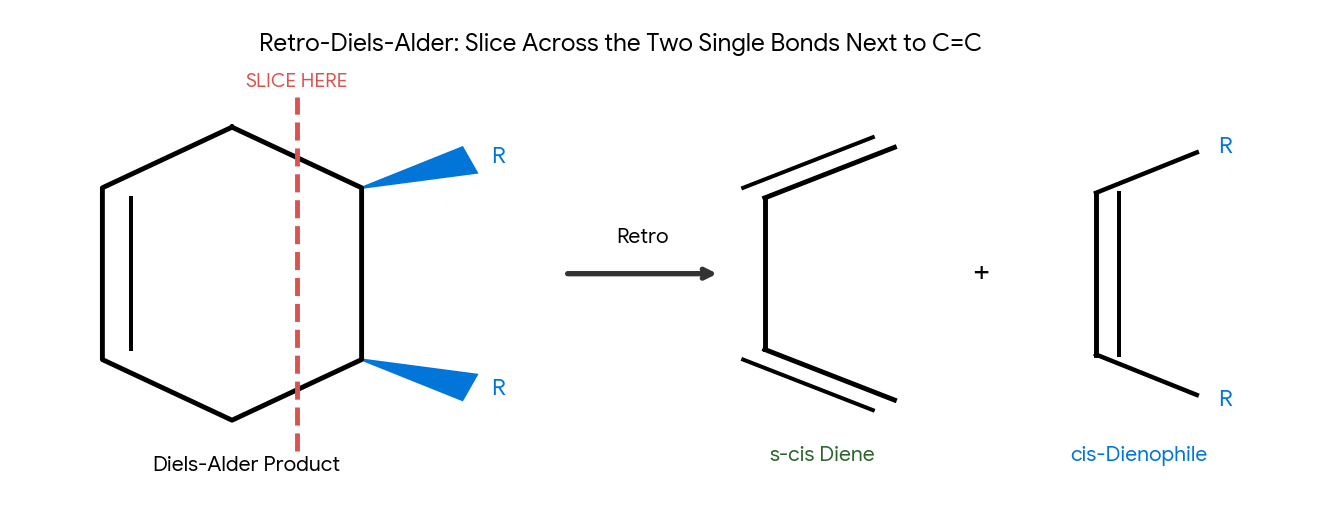
dieneophile
Does the roof come to a sharp point (like a triangle
/\)?
Pick the 5-membered ring (the pentagon with 2 double bonds).Does the roof have a flat top (like a trapezoid
/‾\)?
Pick the 6-membered ring (the hexagon with 2 double bonds).
(Why? Because the 4 floor carbons + 1 pointy roof carbon = 5. The 4 floor carbons + 2 flat roof carbons = 6.)
Cis-Dienophile: Both substituent groups point the SAME way (both up/wedges OR both down/dashes).
Trans-Dienophile: Substituent groups point OPPOSITE ways (1 up/wedge, 1 down/dash).
major product of the following reaction? what conformation must the diene be in to react in a duels alder reaction s-cis or s-trans?
Must be s-cis ("C"-shaped, double bonds on the same side) to react.
Locked s-trans = No Reaction (when two fused rings trap the double bonds in a zigzag on opposite sides so they cannot rotate).
Alkene + HBr in Water
Markovnikov Rule: H always adds to the less substituted carbon (most H's); the other group adds to the more substituted carbon:
Option 1 (Halogenation): Adds \(\text{Br}\) to the more substituted carbon (
CH₃CHBrCH₃).Option 2 (Hydration in excess H2O: Adds
–OHto the more substituted carbon (CH₃CH(OH)CH₃).
Identify for the hydroboration of an alkene, where the hydroxyl group will add. Does the hydroxyl group add to the less substituted or more substituted carbon of an alkene? And Do the H and OH that are added to the two different sp2 carbons add syn or anti. Choose the correct ans from a list that address both. (example answer choice “a) More substituted, anti addition”)
Alkene + Peroxyacid (mCPBA) in CH2Cl2 (Anhydrous/Aprotic)
Forms an epoxide (3-membered cyclic ether) via syn-addition (stereospecific).
Example: 2-butene + mCPBA CH2Cl2 epoxide (2,3-dimethyloxirane).
Why anhydrous? No water/acid means the epoxide ring stays closed
Alkene Ozonolysis
Slice the
C=Cdouble bond in half and put=Oon both ends:R₂C=Ketone (RCOR')RCH=Aldehyde (RCHO)=CH₂Formaldehyde (HCHO/CH₂O)Check: Total carbons in products = total carbons in starting alkene (never forms carboxylic acids with
(CH₃)₂S).
Acetylide (Acetylate) Ion + Alkyl Bromide
With Methyl or Alkyl Bromide: Forms a larger internal/terminal alkyne with a new C–C single bond.
Trap Alkyl Bromide: Steric hindrance causes E2 elimination instead forms an alkene
Alkyne Acid-Catalyzed Hydration (H2O, HgSO4, H2SO4)
Forms a ketone (specifically a methyl ketone for terminal alkynes).
Why: Markovnikov addition puts
–OHon the more substituted carbon to form an unstable enol, which immediately tautomerizes to a ketone.Contrast: Hydroboration-oxidation (
1. R₂BH, 2. H₂O₂, OH⁻) on a terminal alkyne gives an aldehyde instead.
Internal Alkyne + H2 / Lindlar's Catalyst
Forms a cis-alkene via syn-addition (both H's add to the same side, putting both R groups on the same side of
CH=CH).
Internal Alkyne + Sodium Metal in Liquid Ammonia (NaNH3)
Forms a trans-alkene via anti-addition (H's add to opposite sides, putting both R groups on opposite sides of
CH=CH).Example: 2-butyne + NaNH3 trans-2-butene.
Contrast: H2 / Lindlar's catalyst gives the cis-alkene; H2 pt gives an alkane.
Terminal Alkyne + R2BH, then H2O2, OH-