research methods midterm
 Call Kai
 Learn
Learn Practice Test
 Spaced Repetition
 Match
Match Flashcards
 Knowt Play
1/86

There's no tags or description
Looks like no tags are added yet.
Name | Mastery | Learn | Test | Matching | Spaced | Call with Kai | Chat |
|---|
No analytics yet
Send a link to your students to track their progress
87 Terms
why conduct a literature search before designing a study?
To learn what is already known and refine the research question/hypothesis
what is the difference between a resource and source?
a resource helps you find research, a source is the actual research itself
primary source
A source reporting original research conducted by the authors
secondary source
a source that summarizes or discusses research conducted by OTHERS
what is the purpose of review paper
to summarize the current state of research in an area
what is the purpose of a theory paper?
to propose a theory that explains existing findings
what are the 5 sources of research questions?
intuition, everyday life, researcher, discussions, real world, problems, existing research
what does it mean that science is cumulative
new research builds on existing research while making a new contribution
what is a hypothesis
SPECIFIC and FALSIFIABLE prediction about the relationship between variables
what does falsifiable mean?
there are possible results that do not support the prediction
hypothesis vs theory
hypothesis = specific prediction
theory = broad explanation that generates predictions
(THEORY generates multiple HYPOTHESES)
research question vs hypothesis
research question = asks what will happen in a relationship
hypothesis = makes a specific prediction
theory vs law
theory explains/predicts many relationships
law is assumed to apply to ALL situations
conceptual vs empirical variables
conceptual = abstract construct
empirical = how its actually measured
what is an operational definition
the empirical implementation of a conceptual variable
(how a researcher turns an abstract concept into something that can actually be manipulated or measured)
in an experiment how are the IV and DV treated?
IV = manipulated
DV = measured
what is a nominal measure
categories with no meaningful order, NAMES
(categories)
what is an ordinal measure
ORDERED values in which the distances between values aren’t necessarily equal
( categories + order )
what is an interval measure
equal INTERVALS between values but no meaningful zero.
(categories+ order + equal intervals )
what is a ratio measure?
equal intervals and a meaningful zero point
( categories + order + interval + REAL zero)
experimental IV manipulations are usually measured at what level?
nominal/categorical
what are the 4 major types of measures
self report, performance, behavioral , psychophysiological
what is reactivity
when being studied/measured influences participants responses or behavior
what is social desirability
responding in ways that make oneself appear more socially acceptable
what is acquiescent responding?
The tendency to agree with statements, regardless of their content (yeah-saying)
what is the good participant effect and #&*% YOU effect ?
good participant = changing behavior/responses to match what the participant thinks the researcher expects
#&*% YOU ! = the opposite, a participant may intentionally resist what they think the researcher wants rather than cooperating with the perceived purpose of the study
what is reliability?
reliability = CONSISTENCY of a measure, free from random error
what is validity?
whether a measure actually measures what it claims to measure, free from systematic error
how does random error affect reliability?
higher random error = lower reliability
lower random error = higher reliability
random error vs systematic error ?
random error → reduces RELIABILITY
systematic error → reduces VALIDITY
reliability vs validity
reliability = Consistency
Validity = measures what it claims to
item vs scale
item = individual question/measure
scale = multiple items (questions) measuring the same conceptual variable, usually combined into one score
what is test retest reliability?
The consistency of scores on the same measure across two different times
( same measure, different times)
how does test-retest reliability differ for traits vs states?
traits - generally show high test-retest reliability ( traits remain stable, don’t usually change)
states - may have low test-retest reliability because they naturally change over time.
what is a retesting effect?
taking the same measure previously influences response responses/performance when taking it again
what is equivalent-forms reliability?
The consistency between scores on two different but equivalent versions of a measure
(different equivalent versions, different times)
why use equivalent forms instead of test retest?
to reduce retesting effects
what is internal consistency?
The extent to which items within a multi scale consistently measure the same conceptual variable ( do items within one scale correlate with one another )
what is split half reliability?
correlation between scores on two halves of the same scale; measures internal consistency
what does Cronbach’s alpha measure?
internal consistency; how strongly items within a scale correlate with one another ( measure the same construct)
what is interrater reliability?
The degree to which multiple coders/observers agree in their judgments
( do different observers/ coders agree?)
why should cutters be blind to the hypothesis and experimental condition?
to prevent their expectations from biasing their judgments
why should cutters be blind to the hypothesis and experimental condition?
to prevent their expectations from biasing their judgments
why are surveys better at telling us ‘what’ than ‘why’?
people may not accurately know what causes their own dots or behavior
population vs sample
sample = the people you studied/ who actually participated
population = the larger group you actually want to learn about and generalize your findings too
parameter vs statistic
Parameter - describes Population
Statistic - describes Sample
what is convenience sampling?
recruiting participants because they’re easy or readily available
what is snowball sampling?
using existing participants to help recruit additional participants
what is non-probability sampling?
sampling where population members don’t have a known chance of being selected
frequency distribution
shows how frequently different values occur in a dataset
central tendency vs dispersion/variance
central tendency = center (mean,mode,median)
dispersion = spread ( range, standard deviation)
mean vs median vs mode vs range
mean = average
median = middle
mode = most common
range = max - min
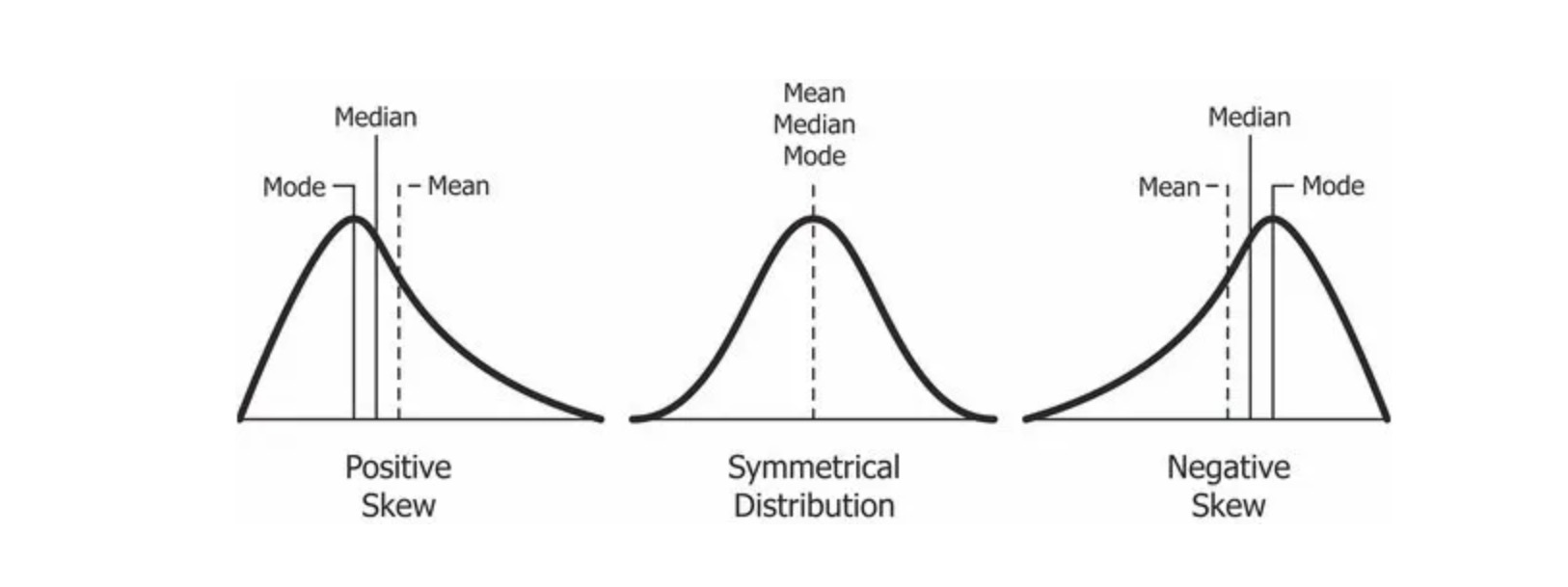
positive vs negative skew
positive = tail right
negative = tail left
confidence interval
range used to estimate a population parameter from sample data
how does sample size affect confidence intervals ?
larger sample → narrower confidence interval → more precise estimate
naturalistic observation vs participant observation
naturalistic = observe without participating
participant = researcher joins group
why define behavioral categories before observation?
to operationalize behavior so they can be observed and recorded consistently
what is the main limitation of case studies?
findings may not generalize to the larger population
archival research vs content analysis
Archival = Analyzes existing records/data
Content analysis = Codes existing material into categories
what are unobtrusive measures?
measures behavior without participants knowing, reducing reactivity
main strength vs limitation of naturalistic methods?
STRENGTH- high external validity/real world behavior
LIMITATION- less control, cannot establish causation
naturalistic vs structured observation
naturalistic- observes behavior and it’s normal setting
structured - creates a situation, then observes behavior
reactivity vs observer bias
reactivity- participants change because they are being observed
observer bias- researcher expectations affect observations
time sampling vs event sampling
time - observe during set time intervals
Event - record Each occurrence of a target behavior
null vs alternative hypothesis
null (H0) - no effect/relationship
alternative (H1) - an effect/relationship does exist
p value, and how is it interpreted
p value - the probability of getting the observed results if (H0) the null is true
if the p is LOW the null must GO ( p<a) reject null (H0), results = SIGNIFICANT
if the p is HIGH, the null will FLY ( p>a) fail to reject null (H0), results NOT significant
type 1 vs type 2 error
type 1 = false positive ( find an effect that isn’t real)
type 2 = false negative ( miss a real effect)
statistical significance vs effect size
significance - evidence an effect exists
effect size - how large/strong the effect is
what is statistical power ?
ability to detect a real effect
higher power → Fewer type two errors
( larger samples increase power)
what is alpha (a)?
cutoff for significance, usually .05
lower a = stricter cutoff + lower type 1 error risk
one tailed vs two tailed hypothesis
one tailed - predicts direction of effect
two tailed - predicts an effect, but not its direction
what does a confidence interval tell us?
A range of values used to estimate the true value in the population from the sample data
smaller sample → wider CI= less precision
larger sample → narrower CI=more precision
why is replication important?
repeating a study test, whether it’s findings are reliable and can be reproduced
publication bias
significant/positive findings are more likely to be published than null findings, potentially distorting the evidence
replication vs Meta-analysis
replication - repeat a study to see if the findings reproduce
Meta-analysis- statistically combines results from many studies
positive vs negative correlation
positive - variables move in the same direction
negative - variables move in opposite directions
the closer ( r ) is to -1 OR 1 the stronger the correlation
closer to 0 = weaker
directionality vs Third variable problem
directionality (reverse causation problem) = unclear which variable causes which
third variable = another variable may cause both
what is the coefficient of determination? (r²)
shows how much the differences in one variable are associated with differences in the other (Proportion of shared variance)
what is restriction of range?
when you only obtain a limited range of scores, so the correlation may appear weaker than it really is
what is a curvilinear relationship?
One variable changes with another up to a point, then the pattern changes direction
( ex increasees, peaks, drops off)
how can outliers affect a correlation?
Extreme scores can distort r, making the relationship appear stronger or weaker
predictor vs Criterion variable
predictor- Used to make a prediction
Criterion - Outcome being predicted
what is multiple regression?
uses multiple predictor variables together to predict one outcome
cross-sectional vs longitudinal research
cross-sectional- Different groups at one time
Longitudinal- Same people followed overtime
what is a spurious relationship?
when two variables seem related, but their relationship is actually explained by a third variable
(The relationship looks real, but something else explains it)
what is self selection in correlational research?
participants already differ on the predictor variable before the study so researchers cannot fully control those differences
self selection → makes it difficult to establish causation