Lab 7B: Key Characters to Animal Diversity
 Call Kai
 Learn
Learn Practice Test
 Spaced Repetition
 Match
Match Flashcards
 Knowt Play
1/43

There's no tags or description
Looks like no tags are added yet.
Name | Mastery | Learn | Test | Matching | Spaced | Call with Kai | Chat |
|---|
No analytics yet
Send a link to your students to track their progress
44 Terms
What are three types of characters that are used to identify clades of animals?
body symmetry, pattern of development in the embryonic stages, and specific embryonic characters in early development.
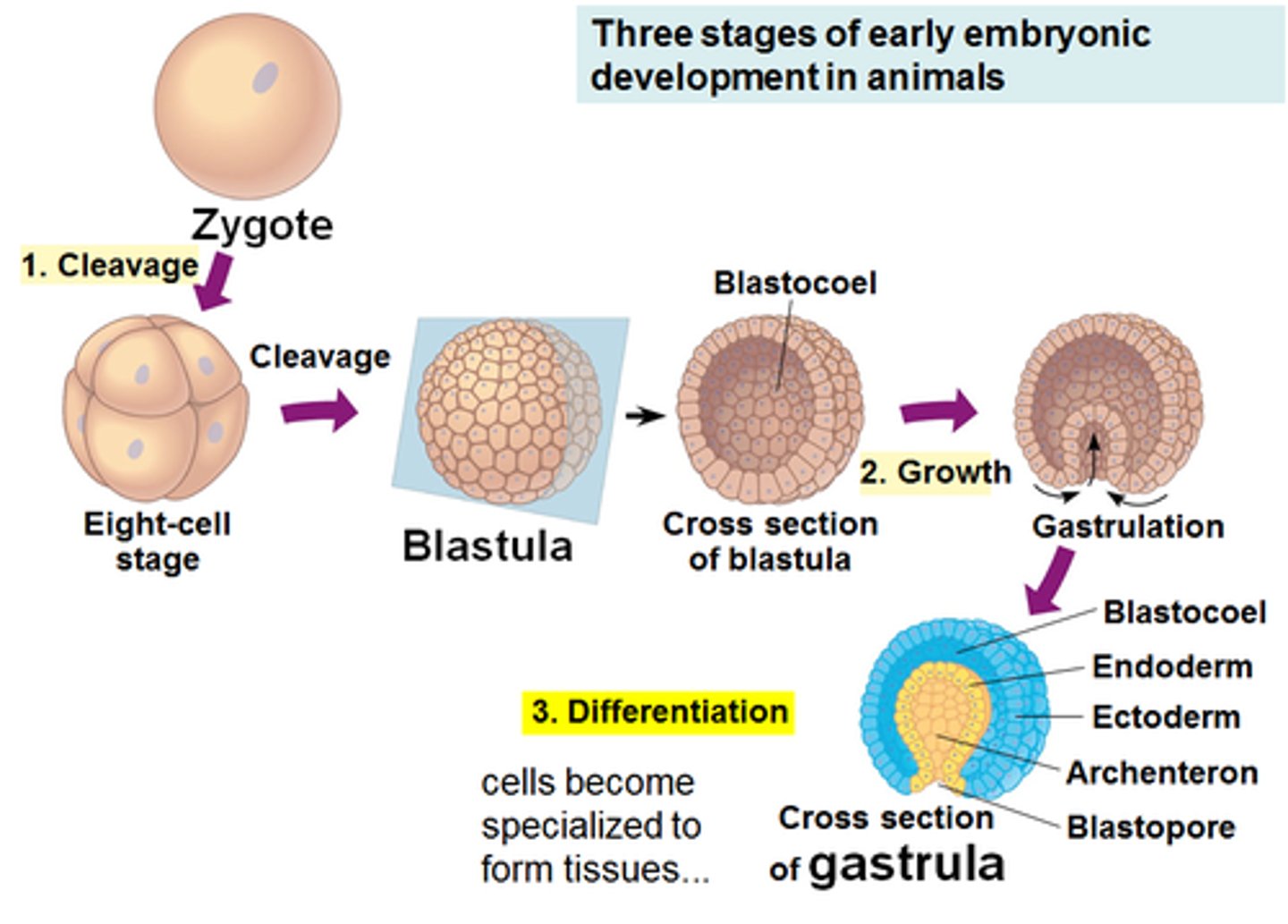
What are the stages of embryonic development?
Fertilization, cleavage, gastrulation, organogenesis
What are three types of body symmetry?
asymmetry, radial symmetry, bilateral symmetry
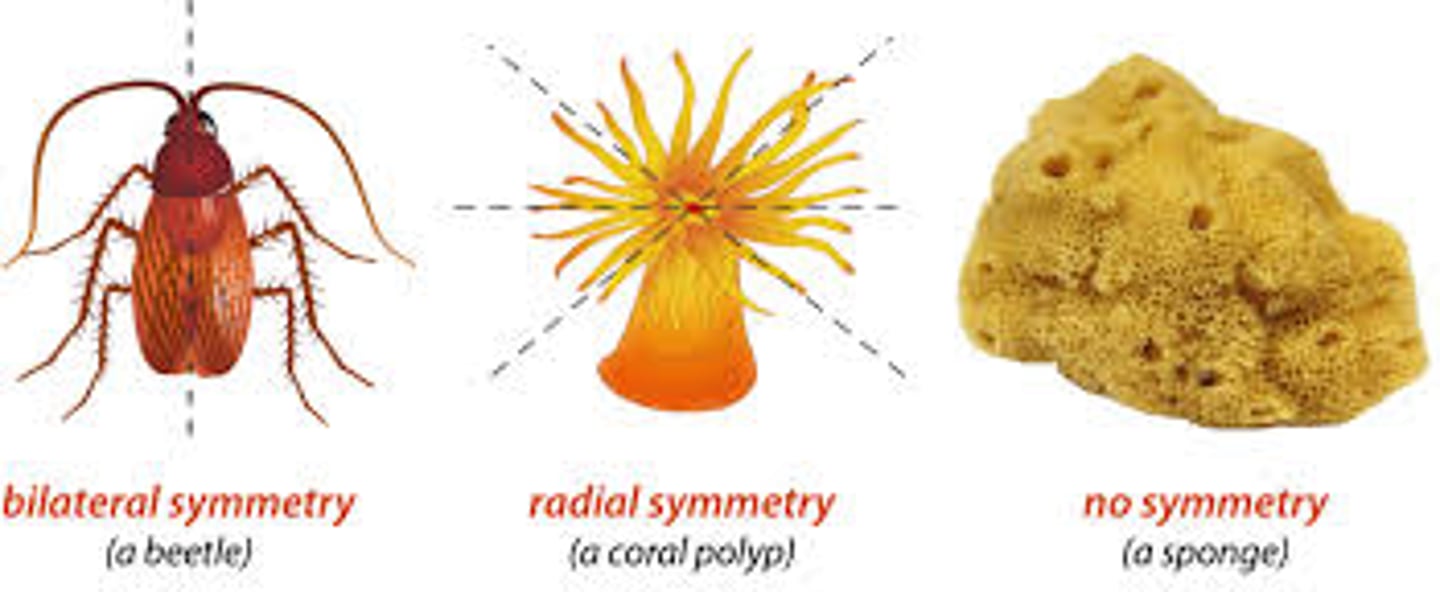
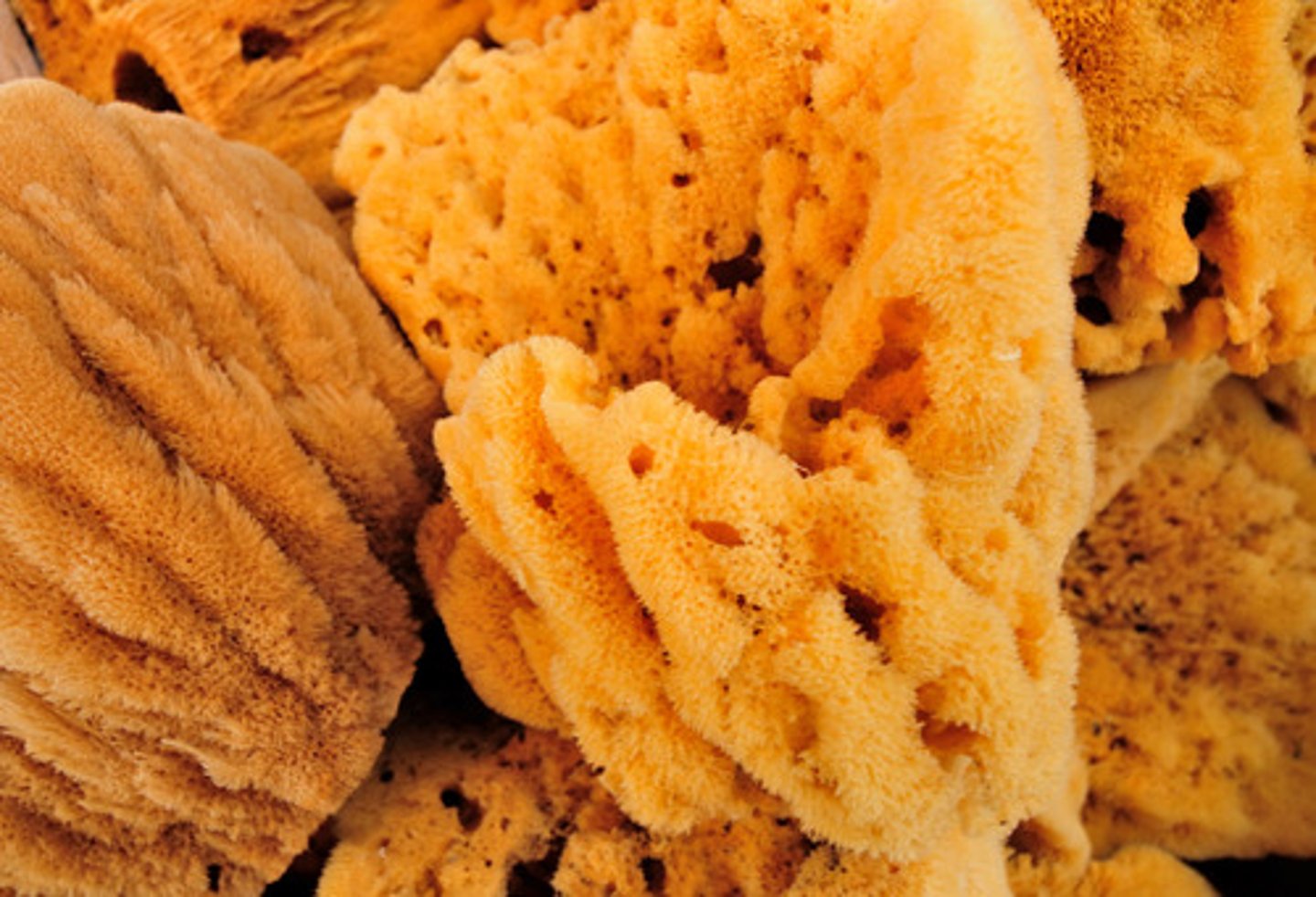
asymmetry
having no symmetry
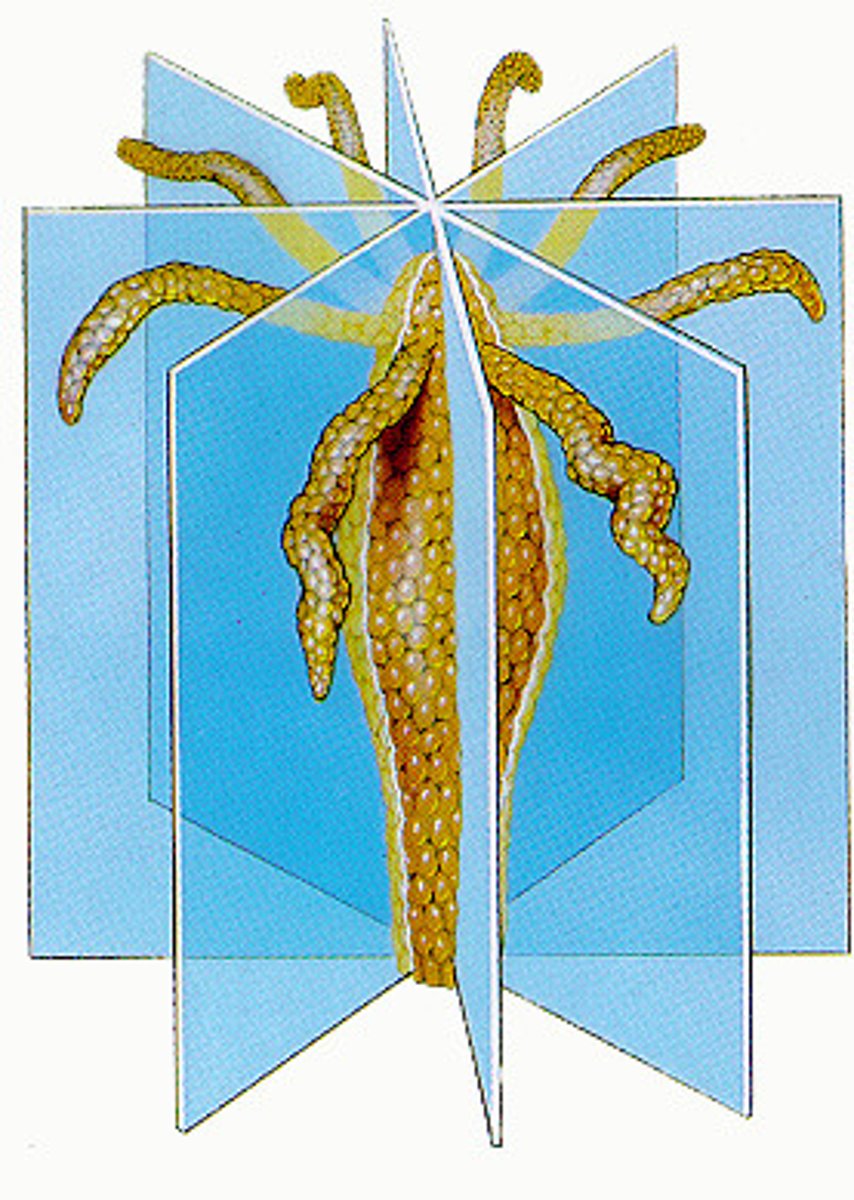
radial symmetry
symmetry around a central axis
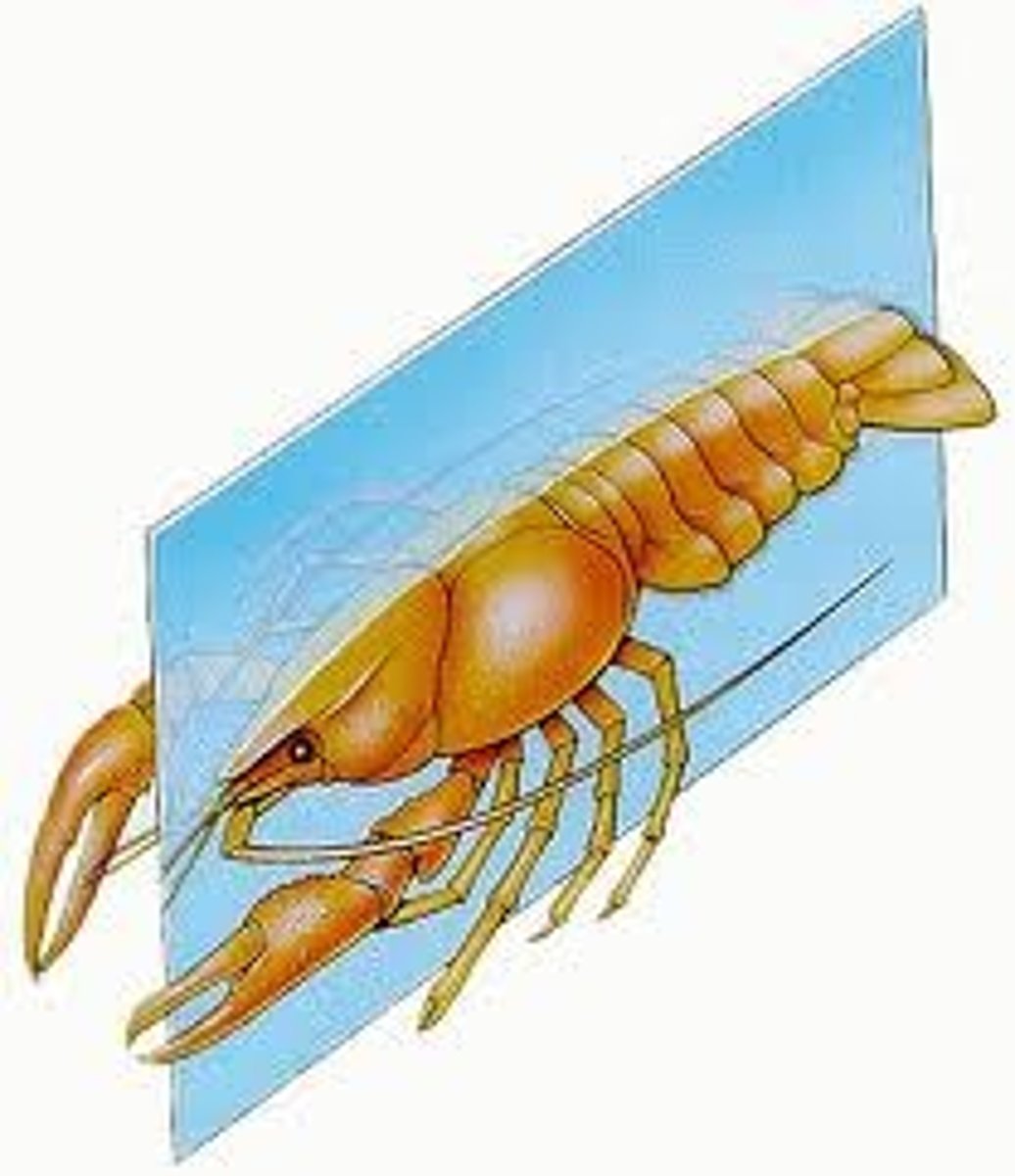
bilateral symmetry
symmetry with right-left mirror images
cephalization
formation of a head
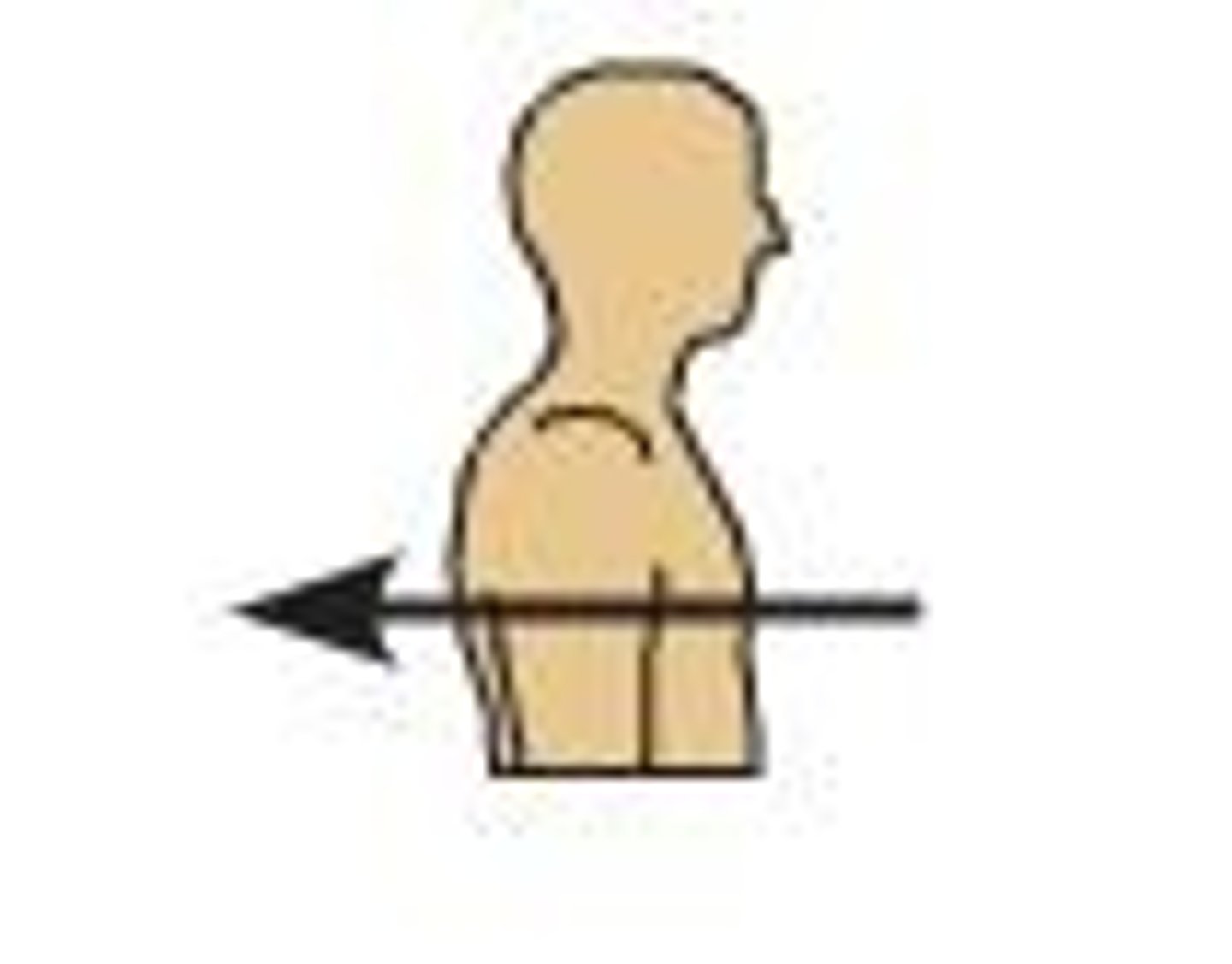
anterior
head end of an animal
posterior
away from the head end, or rear end of an animal
dorsal
top or back side
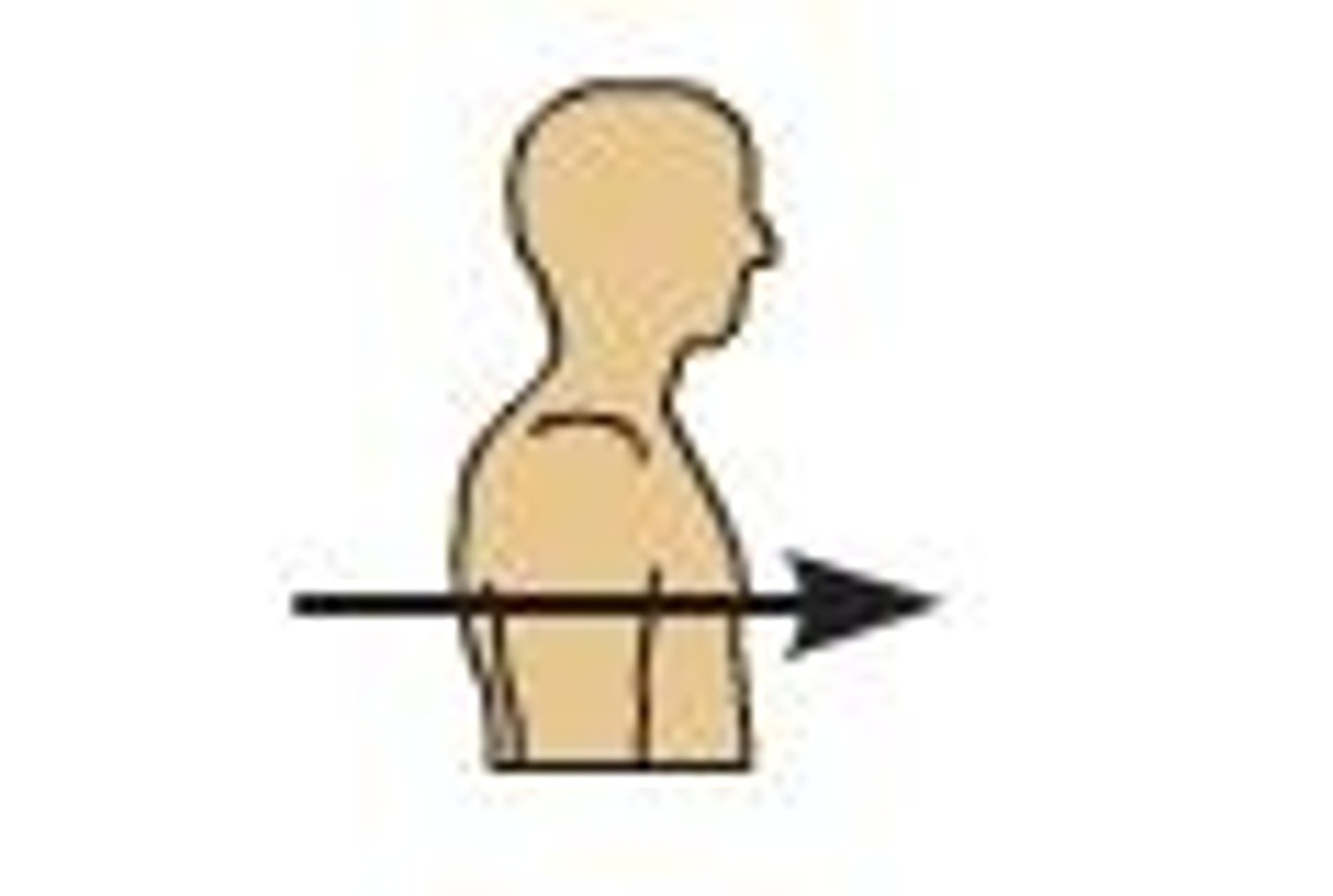
ventral
front or belly side
embryology
study of the embryo, of the growth and differentiation that occurs during early development
What is the difference between growth and differentiation?
In growth, cells or organs become larger. In differentiation, cells change from one type into another (they become specialized into different tissues and organs)
fertilization
Stage of embryonic development; the union of sperm and egg into a zygote
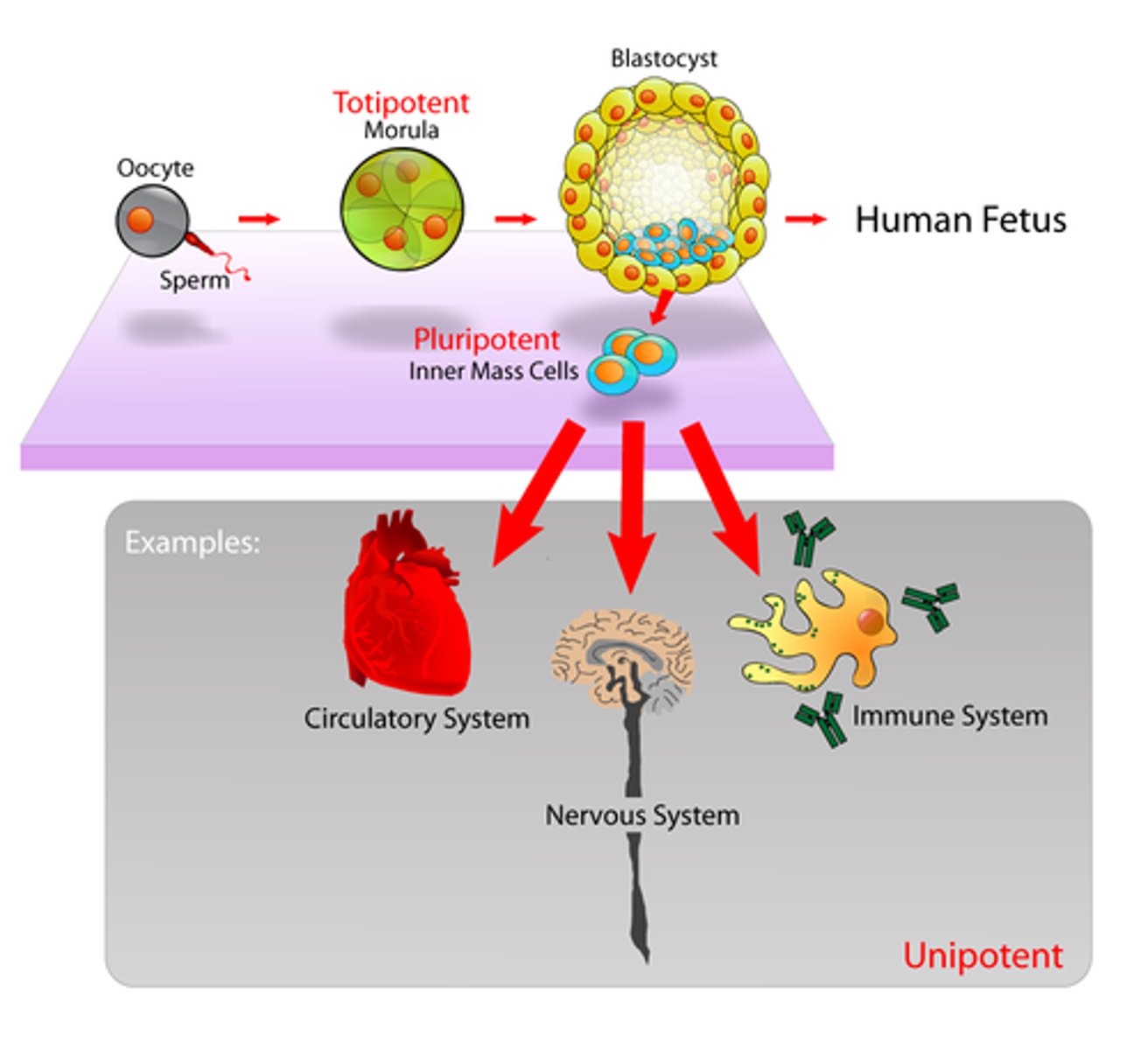
totipotent
a cell like a zygote that can differentiate into any type of cell
pluripotent
a cell like a stem cell that can differentiate into any of the three germ layers (not no longer any cell such as the placenta)
unipotent
a cell that can only grow into one kind of cell or tissue usually because it is already highly differentiated
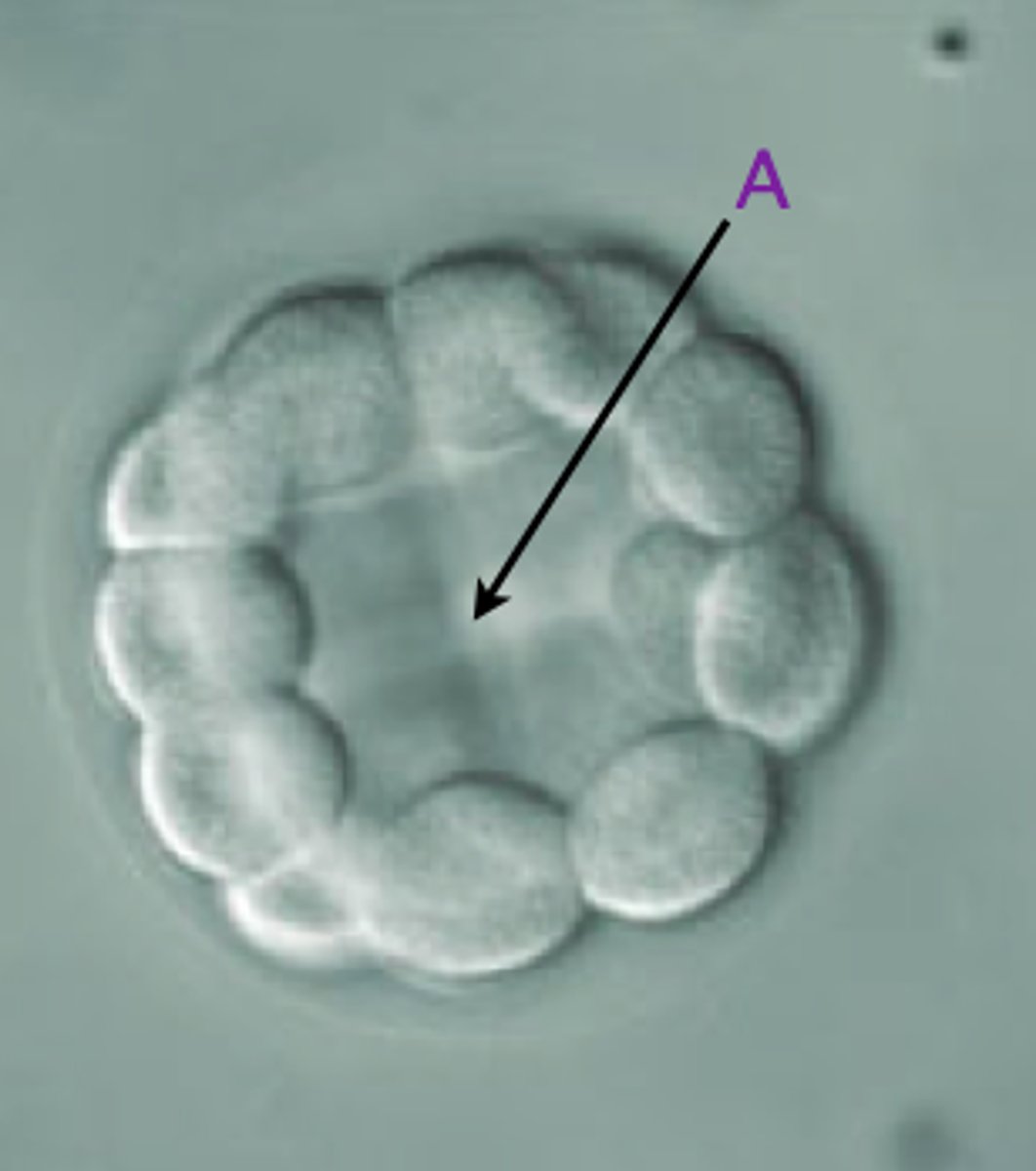
cleavage
Stage of embryonic development; specialized division of cells after fertilization (blastomeres) into a hollow ball of cells (blastula)
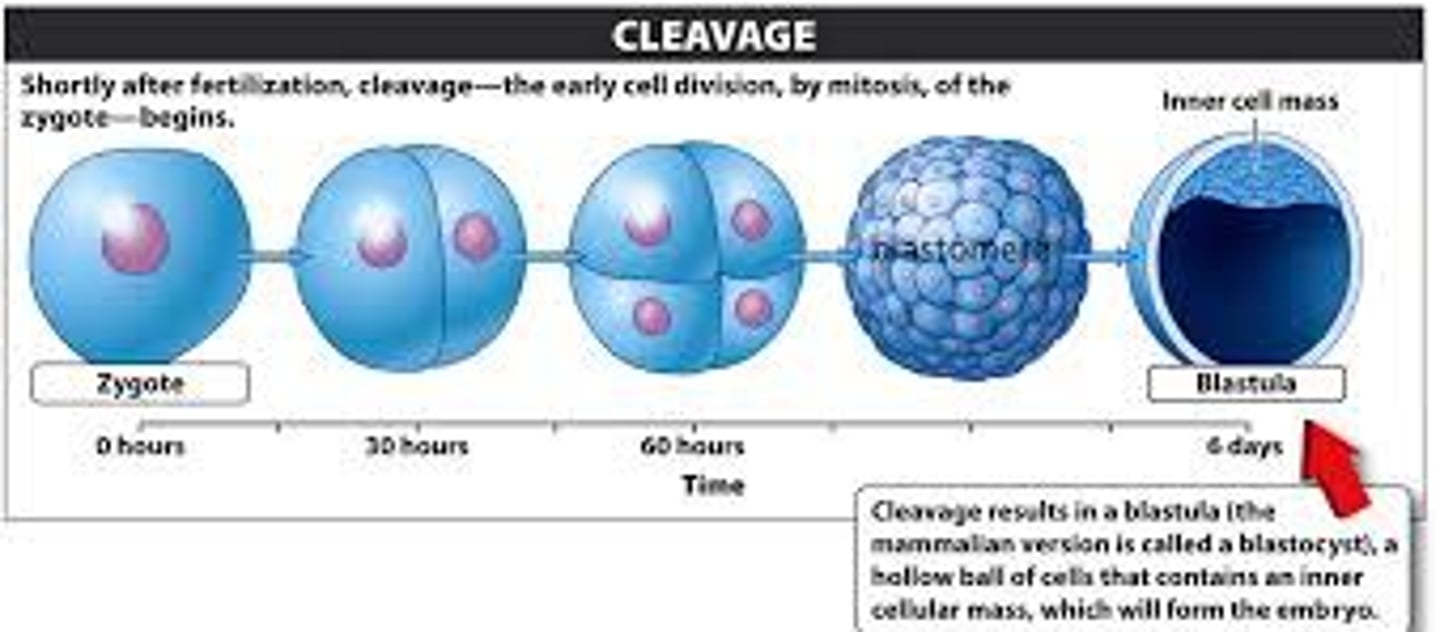
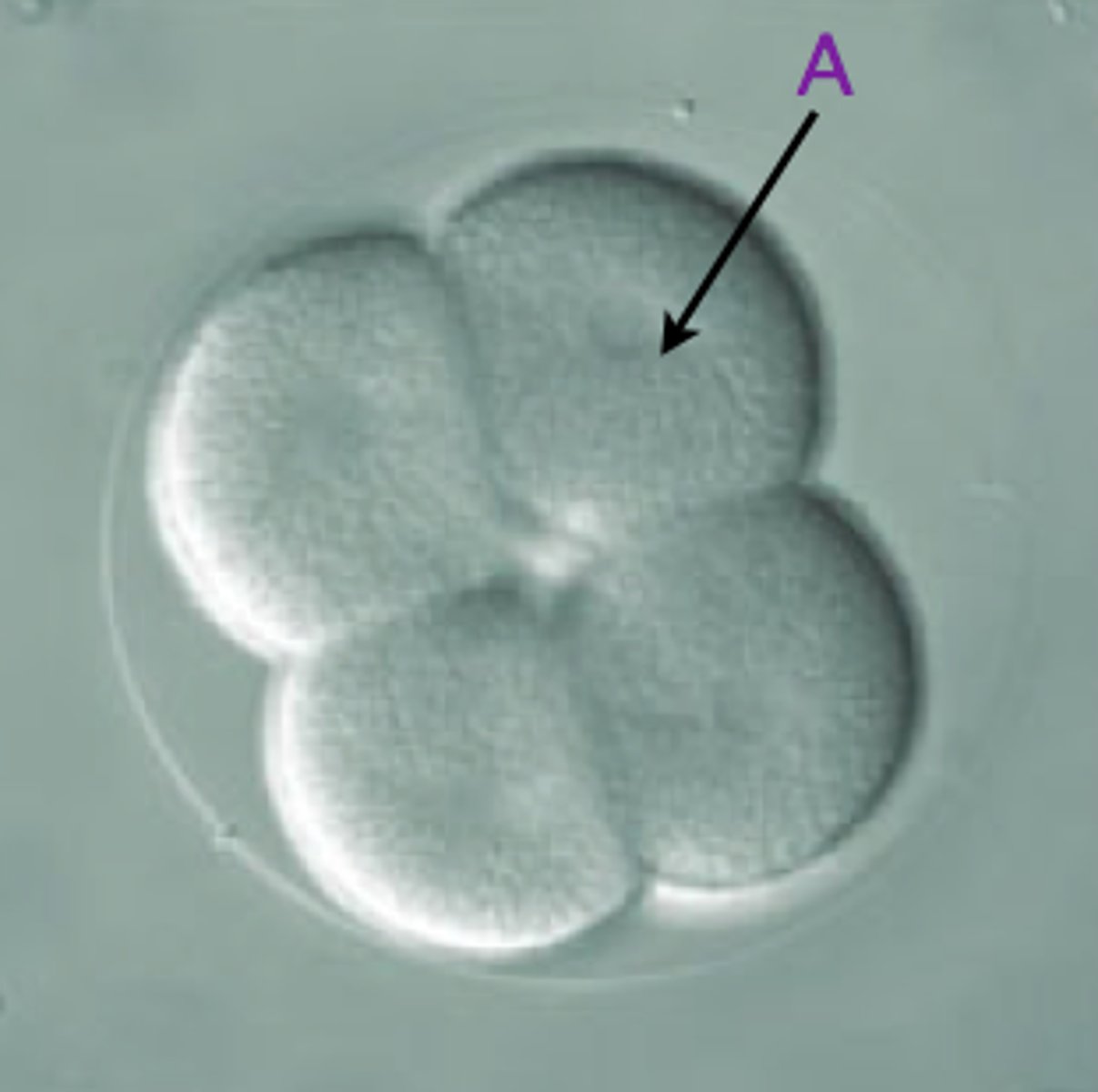
blastomere
During cleavage: the early undifferentiated cells
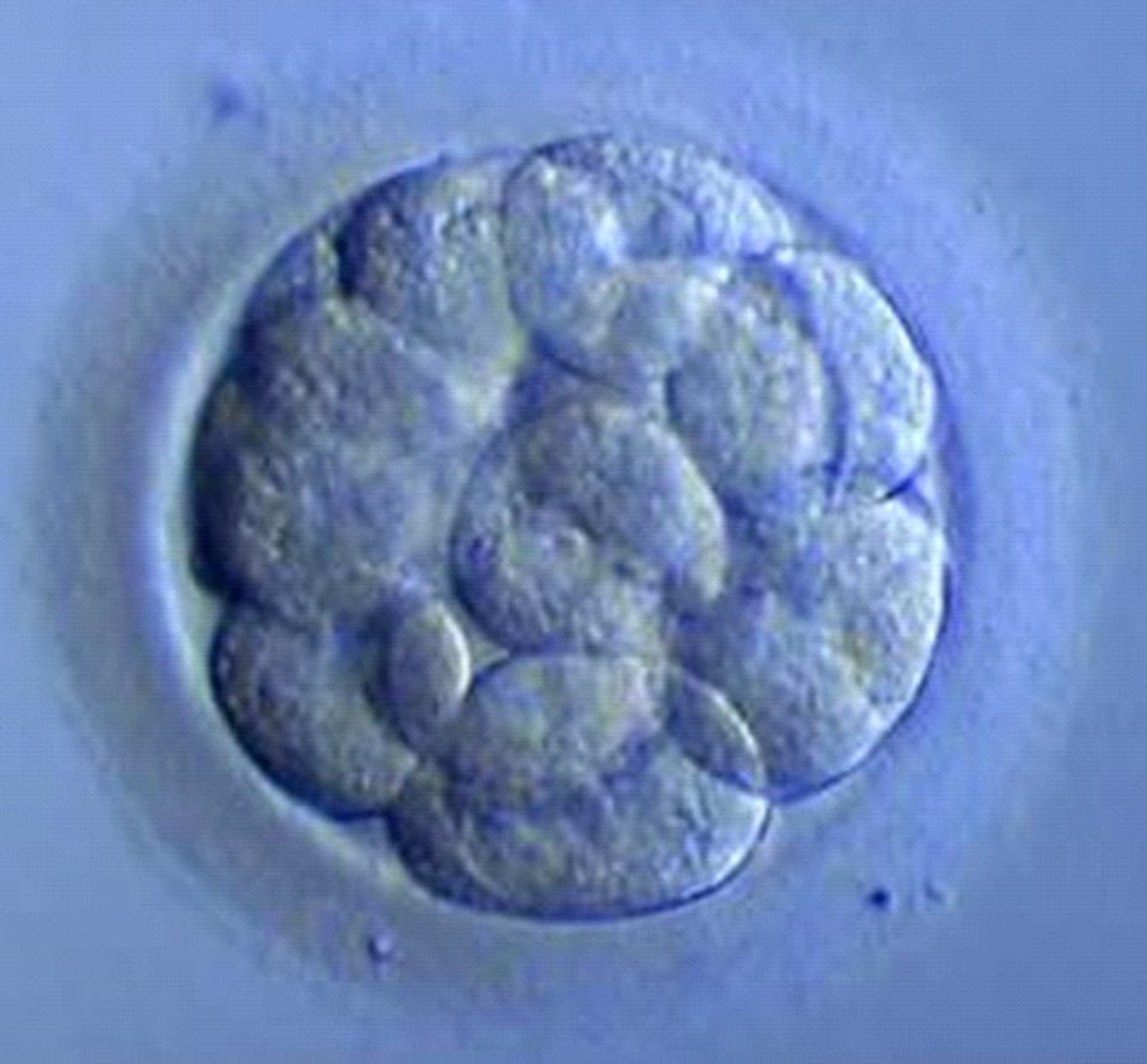
morula
During cleavage: the solid ball of cells
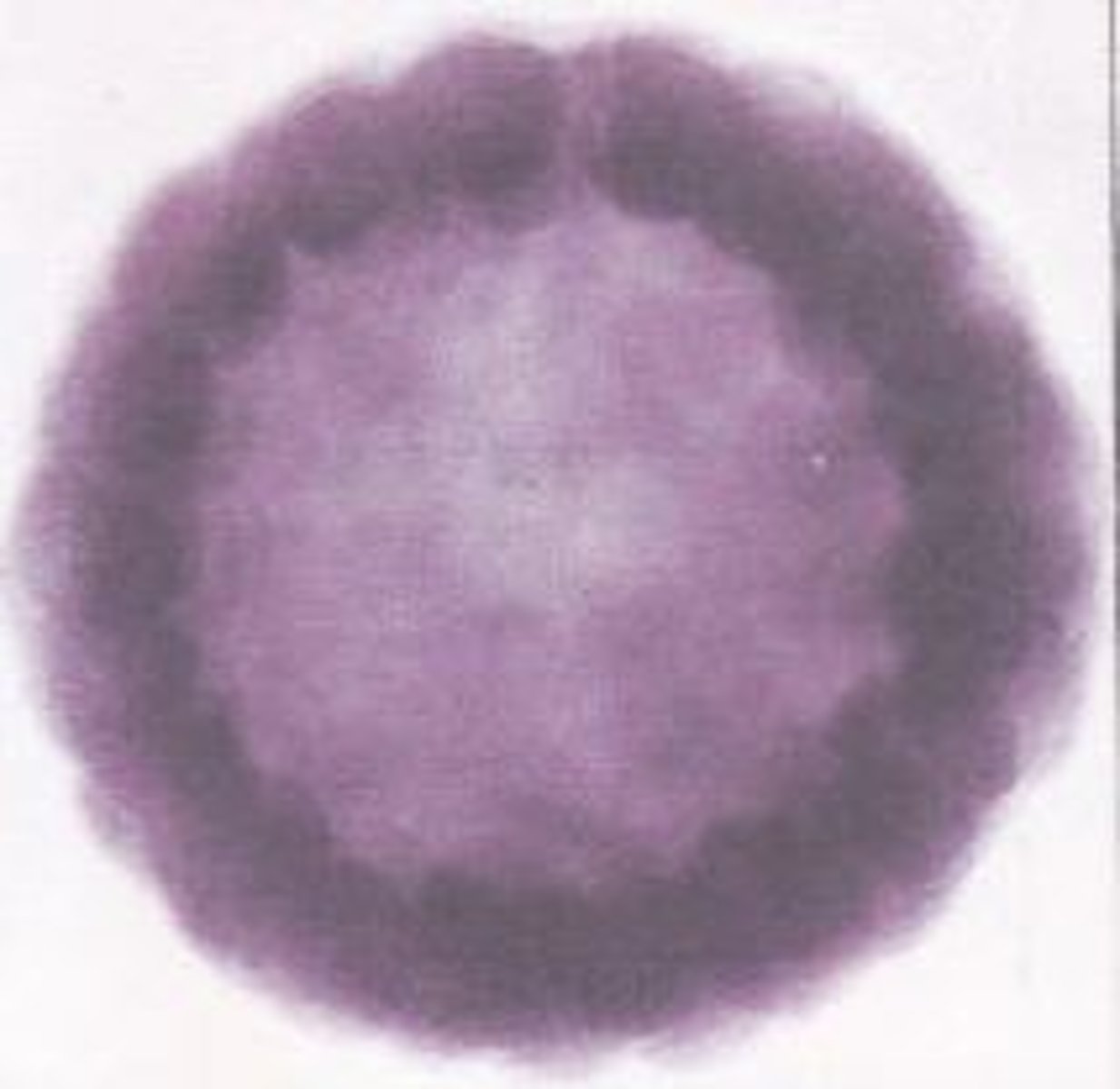
blastula
During cleavage: the hollow ball of cells
blastocoel
During cleavage: the fluid-filled cavity within the blastula
What are some of the patterns of cleavage that identify evolutionary clades of animals?
The size of cells (blastomeres) and their location in the embryo; the kind of blastomeres (determinate and indeterminant)
gastrulation
Stage of embryonic development; reorganization of the hollow ball of cells (blastula) into germ layers
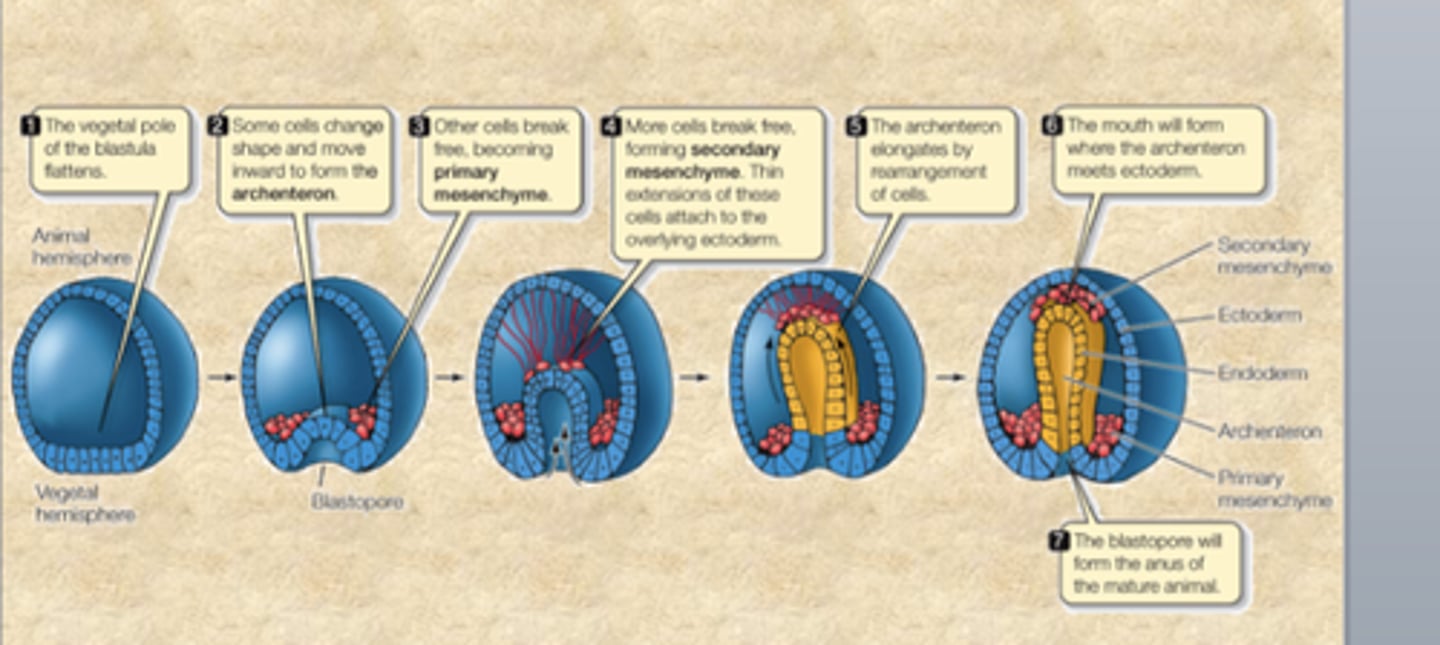
germ layers
cell layers of the embryo- the ectoderm, mesoderm and endoderm
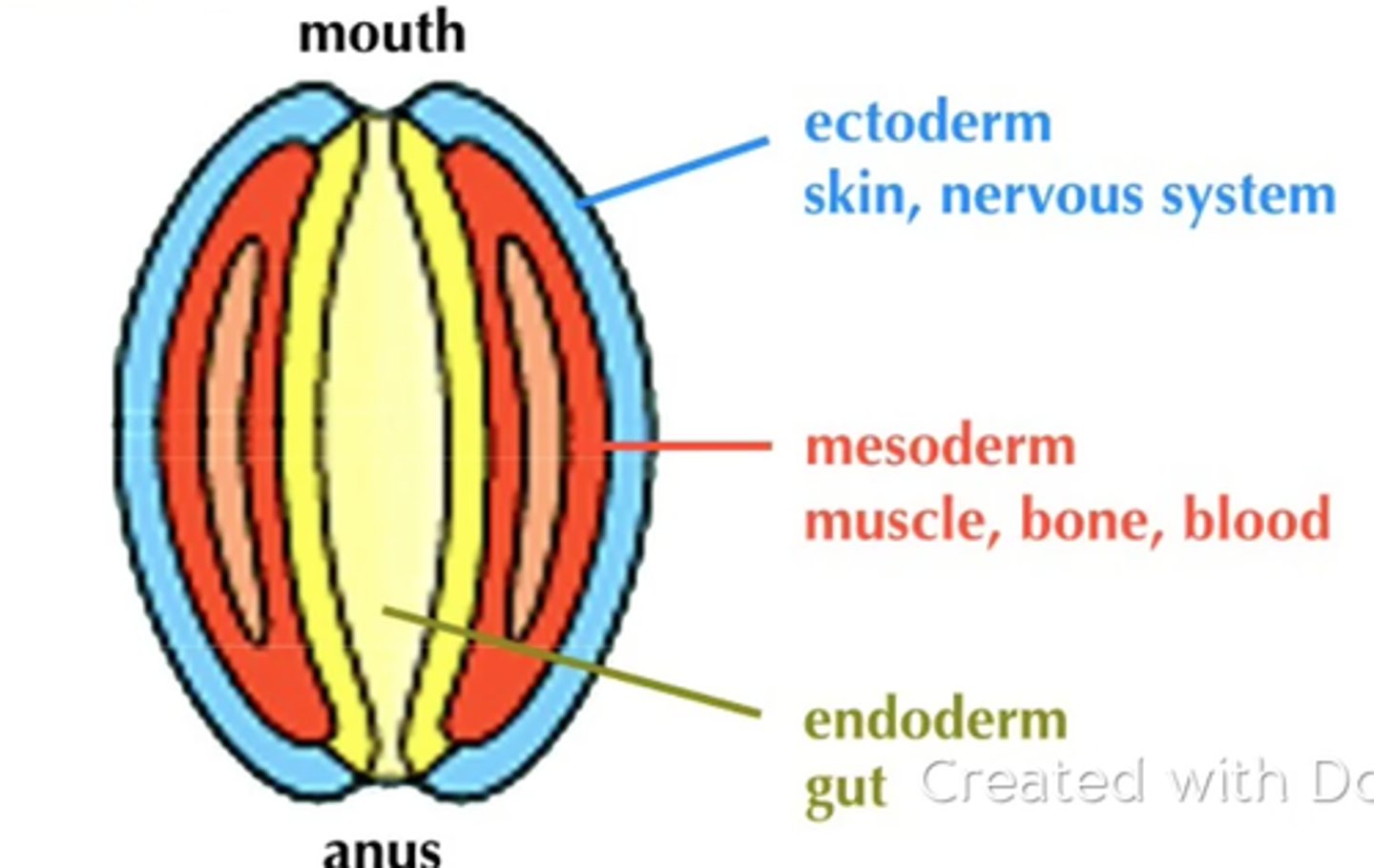
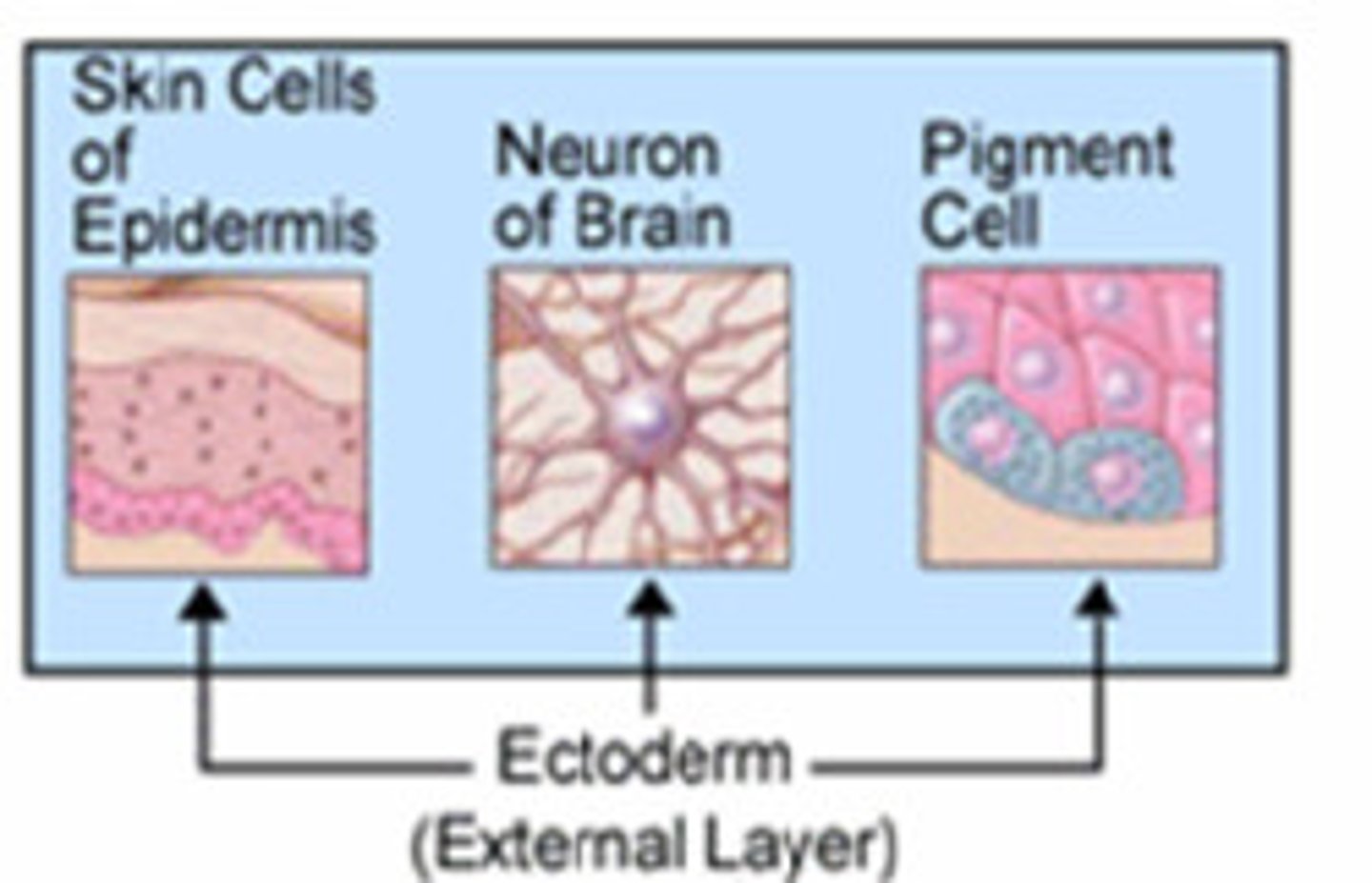
ectoderm
outermost germ layer (develop into skin and nervous system)
mesoderm
middle layer (develop into circulatory and reproductive systems, muscles, and bones
endoderm
innermost germ layer (develops into lining of digestive and respiratory tracts, as well as liver, pancreas and other glands
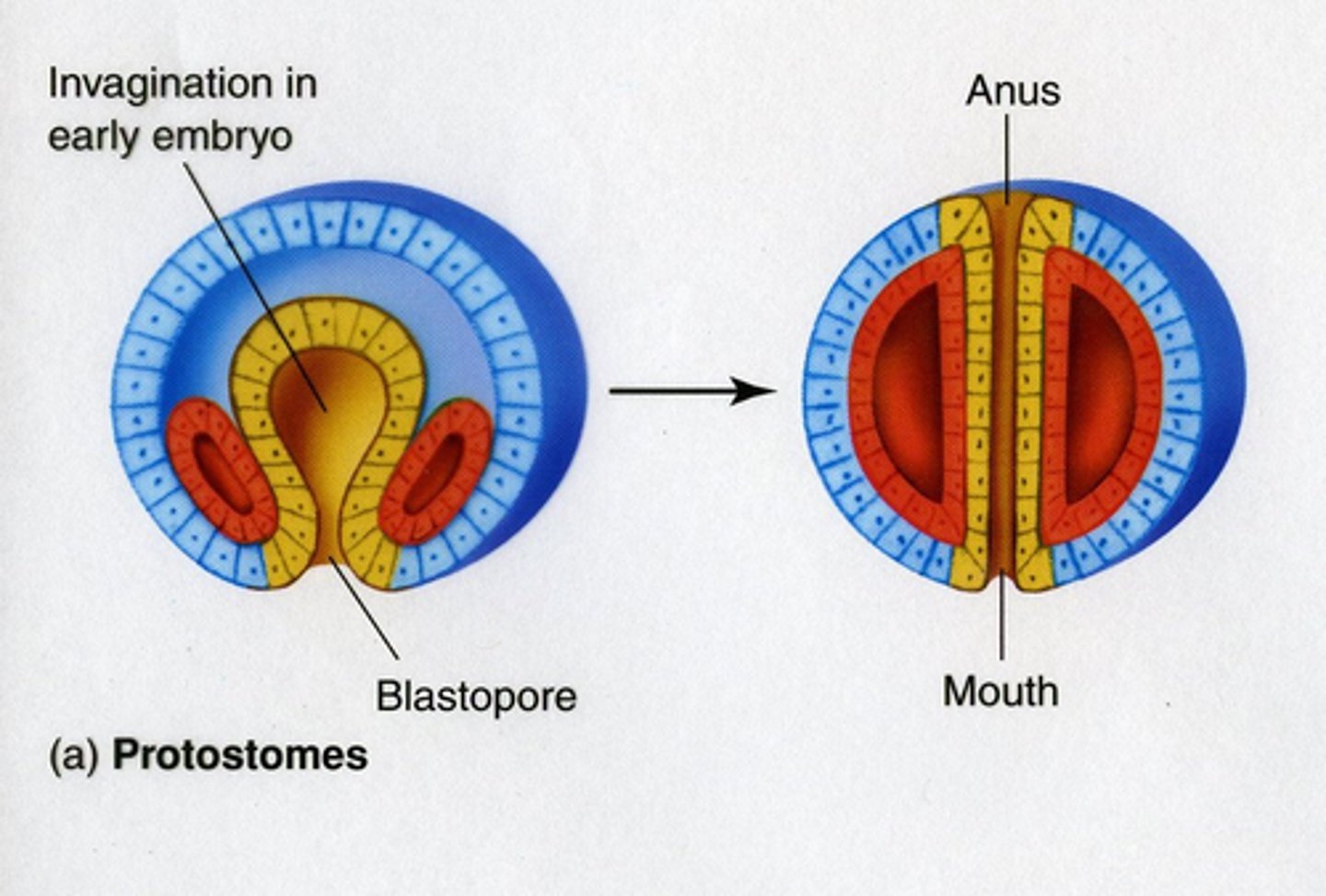
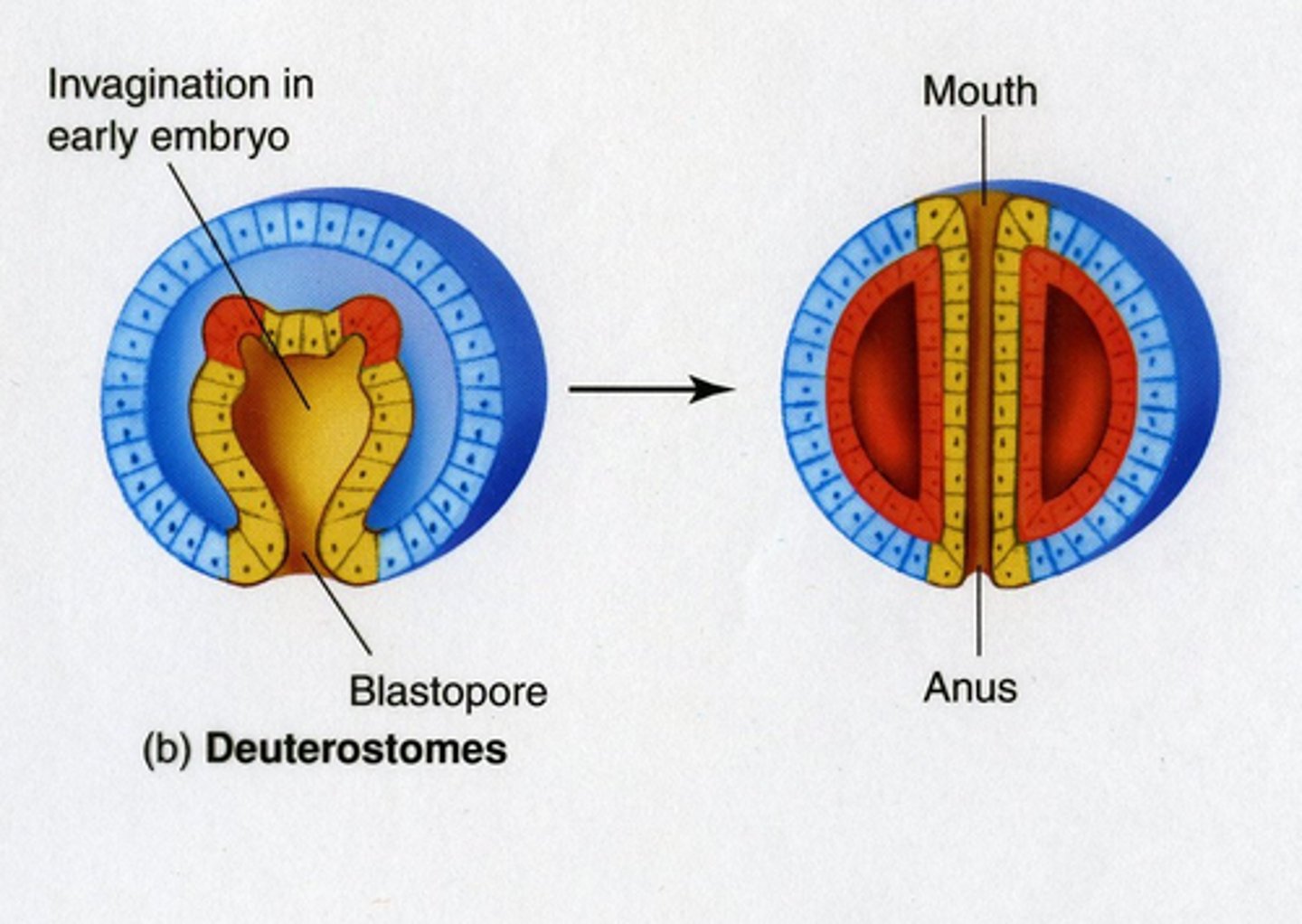
blastopore
During gastrulation: the pore or opening formed in the hollow blastula
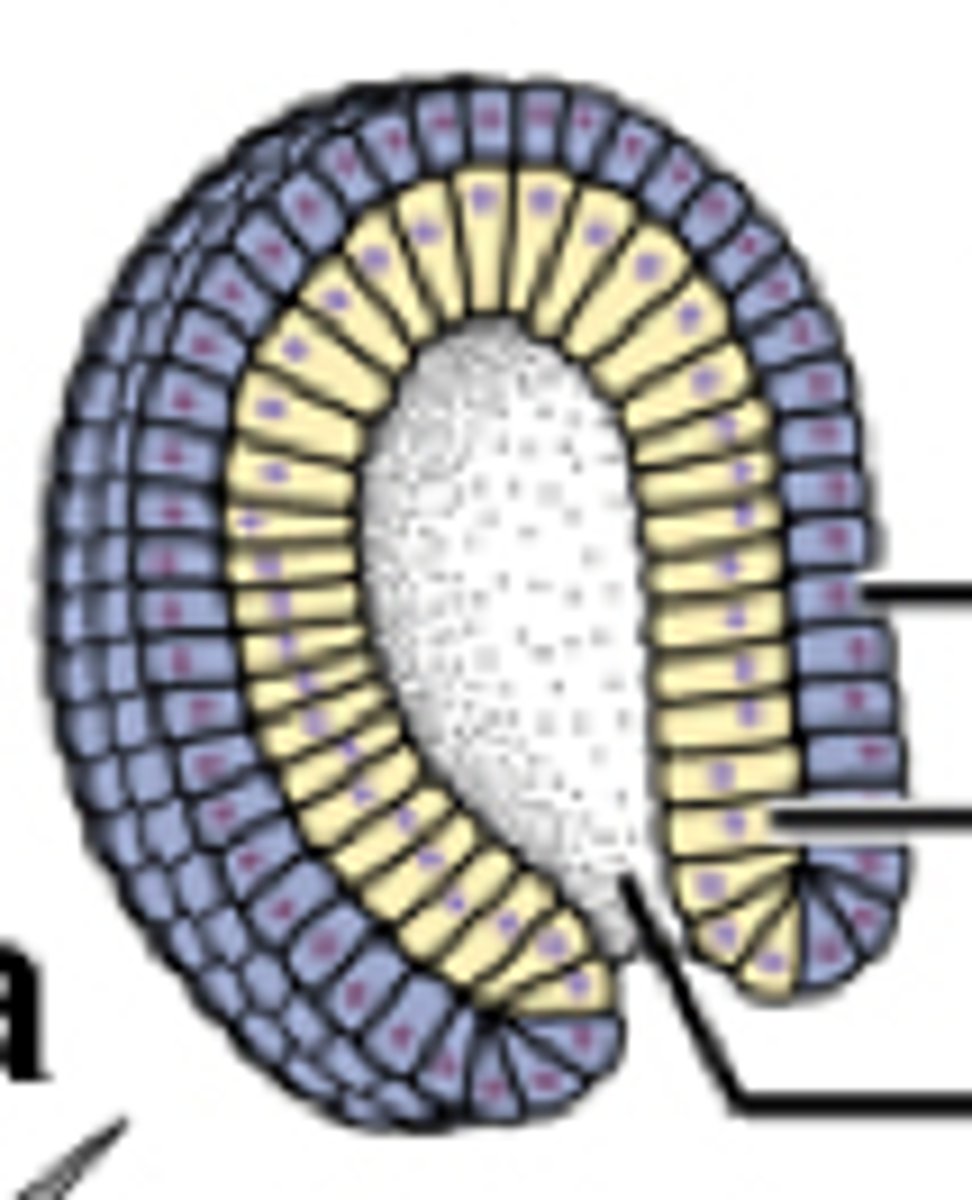
archenteron
during gastrulation: the deeper cavity formed following the formation of the blastopore. This first body cavity becomes the gut.
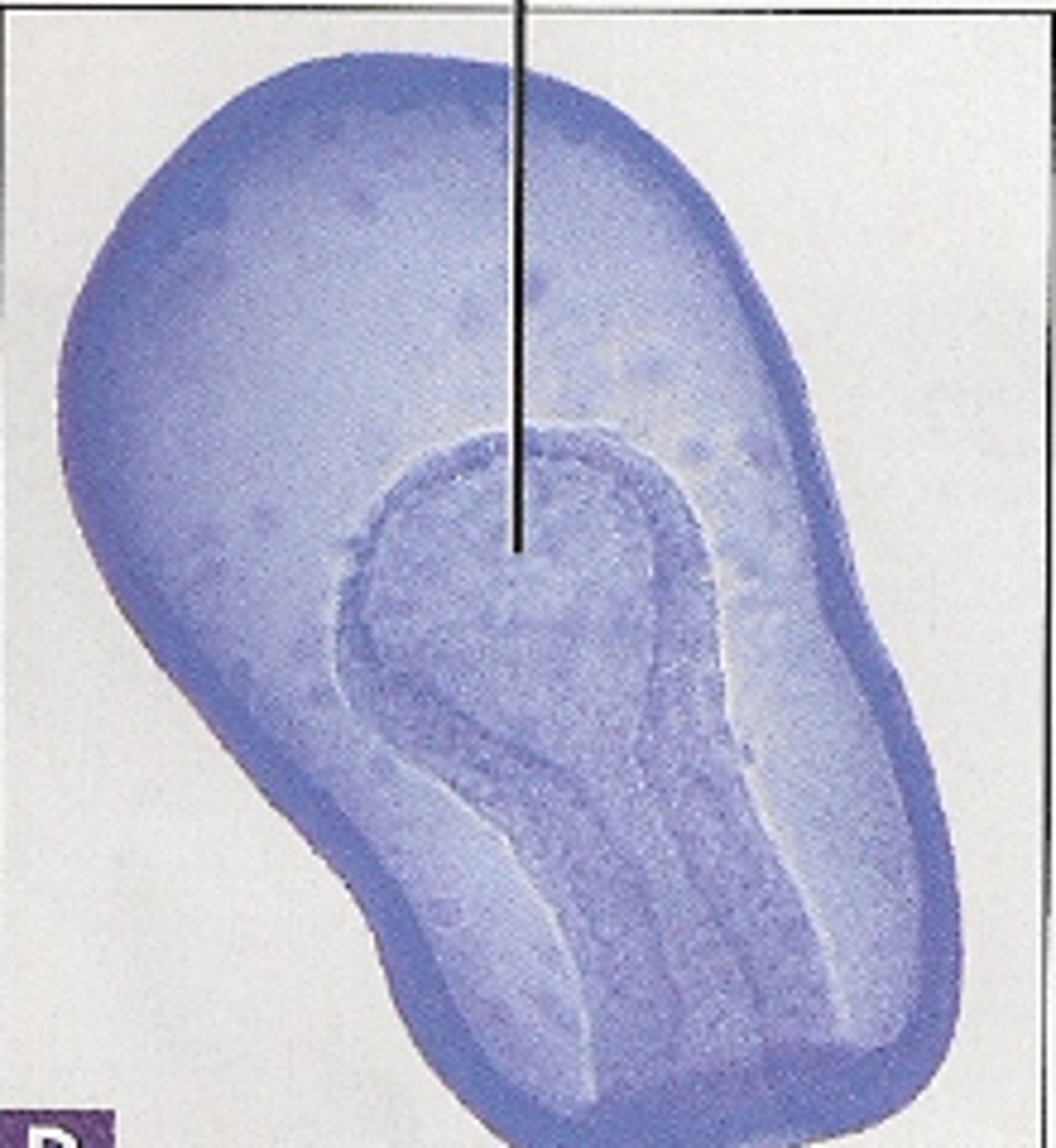
protostome
Organisms in which the blastopore becomes the mouth. "mouth first"
deuterostome
Organisms in which the blastopore becomes the anus. "mouth second"
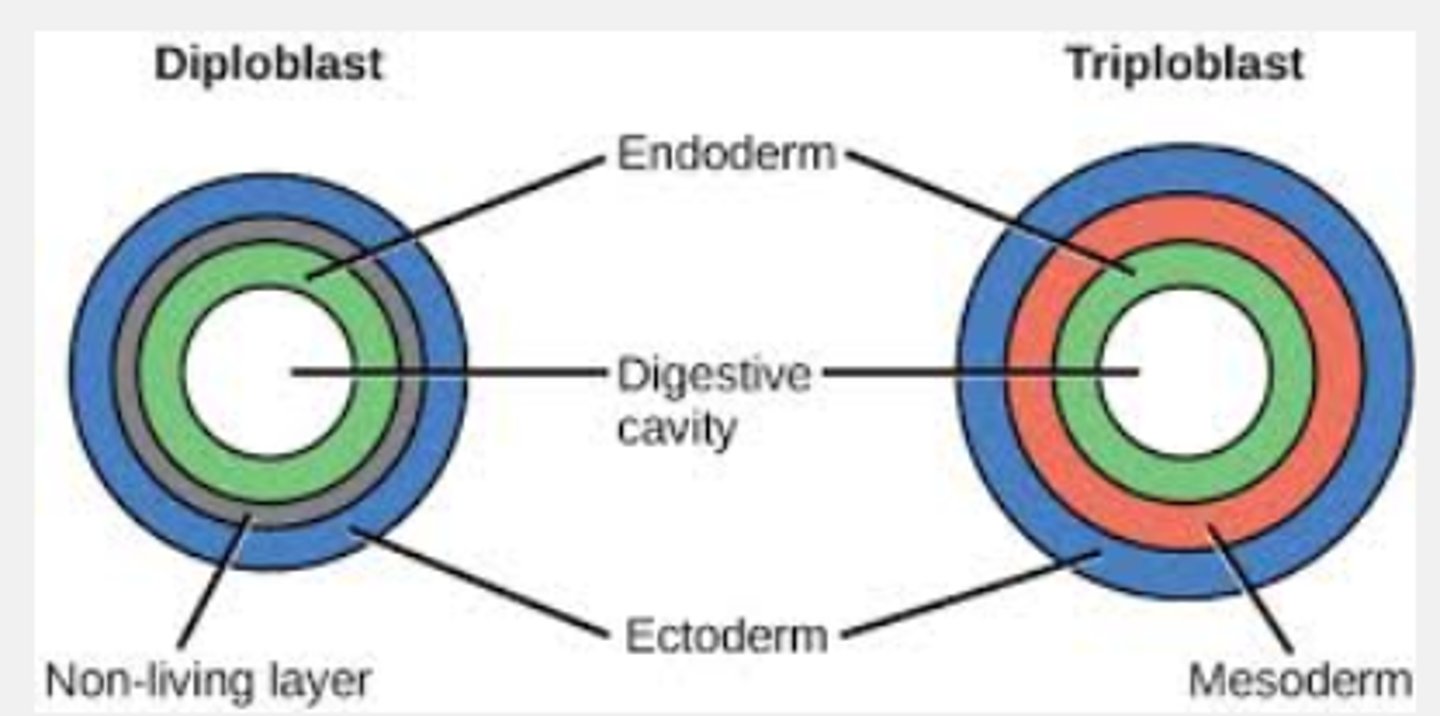
diploblastic
animals having two cell layers (no mesoderm)
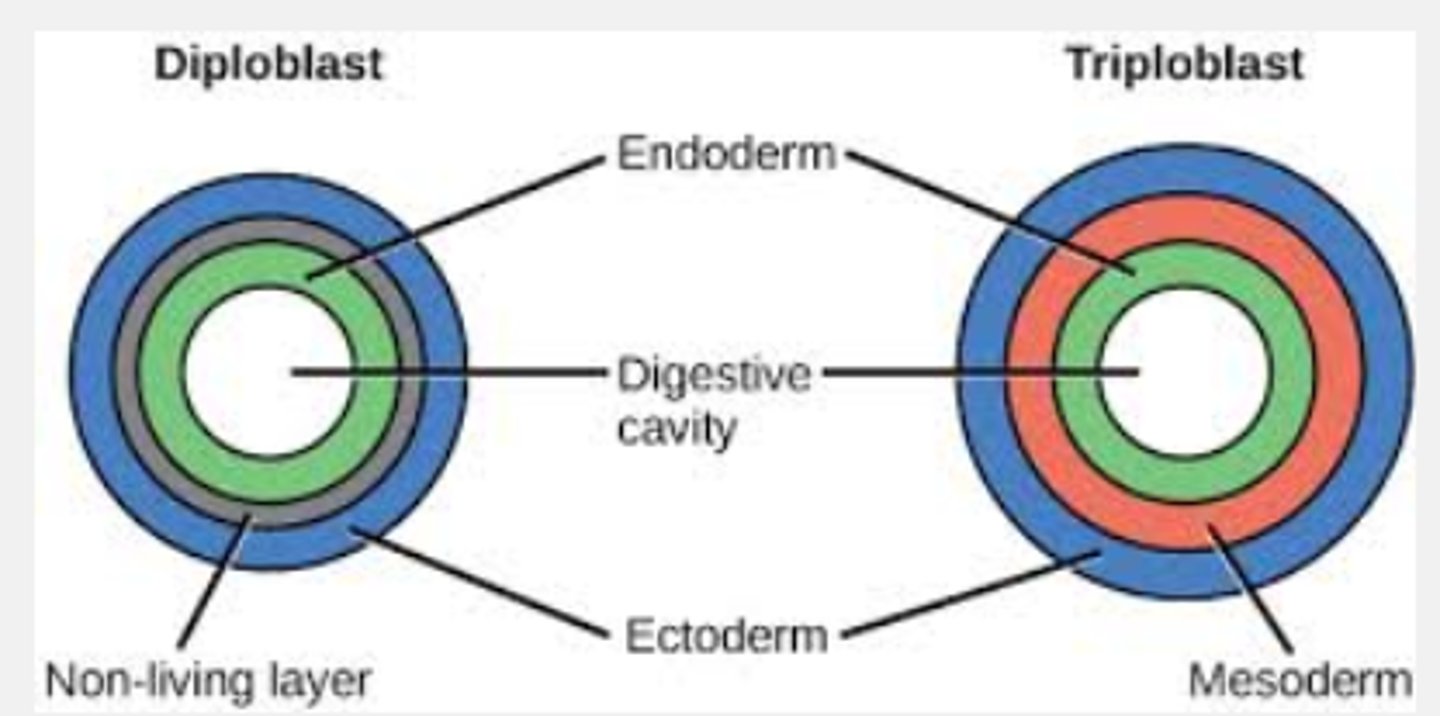
triploblastic
animals having three cell layers (endoderm, mesoderm and ectoderm)
coelom
A second body cavity that forms between the germ layers. Organs are suspended and protected in this cavity.
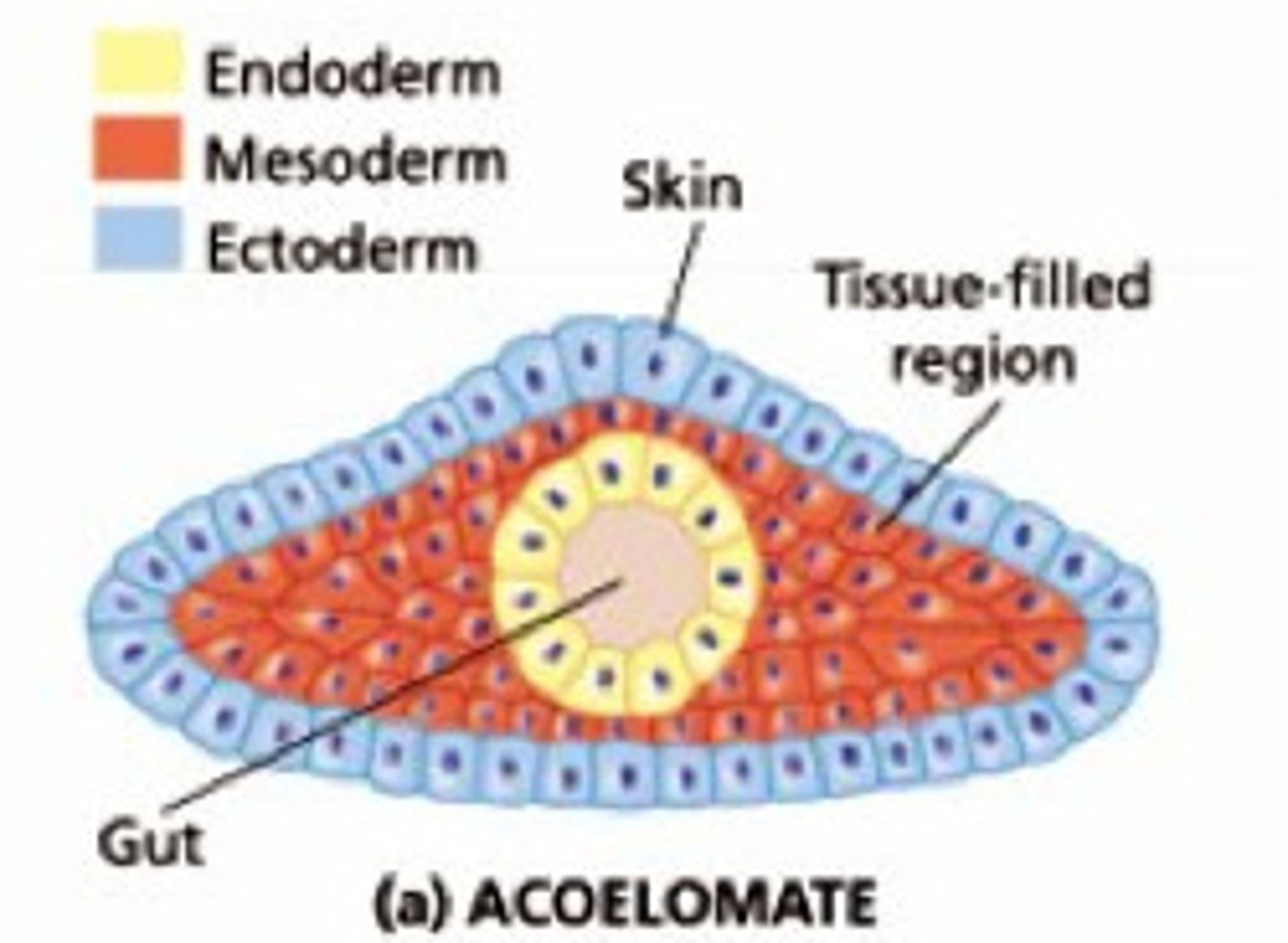
acoelomate
not having a coelom or enclosed body cavity
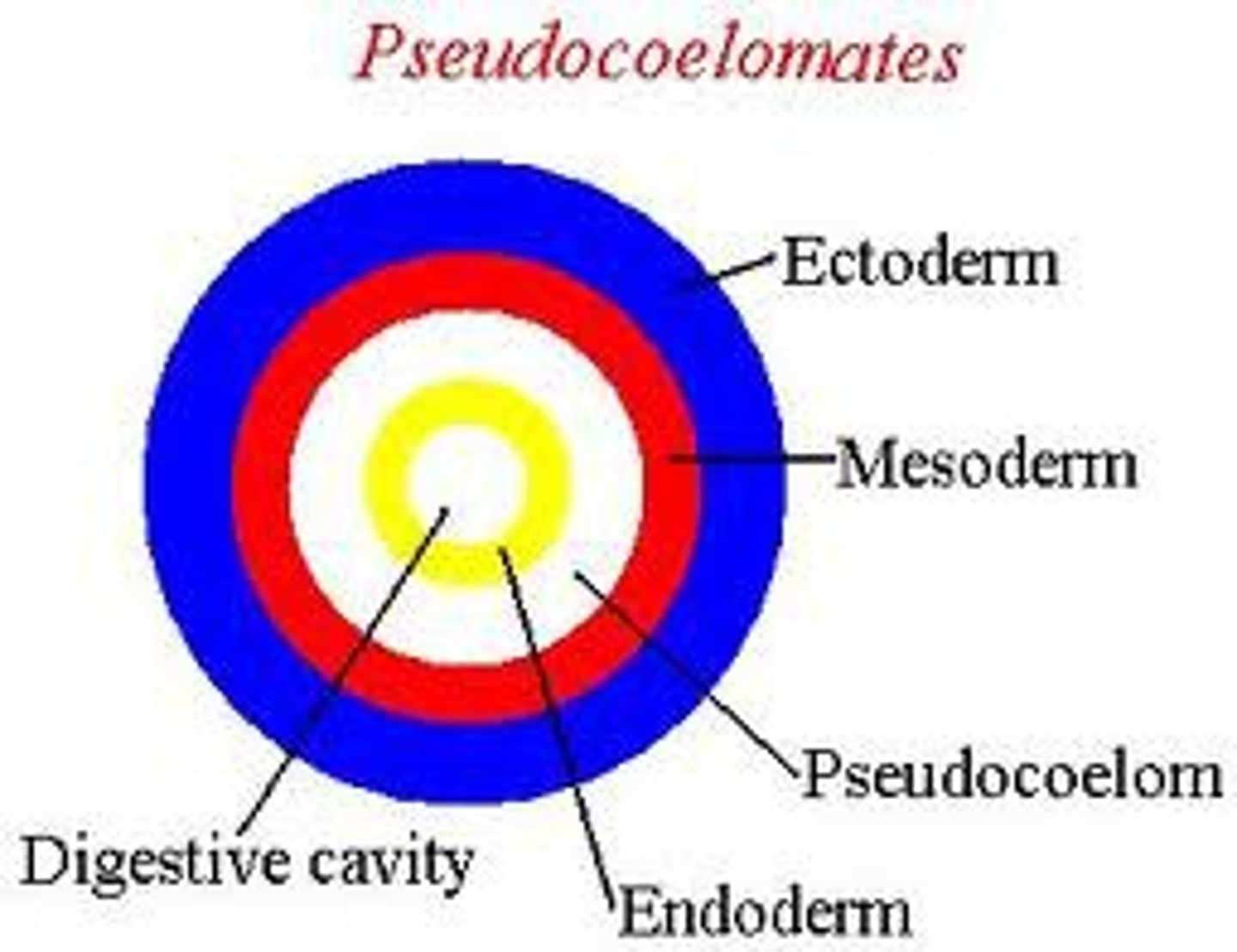
pseudocoelomate
having a fluid filled space, but it is not a true cavity formed from the mesoderm
coelomate
a true body cavity formed from the mesoderm
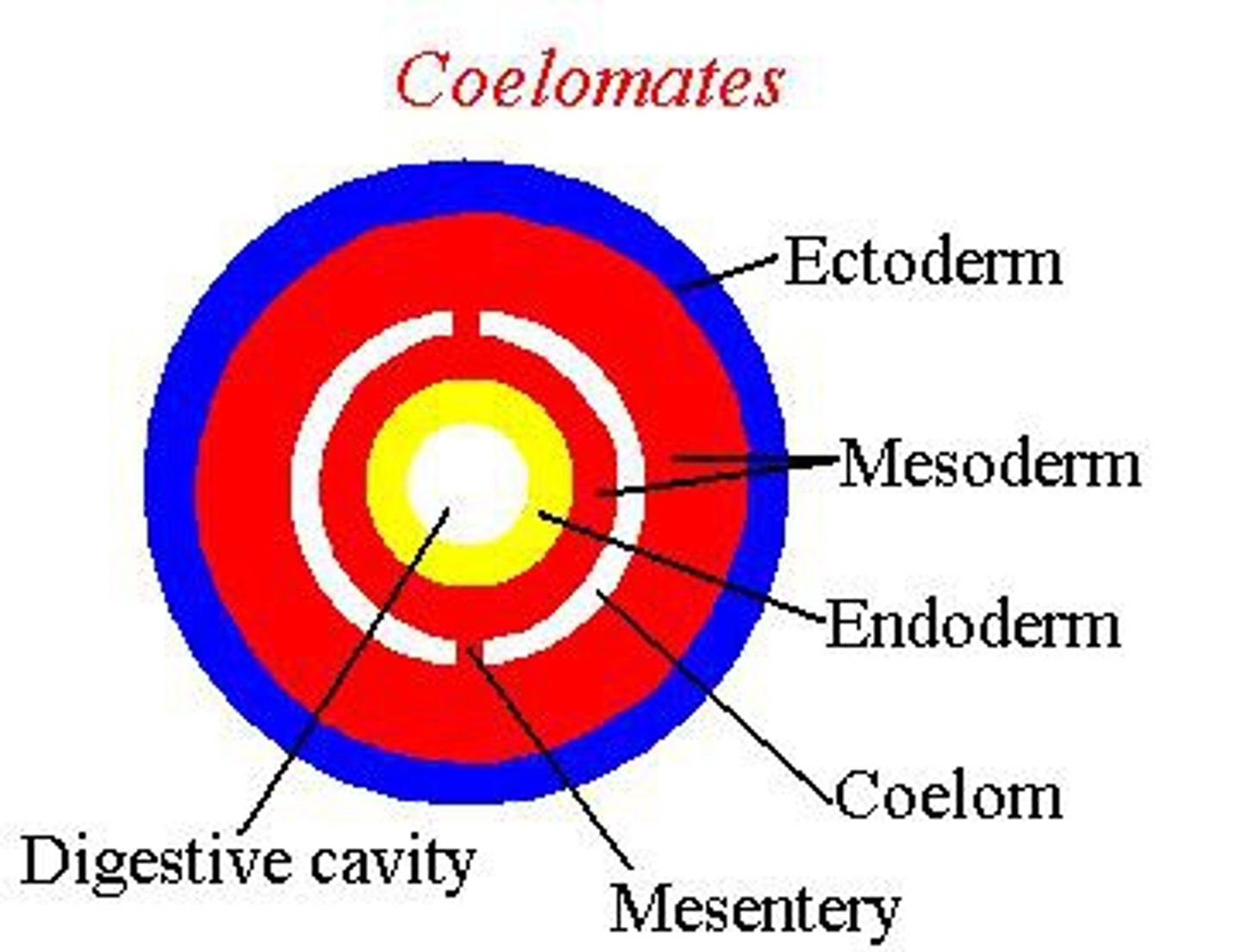
What kinds of characters during gastrulation are used to identify evolutionary clades of animals?
Fate of the blastopore or first opening (becomes the mouth or the anus), the number of germ layers (diploblastic or triploblastic), and presence and kind of coelom or second body cavity (acoelomate, pseudocoelomate, and coelomate)
organogenesis
Stage of embryonic development; process of cells in germ layers becoming body organs.
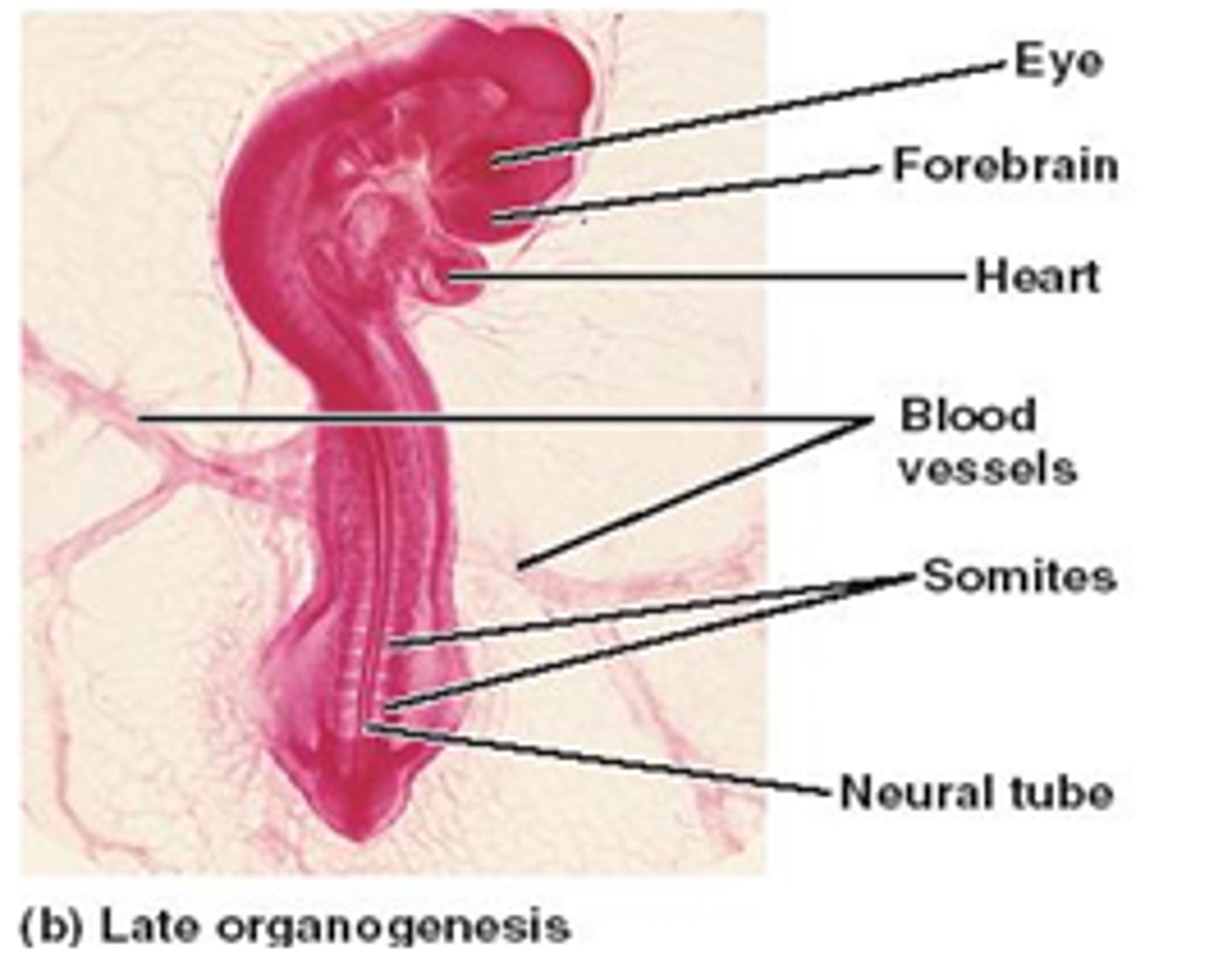
neurulation
stage of organogenesis; formation of brain and spinal cord in vertebrates
notochord
early neurulation; the rod-like structure that forms from the mesoderm
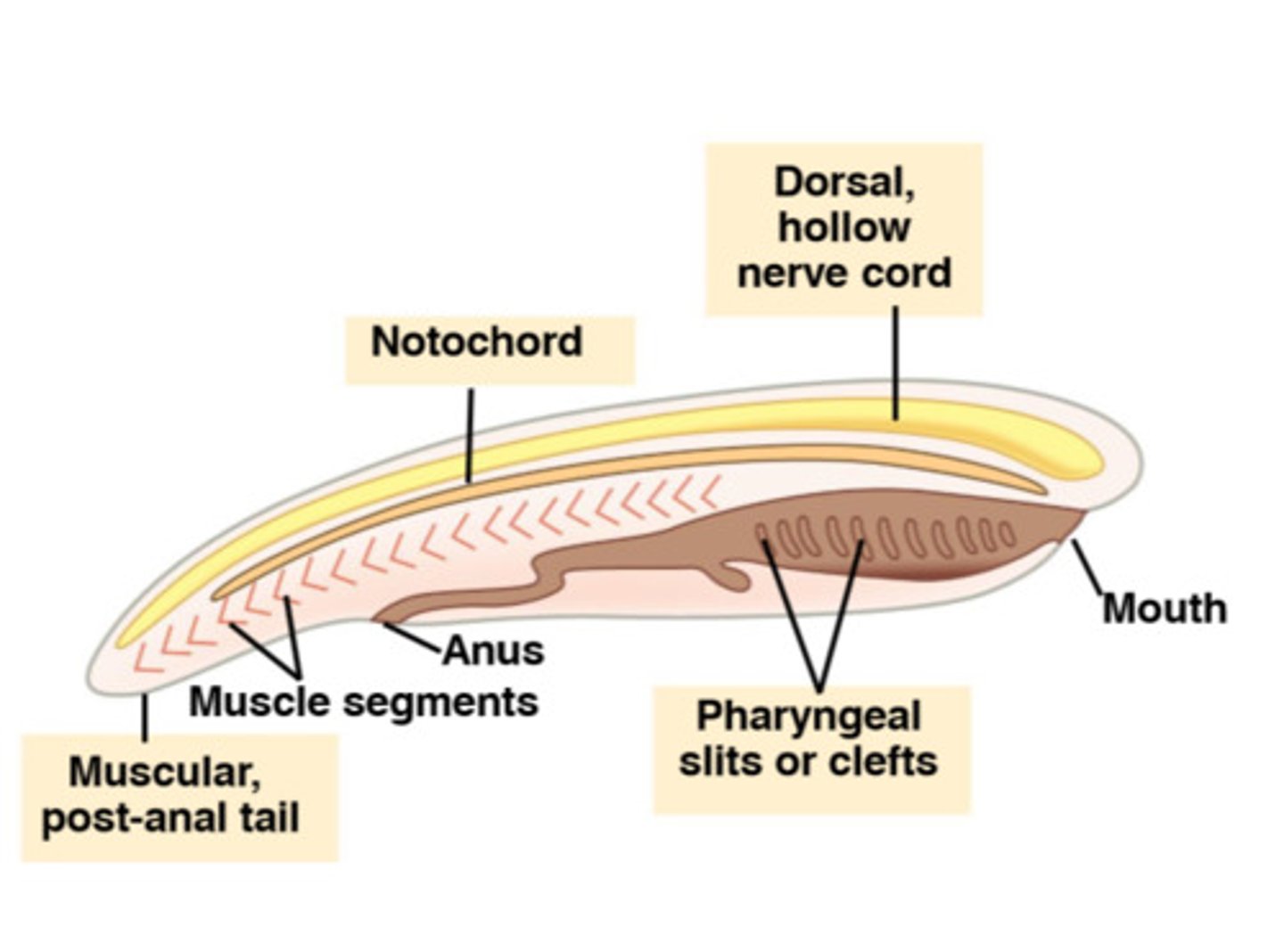
neural tube
early neurulation; this becomes the brain and spinal cord and forms from the ectoderm
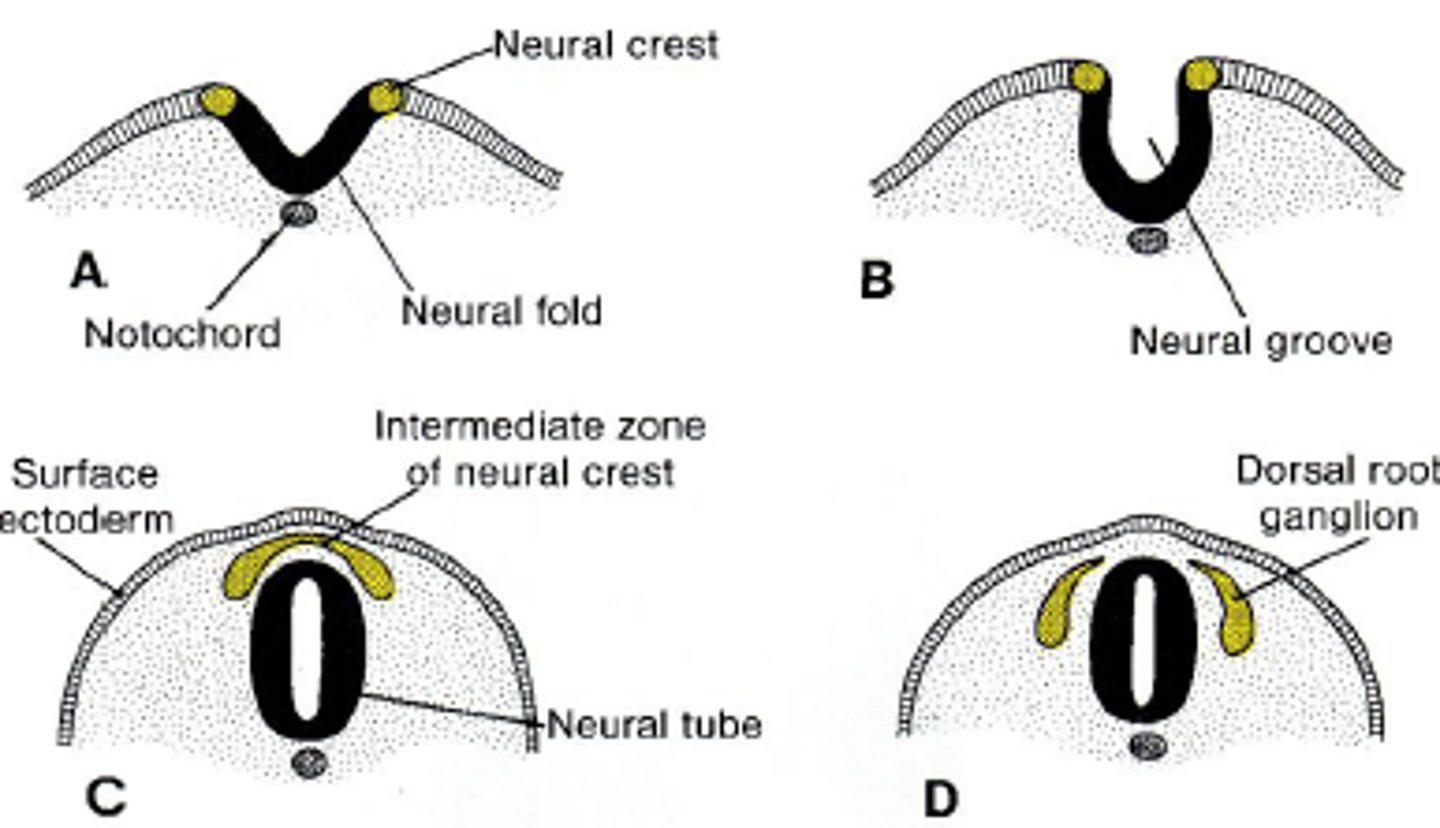
What are kinds of characters during organogenesis that are used to identify evolutionary clades of animals?
All the different kinds and forms of organs. The kinds of brains and spinal cords formed during neurulation are critical to identifying vertebrate animals.