GI disease in avian and exotic species workshop
 Call Kai
 Learn
 Practice Test
 Spaced Repetition
 Match
 Flashcards
 Knowt Play
1/31

There's no tags or description
Looks like no tags are added yet.
32 Terms
You are an out of hours vet and you receive a phone from an owner saying that her pet tortoise has prolapsed something from its cloaca.
is this an emergency
yes
On examination the prolapse tissue is the cloaca, it seems fresh. There is some dirt from the tortoise enclosure covering the prolapse and it appears very swollen.
It looks moderately dehydrated, the owner tells you that the tortoise has not eaten for a few weeks.
The tortoise is 5 years old, it has no medical history and has never been to the vets before.
create a treatment plan
initial medical treatment if the tissue is viable
Pain relief! e.g. NSAIDs and opioid
Lubricate! Sugar mixed with lubricant can help reduce tissue swelling.
Gently replace the prolapse with cotton buds.
Correct underlying issue e.g. treat endoparasites.
surgical treatment
Cloacoplexy if medical treatment hasn’t worked or if reoccurrence.
Hemipene prolapses can be amputated.
what antiparasitic cant be used in tortoises
ivermetin
why is it important to keep reptiles warm during treatment
need animal as metibolically active to deal woth meds and healing process
what is the difference in managing a cloacal or recal prolapse compared to a uterus or bladder prolapse
uterus or bladder → must be aseptic
cloaca or rectum → are covered in faeces, so can remove physical debris but not needed to be aseptic
why warm the saline being used for prolapses
need to be careful of hyperthermia as can lead to death
what is the issue with placing prolapses back in
-get inflamed
-become more swollen
-must find underlying cause→ will reoccur if not
how can we treat a prolapse related to egg laying
put sutures wide enoug for egg to come out
differentials for prolapse
gi parasites
peritonitis
impaction
egg stasis
hemipene prolapse treatment
amputation
what parasite can cause crop stasis in chickens
how treat?
trichomonas
fenbendazole
what can be used as an appetite stimulant in tortoises
metronidazole
what tissue is prolapsed
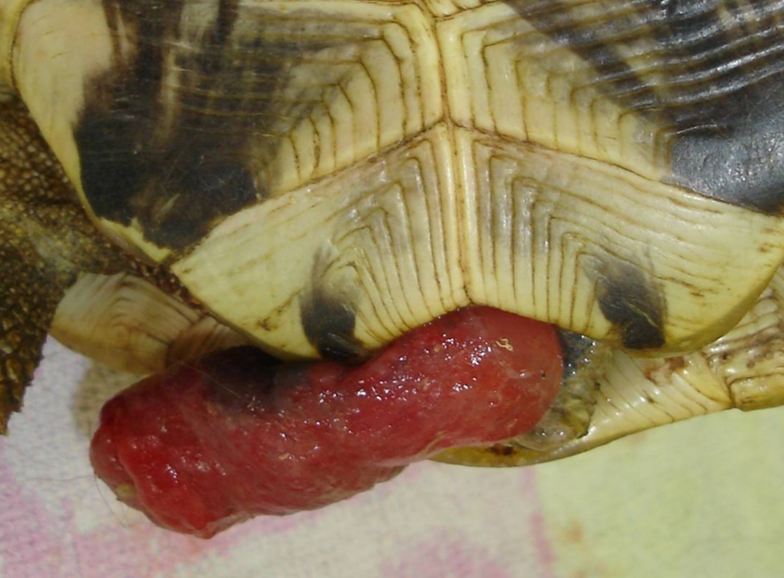
gastrointestinal
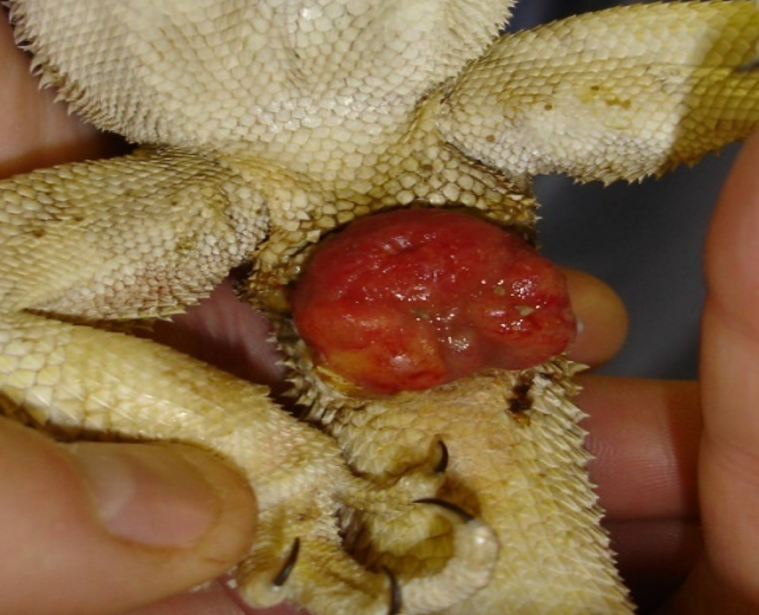
what tissue is prolapsed
cloacal
what tissue is prolapsed;

reproductive, hemipenes
what tissue is prolapsed

reproductive
What diagnostic tests would you do to investigate the underlying cause of the anorexia and prolapse? (and why?)
biochem and haem→ infection, parasitic
radiography→ impactions
blood sampling sites for birds
medial metatarsal v
jugular
basilic/ ulnar v

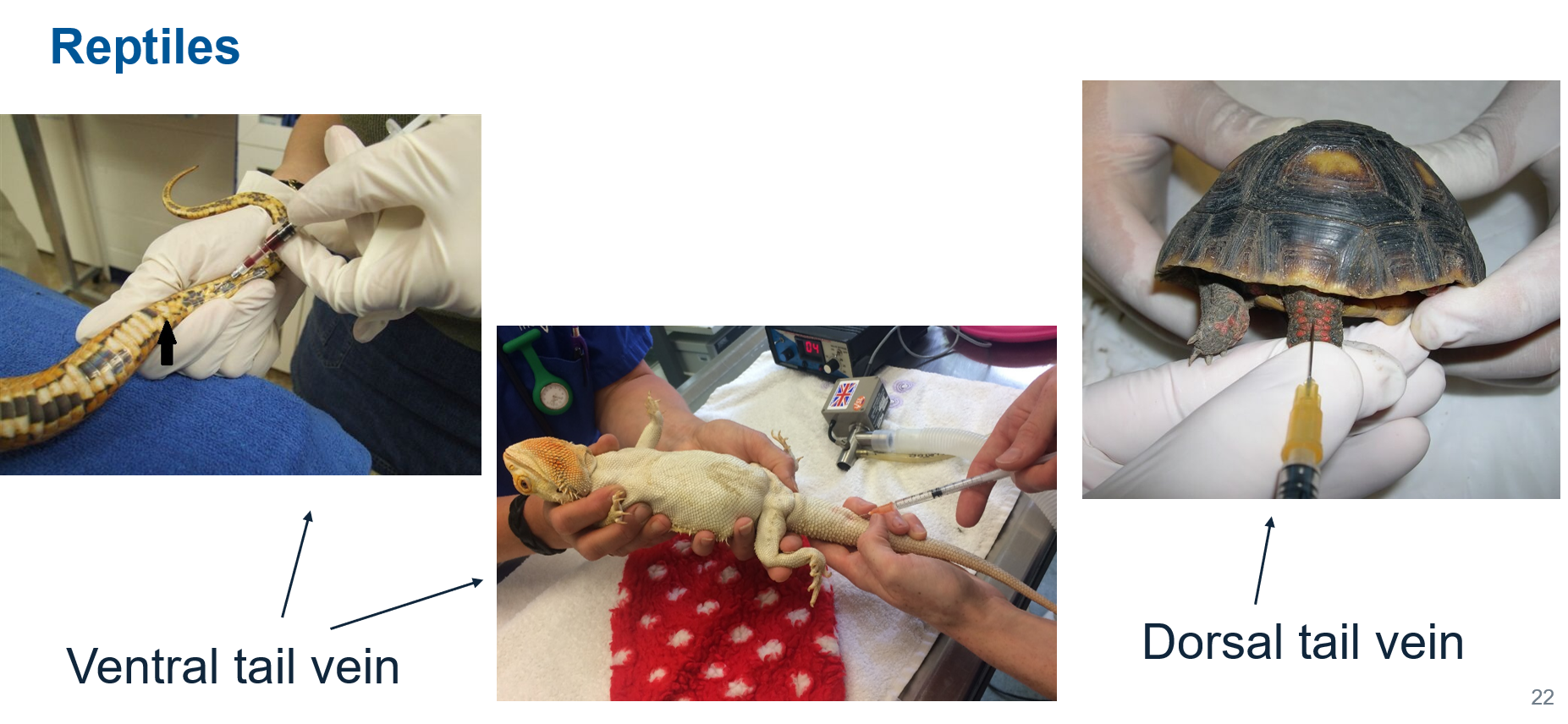
blood sampling sites in reptiles
ventral tail vein
dorsal tail vein
jugular v
intracardiac
subcarapacial v


blood sampling sites in small mammals
vena cava
lateral tail v

This tortoise is dehydrated and anorexic.
You bathe the tortoise twice a day in Reptoboost and you decided to syringe feed it.
.…how do you feed it and what do you use to feed it?
oesophageal/ stomach tubing
oesophagostomy tubes
critical care food
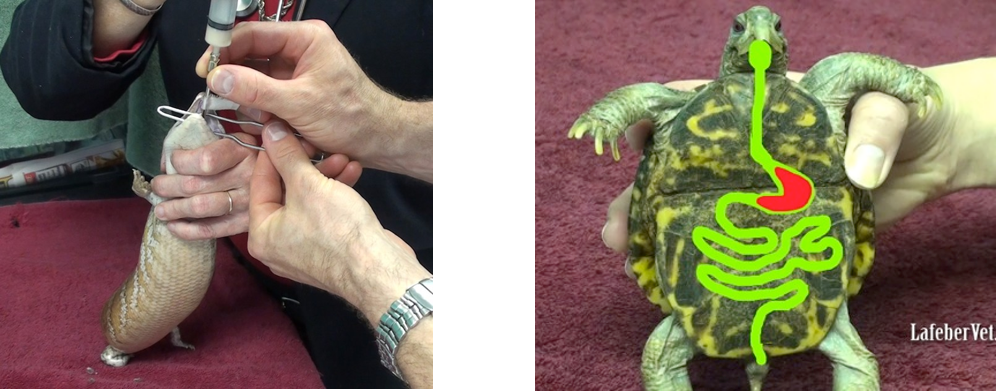
how does oesophageal/ stomach tubing in reptiles
Can use mouth gags to help, only if safe in a conscious animal.
Metal tubes often used. Dog urinary catheters used for snakes.
Tortoise oesophagus is on the left side of the neck, stomach also on the left side. Keep them upright to prevent immediate regurgitation.
when use oesophagostomy tubes in reptiles
Oesophagostomy feeding tubes are routinely used in reptiles where supportive care is required for more than a few days and/or where the patient does not tolerate oral medication or feeds.
Easy to place (first opinion)


list some critical care food
oxbow
emeraid
how to treat crop stasis in pet parrot
Crop flush for cytology/diagnostics.
Oral metoclopramide.
Anti-inflammatory drugs if indicated.
Treat underlying cause(s).
Antibiotics/antifungals if indicated by cytology.
what diagnositcs can be done if the crop stasis in a parrot is chronic
Radiographs if chronic, obstructive or no response to treatment. Or if history makes you suspect a foreign body.
How would this treatment plan change if this bird were a pet chicken?
Restrict grass and free access to water
Empty crop content using a tube and perform cytology/diagnostics.
Ingluviotomy if emptying not possible.
Anti-inflammatory drugs if indicated.
Treat underlying cause(s).
Antibiotics if indicated by cytology.→ remember are food producing
Apple cider vinegar in drinking water if yeasts.
how crop tube birds
For syringe feeding or crop flushing/aspirate.
Insert the crop tube on the right side of the beak and aim into the left side of the back of the mouth.

when is ingluviotomy needed
Crop impaction
Crop foreign body
Crop tumour
Crop burns/injuries
Access to the rest of the gastrointestinal tract.

describe the method of ingluviotomy
Anaesthetise the bird
Intubate to prevent aspiration
Pluck feathers
Iodine scrub (no spirit)
Elevate the head
Midline incision into the skin
Midline incision into the crop
Empty the crop contents.
Close the crop
Flush with warm sterile saline.
Inject saline into the crop to check for leakage along the suture line.
Skin closure
how close the crop
with absorbable monofilament suture and atraumatic needle. Use an inverting or appositional pattern.
how close the skin in ingluviotomy
using an appositional suture pattern and a monofilament suture material.