bio exam re2
 Call Kai
 Learn
 Practice Test
 Spaced Repetition
 Match
 Flashcards
 Knowt Play
1/176

There's no tags or description
Looks like no tags are added yet.
177 Terms

central dogma (theory)
genetic information flows in one direction
from DNA to RNA to Protein

RNA replication
RNA is copied without a DNA intermediate
used by viruses (to make more viruses)
reverse transcription
synthesis of DNA using an RNA template
used by viruses
eg. HIV (retrovirus infection)
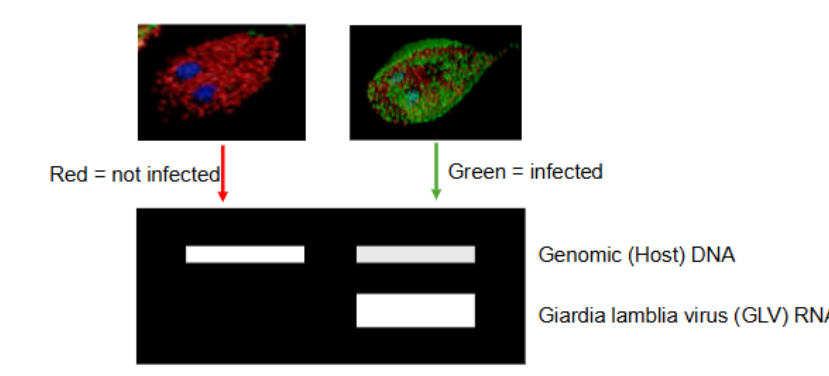
what process is being used by the virus
RNA replication

what process is being utilized by the parasite
DNA replication

2 polymers that make up a chromosome
DNA & proteins

frederick griffith experiment
DNA is genetic material
transformation of mice
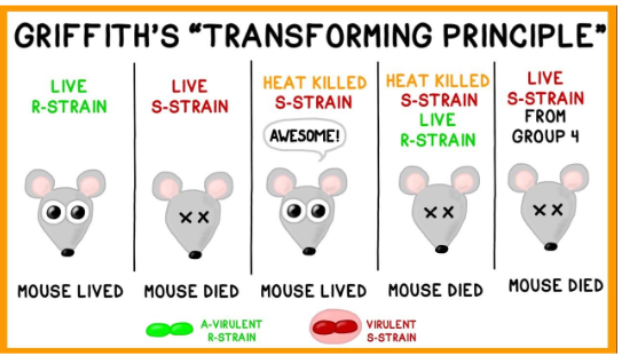
transformation
process by which an organism acquires exogenous DNA

proteins but not DNA are
killed with heat
separates DNA but wont kill them
eg. Fever: degrades proteins
eg. DNA extraction & PCR: kills DNAases/proteases; separates DNA strands

avery-macleod-mccarty experiment
confirms griffith’s conclusion that DNA is the “transforming” particle

hershey and chase
DNA is genetic material
experiment with bacteriophages + radioactivity

5 steps of infection
virus attaches to bacterial wall
virus injects genetic material into cell
viral DNA disrupts bacterial DNA + uses cellular machinery to make viral components (proteins + more DNA)
new viruses assemble
New viruses are released to infect other cells and restart the cycle

nucleotide sequences
carry information to make primary protein structures

transcription
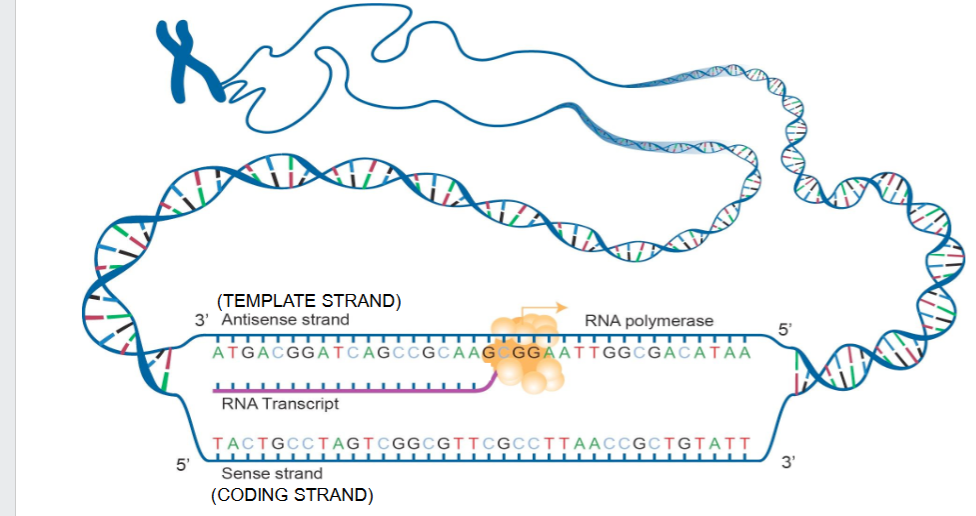
process of making RNA (from DNA)
DNA is template
coding / non-coding RNA
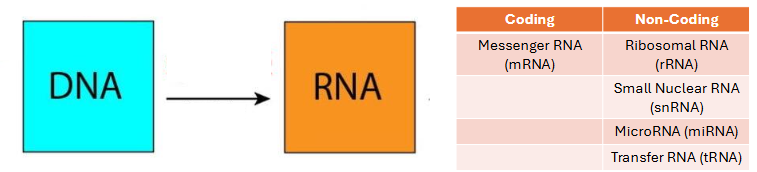
coding RNA
encodes for proteins
eg. mRNA

non-coding RNA
“housekeeping” RNA that does not encode for proteins
eg. tRNA, snRNA, rRNA, miRNA

RNA polymerase
multi-unit enzyme; synthesizes RNA from DNA template
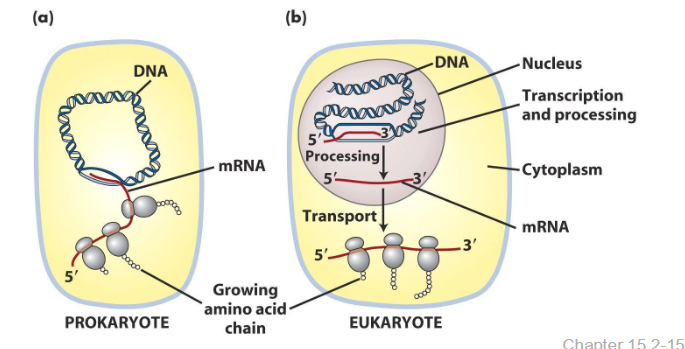
transcription in eukaryotic vs prokaryotic
spatially and temporarily separated in eukaryotic but simultaneous in prokaryotic

RNA polymerases (bacteria)
1 type
4 catalytic subunits +1 regulatory subunit

RNA polymerases (eukaryotes)
3 types
RNA polymerase I - rRNA
RNA polymerase II - mRNA/snRNA
RNA polymerase III - tRNA

transcription 1st step: initiation
RNA polymerase binds, DNA unwinds, and transcription bubble is created

transcription 2nd step: elongation
RNA synthesized from 5’ to 3’ using ribonucleotides by RNA polymerase

transcription 3rd step: termination
transcription stops, RNA-DNA hybrid and bubble dissociates, RNA polymerase is released, DNA rewinds

the structure of a gene determines
the START and STOP of transcription by RNA polymerase

monocistronic
gene under 1 promoter codes for 1 protein
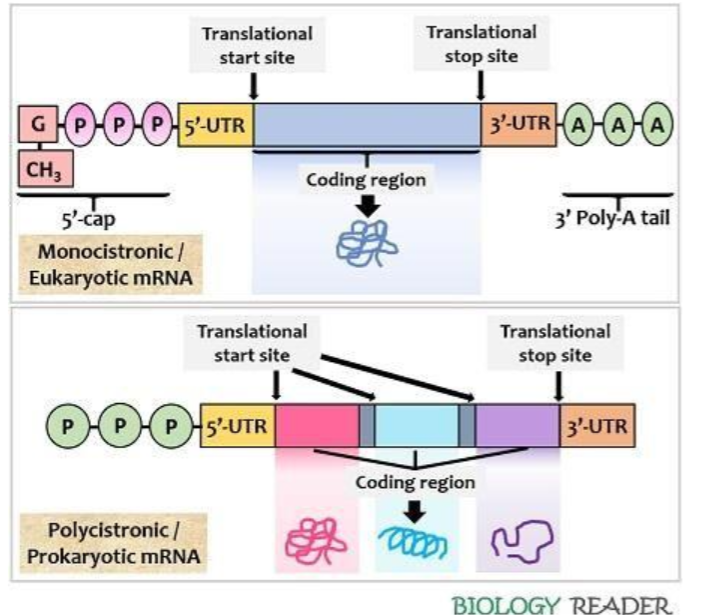
polycistronic
multiple genes under 1 promoter codes for multiple proteins

promoter forms a
recognition and binding site for RNA polymerase
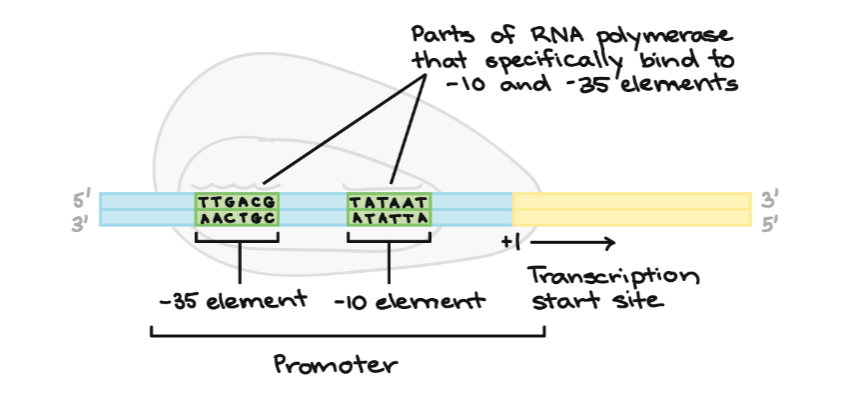
promoter
region of DNA upstream of a gene where proteins bind to initiate transcription
eg. prokaryotic promoter

transcription factors
proteins that to the -35 and -10 elements and recruit RNA polymerase

enhancer
regulatory DNA sequences; enhance transcription of a gene when bound by transcription factors
eg. eukaryotic promoter
ribonucleotides consist of
A, U, C, and G
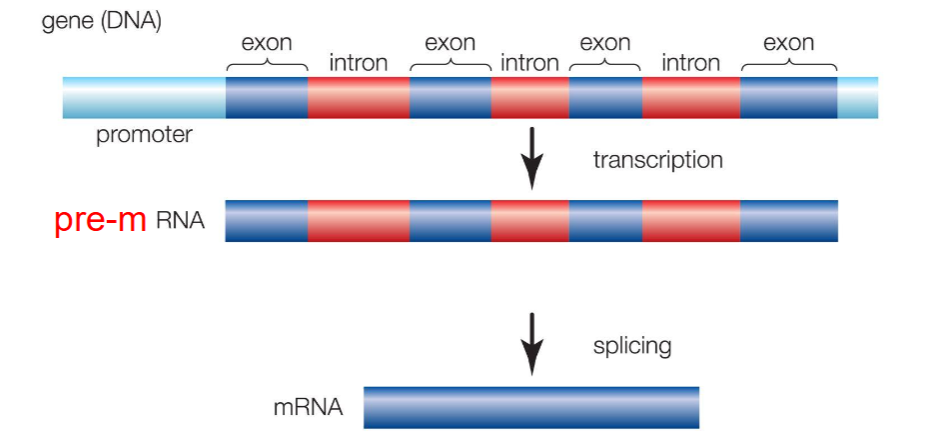
introns
non-coding regions of DNA

exons
coding regions of DNA

splicing
introns are removed so protein synthesis can occur
occurs in nucleus
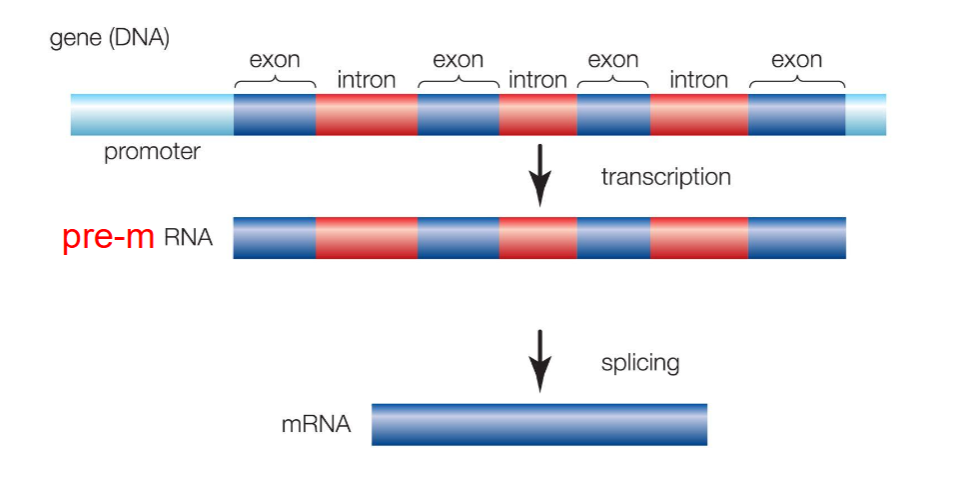
pre-mRNA
synthesized by RNA polymerase during transcription
contains introns + exons

mRNA
product after splicing occurs (only exons)
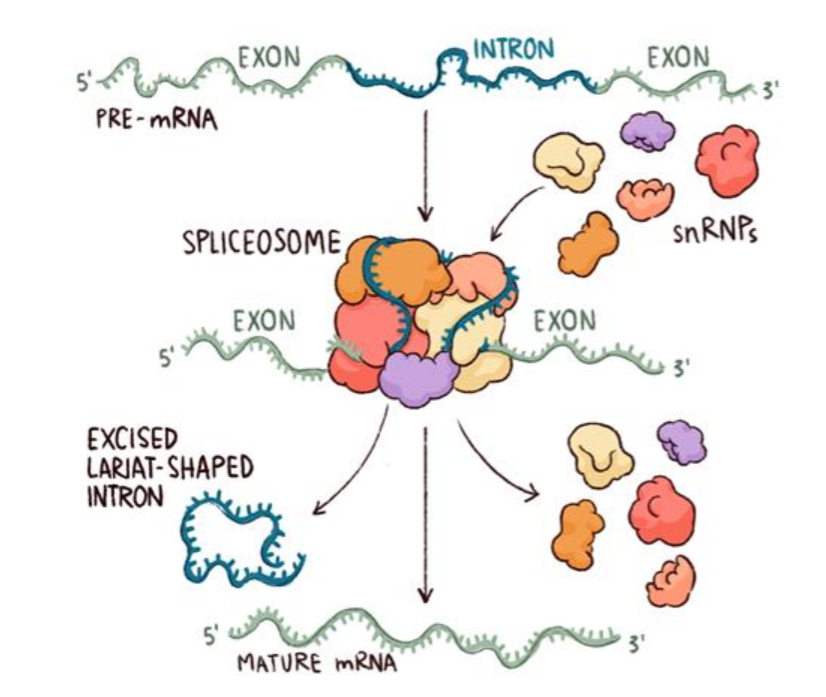
complex that helps remove introns
spliceosome complex
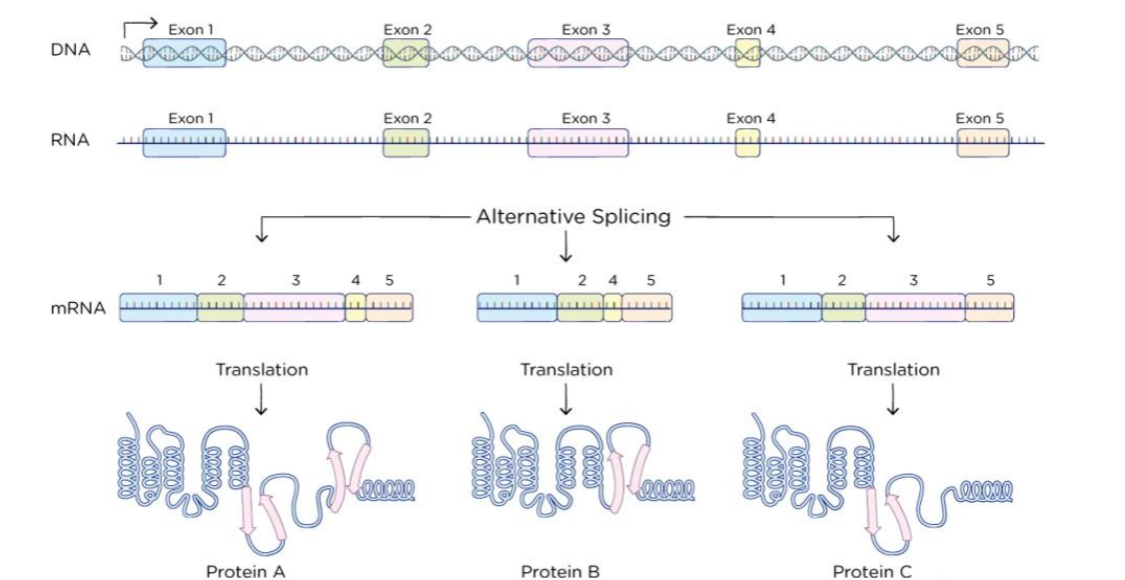
why do eukaryotes have introns
help regulate gene expression
splicing process needed for extracellular export of mRNA
introns contain sequences that control gene activity
alternative splicing: a single gene codes for more than one polypeptide by changing how a gene is spliced
results in different proteins being made
associated w/ ~15% of human genetic disorders
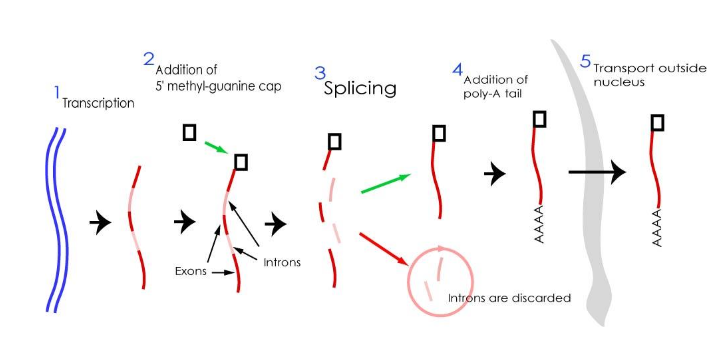
mRNA capping
adding a 5’ cap on mRNA

5’ cap
specially altered nucleotide at the 5’ end that:
regulates nuclear export, prevents degradation by exonucleases, promotes translation, promotes 5’ intron excision

polyadenylation
adding a poly-A tail to mRNA

poly-A tail (3’)
long chain of adenine nucleotides added to mRNA to increase stability and prevent degradation
transcription regulation: activators + repressors
promote transcription; prevent transcription
operators
DNA sequence near the promoter
where activators/repressors bind

housekeeping (constitutive) genes
genes essential for cell survival and expressed all the time

translation
making proteins from messenger RNA (mRNA)

ribosome
2 subunits that build peptides from mRNA
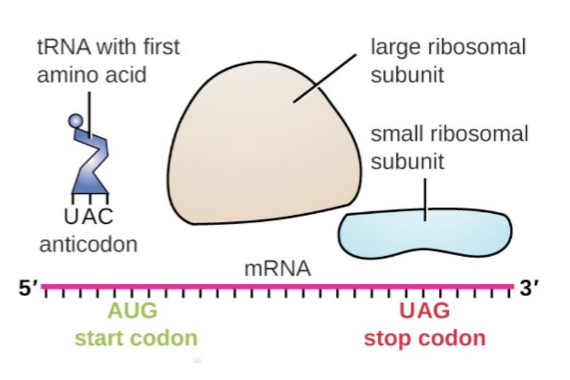
transfer RNA (tRNA)
interprets mRNA and brings amino acids to ribosome (anticodon)
1 tRNA for each amino acid

codon
mRNA sequence; 3 sequential nucleotides that dictate an amino acid that tRNA brings to the ribosome
prokaryotic vs eukaryotic ribosome subunits
pro: 70S ribosome
euk: 80s ribosome
how many amino acids does this mRNA encode for?
GCT CTA TGG GGA CCT
5
what bond connects amino acids
peptide bonds
code bias
different species may prefer different codons
exception
UGA is universally a STOP codon
exception: codes for trp in vertebrate mitochondria

wobble hypothesis
explains why multiple codons code for the same amino acids

F. Crick & S. Brenner experiment
how order of nucleotides encodes for the order of amino acids using mathematical modeling
how single nucleotide insertions/deletions change proteins (point mutation)
confirmed that genetic code was triplet code
reading frame
codons, every 3 nucleotides

2 functions of ribosome during translation
decode mRNA
recruit proper tRNA
form peptide bonds
peptidyl transferase: forms peptide bonds between amino acids

shine-dalgarno sequence (prokaryotic)
ribosomal binding site in bacterial/archaeal mRNA

kozak consensus sequence (eukaryotic)
nucleic acid that functions as protein translation initiation site
initiation factor
brings ribosomal components to mRNA

A site of ribosome (aminoacyl)
first binding site in the ribosome
exception: initiator tRNA

P site of ribosome (peptidyl)
holds tRNA as polypeptide chain grows

E site of ribosome (exit)
uncharged tRNAs exit the ribosome
elongation factors
bring charged tRNAs to the ribosome and translocate tRNAs inside the ribosome

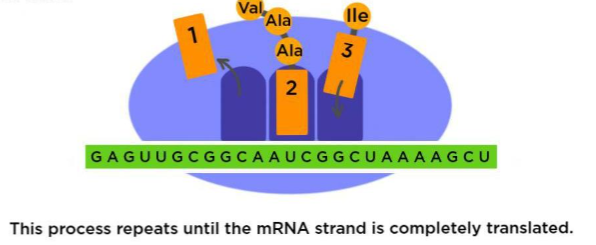
ribosomal process
subsequent RNAs bind to A-site
after peptide synthesis, tRNAs exit via the E-site
termination: completed polypeptide is released and ribosome dissociates
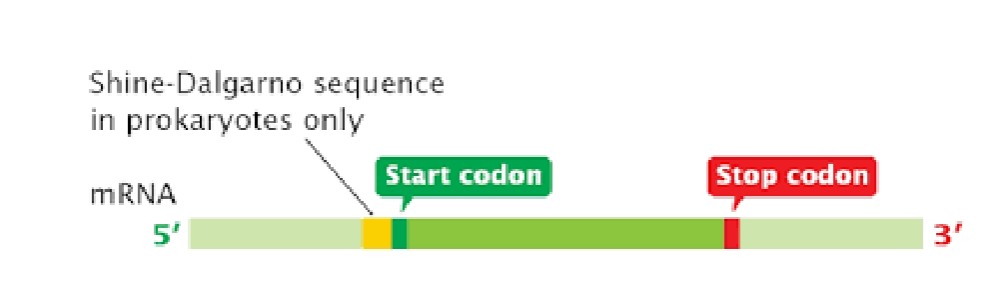
stop codon
tells ribosome to stop translating
no acetyl-tRNA enters A-site
release factors

release factors
enter and cleave bond between peptide and tRNA
3’ UTR (untranslated region)
aids in termination
folds into stem-loop; helps disassociate the ribosome from transcript once stop codon is reached

image
prokaryotic translation
shine-dalgarno sequence (AGGAGGU))
ribosome-binding site (RBS) present

prokaryotic or eukaryotic translation
coupled transcription + translation
transcribing DNA + ribosome translating mRNA
ribosome-bonding site (RBS) feature of prokaryotic transcripts

conservative model
parental DNA remains together while newly formed daughter strands become paired

semi-conservative
each of the 2 parental DNA strands acts as a template for new DNA to be synthesized so that each newly formed daughter strands is paired with an “old” strand
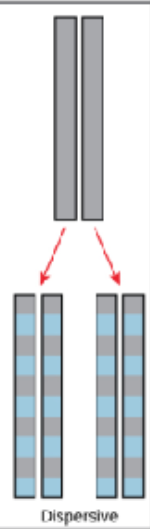
dispersive model
both copies of DNA have double-stranded segments of parental DNA and newly formed DNA interspersed

meselson-stahl experiment
The experiment proved that DNA replication is semiconservative: every time a cell divides, each of the two resulting DNA molecules consists of one strand from the original molecule and one newly synthesized strand
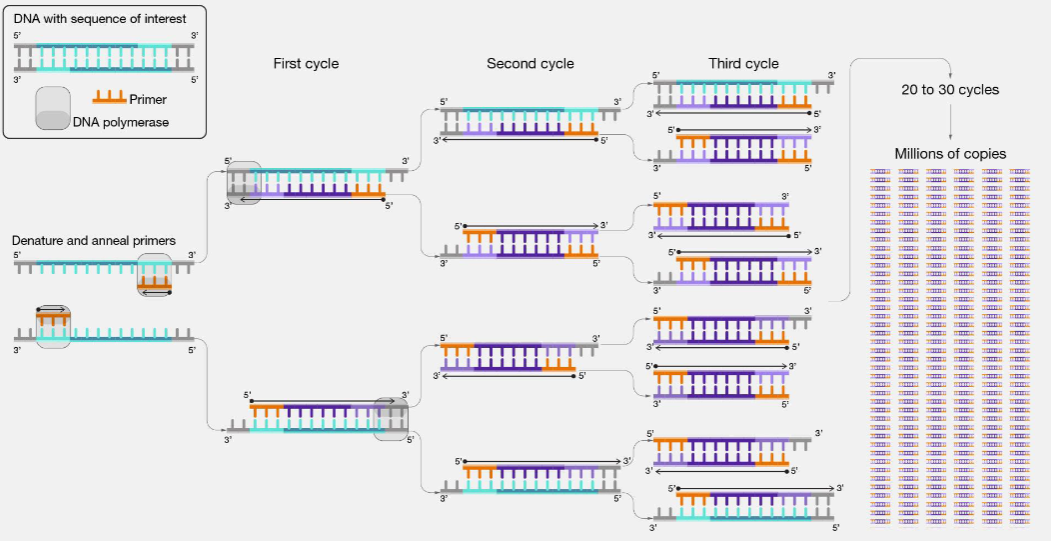
polymerase chain reaction (PCR)
allows scientists to rapidly replicate lots of DNA

gel electrophoresis
allows scientists to determine what DNA was replicated in PCR
where smaller DNA travels further
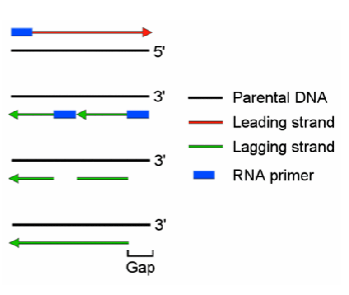
end-replication problem in eukaryotes
loss of genetic information due to RNA primers inability to “clip onto” the lagging strand (lack of space)

telomeres
protective, repetitive, non-coding regions at the end of linear chromosomes; prevents loss of coding regions of DNA during replication and unraveling/sticking of chromosome ends

telomerase
protein found in eukaryotic cells that extend telomeres by writing telomeric DNA
in cancer, egg, sperm, and stem cells
centrifugation
separates heavy from light DNA
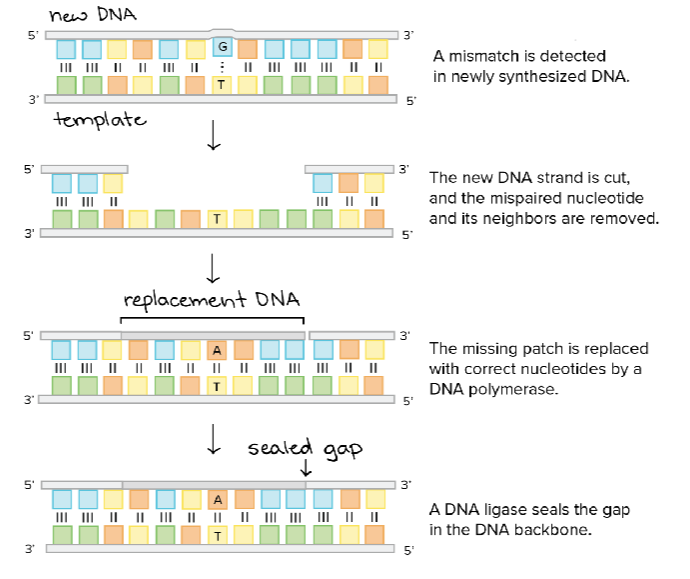
DNA polymerase
“proofreads” the replicated DNA for mitosis
replaces errors
exonuclease activity (nuclease)
removal and replacement of incorrect nucleotides by cleaving the phosphodiester backbone
DNA ligase
seals gaps in DNA backbone

mismatch repair
incorrectly added bases are detected, removed, and replaced

base excision repair
only the damaged base is removed and replaced

nucleotide excision repair
1+ damaged bases are removed and replaced
if errors in replication are not repaired
mutations occur

induced mutation
caused by environment
chemicals, xrays, UV light, lab experiments, etc

spontaneous mutation
naturally caused, randomly occurring

DNA mutations in non-coding DNA
most mutations occur in this type since it makes 97% of our DNA
affects the expression of genes
mutations still occur in coding regions

codon
sequence of 3 nucleotides
represents an amino acid or start/stop signal of protein synthesis
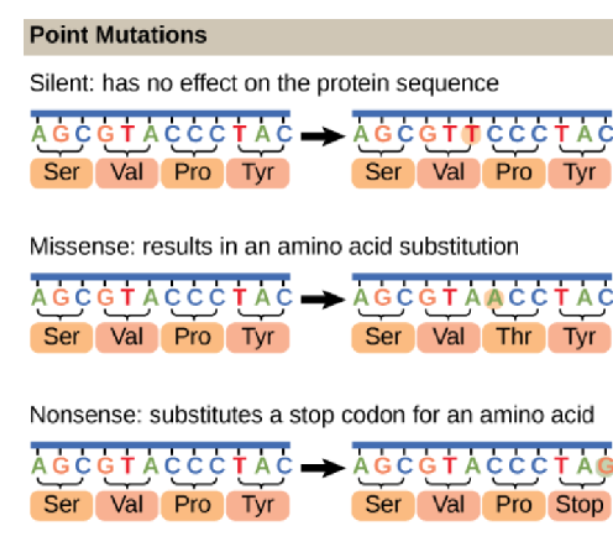
point mutation
change of a single nucleotide for another

missense (point) mutation
one nucleotide change resulting in a different amino acid
sickle cell anemia

nonsense (point) mutation
one nucleotide change resulting in a stop codon (UAA, UGA, UAG)
duchenne muscular dystrophy

silent (point) mutation
single nucleotide change resulting in no change of amino acid

frame shift mutation
addition/deletion of nucleotide(s) that shift all following amino acids making them wrong (frameshift error)
creates new proteins useless to the cell (stop codons)
more severe than point mutations
thalassemia + tay sachs disease

insertion/deletion of whole codons
no frameshift errors; may pose severe effects
spontaneous mutations
result from intracellular processes
meiosis, inherent instability of nucleotide bases, DNA polymerase error, base pair degradation

induced mutations
result from external mutagens