Lab practical 2 - Bio 150 DCCC
 Call Kai
 Learn
 Practice Test
 Spaced Repetition
 Match
 Flashcards
 Knowt Play
1/258

There's no tags or description
Looks like no tags are added yet.
259 Terms
orbicularis oculi

orbicularis oris

platysma

scalene

sternocleidomastoid
Flexes and laterally rotates the head

temporalis

masseter

external intercostal

internal intercostals
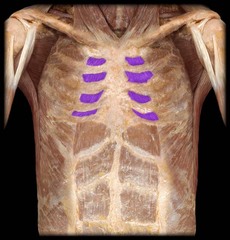
pectoralis major

pectoralis minor

serratus anterior

biceps brachii
flexes elbow and supinates forearm

Brachialis
elbow flexion

deltoid
abducts arm

triceps brachii
extends elbow

Brachioradialis
flexes elbow

flexors
ulnar side

extensors
radial side

latissimus dorsi

trapezius

external abdominal oblique

internal abdominal oblique

linea alba

rectus abdominis
flexes and rotates vertebral column
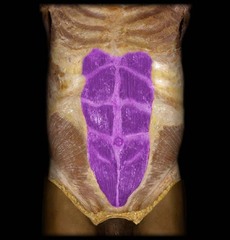
transverse abdominis

adductor longus

Gracilis
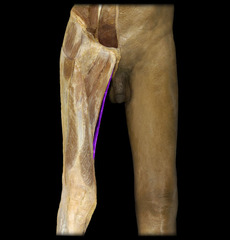
rectus femoris
extends knee and flexes thigh at hip
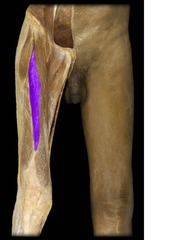
vastus intermedius

vastus lateralis

vastus medialis

tensor fasciae latae

sartorius

adductor magnus

piriformis

gluteus maximus
extends hip

gluteus medius

sciatic nerve

biceps femoris
extends thigh, flexes leg, laterally rotates leg; included in hamstring group;

Semimembranosus
included in hamstring group

Semitendinosus
included in hamstring group

tibialis anterior
dorsiflexion and inversion of foot

Gastrocnemius
plantar flexion

Soleus

Stratified squamous epithelium
type of cell based on shape and orientation

Pseudostratified columnar ciliated epithelium
type of cell based on shape and orientation

simple columnar non-ciliated epithelium
type of cell based on shape and orientation

simple cuboidal epithelium
type of cell based on shape and orientation

simple squamous epithelium
type of cell based on shape and orientation

nucleus

cell membrane

cytoplasm

areolar connective tissue
Elastic Fiber, Collagen Fiber - connective tissue

Adipose tissue
nucleus, lipid droplet- connective tissue

hyaline cartilage
lacuna, chondrocyte, matrix- connective tissue type

elastic cartilage
lacuna, chondrocyte, matrix, elastic fiber - connective tissue type

Fibrocartilage
lacuna, matrix, chondrocyte, collagen fiber - connective tissue type

compact bone
Osteon, central canal, osteocyte, lamella, lacuna, canaliculi

blood

dense regular connective tissue
type of connective tissue

integument
hair shaft, sudoriferous gland, sebaceous gland, hair follicle, epidermis, dermis, subcutaneous layer

peak force

calculate time to fatigue

glenohumeral joint
scapula, humerus, deltoid muscle
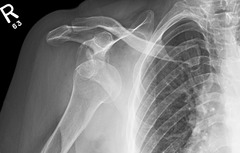
glenohumeral joint movement
extension/flexion, abduction/adduction, medial rotation/lateral rotation, circumduction
humeroulnar joint
humerus, ulna, radius, biceps brachii, triceps brachii

humeroulnar joint movement
extension/flexion
tibiofemoral joint
femur, tibia, quadriceps femoris group, hamstrings
quadriceps femoris group
rectus femoris, vastus lateralis, vastus medialis, vastus intermedius

hamstrings group
biceps femoris, semitendinosus, semimembranosus

movement at tibiofemoral joint
extension/flexion
tibiofibulotalar joint
Tibia, Fibula, Talus, tibialis anterior, gastrocnemius, soleus

movement at tibiofibulotalar joint
plantar flexion/ dorsiflexion
What is the prime mover for the glenohumeral joint?
anterior deltoid muscle
what is the antagonist for the glenohumeral joint
posterior deltoid muscle
What is the prime mover for the humeroulnar joint
biceps brachii muscle
what is the antagonist for the humeroulnar joint
triceps brachii muscle
what is the prime mover for the tibiofemoral joint
quadriceps group
what is the antagonist for the tibiofemoral joint
the hamstrings group
What is the prime mover for the tibiofibulotalar joint
tibialis anterior muscle
what is the antagonist for the tibiofibulotalar joint
gastrocnemius, soleus
brain

reflex
a quick, predictable, and involuntary response to a specific stimulus
reflex arc
receptor, afferent signal, interneuron, motor neuron, efferent signal, effector cell
receptor
sensory neuron activated by stimulus
afferent signal
signal going to the spinal cord/brain; by sensory neurons
interneuron
relays the signal within the CNS
efferent signal
carried by motor neurons from CNS to effector cell
effector cell
responds to the motor neurons signal
pupillary light reflex

Normal response to direct pupillary light reflex
decrease in diameter of pupil for the eye that is currently being exposed to bright light
abnormal response to direct pupillary light reflex
no change in pupil size in various light environments
normal response to consensual pupillary light reflex
decrease in diameter of the pupil that is not currently being exposed to bright light
abnormal response to consensual pupillary light reflex
no change in pupil size when opposite eye is exposed to light
biceps jerk reflex
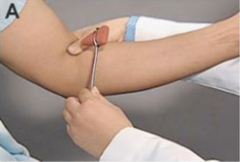
normal response to biceps jerk reflex
slight twitch of the biceps brachii or flexion at the elbow
patellar reflex

normal response to patellar reflex
slight extension of the leg at the knee
achilles reflex
