NEUR30080 L20 OB extracellular vesicles in NS
 Call Kai
 Learn
 Practice Test
 Spaced Repetition
 Match
 Flashcards
 Knowt Play
1/34

There's no tags or description
Looks like no tags are added yet.
35 Terms
communication/transmission types at synapses

chemical neurotransmission
NT
vesicles
exocytosis
electrical transmission
exocytosis too?
gap junctions
no NT, direct electric
retrograde
cannabinoid
no exocytosis?
growth factors
what are EVs
membrane bound vesicles
released from:
presynaptic nerve terminal after depol
astrocytes
microglia
oligodendrocytes
EC vesicles may play a role in transsynaptic communication
synapses are not simply sites of NT exchange using the canonical NT release route via exocytosis or signalling through gap junctions
syn cleft is a specialised signalling env: cells can exchange info through multiple mechanisms (incl. ECVs)
learning objectives

types of EVs
heterogenous population of membrane vesicles from various origins
categories based on the mode of biogenesis:
exosomes: endosomal origin, intraluminal vesicles formed within multivesicular bodies/endosomes (smaller)
microvesicles: plasma memb origin, buddying off the cell memb (usually larger)
contents typically resemble those of the donor cell
types of EVs image

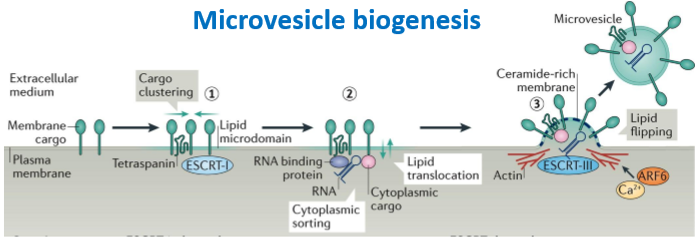
microvesicle biogenesis
seems to require molecular rearrangements in the plasma memb, incl. changes in lipid components and protein composition
dependent on Ca2+ signalling
cytoskeletal elements and their regulators required
microvesicle biogenesis image
memb cargo clustering
soluble cargo loading
memb budding, fission and vesicle release
ESCRT-dependent biogenesis of exosomes
lipid composition of exosomes and macrovesicles related to their ability to form or pinch off from plasma memb
ESCRT: endosomal sorting complex req for transport
ESCRT 0: cargo recogn
ESCRT I/II: memb budding
ESCRT III: memb constriction and scission
ESCRT-dependent biogenesis of exosomes image
memb cargo clustering
soluble cargo loading
memb budding, fission and vesicle release

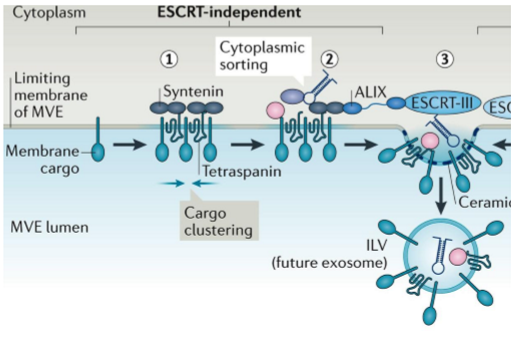
ESCRT-independent biogenesis of EVs
cargo clustering and memb budding can also occur by ESCRT-independent mechanism
involves interaction of synthenin with tetraspanins for clustering of memb cargo and cytoplasmic cargo recruitment
tetraspanin: proteins with 4 transmemb domains, allow assoc with other members of the family and with other prots to gen dynamic memb domains
ALIX (accessory prot ALG-2 interacting prot X): bridges cargoes and the ESCRT-III subunit for memb budding and fission
ESCRT-independent biogenesis of EVs image
still relies on ESCRT-III
neuron-specific transport and functions of MVBs
primary destination is degradation
MVBs package damaged or unreq memb prots into ILVs, may then fuse with autophagosomes (forming amphisomes) of fuse directly with lysosome
signal determination: sequestering signalling Rs into MVBs also turns off cellular signalling
neuron-specific transport and functions of MVBs
cell communication and exocytosis
MVEs transported along microtubules to the plasma memb, where docking and fusion facil exosome release
RAB GTP-ases, cytoskeletal regulators and SNARE machinery play critical role
ESCRT machinery important role in reg the balance between excretion and digestion
neuron-specific transport and functions of MVBs
cargo storage and recycling
MVBs also serve as temporary storage of signalling Rs
neuron-specific transport and functions of MVBs image
cell comm and exocytosis
cargo storage and recycling
degradation

autophago-lysosomal catabolic degradation pathway
at least 4 pathways feed substrates to lysosome for degrad
lysosomal hydrolases break down bulk cargo into simple metabolites (e.g AAs and lipids) and recycled
autophagy: IC components engulfed in double membrane vesicle (phagosome)
misfolded proteins
organelles
foreign bodies
autophago-lysosomal catabolic degradation pathway image

5 steps of auto-phagosome biogenesis
mTOR important
dont need to know in detail, but know steps

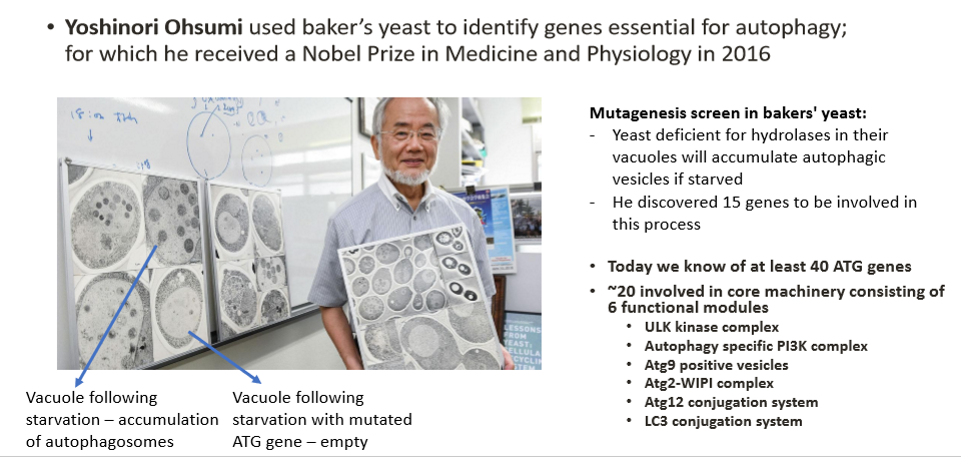
ATG genes
know some of the machinery names
function as alt waste disposal?

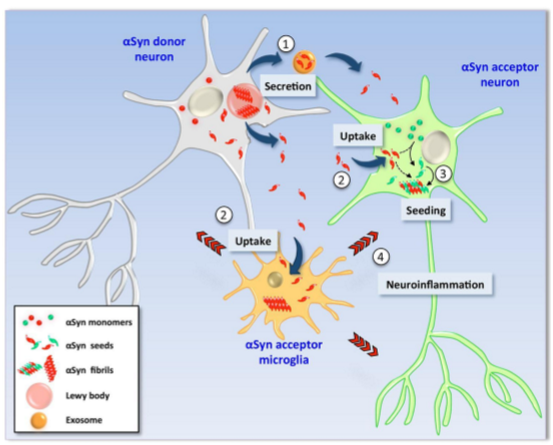
EVs might play role in prion-like spreading of protein aggregation in ND disorders
prion D: alpha-synuclein aggregates spread through NS → degeneration
EVs strongly implicated in PD pathology
cellular stress (ie inflam etc) increases release of EVs
EVs containing misfolded prot may represent a seed in healthy neurons, precipitating alpha-synuclein aggregation within network of neurons
EVs might play role in prion-like spreading of protein aggregation in ND disorders image
function as alt waste disposal or perhaps homeostatic adjustment?

functional role in synaptic signalling?
hydrophobic cargo: e.g cannabinoids (lipophilic)

neuro-EV cargo
neuronal EVs can contain:
cell-sig prots
aggregation in neurodegen prots (eg Tau)
synaptic and R prots
lipids and memb-assoc prots
mRNA
mirco RNAs (miRNA)
other reg RNAs

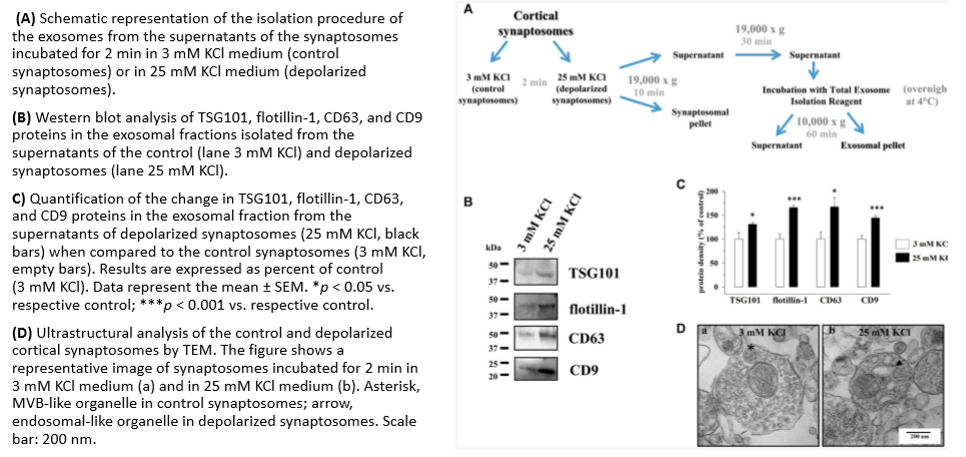
cortical synaptosomes release EVs immunopositive for exosomal markers
isolated exosomes using ultracentrifugation and found many diff markers for exosomes (TSG etc…) dont need to recall this stuff
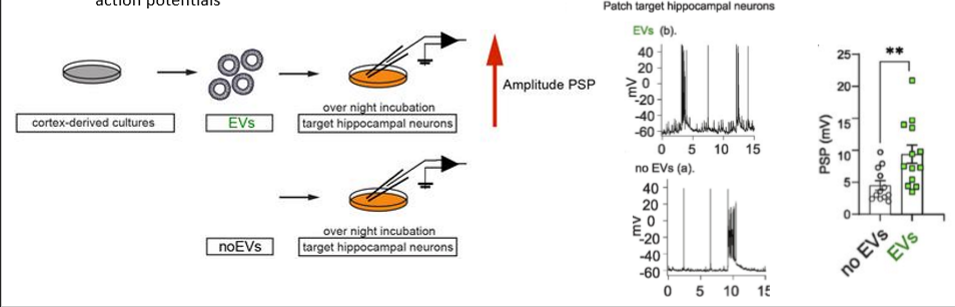
function in syn neurotransmission?
current clamp recordings were performed on untreated cultured neurons and on neurons exposed to EVs
exposure to EVs altered the magnitude of postsyn potentials but NOT the frequency of APs
Drosophila melanogaster NMJ is model synapse for Glut transmission

anterograde signalling via EVs

depolarisation increases the number of particles expressing EV-marker surrounding the presyn terminal of D.m. NMJ

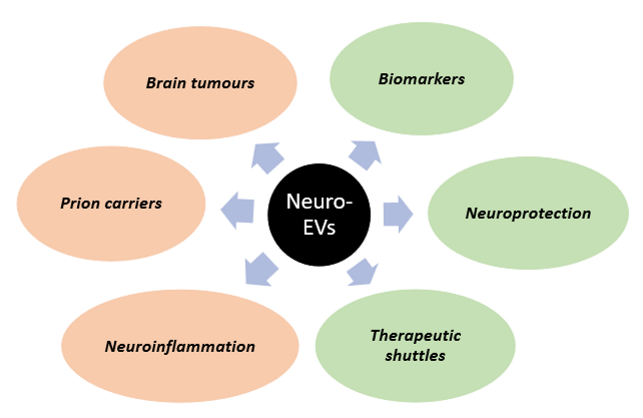
role and potential in human disease