Bio 1406 - Exam 2
 Call Kai
 Learn
 Practice Test
 Spaced Repetition
 Match
 Flashcards
 Knowt Play
1/104

There's no tags or description
Looks like no tags are added yet.
105 Terms
Photosynthesis
how plants use energy from the sun (CO2 and H2O) to make sugar (carbohydrates like starch, etc.)
-Reverse of cellular/aerobic respiration
What is a byproduct of photosynthesis?
Oxygen (O2)

Photosynthesis equation
12 H20 +6 CO2 + light energy --> 6O2 + glucose + 6H20
-(co2 becomes reduced and h20 becomes oxidized)
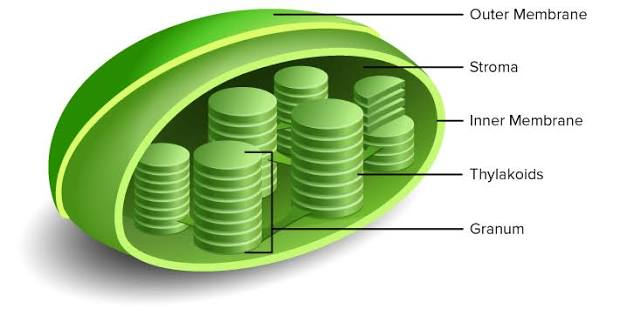
Organelle where photosynthesis takes place?
Chloroplast

Chloroplast
Where photosynthesis takes place; can be found in leaves of plants (eukaryotes) and in many protists (algae, cyano-bacteria; perform prokaryotic photosynthesis)
-double membranes surrounding a fluid interior (stroma), and thylakoid (interior folded membranes) that form granum

Stroma
fluid interior of chloroplast

Granum
stacks of thylakoid membranes in the chloroplasts
The two stages of photosynthesis are ______ and ______.
1.) Light dependent reactions; occurs in thylakoid
-Harvests energy from sun, splits H2O into O2 and H+, and makes ATP.
2.) Light Independent or Calvin Cycle; occurs in stroma
-Uses C from CO2 to make sugar (Carbon fixation)
Pigments
give colors to things, like leaves; the color they appear as is actually the color they reflect, not the color they absorb.
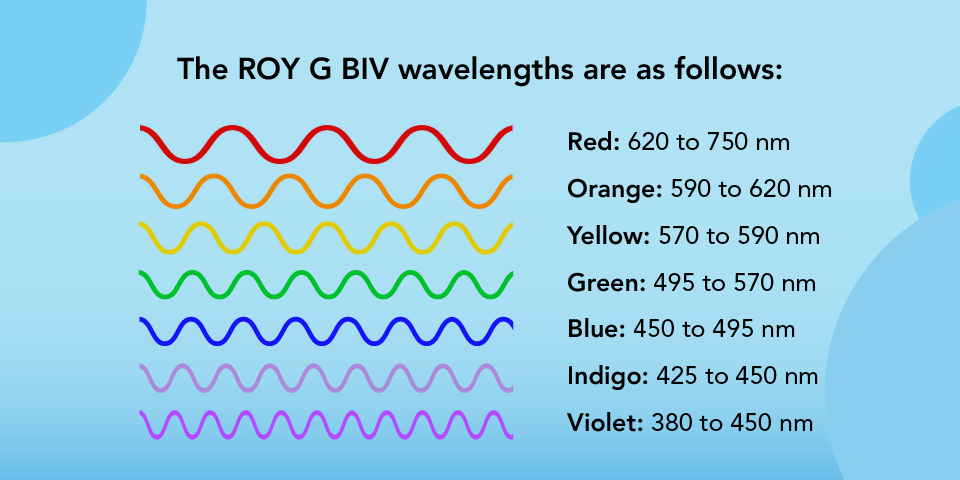
Different pigments absorb different wave lengths of light and reflect/transmit the rest.
The visible spectrum ranges from 380 (purple) to 750 (red) nm = ROYGBIV
(Red, orange, yellow, green, blue, indigo, violet)
-Red is longest, violet is shortest
Chlorophyll A
Primary photosynthetic pigment in plants; blue-green
-Mainly reflects green and absorbs other wavelengths
Accessory pigments
Pigments that do not directly participate in photosynthesis but absorb other wavelengths
Chlorophyll B
an accessory pigment, yellow-green in color (absorb blue & orange wavelengths);
-transfer energy to chlorophyll for photosynthesis
Carotenoids
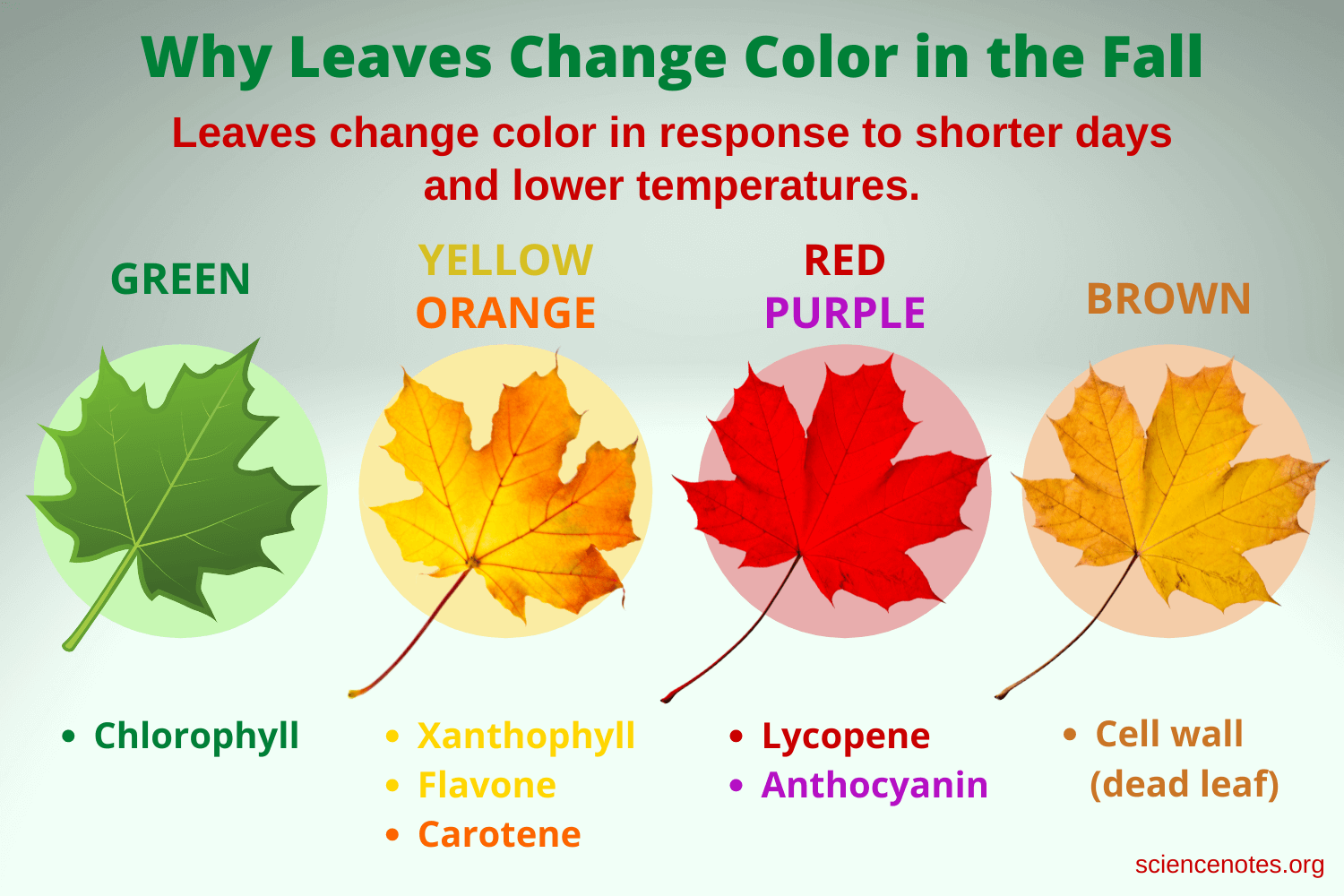
an accessory pigment, that give fall leaves their yellow and orange colors;
-does not transfer energy to chlorophyll A, but rather absorbs light that is damaging to the chlorophyll
Photon
unit of light energy (a light particle)
Light Dependent reaction
harvests energy from the sun, split water (H2O) into O2 and H+, and make ATP (the reaction that releases oxygen)
-This step is also important for harvesting energy for the Light Independent Reactions.
-happen in the thylakoid membrane (granum)
-can be non-cyclic or cyclic (moving in a cycle or not)

Non-cyclic electron flow
Involves 2 types of photosystems (II - called p680 and I - called p700)
1. Sunlight excites chlorophyll in P680, which causes an electron to be excited and exit the photosystem. To replace this lost electron, water is split which releases 2 electrons to P680
2. The excited electron moves down an electron transport system (like in cellular respiration) which produces ATP (this process is call photophosphorylation)
3. Light also excites photosystem 1 (P700) making it lose an electron as well. The excited electron from photosystem II replace the lost electron. The excited electron from P700 moves down another transport chain where it creates NADPH, which carries electrons to the next step
Cyclic Electron Flow
involves photosystem I (P700) ONLY; it produces ATP, and more ATP than the non-cyclic flow, but no NADPH. (Why Cyclic? Provides extra ATP)
1. Light excites electron in P700 and the electrons go into the electron transport chain
2. ATP formation is similar to the non-cyclic flow, because they go through the same electron chain that make ATP; different because it requires pumping H+ across the thylakoid membrane and chemiosmosis (the movement of ions (H+ down their concentration))
Chemiosmosis
the movement of ions (H+) down their concentration by ATP synthase; ATP formation in both Non-cyclic and cyclic is by chemiosmosis
Light Independent reaction (Calvin Cycle)
Process occurring in the stroma where Rubisco fixes 3CO2 with 3 RuBP, consuming 9 ATP and 6 NADPH to produce 1 net G3P sugar and regenerate RuBP
Reactants of Calvin Cycle
1.) 3 CO2 (from atmosphere)
2.) 3 RuBP (regenerated from cycle)
3.) 6 NADPH (from light reaction)
4.) 9 ATP (from light reaction)
Products of the Calvin Cycle
1.) 1 G3P
2.) 3 RuBP (created from the 5 G3P)
3.) 6 NADP+ (regen. by light reaction later)
4.) 9 ADP (regen. by light reaction later)
Terms from the Calvin Cycle
-RuBP = the 5-carbon starting/acceptor molecule
-Rubisco = the enzyme that attaches CO₂ to RuBP
-G3P = the 3-carbon product/sugar (make 6 total, but use 5, so we actually only get 1 as a product)
-NADPH = electron donor
-NADP⁺ = used-up electron carrier
-ATP = energy
-ADP = used-up ATP
C4 plants
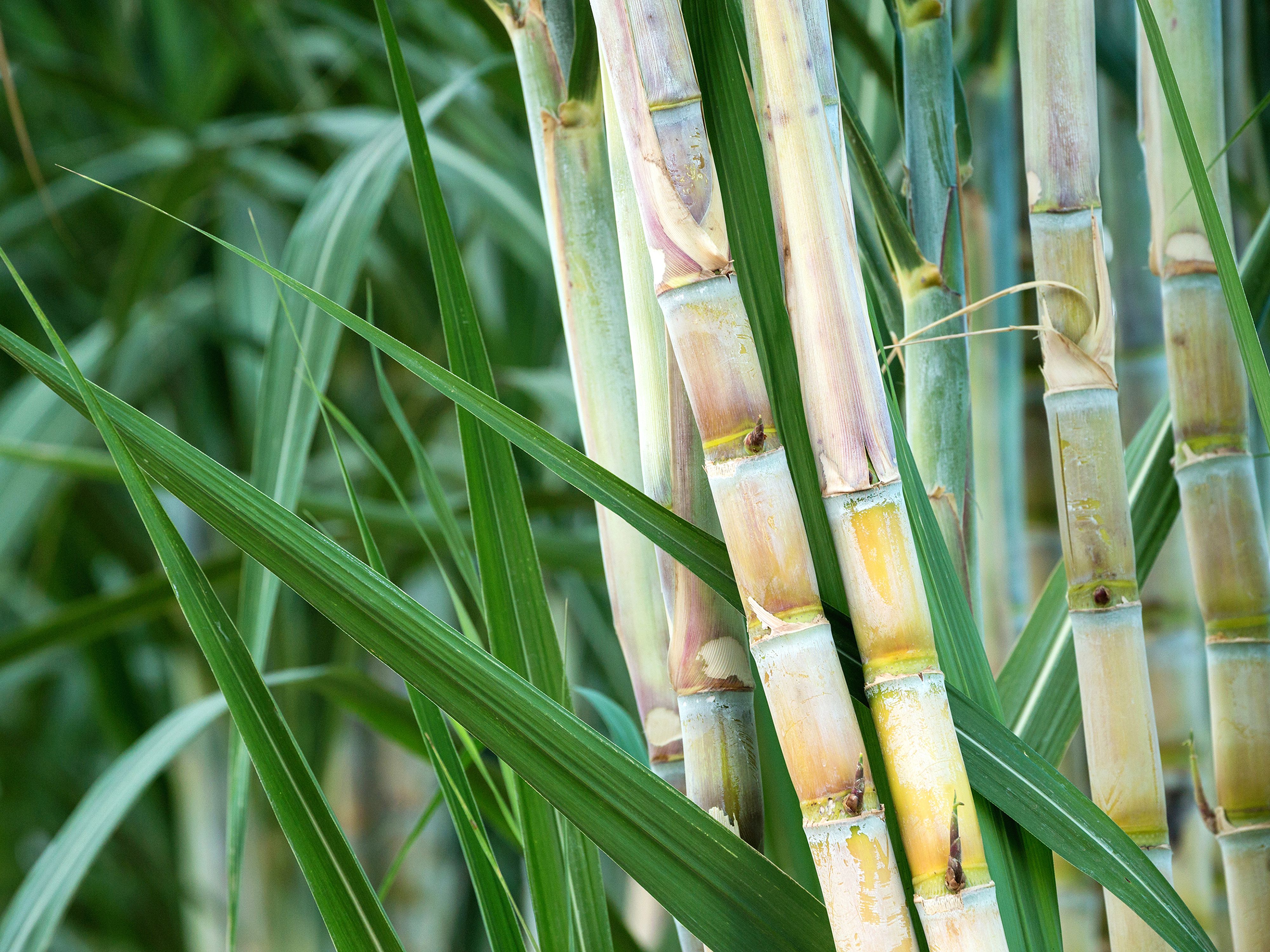
CO2 is fixed into a 4-carbon organic acid; this organic acid is transported to Bundle sheath-cells where the Calvin Cycle happens
Ex. Grasses, sugar cane, corn

CAM plants
Also convert CO2 into an organic acid; these plants open their stomata at night instead of the day (opposite other plants)
Ex. Succulents, cacti, pineapple
Hydrolysis
Splitting water
What kind of plants save water by opening their stomata at night and closing them during the day?
Cam
Binary fission
Cell division in protists; how protists reproduce (asexual)
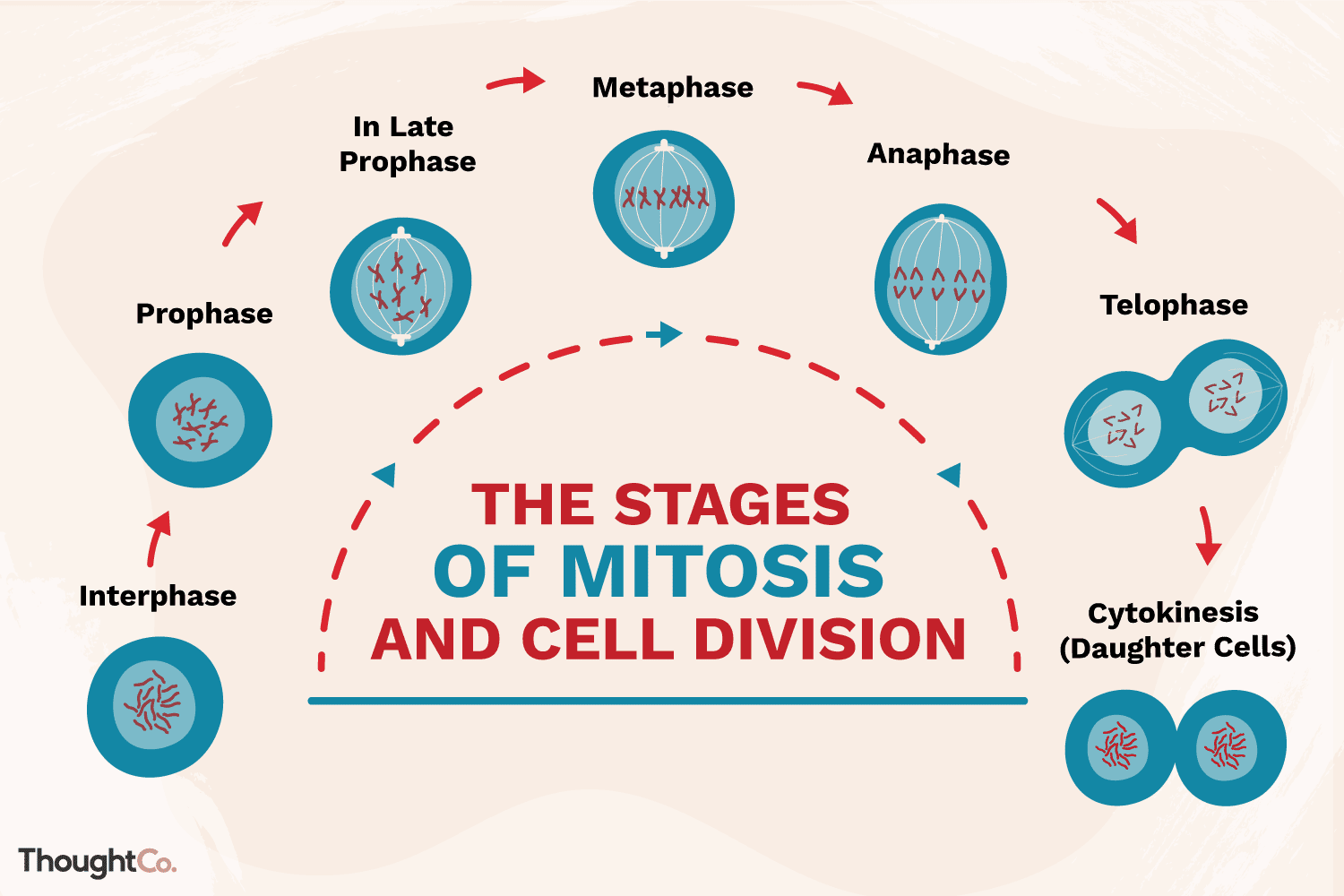
Mitosis
the division of the nucleus in somatic (body) cells; the nucleus must divide so that the two daughter cells get the exact same set of chromosomes
-one diploid mother cell makes two identical diploid daughter cells.
-The chromosomes (in humans we have 46) duplicate themselves so that each daughter cell receives the same number of chromosomes

DNA
the molecule of heredity

Chromosome
a molecule of DNA and its associated proteins
-consists of 2 identical chromatids that are attached to each other
-occur in homologous pairs, one of each is one from the father (paternal) and one from the mother (maternal)

Gene
the region on a chromosome that has a code for a particular trait (ex. blue eyes gene)
DNA Replication
Before Mitosis can take place, the cell must replicate its DNA

Chromatid
one half of a duplicated chromosome; joined together at centromere
How many chromosomes do humans have?
46 (2 duplicated pairs of 23 chromosomes)

Diploid (2n)
Having 2 of each type of chromosome (in somatic cells)
-chromosome number → 46
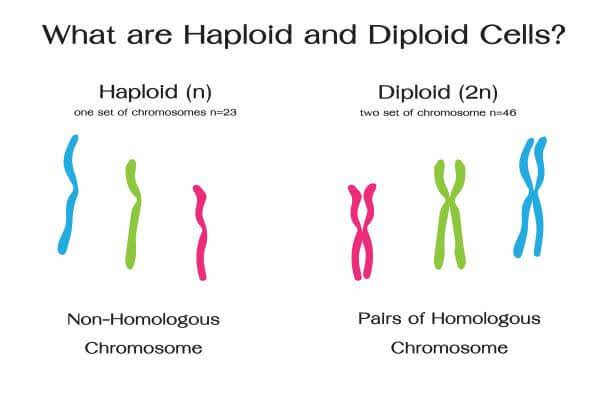
Haploid (1n or n)
Opposite of diploid; Having only 1 type of each chromosome (ex. gametes)
-chromosome number → 23

Cell Cycle (Mitosis)
the cycle of growth and division in a cell
4 parts, 3 stages (collectively called Interphase) and Mitosis.
Mitosis - nuclear division; occurs after Interphase, followed by Cytokinesis (division of the cytoplasm resulting in 2 cells).
The stages of Mitosis include: Prophase, late prophase, Metaphase, Anaphase, Telophase, and then Cytokinesis
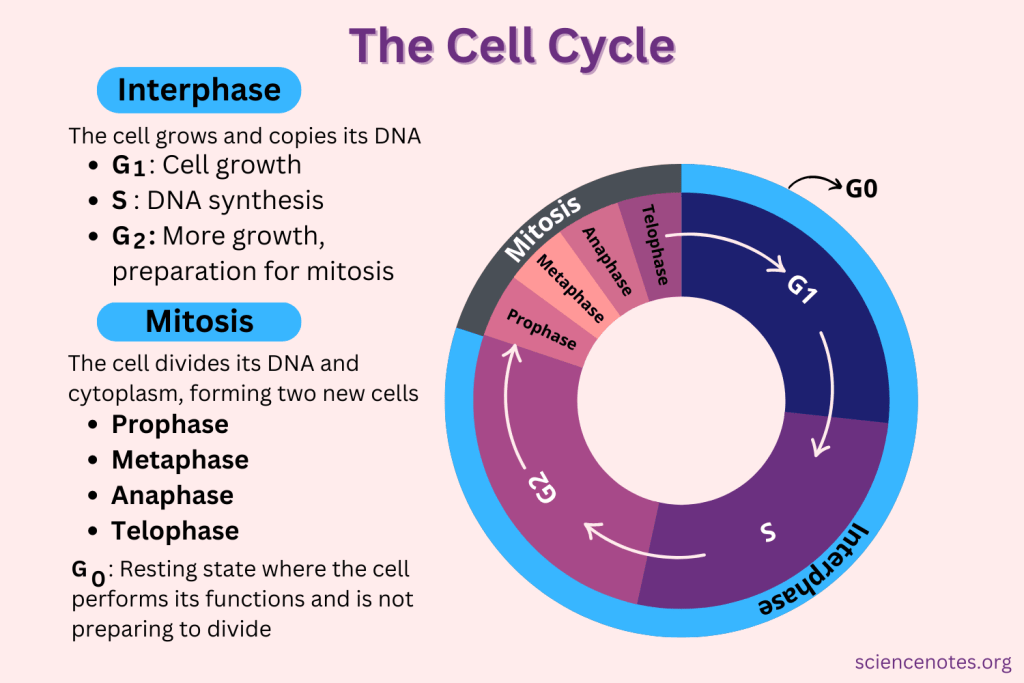
Interphase
3 subphases; 90% of the cell cycle
-cycle starts with cell growth in G1 (Gap1), then DNA Replication in the "S" or synthesis stage, then preparation for nuclear division in G2 (Gap2)
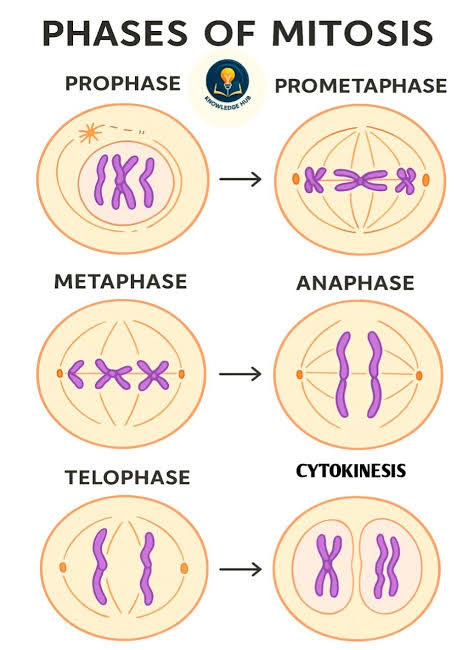
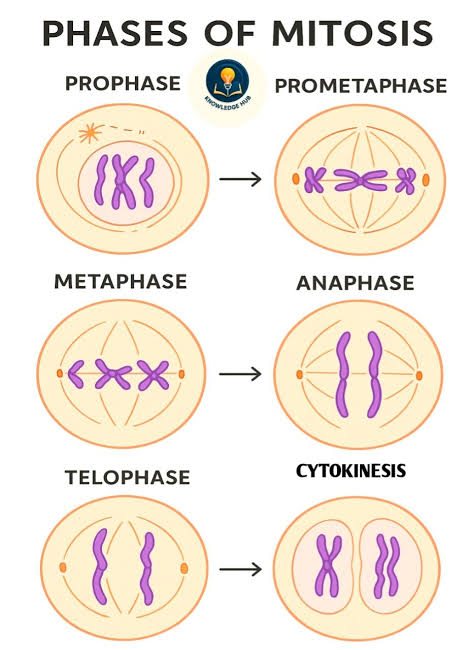
Prophase
The first (preparing) stage for cell division
-chromosomes condense
-Subunits of microtubules break apart from the cytoskeleton to form the spindle apparatus (what moves the chromosomes around)
-Centrosomes (two centrioles) duplicate to make 2 centrosomes, which will move to each side of the cell (one to each side). The spindle apparatus attaches to the centrosomes

Prometaphase (late prophase)
The stage when the nuclear envelope breaks up and disappears;
-the kinetochore type of microtubules attach to centrosomes to move them around, while the non-kinetochore microtubules move towards opposite ends of the cell
Metaphase
Stage when chromosomes are lined up (by the spindle apparatus) along the equator of the cell (called the metaphase plate)

Anaphase
Stage where chromatids are pulled to opposite poles of the cell by kinetochore microtubules; Each chromatid is now a chromosome

Telophase
last stage when chromosomes relax, the spindle breaks up, and the nuclear envelope starts to reform around each of the 2 chromosome sets (reverse or opposite of Prophase)
Cytokinesis
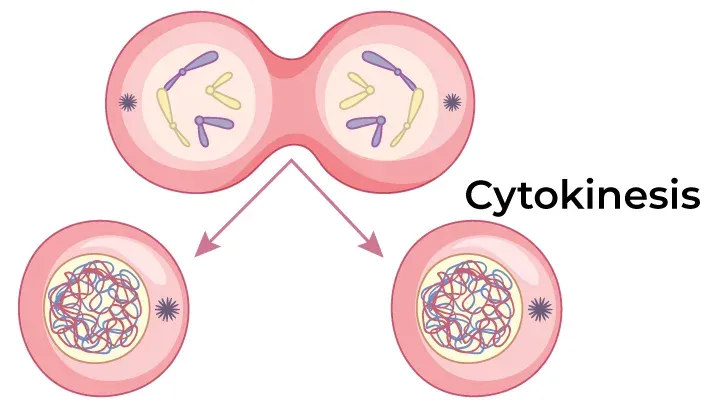
Division of the cytoplasm; the stage when microfilaments pull the cell membrane apart and pinch the cytoplasm into 2 cells
-there are now 2 daughter cells, the cells will enter Interphase (cell cycle starts over)
Cell Responses
Cells respond to chemical and physical cues from the environment.
1.) Chemical: cell require a certain amount of nutrients before they can divide
2.) Physical: Cells need something to grow on, and will normally stop growing/dividing if the space is overcrowded
Cancer
occurs when cells divide out of control
-Cancer cells do not require growth factors, and keep diving, regardless of overcrowding, as long as there is nutrients
-Tumors are formed when the cells start overcrowding
If a tumor stays in one place?
benign
If a tumor spreads and damages to other tissues and organs?
Malignant (the spread to other tissues is called Metastasis)
Meiosis
-function: reproduction (production of gametes)
-starts with diploid cells (only can) and produces haploid gametes.
-occurs in germ cells in the testes or ovaries
-results with 4 daughter cells, each haploid (these are genetically different from each other and parent)
-only in sexually reproducing organisms
Fertilization
gametes (eggs - sperm) joining together
-This union forms a zygote, which develops into an embryo
Meiosis is a _____.
reduction; gametes can’t be diploid because every time fertilization occurs the chromosome number would double in future generations

Meiosis begins with a diploid cell and results in 4____________.
haploid daughter cells
What makes mitosis and meiosis different?
Meiosis occurs in two parts, I and II
-occur in phases with same names as mitosis, and what happens in each phase is also similar

Interphase I (Meiosis I)
before meiosis I, DNA is replicated (just like interphase in mitosis), so each chromosome consists of two sister chromatids

Prophase I (Meiosis I)
1.) Chromosomes condense
2.) Spindle forms
3.) homologous chromosomes pair up = synapsis (doesn’t happen in mitosis prophase)
4.) Crossing over occurs (exchange of genetic material)
5.) Nuclear envelope breaks up and disappears
6.) Spindle microtubules attach to each chromosome

Metaphase I (Meiosis I)
1.) Homologous chromosome pairs line up on equator (double-file instead of single-file like mitosis)

What kind of chromosomes line up at the equator of the cell during metaphase I of meiosis?
Homologous
Anaphase I (Meiosis I)
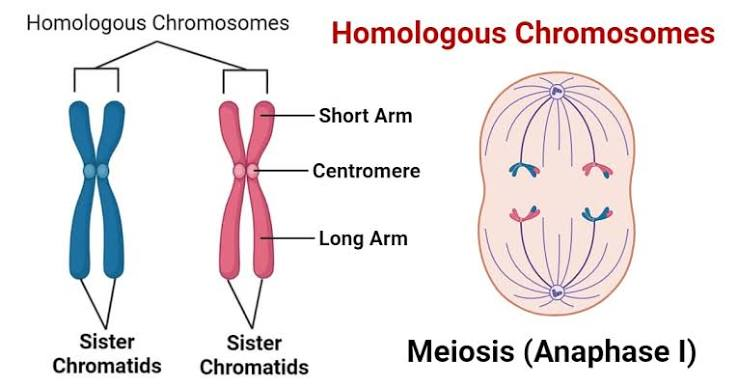
1.) Chromosomes (not chromatids) are pulled away from their homologous pairs and toward opposite ends of cells (sister chromatids remain attached)

Telophase I (Meiosis I)
1.) Cytoplasm divides
2.) Now there are 2 daughter cells; each a haploid (n) in each chromosome number but each chromosome still consists of two sister chromatids
(sister chromosomes decondense, nuclear envelop forms around each;
each nucleus is now haploid)

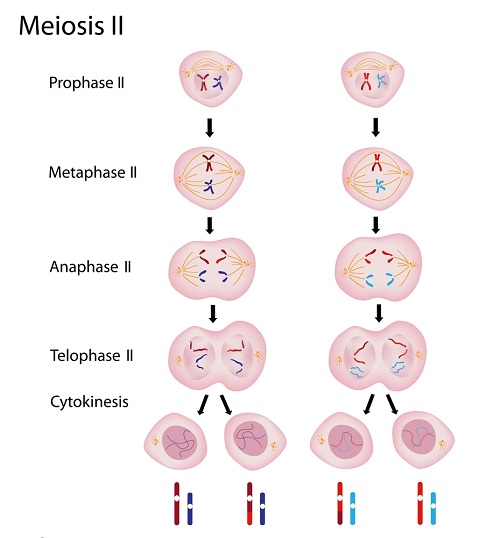
Prophase II (Meiosis II)
1.) Spindle microtubules attack to centromere of chromosomes
(Different from prophase I - no synapsis and crossing over/condensing)
Anaphase II (Meiosis II)
1.) sister chromatids within cell finally separate due to the breakdown of proteins holding the sister chromatids together at the centromere
2.) Chromatids move toward opposite poles as individual chromosomes
(in anaphase I, sister chromatids are not separated, the homologous chromosome pairs are)
Telophase II
1.) Nuclei reform (nuclear envelope form around each set of chromosomes)
2.) chromosomes relax and begin decondensing
3.) cytokinesis occurs (haploid daughter cells form; no crossing over aka non-duplicated)
4.) Spindle breaks up
Spermatogenesis
one diploid germ cell makes 4 haploid sperm cells by meiosis
Oogenesis
one diploid cell makes one haploid ovum (female egg cell) and two polar bodies that degenerate
Genetic recombination
allows for genes to be put in a different combination then what the parents originally had (why children are somewhat different than their parents)
2 points in meiosis that allows for this to happen
1.) Prophase I: when crossing over occurs (synapse)
genes are swapped between two non-sister chromatids
One chromosome maternal and other paternal; now 2/4 chromatids have a ew continuation of genes
2.) Between prophase I & metaphase I
when spindle microtubules attach to chromosomes to line them up; random process

What part of meiosis does crossing over occur in?
Prophase I
What are the advantages for sexual reproduction?
Allows for a lot of genetic variation among a population; important in evolution
Heredity
how genes and traits are passed on from one generation to the next
Gregor Mendel
Father of genetics; was an Austrian monk who worked on pea plants in the late 1800's. He thought gametes carried discrete "units" of information about certain traits (we call these genes now).
He worked with true-breeding plants and allowed them to self-fertilize, then he cross fertilized different types of true-breeding plants together and followed the ratio of traits.
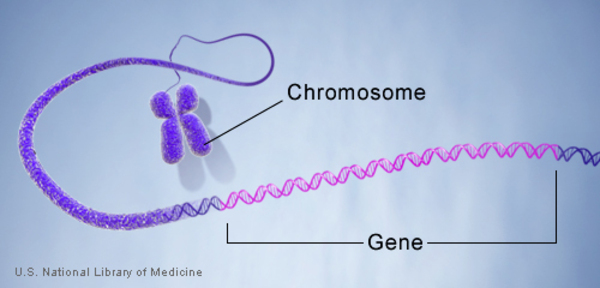
Genes
units of information about specific traits; occur at specific locations (loci) in the chromosome
Alleles
Different versions of genes
(the different options that the gene can express, for example, brown eyes, blue eyes, etc.)
Genotype
the alleles that an individual carriers (unique to each person); genetic makeup of an individual;
Homozygous condition
When the alleles for a trait on both homologous chromosomes are identical (says the same thing)
What condition is when the alleles for a trait are not identical on the homologous chromosomes?
Heterozygous

Dominant allele
masks the effects of other allele in heterozygous condition
-represented by uppercase letters (ex. AA or Aa)

Recessive allele
trait that is masked by dominant allele
-represented by lowercase letters (aa or Aa)
Phenotype
physical appearance; observable traits (expression of genes/alleles)
ex. flower color, seed texture, etc.
What stage in Meiosis 1 is when homologous chromosomes pair up (synapsis)?
Prophase I
What stage in Meiosis 1 is when chromosomes are pulled away from their homologous pair?
Anaphase I
What are the 2 parts where genetic recombination can happen?
Prophase I and between Prophase and Metaphase I
Mendel's Law of Segregation
This law states that offspring inherit two units of information for a trait, one from each parent.
He hypothesized that since fertilization is random, traits should appear in ratios that can be predicated by the laws of probability
To test this idea, Mendel ran monohybrid crosses and used Punnett squares to make the prediction of ratios
Then, he used test crosses to further support his theory
This is when if there was a plant showing a dominant trait (meaning it could be AA or Aa), he would breed the plant with a true-breeding recessive plant to determine what the unknown plant was.
Pleiotropy
when one gene affects multiple genes (genes that are not related to it).
Ex. the mutation in one gene affects hair color, eye color, etc.
A single gene affects more than one aspect of the phenotype.
This happens because the gene’s protein product is used in several tissues or has multiple effects

Epistasis
One gene controls or masks the expression of another gene for the same trait.
So, even if a gene codes for a certain phenotype, another gene can “override” or modify it.
ex.) coat color in mice; gene at one locus controls coat color
Aneuploidy
one too many or one too few of a particular chromosome; caused by nondisjunction
Ex. Trisomy 21
Difference between Pleiotropy versus Epistasis?
Pleiotropy = one gene affects two or more traits
Epistasis = two or more genes affect one trait
Polygenic Inheritance
several genes have an active effect on a trait
-results in population varying on a consortium (community)
-ex.) skin color and height in humans
Genetic disorder
inherited trait that causes a medical problem
-persists because rare mutations are reintroduced; often recessive and only expressed in homozygous condition
Autosomal Recessive Disorder
When recessive allele codes for a defective or nonfunctional protein
-person must inherit two defective alleles (homozygous & one from each parent) to actually show the disorder.
-Ex. Sickle cell
Autosomal Dominant
When dominant allele on a non-sex chromosome codes for something
-Only one copy is needed to show the trait so both homozygous and heterozygous individuals are affected.
-Ex. Huntingtons

X-linked Recessive
trait caused by recessive alleles on the X chromosome
-changes/disorders are expressed more in males since it cannot be masked in males but can in females.
-ex.) Hemophilia, red-green colorblindness
Nondisjunction
error that causes homologous chromosomes or sister chromatids to move to the same side

Phenotypic ratio (Dihybrid cross)
9-3-3:1
ex.) purple/tall: purple/dwarf: white/tall: white/dwarf

punnett square
used to predict the genotypes and phenotypes of the offspring from a cross

monohybrid cross
A cross between two individuals, concentrating on only one trait
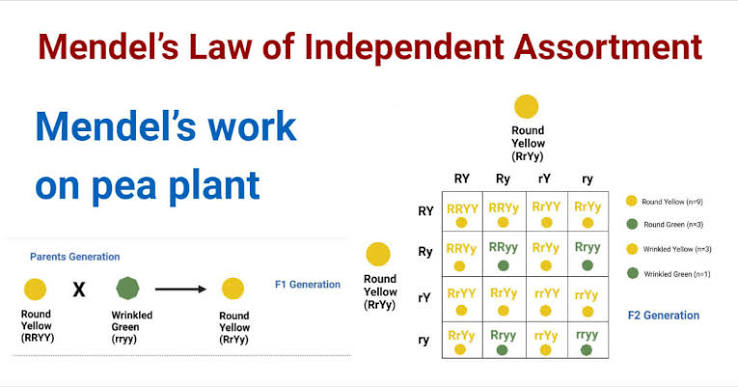
Law of Independent Assortment
pairs of genes for trait get sorted independently of pairs of genes for another trait (when genes for traits are on different chromosomes)
-probabilities of each occurring in gamete are independent (because of what happens to chromosomes in meiosis)
-Mendel used dihybrid crosses to test this (looked at two traits instead of one)
Rule of multiplication
chance that two or more independent events will happen together = product of individual probabilities
ex.) 2 coins flipped → chance of both landing heads = ½ x ½ = ¼
Rule of addition
Probability of an event that can occur in 2 or more different ways → sum individual probabilities
ex.) ¼ + ¼ = ½
Incomplete dominance
one allele is not fully dominant over the other
ex.) snapdragons
RR = red, rr = white, Rr = pink
phenotype for heterozygous is in between
not blending (law of segregation); still independent assortment
Codominance
non-identical alleles are both expressed in the heterozygous condition
ex.) genes coding for blood antigen; people with one blood type antigen reject other blood types
Aneuploidy is usually caused by ______ during meiosis.
nondisjunction