Civ Arts Exam 2 Material
 Call Kai
 Learn
Learn Practice Test
 Spaced Repetition
 Match
Match Flashcards
 Knowt Play
1/87

There's no tags or description
Looks like no tags are added yet.
Name | Mastery | Learn | Test | Matching | Spaced | Call with Kai | Chat |
|---|
No analytics yet
Send a link to your students to track their progress
88 Terms
Florence in the 15th century

Duomo
Cathedral in Italian

Ghiberti, Gates of Paradise, 1425-1452

Ghiberti, Gates of Paradise, 1425-1452

Brunelleschi, Dome of Florence Cathedral, 1436

Donatello, Lo Zuccone, 1423–1425

Donatello, David, 1430-1432

Masaccio, The Tribute Money, c.1425

Botticelli, Primavera, c. 1478
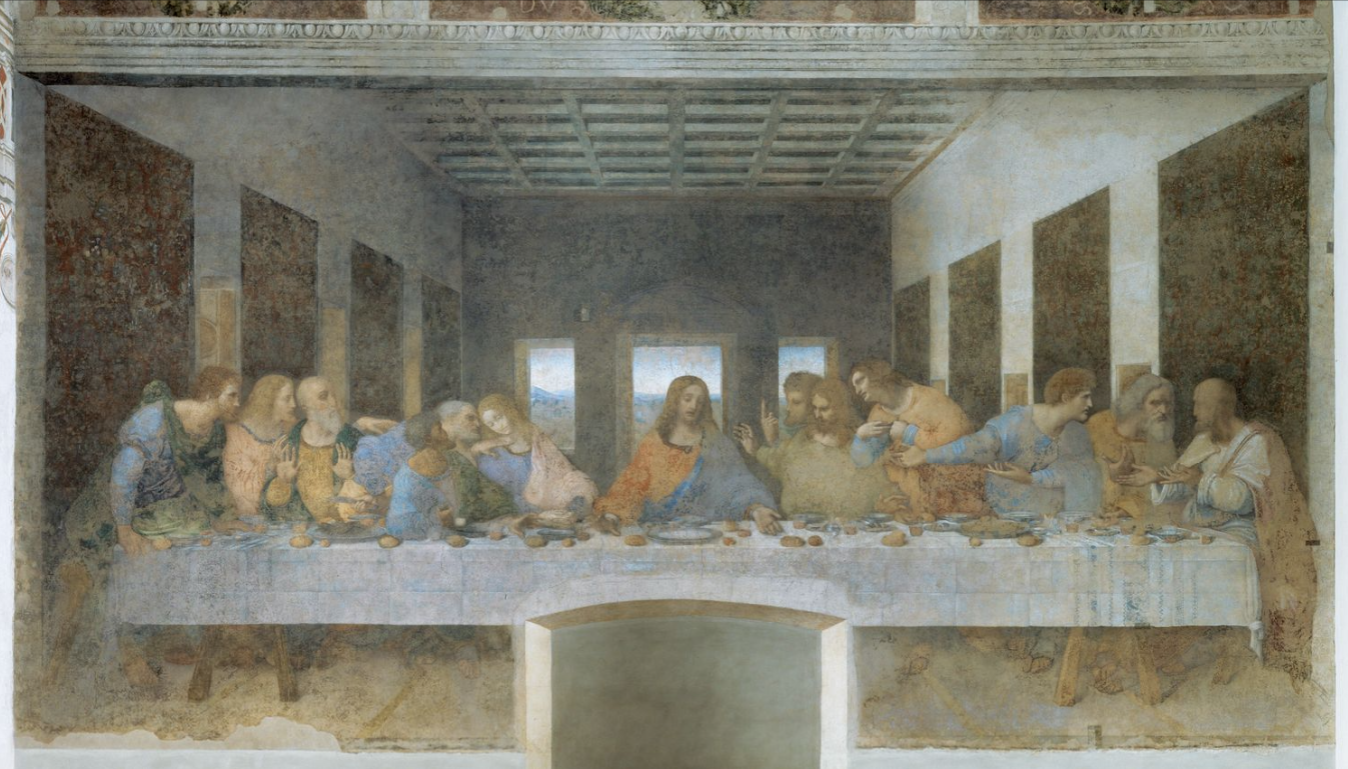
da Vinci, Last Supper, 1495–1498

da Vinci, Mona Lisa, 1503–1506

Michelangelo, David, 1501–1504

Michealangelo, Creation of Adam, 1508-1512

Michelangelo, Moses, 1513-1515

Raphael, Portrait of Pope Julius II, 1511

Raphael, School of Athens, 1510-1512

van Eyck, The Annunciation, 1434
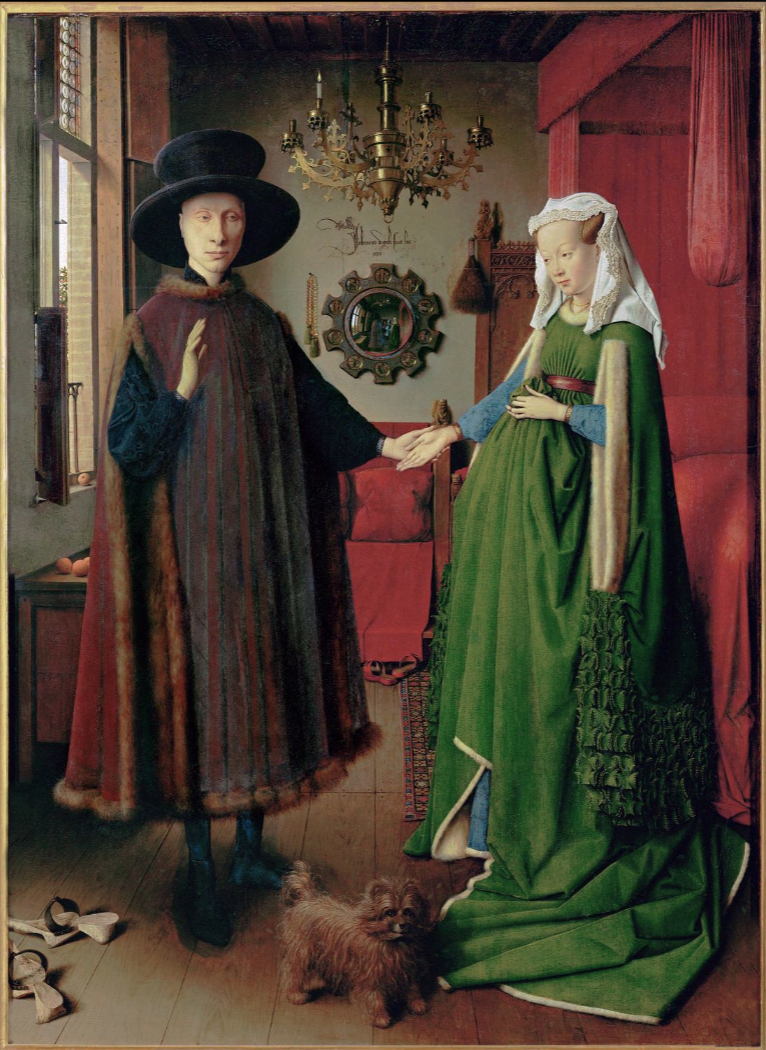
van Eyck, The Arnolfini Portrait, 1437

van der Weyden, Seven Sacraments Altarpiece, 1445-1450

Memling, The Last Judgment Triptych, 1467–1473
Listen to this piece: Josquin, Ave Maria, Virgo Serena, 1502

Dürer, The Four Horsemen of the Apocalypse, 1498

Dürer, Knight, Death and Devil, 1513

Cranach, Central Panel from the Triptych of the Weimar Altarpiece, 1555

Titian, Bacchus and Ariadne, 1520-1523
Listen to this piece:
Weelkes, As Vesta Was From Latmos Hill Descending, 1601

Caravaggio, Judith Beheading Holofernes, 1597-1598

Caravaggio, Calling of St. Matthew, 1599–1600
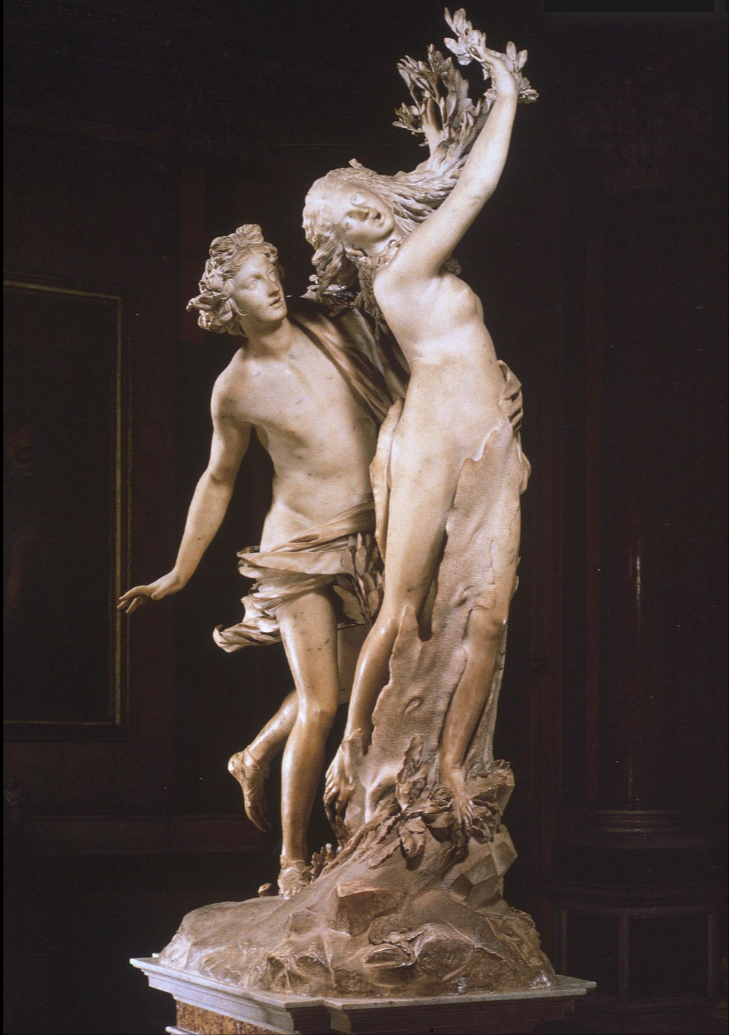
Bernini, Apollo and Daphne, 1622-1624

Rubens, Raising of the Cross, c. 1638

Hals, The Merry Drinker, 1628

Rembrandt, The Night Watch, 1642

Vermeer, The Kitchen Maid, c. 1660

van Ostade, Peasants in an Interior, 1661

Listen to this song: Antonio Vivaldi, The Four Seasons: Spring, 1725

Listen to this song: Bach, Fugue in G Minor, c. 1703–1707
Lorenzo Ghiberti
1378-1455
Florentine Sculpture
Perspective
The art of depicting solid objects on a two-dimensional or shallow surface so as to give the right impression of their height, width, depth, and position in relation to each other.
Linear Perspective
technique of representing graphically, by means of lines, an object as it appears to the eye, suggesting three dimensions
based on the proposition that parallel lines at 90 degrees to the field of vision (orthogonals) seem to converge at a vanishing point on the horizon
developed in early renaissance Italy and remained a central feature of much Western art until the later 19th century

what are the arrows showing here?
Orthogonal lines
Filippo Brunelleschi
1377-1446
Florentine architect and sculptor
Studied Roman architecture
Vanishing point
where orthogonal lines meet
Horizon
where the earth and sky meet
Donatello
Florentine Sculpture
studied classical sculpture
Vasari said that he had equaled the sculptures of antiquity
Supported by the Medici family
c. 1386-1466
Sandro Botticelli
Florentine
Supported by Lorenzo de Medici
c. 1445-1510
Leonardo di Vinci
Born in Vinci, near Florence
renowned painter, sculptor, scientist, engineer, inventor, and architect
“Renaissance man”
1452-1519
Characteristics of Renaissance Art
Themes: Biblical, Classical mythology, portraits of wealthy/aristocracy
use of perspective
balance, symmetry, and proportion
Orthogonal lines: Renaissance art
Sfumato
“smoky”
A term used to describe the subtle blending of colors and tones to such an extent that they seem subtly to melt into one another
Leonardo: “without lines or borders in the matter of smoke.”
Chiaroscuro
the opposite of light and dark in painting and drawing
Aerial perspective
The illusion of distance in landscape painting achieved by making objects paler and bluer the further they are from the viewer
Michealangelo Buonarroti
1475-1564
Born in Caprese, near Florence
As a boy, visited the stonecutters in a nearby quarry, learning to chisel marble
Apprenticed with an artist in Florence at 13
Primarily considered himself a sculptor, but also completed one of the most remarkable feats in art, painting the Sistine chapel ceiling
first western artist to have his biography published while he was alive
what are the key points of Michealangelo’s David
carved by Michealangelo while in his mid 20s for the exterior of the Florence Cathedral
17 feet tall
shows David before his battle with Goliath, perhaps at the moment he first sees his foe
David stands in a relaxed, but resolute contrapasso
a remarkable naturalism is achieved, with fine details based on Michealangelo’s study of anatomy
from the neck down, the statue could be a Greek or roman statue, but his face conveys a spiritual force unlike the sculptures from antiquity.
what are the key points about the painting of the Sistine Chapel?
Michealangelo was commissioned by Pope Julius the II to paint the ceiling of the Sistine Chapel in Rome.
Michealangelo only reluctantly accepted because he considered himself a sculptor, not a painter.
he stood on scaffolding 70 feet in the air, reaching up to paint the frescos of the ceiling. the project took over 4 years to complete.
The ceiling is comprised of 343 figures, both clothed and nude, allowing Michealangelo to demonstrate his skill of depicting the human form in a variety of positions.
the central panels on the ceiling show nine scenes from the book of Genesis, including the creation of Adam.
Key points about Moses

Raphael
1483-1520
From Urbino, Italy
Spent 4 years in Florence
worked as a painter for popes in Rome
which element of art does the Renaissance most focus on?
Color
Color
Created by the reactions of the human eye to certain properties possessed by an object when it reflects or emits light
Primary and secondary colors
Primary colors:
red
yellow
blue
Secondary colors:
orange (red + yellow)
green (yellow + blue)
violet (blue + red)
Complimentary colors
Located directly across the color wheel from each other
Create a strong contrast
Jan van Eck
Flemish painter
Worked in Bruges
Pioneering use of oil paint
Minute details of meticulously painted
c. 1390-1441
Texture
The perceived physical appearance of the surface of an artwork
actual texture
implied texture
Josquin des Prez
Franco-flemish
Worked in France and Italy for 10 years
music was widely published due to the printing press
Imitation
repetition of the melodic contour of one part by another
“echoing”
e.g. A round
Albrecht Durer
Nuremberg → Germany
Visited Italy twice
Elevated printmaking to an art
1471-1528
an image or design impressed or stamped on a support such as a paper or fabric that can be reproduced in multiples
Woodcut
Engraving
A printmaking technique in which the design is carved into a copper plate. Ink is forced into the resulting grooves and then pressed onto paper.
Triptych
a picture consisting of three parts, usually a central panel flanked by wings (or shutters).
which could be closed both for protection of the central image and the limitation of when it could be viewed.
Triptychs particularly flourished as altarpieces in Germany and the Netherlands in 1300s-1600s
The Counter Reformation

Titian
Venice
Versatile painter of mythological and religious scenes, portraits, and landscapes
Influential painter of the known for his work as a colorist
1488/1490-1576
Thomas Weelkes
Elizabethan musician and composer
famous for his madrigals
Madrigal
a secular, polyphonic, unaccompanied song that became popular during the Renaissance.
Although madrigals originated in Italy, we typically think of the madrigals that were written in England in the 16th-17th centuries.
The Triumphs of Oriana
Book of 25 English madrigals by different composers
Dedicated to Queen Elizabeth I
Each madrigal ends with the line “then sang the shepherds and nymphs Diana, long live fair Oriana”
Text painting
Compositional device in which the music reflects the meaning of the text
A common feature of the madrigals
Baroque

Characteristics of Baroque Art

Caravaggio
born in Milan but worked primarily in Rome
known for the psychological intensity of his scenes
Took chiaroscuro to such an extreme that a new term was coined to describe his work, “tenebrism”
Chiaroscuro
the opposition of light and dark in painting and drawing
tenebrism
Tenebrism
a form of chiaroscuro characterized by extreme contrasts between light and darkness
figures are illuminated against a predominately dark background
developed by Caravaggio and his followers in the 16th century
Space
the area between, around, above, below, or within objects
positive space: the shapes of forms of interest
negative space: the empty space between the shapes or forms
Peter Paul Reubens
Flemish Baroque painter
History paintings: both
mythological and biblical
1577-1640
Gian Lorenzo Bernini
Born in Naples, but worked in Rome
credited with creating the Baroque architectural style
most important sculptor of the 17th century
1598-1680
Rembrandt van Rijn
1606-1669
Amsterdam, Dutch republic
prolific painter, engraver, and drawer
known for chiaroscuro/tenebrism
painting style evolved from employing very precise, detailed lines, to a courser style of brushwork
Jan Vermeer
1632-1675
Delft, Dutch republic
Known for portraits in domestic scenes, including everyday objects
paintings have been described as having a “pearly light”
work was little known until the 19th century
Antonio Vivaldi
1678-1741 (Baroque)
Venetian priest and musician
worked at the Ospedale della Pieta as a composer, conductor, and violin teacher
known for the development of the concerto form and his vivid depictions of nature
The four seasons

Concerto
a musical work that features a soloist performing in dialogue with an orchestra
typically, in three movements:
I. fast
II. slow
III. fast
From the Latin concertare, “to contend” and also “to work together”
concerto no. 1 in E major, “spring”
I. Allegro (e major)
II. Largo e pianissimo sempre (C# minor)
III. Allegro pastorale (E major)