32 Lab (7)
 Call Kai
 Learn
 Practice Test
 Spaced Repetition
 Match
 Flashcards
 Knowt Play
1/42

There's no tags or description
Looks like no tags are added yet.
43 Terms

Label

Kidneys:
Maintain internal ________
Filter _____
Remove waste products
Regulate ion levels/acid base balance
Produce important hormones
Kidneys:
Maintain internal homeostasis
Filter blood
Remove waste products
Regulate ion levels/acid base balance
Produce important hormones.
True or false?
Normally, a person can live with one kidney
True

Label


Label

What are the 3 renal linings?
Renal fascia
Perirenal fat capsule
Fibrous capsule
Renal fascia:
Anchors the _____ to the surrounding structures and to the abdominal wall
Perirenal fat capsule:
______ the kidneys from trauma
Holds it firmly in place within the abdominal cavity
Fibrous capsule:
Helps ______ the shape of the kidney (Against trauma)
Renal fascia: Anchors the kidney to the surrounding structures and to the abdominal wall
Perirenal fat capsule:
Protects the kidney from trauma
Holds it firmly in place within the abdominal cavity
Fibrous capsule:
Against trauma
Helps maintain the shape of the kidney

Label


Label


Label


Label


Label


Label


Label

Renal Tubule:
It returns _____, fluids, and other substances that have been filtered from the blood, but the body needs, back to the blood.
The remaining fluid and waste in the renal tubules become _____
Renal Tubule:
It returns nutrients, fluids, and other substances that have been filtered from the blood, but the body needs, back to the blood.
The remaining fluid and waste in the renal tubules become urine

Label and fill in the blank


Label


Label
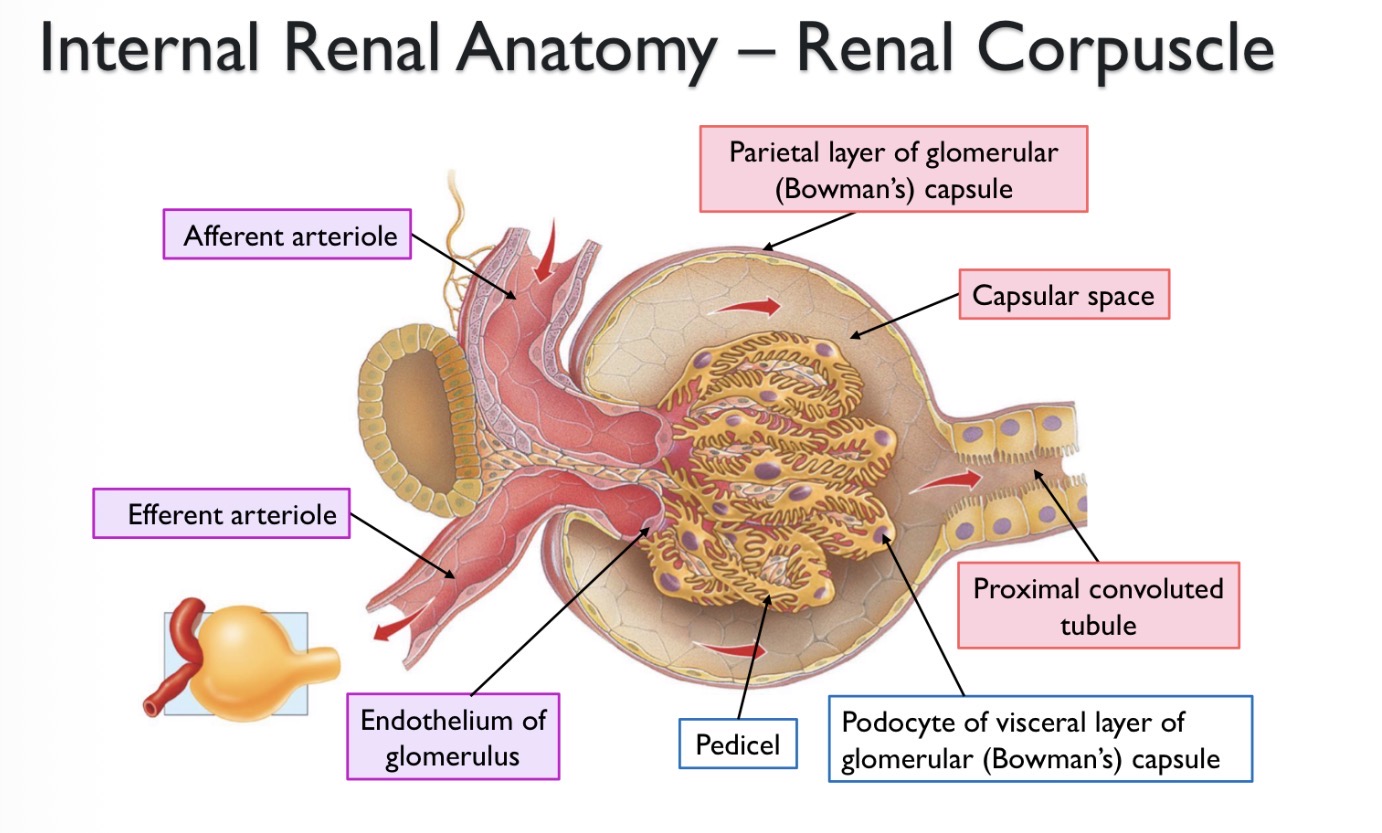

Label

Components of Juxtaglomerular Apparatus:
Juxtaglomerular ____ (mainly in the afferent arteriole, secrete renin)
Extraglomerular _______ cells
Macula _____ at the junction of the ascending limb and distal convoluted tubule
Involved in feedback control of renal blood flow, glomerular filtration rate, and Na+ reabsorption
Components of Juxtaglomerular Apparatus:
Juxtaglomerular cells (mainly in the afferent arteriole, secrete renin)
Extraglomerular mesangial cells
Macula densa at the junction of the ascending limb and distal convoluted tubule
Involved in feedback control of renal blood flow, glomerular filtration rate, and Na+ reabsorption
Glomerular C. vs. Blood C.:
Surface area: glomerular C. (> or <) blood C.
Thickness of filtration membrane: glomerular C. (> or <) blood C.
Capillary blood pressure: glomerular C. (> or <) blood C.
Glomerular C. vs. Blood C.
Surface area: glomerular C. > blood C.
Thickness of filtration membrane: glomerular C. < blood C.
Capillary blood pressure: glomerular C. > blood C.
Glomerular capillaries:
_______ surface area
_______ wall
_______ capillary blood pressure
Glomerular capillaries:
Larger surface area
Thinner wall
Higher capillary blood pressure

Label


Label


Label


Label


Label


Label


Label
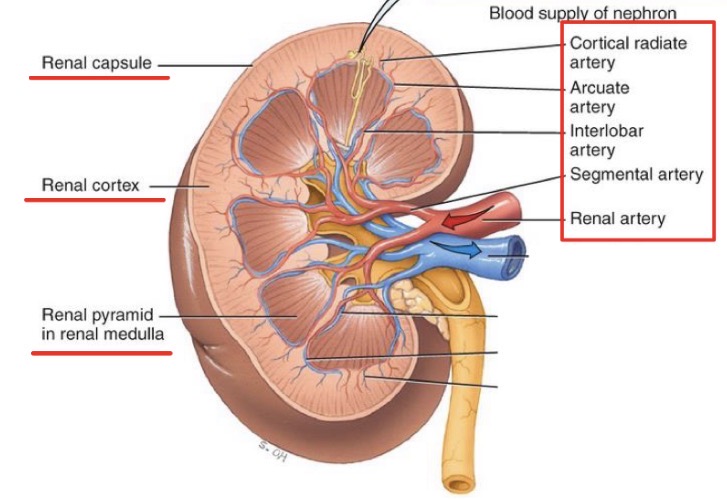

Label


Label


Label


Label


Label


Label


Label


Label

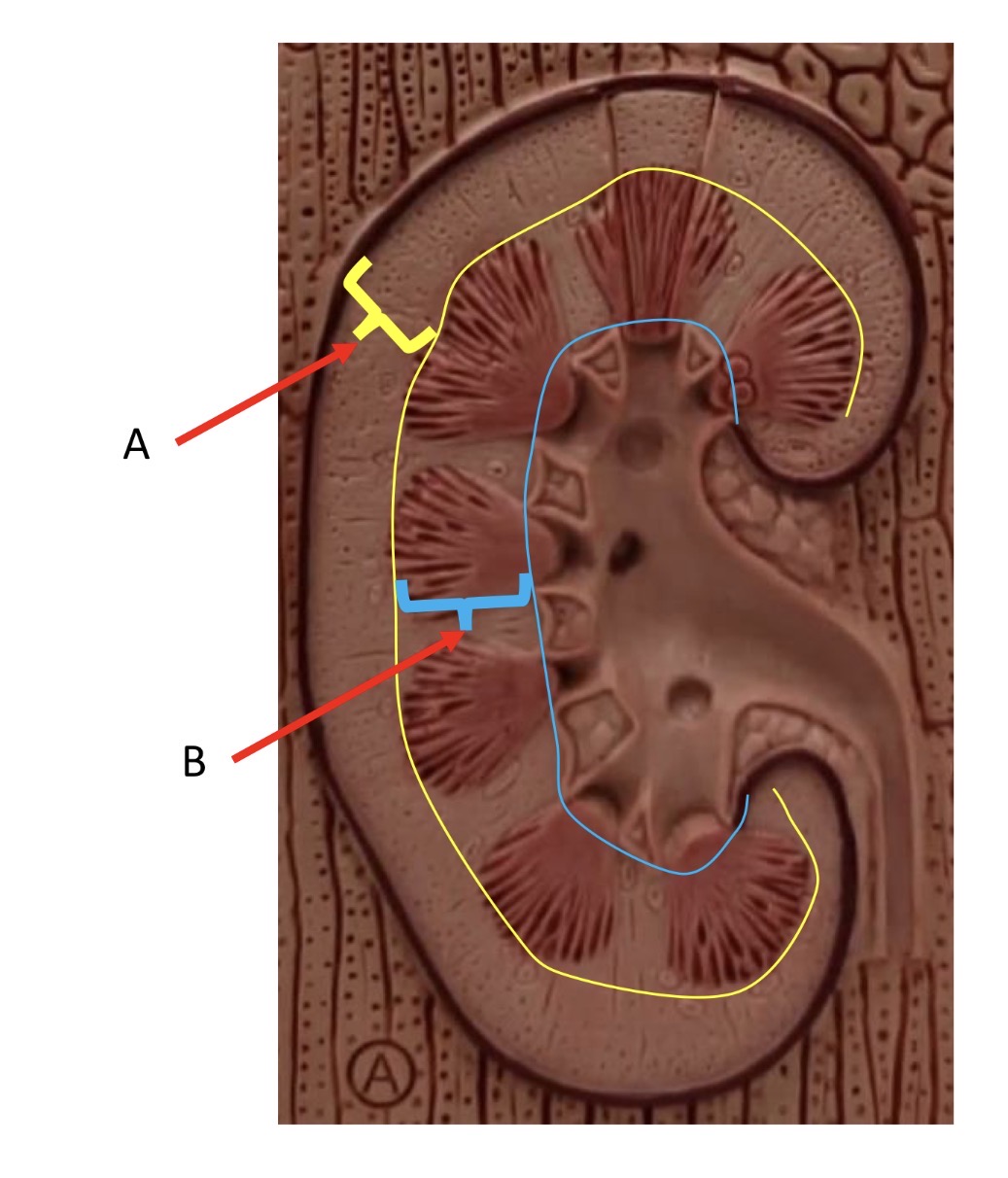
Label


Label


Label

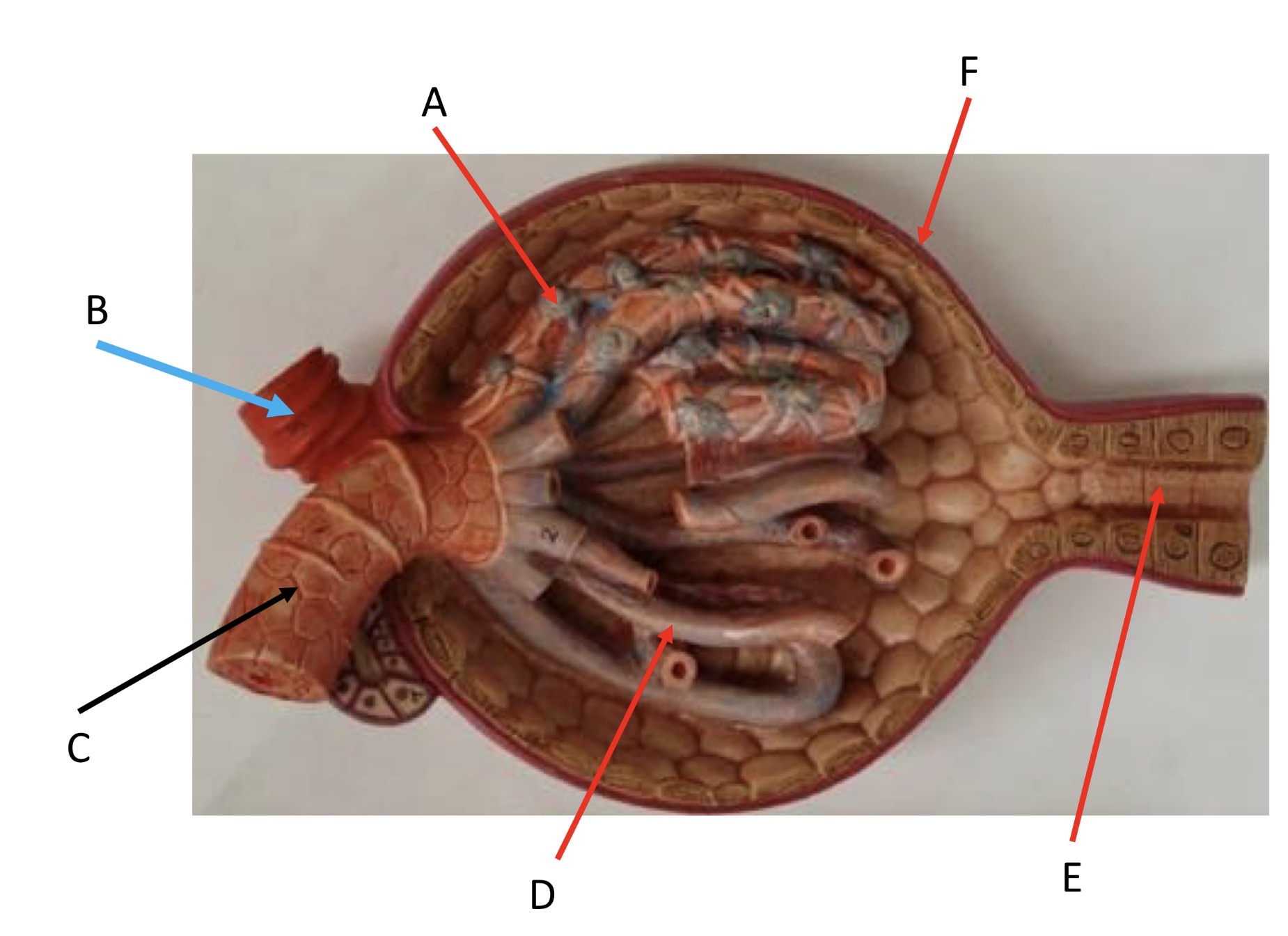
Label
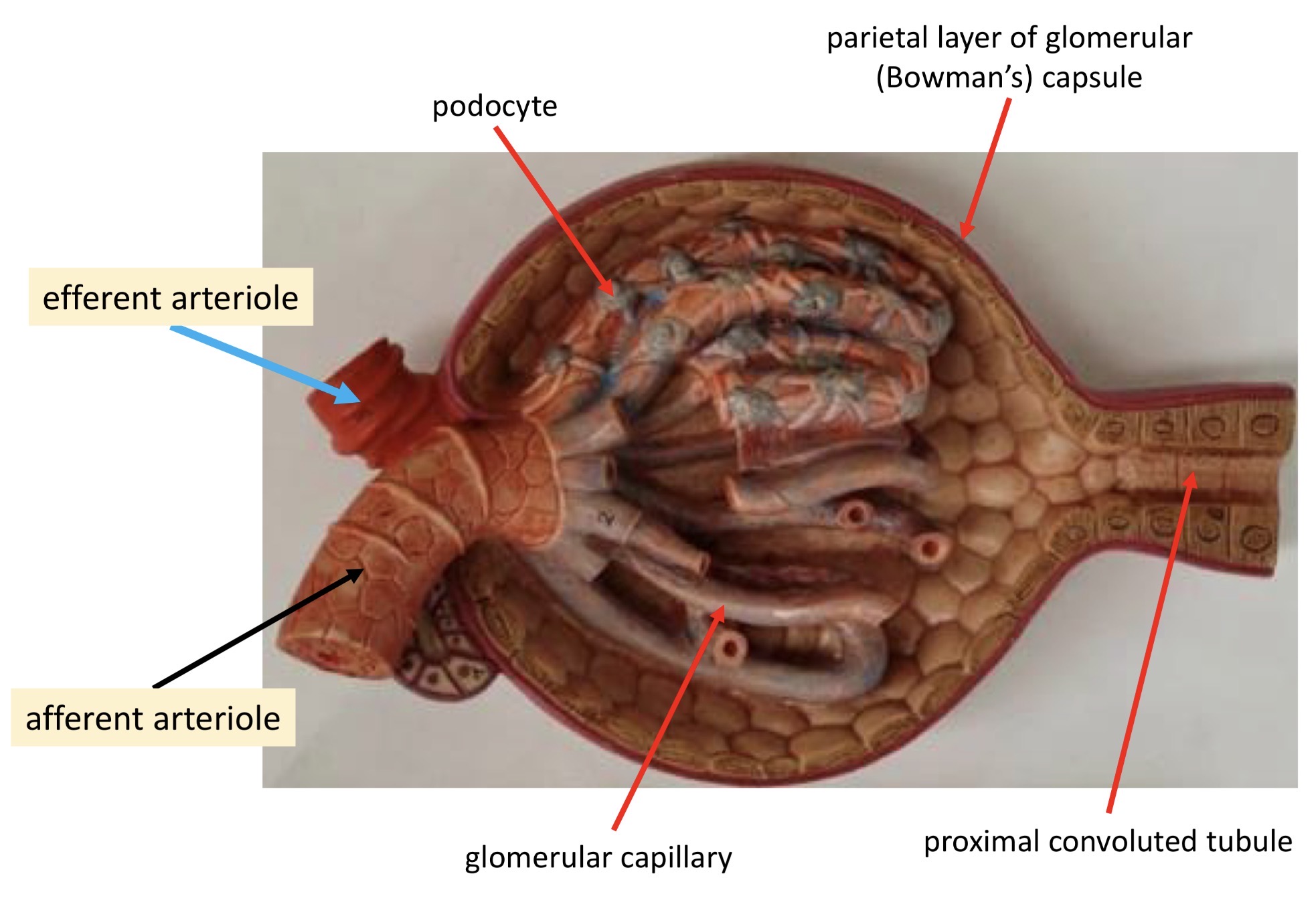

Label


Label
