surgery test # 1
 Call Kai
 Learn
Learn Practice Test
 Spaced Repetition
 Match
Match Flashcards
 Knowt Play
1/263

There's no tags or description
Looks like no tags are added yet.
Name | Mastery | Learn | Test | Matching | Spaced | Call with Kai | Chat |
|---|
No analytics yet
Send a link to your students to track their progress
264 Terms

Mayo-hegar needel holder
A surgical instrument used to hold needles during suturing procedures, allowing for precise manipulation and control.
it has a ratchet and a hinge system that enables the locking mechanism for secure grip on the needle.

olsen-hegar needle holder
an instrument that is a needle holder and suture scissors in one tool.
some girl wants to cut the head off of the olsen twins, these have scissors
Olsen = scissors

Derf needle holder
A specialized needle holder designed for fine suturing, commonly used in delicate surgeries. It features a shorter length and tweezers-like grip for enhanced control.
small and has short serrated jaws.
Scalpel Handle
A surgical instrument used to hold a scalpel blade, allowing for precise incisions in various surgical procedures. It typically has a straight or curved shape and is designed for comfortable grip and control.

Mayo dissecting scissors
Surgical scissors used for cutting and dissecting tissues in various procedures, characterized by their straight or curved blades and sturdy construction.
They are commonly used in surgeries for blunt dissection and cutting through heavier tissues.
Heavy duty thick shanks and blades designed for durability.
is used when cutting large muscle masses, cartilage, or any other nondelicate tissue.

Metzenbaum scissors
Surgical scissors designed for precise cutting and dissection of delicate tissues, typically featuring long handles and shorter blades. They are ideal for soft tissue dissection.
very delicate looking with long shanks
is used for delicate surgical dissection.

iris scissors
Surgical scissors designed for precision cutting of delicate tissues, particularly in ophthalmic procedures. They feature a fine and pointed blade, allowing for detailed dissection in small areas.
the shanks are short and so are the blades

Operating scissors
Surgical scissors used in various procedures for cutting tissues, often characterized by their versatility and suitability for both delicate and heavy-duty tasks. They may have straight or curved blades, depending on the intended use.
they are intended to only be used for cutting inanimate objects (e.g., suture, paper drapes, and sponges)

Suture scissors ( Littauer)
An instrument that has a hook like end used to grab and then cut suture
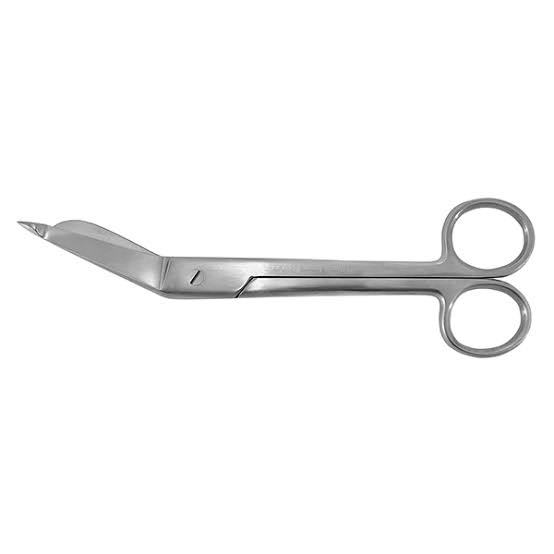
Bandage Scissors (lister)
A specialized scissor designed with a blunt tip on one edge, ideal for safely cutting through dressings and bandages without risking injury to the skin.
Staple remover
A surgical instrument designed to remove staples from skin or tissue, often featuring claw-like jaws that grasp and extract the staples without causing damage.

Brown adison tissue forceps
A type of surgical forceps with serrated jaws, used for grasping and holding tissue securely during surgical procedures.
Can cause damage to tissues
Looks like tweezers that have tooth like structures
has two parallel rows of nine shallow teeth on both tips. A common general surgery tissue forceps.
found in most surgery packs

Rat tooth thumb Forceps
A type of tissue forceps with interlocking, serrated jaws resembling rat teeth, used for holding and manipulating tissue during surgeries.
looks like tweezers with pointed tips.

Allis tissue Forceps
A type of surgical forceps with curved, serrated jaws designed to securely hold and manipulate tissue during procedures. They often have a locking mechanism to maintain grip.
generally used to grasp tough tissue (e.g., linea alba) or tissue being removed from the animal (e.g., tumor, skin)
can cause damage to the tissues, need to be careful with certain tissues.
Alice is malice

Desmarres Chalazion forceps
A specialized type of surgical forceps used primarily to grasp and manipulate tissues during eyelid surgery, particularly for the treatment of chalazia. They feature a curved design and provide a secure grip to minimize tissue trauma.
The body looks like tweezers and the end is oval shaped

babcock intestinal forceps
A type of surgical forceps with a unique grip designed to hold delicate tissues, commonly used in intestinal surgeries. They have rounded jaws that minimize injury to the tissue while providing a secure hold.
is designed to be a non crushing instrument with a very long tapered design for accessing deep cavities.
used in intestinal surgery

Doyen intestinal forceps
A type of surgical forceps designed for clamping and occluding intestinal tissues. They feature a long, flat serrated jaw that minimizes tissue damage and allows access to deep cavities.
They are non-crushing and used in gastrointestinal surgery.

Halsted mosquito hemostatic forceps
A type of small surgical forceps used for controlling bleeding by clamping blood vessels. They feature a straight or curved jaw with fine serrations, providing a secure grip without crushing the tissue.
used for small vessel clamping during surgery.
very small and has a transverses lined pattern
mosquitos are very small! i.e. small instrument used for small things
has small jaws with fine horizontal serrations along the length of the tip. These are generally used for clamping small vessels.

Crile Hemostatic forceps
A type of surgical forceps used for clamping larger blood vessels and controlling bleeding during surgery. They feature a straight or curved design with transverse serrations for a secure grip. These forceps are designed to provide a firm hold on tissues without causing damage, suitable for various surgical procedures.
can be used for medium-sized vessels or small tissue masses.

Kelly hemostatic forceps
A type of medium sized surgical forceps used to clamp larger blood vessels and control bleeding during surgery. They have a wider jaw and transverse serrations for a secure grip, making them effective for various surgical applications.
the transverse serrations do not go the full length of the instrument
Kelly is not a good girl so she does not go all the way

Rochester-ochsner hemostatic forceps
A type of surgical forceps designed for clamping larger blood vessels and tissues during surgical procedures. They feature a wider jaw and longer with a tooth on the end, transverse serrations that provide a strong grip, making them effective for controlling bleeding.
more of a heavy duty instrument
Often used in more demanding surgical settings where a strong hold is necessary, suitable for clamping major vessels and tissues.

Rochester-Carmalt hemostatic forceps
A type of surgical forceps used for clamping large blood vessels and tissue bundles. They have a distinctive longitudinal serration pattern and cross-hatched tips, allowing for a secure grasp, especially in abdominal procedures.
used for clamping larger blood vessels or securing heavier tissues
This hemostatic forceps is usually about 8 inches long with a jaw that is approximately 3.5 inches of the total length, making this a good instrument to use when clamping a large vessel or tissue mass.
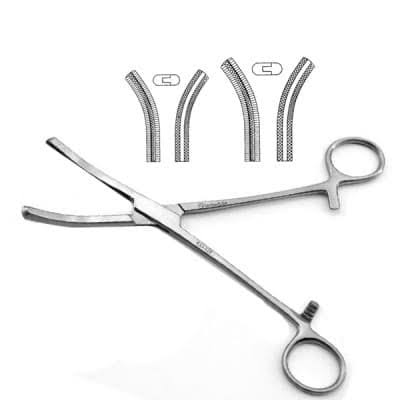
Ferguson angiotribe
extremely strong forceps that is quite traumatic, with a crushing jaw design that can be used on vessels of almost any size and on any tissue that will not need to be viable in the body.
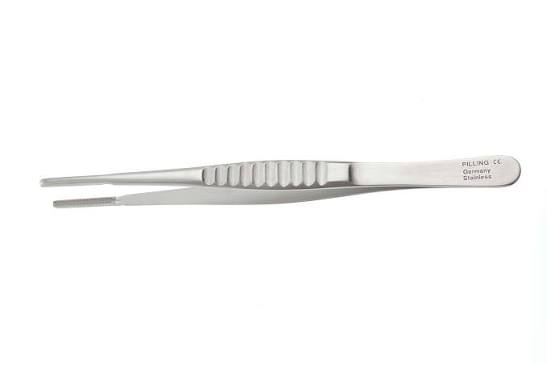
DeBakey thoracic thumb tissue forceps
an atraumatic forceps that should be used only on delicate tissue
originally designed for cardiovascular surgery
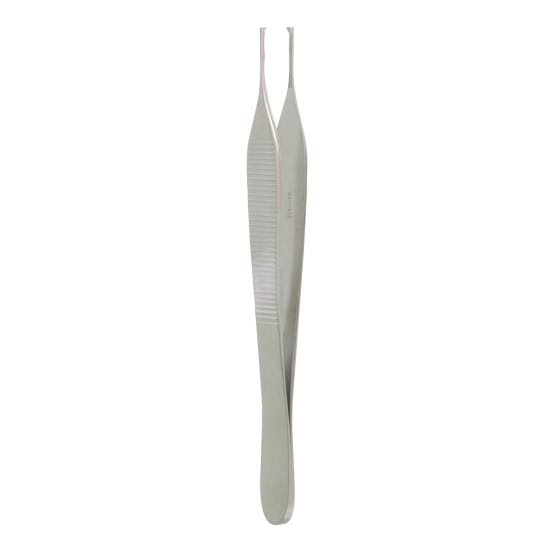
Adson 1 × 2
The tip has one tooth on one tip and two teeth on the other. The teeth interdigitate to grasp tissue firmly. It can be fairly traumatic if used on delicate tissue or too aggressively.

backhaus towel clamps
Surgical instruments used to secure drapes and towels to the patient's skin during surgical procedures. They consist of two curved, sharp jaws that create a strong hold, preventing movement and maintaining a sterile field.

Jones towel clamps
Surgical instruments designed to hold drapes and towels firmly to the patient's skin during surgery. They feature two curved, sharp jaws that ensure a secure grip, aiding in maintaining a sterile environment.
body is tweezer like and the end kind of looks like an oval
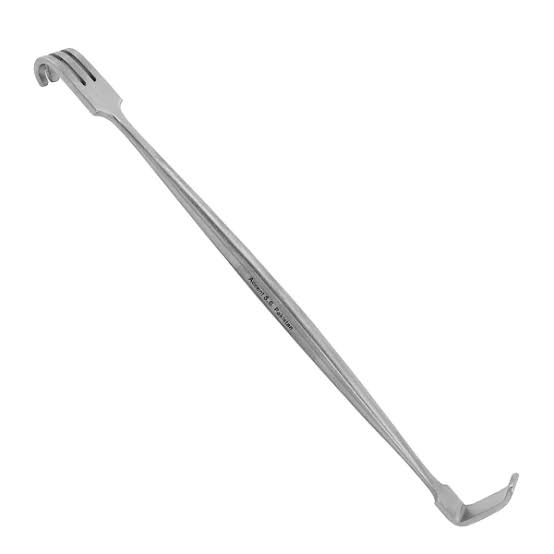
Senn retractor
A surgical instrument used to hold back tissues and provide visibility in the surgical site. It features two prongs on one end and a handle on the other, allowing for easy manipulation in various procedures.
long instrument with hand like projections at the end for grasping tissue.
hand held retractor that assists in exposing surgical areas.

Say/snook hook
A surgical instrument used to expose tissue and access deeper structures. It has a hooked end that allows for effective retraction of soft tissues during procedures.

Weitlaner retractor
A surgical instrument with outward-curving prongs designed to hold back tissue and maintain exposure during surgical procedures. It typically features a ratchet mechanism for adjusting its width and securing tissue in place.
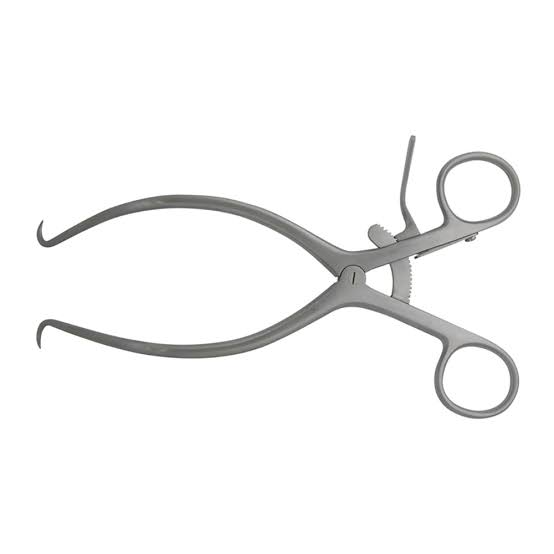
Gelpi retractor
A surgical instrument with pointed, outward-curving tines that holds back tissue and maintains exposure during procedures. It is a self-retaining retractor, commonly used in orthopedic and neurosurgery to provide optimal visibility of the surgical field.
used to hold open shallow incision sites
has scissor like handles with a ratchet locking system

Balfour retractor
a heavy duty instrument that has two arms to push the incision to the left and the right as well as a curved projection that is used to pull tissue downward.
it has a ratchet system, so it keeps everything open on its own
It is often used in abdominal procedures to facilitate access and visibility, allowing surgeons to work more efficiently.

Yankauer suction tip
A surgical suction device with a rigid, curved design and a wide lumen, used to remove fluids or debris from the surgical field. It typically has a bulbous tip that minimizes tissue trauma while effectively aspirating.
curved with a rounded tip

poole suction tip
A surgical suction device that features multiple side holes and a long, straight design, allowing for efficient fluid removal in large surgical areas while minimizing tissue trauma. It is particularly useful in abdominal and thoracic surgeries.
the tiny holes prevents tissues from getting sucked into the tool
used for deeper body cavities

Frazier Suction tip
A thin tip placed on the suction machine to suck out a certain amount of fluid

Rongeurs
Surgical instruments designed for grasping and cutting bone or tissue, typically featuring a pair of sharp, blunt jaws that can be opened and closed. They are commonly used in orthopedic and neurosurgical procedures to remove or reshape bone.
A scissor like instrument that has a double action joint that creates a crushing force used to chip / cut away at bone
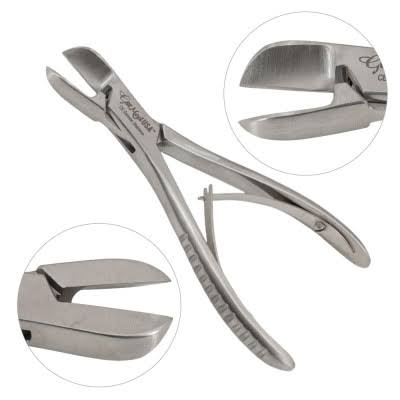
Bone cutting forceps
Surgical instruments used to cut and shape bone, designed with strong jaws that can exert considerable pressure to effectively slice through dense bone tissue.
Scissor like instrument with a double action joint and a flat, wedge shaped blade.
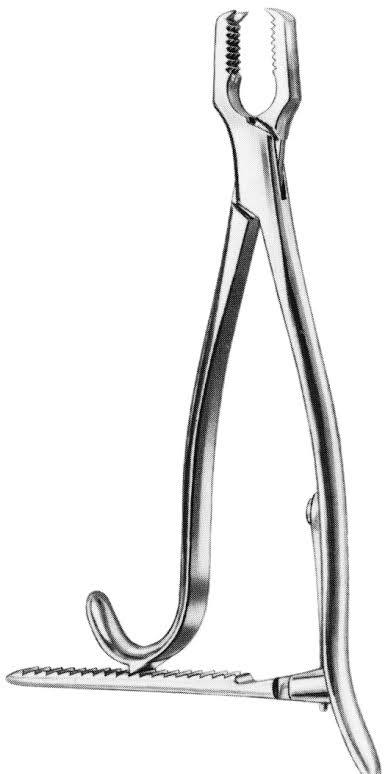
Kern Bone holding forceps
Surgical instruments used to hold bone fragments in place during procedures. They feature a ratchet mechanism and jaws designed to securely grip bone without slipping.
Look like pliers and has jaws with deep teeth like ridges used to grip

Freer periosteal elevator
A surgical instrument used to separate the periosteum from the underlying bone. It typically has a flat, slightly curved blade to facilitate the gentle lifting of the periosteum during surgery.
Long pencil like instrument with rounded blunt blade
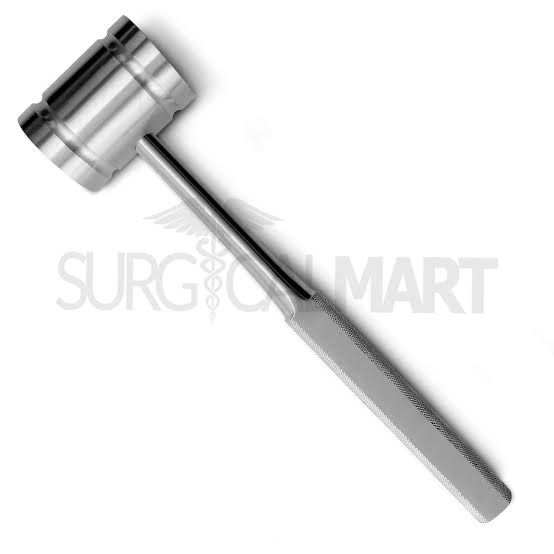
Mallet
a specialized hammer used to deliver precise controlled impact force to bone
the head of the instrument is weighted to equally distribute force
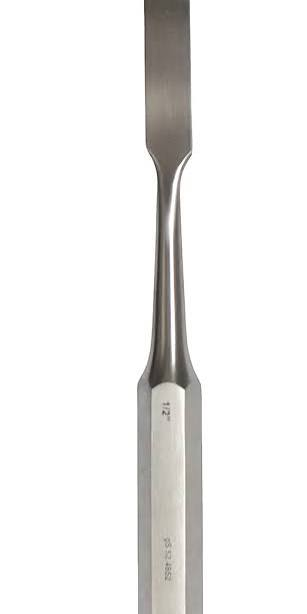
Osteotome
wedge shaped instrument with a blade on one end. used to chisel, cut, shape or split bone
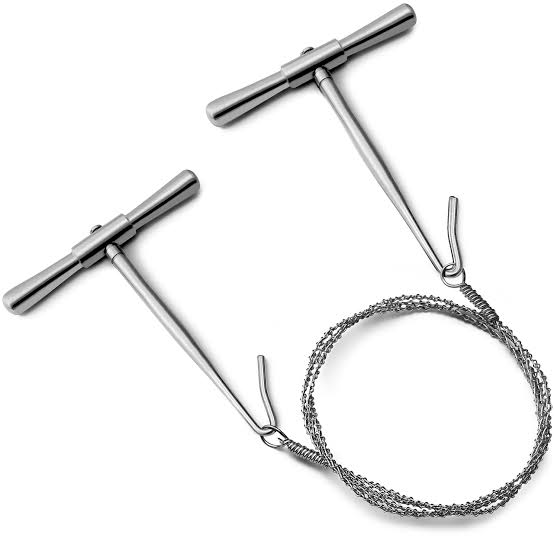
Gigli wire
A flexible wire saw used in surgery to cut bone smoothly, often employed in orthopedic and neurosurgical procedures.
Hand operated

Jacobs hand chuck and key
A surgical instrument used to securely hold and manipulate bone fragments when drilling or inserting pins, screws, or implants. It typically consists of a chuck that grips the device and a key to tighten or loosen the grip. It allows for precise alignment and stabilization of bone during procedures.

Intramedullary pin
a stain-less steel rod that gets driven through the hollow marrow cavity of long bones
used to stabilize fractures in long bones
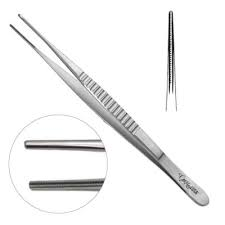
Debakey vascular forceps
specialized, atraumatic surgical instruments designed to grip delicate tissues and blood vessels without crushing or piercing them

sponge forceps
specialized surgical instruments featuring ring handles, a ratcheted locking mechanism, and oval, fenestrated (looped) jaws that can be smooth or serrated
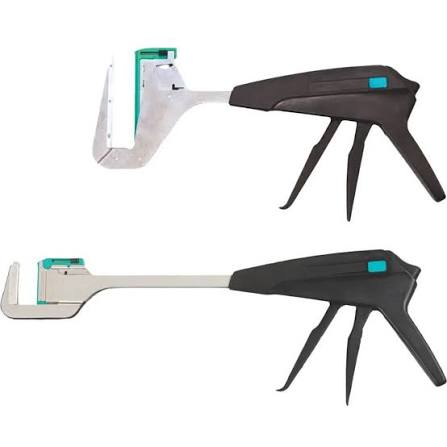
Thoracic abdominal stapler
is a specialized, single-use surgical linear stapler used to place parallel, staggered rows of titanium staples across tissue without cutting it

Gastrointestinal anastomosis stapler
a specialized surgical device used to reconnect sections of the intestine, stomach, or other digestive organs securely during surgery

Endoscopic GIA stapler
a single-use laparoscopic surgical instrument used to simultaneously cut and staple tissue during abdominal, gynecologic, thoracic, and pediatric surgeries

Curettes
a hand-held medical instrument with a small scoop, loop, or ring-shaped tip used to scrape, clean, or remove biological tissue and bone

Beaver blade handle
a specialized, slender surgical instrument used to securely hold ultra-fine micro-blades for delicate procedures like ophthalmic (eye) surgeries and precise soft-tissue dissection

Stevens tenotomy scissors
fine, lightweight surgical instruments designed for delicate soft tissue dissection and tenotomy in ophthalmic, plastic, and reconstructive procedures.

desmarres chalazion forceps
a specialized ophthalmic surgical instrument used primarily to immobilize, stabilize, and evert the eyelid during eye surgeries
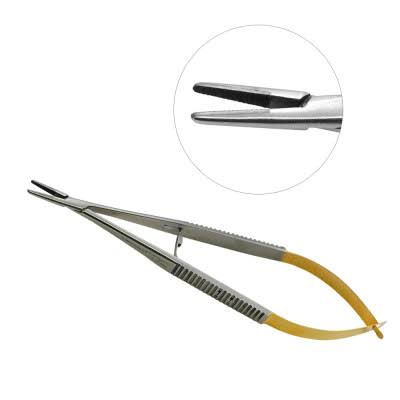
Castroviejo needle holder or scissors
Features a spring-action handle (pencil-grip style) instead of traditional ring handles, allowing the jaws to open and close smoothly with gentle finger pressure
Used to securely grip tiny, delicate suture needles (often with tungsten carbide jaws for enhanced durability and grip)
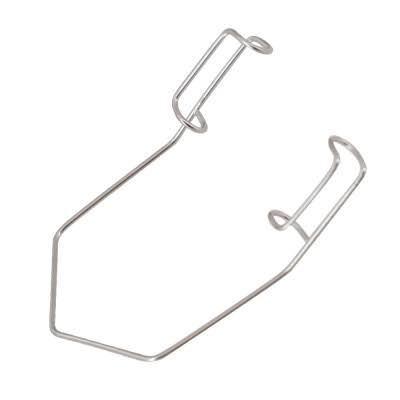
Barraquer lid speculums
a lightweight, spring-action wire surgical instrument used to retract and hold the eyelids open during ocular examinations and microsurgeries
The veterinary surgeon needs to clamp a small vessel in a Cairn terrier dog. Which of the following forceps is most appropriate to use?
Halstead mosquito hemostatic
During surgery on a cat, the veterinarian needs to cut a sponge to fit a particular wound size. Which of the following surgical scissors is most appropriate to hand her?
Operating scissors
Which represents safe storage time for a sterile pack in a single-wrapped muslin stored in a closed cabinet?
1 week
What reduces the safe storage time for a single-wrapped muslin pack
Storaging the pack in an open cabinet reduces the safe storage time to 2 days
What is the safe storage time for double-wrapped muslin packs and single-wrapped crepe paper packs?
The safe storage time in an open cabinet is 3 weeks but that is doubled in a closed cabinet.
For example, storage of a single-wrapped crepe paper pack is at least 8 weeks in a closed cabinet, and 7 weeks for a double-wrapped muslin pack.
A circulating nurse inadvertently touches the outer surface of the inner wrap of a double-wrapped pack, thus contaminating it. Which is the most appropriate response?
The circulating nurse then finishes opening the pack being careful not to touch the instruments.
what is the advantage of having a double wrapped pack
The advantage of a double wrapped pack is if when the circulating nurse unwraps the outer layer but then accidently contaminates the inner layer of wrapping the instruments are still sterile. This ensures that even if the inner layer is compromised, the instruments remain protected and sterile until ready for use.
when this happens the circulating nurse can open the inner layer, (usually the scrubbed-in assistant unwraps the inner layer), they just need to be careful to not touch the instruments.
During abdominal surgery, the surgeon wants to remove a tumor. Which tissue forceps, because of its traumatic nature, is used to grasp tough tissue or tissue being removed from the patient?
Allis
During surgery, a veterinary technician drops a forceps. The surgeon says she needs it cleaned. Which of the following types of sterilization is most appropriate in this case?
Flash
Flash sterilization
is an abbreviated version of a regular sterilization cycle. Instruments usually are sterilized one or two at a time. This process is most appropriate for instruments that were dropped during surgery. Because autoclaves are used in flash sterilization, neither dry heat, boiling water, nor gas heat is used, but pressurized steam is used, as it is for normal sterilization by autoclave.
The surgical assistant is “running” the suture. What is the assistant actually doing?
Keeping the sutures out of the way of the surgeon
What does it mean to run suture for a surgeon?
The technician’s responsibility is to keep the suture out of the incision and out of the way of the surgeon. If the path is clear, all the surgeon needs to do is to place the stitches. Running the suture significantly reduces anesthesia time because the surgeon can suture much faster. The surgical assistant is responsible for cutting the sutures once the veterinarian has completed the suture placement, as well as “running” the suture when the surgeon is placing a continuous pattern.
When passing a scalpel blade and handle to the surgeon, the technician should hold it so that the blade points:
toward the technician.
How to correctly pass a scalpel blade and handle to a surgeon
The technician should hold the scalpel handle with the blade facing away from the hand, with the point toward the technician. The thumb and index finger should be holding the handle with the hand in a supinated position. Pronation of the technician’s hand follows as the handle is passed into the waiting hand of the surgeon.
Which best describes a subcutaneous suture pattern?
It brings the skin edges into apposition but generally does not appropriately close the skin.
subcutaneous suture pattern
is placed in the subcutaneous tissue layer. This pattern brings the skin edges into apposition but generally does not appropriately close the skin. This pattern is often used to decrease dead space in a wound, with skin sutures still being needed.
Lembert pattern
is an inverting pattern generally used to close a hollow organ (stomach, urinary bladder, intestine, etc.). This patterns can be placed to appose tissue edges but if pulled more tightly create an inverting pattern.
continuous pattern
A subcuticular suture pattern
placed in the subcuticular space just under the skin. Often subcuticular patterns are placed to eliminate the need for skin sutures The skin edges are close enough in apposition that further external sutures are unnecessary.
Simple continuous patterns
can be employed in subcutaneous space, subcuticularly, as a skin suture on muscle layers on the linea alba or any other area where a relatively air-tight/fluid-tight apposition is needed.
I am the preferred instrument for securely clamping the uterus for ligation during an ovariohysterectomy. What am I?
Rochester-Carmalt hemostat
In small animal anesthesia when delivering breaths with the reservoir bag, the pressure manometer reading should not exceed:
20 cm H2O
Simple interrupted suture pattern
is probably the most frequently used suture pattern in veterinary surgery. It is an easy, quick, and versatile pattern to place. It is frequently used to close the skin, linea alba, muscle layers, subcutaneous space, and so on. It is also the pattern used to secure implants such as Penrose drains.
horizontal mattress pattern
is time consuming to place but is ideal in areas of tension. If pulled too tightly it will result in an everting pattern, so care must be used to keep the tissue edges appositional if that is the intention.
continuous pattern
Which of the following suture patterns is a surgeon most likely to use to close the skin of a dog in whom a Penrose drain has been placed?
Simple interrupted
The tidal volume (Vt) of an anesthetized animal is considered to be ________ ml/kg of body weight.
10-20
Which part of the anesthesia machine reduces the pressure in the system from 50 psi to 15 psi?
flowmeter
Tipping an anesthetic vaporizer can result in:
high dosage or potential overdose for a patient.
what happens when a vaporizer is tipped over
Tipping may lead to leakage of anesthetic into the oxygen bypass channel, resulting in higher concentrations of anesthetic reaching the patient and therefore potential overdose. All other options do not correctly describe what occurs when an anesthetic vaporizer is tipped.
Which of the following processes is intended to rid an object of all living microbes?
Sterilization
Avoiding buildup of which of the following best explains why the technician should pay special attention to surgical instruments’ box locks, joints, and serrations during the decontamination process?
Biologic debris
When first picking up a folded gown from a pack in order to put it on, hold the gown by the _____ to allow it to unfold.
neckline
Which is an appropriate step in the closed gloving technique?
Place the palm of the glove palm down on the hand with the thumb and fingers facing the body.
Non-rebreathing systems should have maintenance flow rates that are:
Very high (100 to 200ml/kg/min)
Reminders for closed gloving technique
Remember to always keep the hands within the cuffs of the gown. With the left hand, pick up the right glove from the inner wrapper of the glove package by the folded cuff. Extend the right hand (still within the cuff) with the palm facing upward. Place the palm of the glove palm down against the palm of the hand with the thumb and fingers of the glove facing the body. (The thumb side should be underneath on the same side as the thumb of the right hand facing upward.)
How to put on a surgical gown
Gowns are folded inside-out in the packs. Grasp the whole gown, and lift the folded gown out of the package. Step away from the table, making sure there is adequate space to gown without contaminating anything. After locating the neckline and armholes, hold the gown by the neckline and allow it to unfold (do not shake it).
chromium oxide
is a protective coating on all instruments to extend their usefulness as properly functioning devices. If the coating is removed, the instrument will be compromised, and then its surface can harbor pathogens that can adversely affect the patient’s health.
Where do biologic debris like to build up
they like to build up in box locks, joints and serrations.
What does presoaking help with?
helps loosen biologic and other debris before cleaning the instrument
what is decontamination
is the manual cleaning of an instrument in a commercial instrument detergent solution to assist in the breakdown of biologic debris.
antiseptic
is a chemical that only inhibits or prevents the growth of microbes on living tissue.
how is the Daily scheduling for a surgery day decided?
Cleanest cases to dirtiest cases
more difficult cases earlier in the day
animals in critical condition take precedence
procedures needing the same equipment should be spread out throughout the day
From where do animals lose heat?
through mucus membranes, open body cavities, and extremities such as paws.
the head as well
What are some patient warming risks?
Long and/or wet procedures like dentals
geriatrics
diabetes
cushings
hairless pets
Electrocautery
is an electrosurgical unit is used to cut or coagulate vessels
there is a monopolar handpiece and a bipolar handpiece
Monopolar handpiece
Electrocautery handpiece that has a foot switch and or a hand control pen
requires a ground plate