Anatomy: The nervous system, part 1
 Call Kai
 Learn
 Practice Test
 Spaced Repetition
 Match
 Flashcards
 Knowt Play
1/49

There's no tags or description
Looks like no tags are added yet.
50 Terms
The nervous system
It is responsible for all our behaviors, memories, and movements
-help to maintain homeostasis
-receives information (sensory motors stimuli inside and outside the body)
-integrates information (integrative interprets sensory input)
-Acts upon information (motor responds to stimuli by activating effector organs)

Peripheral Nervous system division: Sensory (to CNS)
-somatic
-visceral(organs)
-special senses(vision, hearing taste)

Peripheral Nervous system division: Motor
-somatic(voluntary)=skeletal muscle
-Autonomic(involuntary)=glands, organs, cardiac/smooth muscle

Ganglia(ganglion)
groups of neurons outside of the CNS
-apart of peripheral NS

Nerves(cranial and spinal)
groups of axons, may be comprised of sensory axons, motor axons or both
-apart of the peripheral NS

Neuron
a specialized, electrically excitable cell
-the soma, dendrites, and axons are all part of the same cell and share a contiguous membrane and cytoplasm

Soma(cell body, perikaryon): apart of neuron
-nucleus, nissl bodies(rough ER), many mitochondria, golgi, vesicles containing neurotransmitters, many microtubules and neurofilaments(intermediate filaments), glycogen, lipids, melanin

Dendrite: apart of neuron
-input structure of neuron, generally highly branched, post-synaptic side of synapses, involved in integration of information

Neurons
functional units(excitable)

Neuroglia
support/ nourishment/protection, blood vessels(epithelium tissue) & connective tissue

Axon: apart of the neuron
-output structure of neuron, usually just one/neuron, neuro filaments

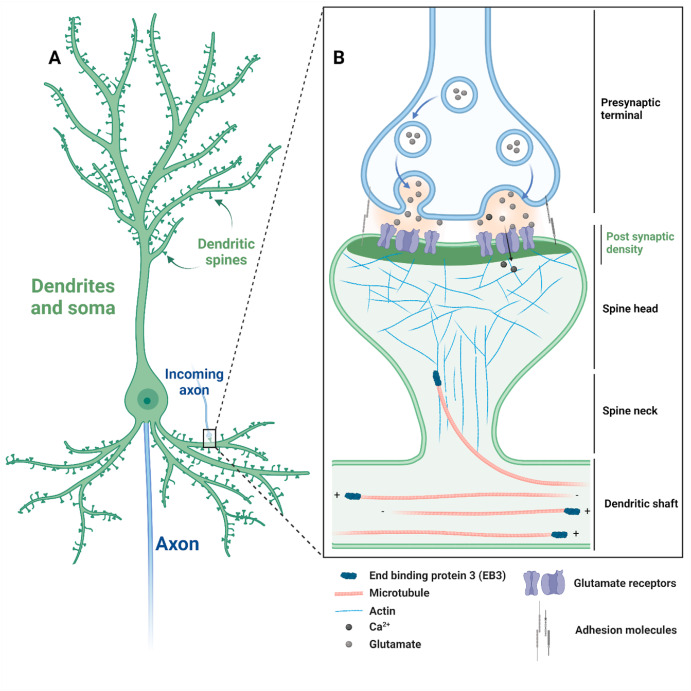
Dendric spines
synaptic specialization seen on some CNS neurons
Telodendria
branches at terminal ends

Axon terminals
pre-synaptic side of synapse

sensory: afferent
Towards CNS
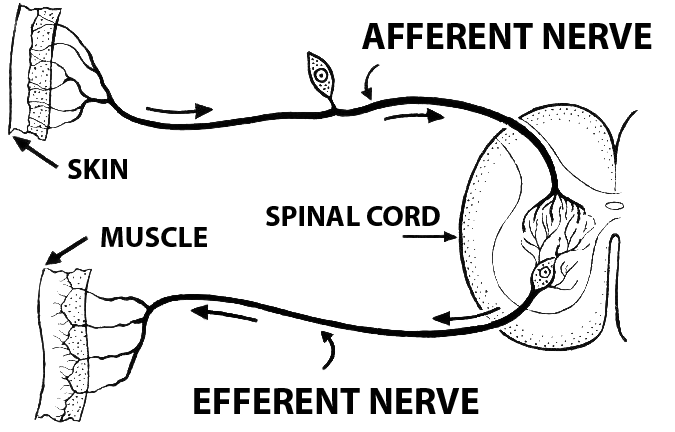
Interneuron
integration in CNS

Motor: efferent
away from CNS

More on Neuroglia
-Glia(greek for glue)
-2 to 10 times more glia than neurons
-likely more heterogenous than we know
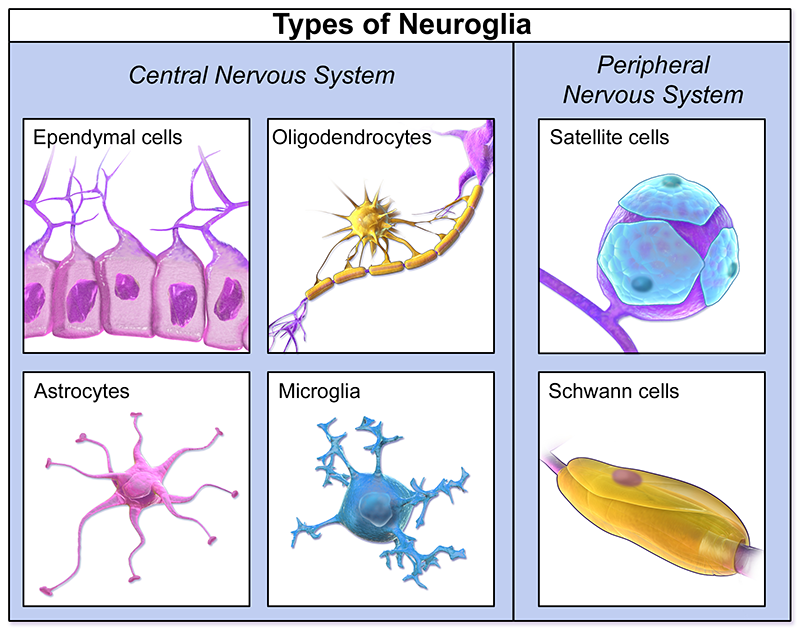
-microglia and macroglia (oligodendrocytes, Schwann cells and astrocytes)
-80% of cells in brain are macroglia

Oligodendrocyte
-CNS
-1-30 different axons/oligodendrocyte
-50% of brain macroglia

Schwann cell
-PNS
-single axon/schwann cell

Myelinated Axons: PNS Schwann cell
single schwann cell forms many wraps around single axon

Neurolemma: PNS Schwann cell
last wrap of Schwann cell containing nucleus and other organelles

Unmyelinated axon: PNS Schwann cell
-multiple small diameter axons contacted by one Schwann cell
-Axons are not fully wrapped by Schwann cell (myelin)

Node of Ranvier
gap between Schwann cells, allows for action potential propagation

Macroglia: Astrocytes (astroglia)
-CNS
-regulate extracellular ion and small molecule concentrations
-involvement in neurotransmitter uptake and recycling
-line blood vessel, meningeal surfaces, synapses and nodes of Ranvier
-Important role in cell migration and various other processes
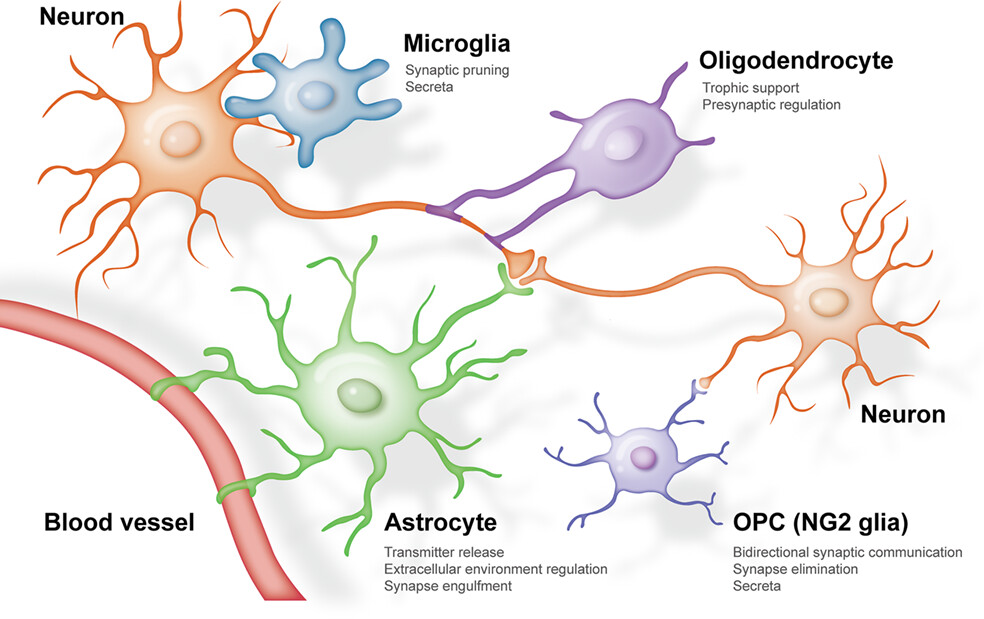
Microglia
-serve as immune type of role in the CNS
-possible macrophage origin, migrate from embryonic blood marrow
-important role in synaptic remodeling

CNS: ependymal cells
They form a epithelium that lines central canal of spinal cord and ventricles of brain

Function of ependymal cells
produce and monitor cerebrospinal fluid, have cilia that help circulate cerebrospinal fluid

PNS: Satellite cells
-surround ganglia and neurons within ganglia
-regulate interstitial fluid around neurons
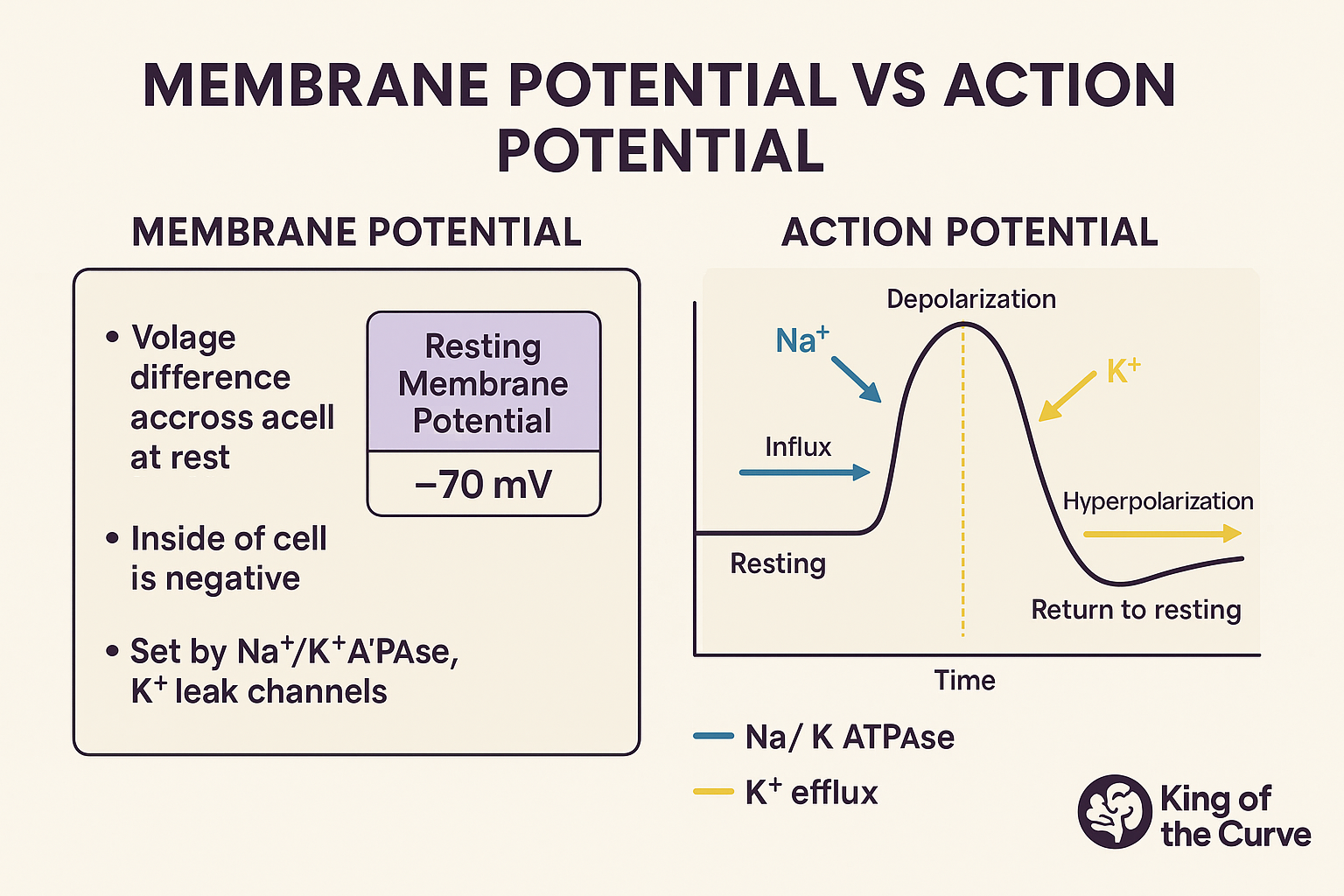
Membrane potential
the potential difference across a cell membrane
Volts
the difference in electrical charge between two points that is measured

Potential
referring to electrical energy that could preform work

resting membrane potential
based on relative ion concentrations inside and outside the cell

Active transport of ions
various ion transporters that use energy (ATP) to move ions across the cell membrane
-sodium/potassium exchange pump, 3 Na+ out of the cell and 2 K+ into the cell
-requires phosphorylation by ATP

facilitated diffusion
-the plasma membrane is selectively permeable: ions cannot freely diffuse across the plasma membrane
-various ion channels(membrane proteins) can serve as conduits for ions

Leaked channels
ion channels that are always open, ion selective conductivity, named for the ions they transport

relative permeability
-not all ions are equally able to pass through leak channels:
-ion channels are selective
-the rate of ion transfer (conductance) varies between leak channels
-the number of each type of leak channel varies
-the permeability of cell membrane is greater than K+ than for Na+

More on resting membrane potential
the ion concentration inside and outside a neuron is the balance of the activity of ion pumps and facilitated diffusion that occurs through leaked channels. The net charge balance from these processes determines the resting membrane potential

Electrochemical gradient
the movement of ions through ion channels is affected by the electrochemical gradient for an ion:

chemical gradient
concentration gradient across membrane

Electrical gradient
ionic change difference across the membrane(membrane potential)

Equilibrium potential of an ion
-the potential at which the net flux across a membrane is 0 if the membrane is only permeable to one ion
-can be calculated using the nernst equation from the intracellular and extracellular concentration of an ion and its charge
-90mV for K+, 55mV for Na+
Gated ion channels
Ion channels that require some type of of stimulus to open
Three major classes:
-chemically gated (ligand-gated)
-voltage-gated
-mechanically gated

Chemically gated ion channels(ligand-gated)
-ion channels that open when they bind a particular chemical
-respond to neurotransmitter, hormones
-found in many tissues:neurons, muscle, glands, viscera
-located on dendrites and soma, sometimes axon terminals
-ion selective

Voltage gated ion channels
ion channels that open/close in response to changes in membrane potential (change opening probability)
-found in electrically excitable cells(neurons, muscles)
-ion selective permeability
Three primary states:
Closed, but able to be open
Open(activated)
Closes, but incapable of opening until something else occurs (inactivated)

Mechanically gated ion channels
-ions channels that open in response to deformation of the plasma membrane (mechanical or osmotic pressure)
-found in some sensory receptor neurons, cardiac muscle, smooth muscles
-selective cation channels

Graded(local) potentials
-activation of an ion channel allows for influx or efflux of ions at that location
-this local change in ion concentration causes a local change in the membrane potential
-The change in membrane potential dissipates with distance from the activation site

Depolarization
less polarized, at rest it is positive-going change in potential, positive ions entering a cell

Hyperpolarization
more polarized, at rest it is negative-going change in potential, positive ions leaving the cell

Repolarization
return to resting potential (if becoming more polarized), due to facilitated diffusion and ion pumps
