Skin — The Largest Organ
 Call Kai
 Learn
Learn Practice Test
 Spaced Repetition
 Match
Match Flashcards
 Knowt Play
1/14

Earn XP
Name | Mastery | Learn | Test | Matching | Spaced | Call with Kai | Chat |
|---|
No analytics yet
Send a link to your students to track their progress
15 Terms
The skin is…
The skin (integument) is the largest organ, uses all four tissue types, and has accessory organs (glands, hair, and nails)
The three layers of the skin are
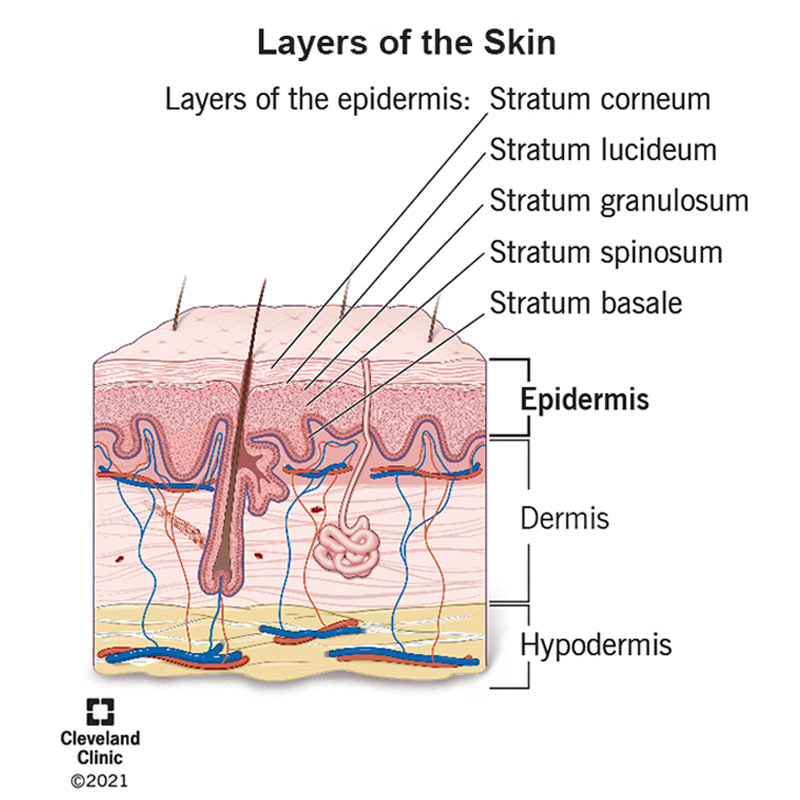
Epidermis, Dermis, and Hypodermis
Epidermis
The epidermis uses tightly packed cells that do not absorb or lose water
Stratum Layers
The Stratum Layers are at the very surface of the epidermis and protect the body from microbes
Melanocytes
Melanocytes are specialized cells that produce melanin
Melanin
Melanin is a dark pigment that builds up around the nucleus of each skin cell to protect nuclear DNA from mutations and skin cancer
Dermis
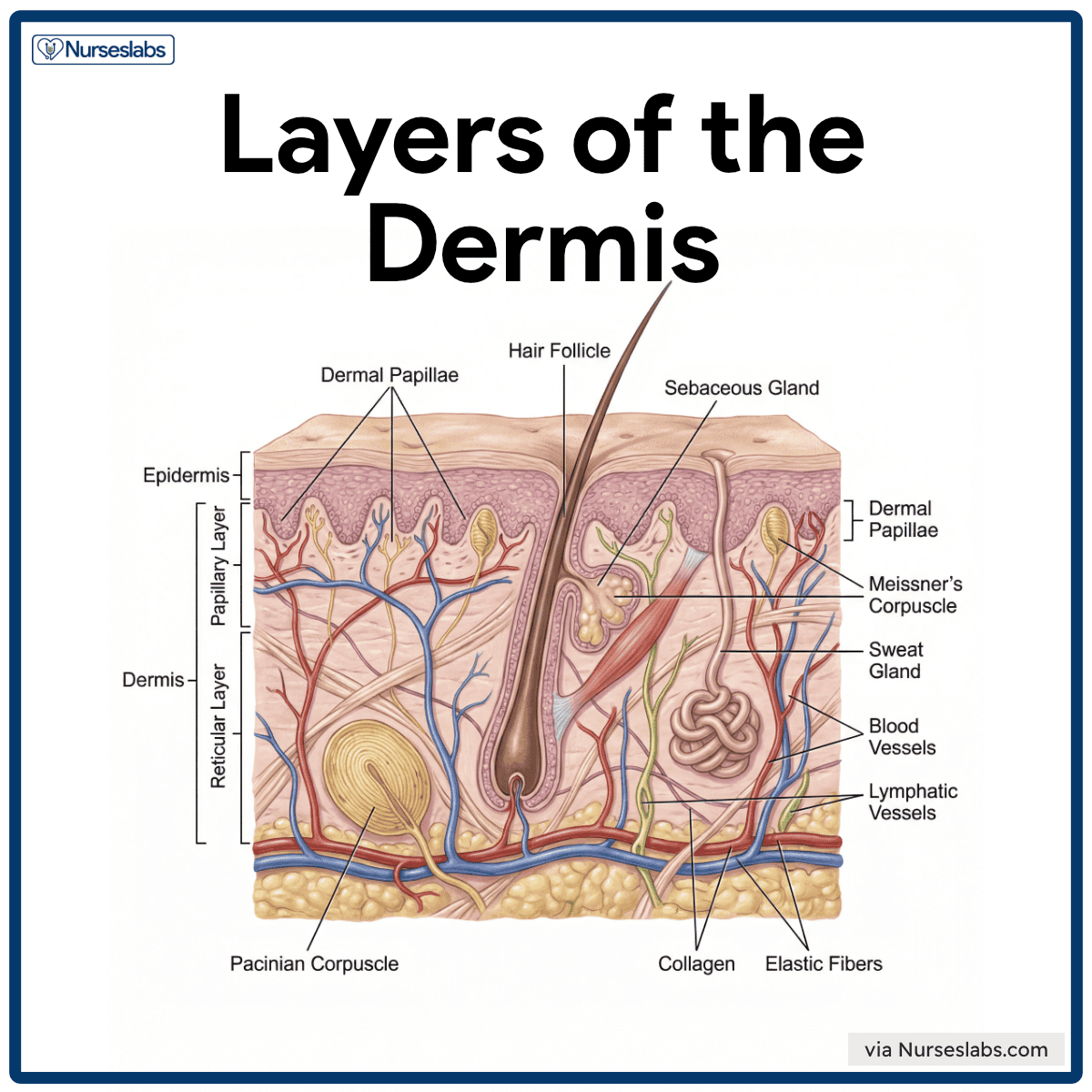
The dermis is the thickest layer of the skin, made up of dense irregular connective tissue and maintains body temperature (thermoregulation)
The dermis reacts to heat by…
The dermis reacts to heat by stimulating sweat glands to allow heat to evaporate and opening blood vessels
The dermis reacts to cold by…
The dermis does not stimulate any sweat glands and constricts blood vessels (vasoconstriction)
Hypodermis (subcutaneous tissue)
The hypodermis (subcutaneous tissue) is made up of connective tissue and adipose (fat).
The hypodermis is…
The hypodermis is an insulator, cushion, and energy reservoir
Merkel Cells
Merkel Cells are few in number and found at the stratum basal layer in the epidermis, they are touch and temperature receptors.
When epithelial cells are cut…
When epithelial cells are cut, they will actively divide to make up for the lost cells.
When the dermis is wounded…
When the dermis is wounded, blood vessels break off and form a scab, that will later break off as damaged tissue is replaced
Doctors classify burns by…
Doctors classify burns using degrees to indicate the depth and severity of the burn
