Phleb - Unit 5 Special Blood Collection Procedures
 Call Kai
 Learn
Learn Practice Test
 Spaced Repetition
 Match
Match Flashcards
 Knowt Play
1/34

There's no tags or description
Looks like no tags are added yet.
Name | Mastery | Learn | Test | Matching | Spaced | Call with Kai | Chat |
|---|
No analytics yet
Send a link to your students to track their progress
35 Terms
what equipment is used for microcapillary collection
Lancets
BD microtainer tubes (0.2-0.5 mL)
why might microcapillary collection be performed
patient doesn’t have adequate veins → small child or infant
point of care testing (checking blood often, glucose)
where are collection sites for microcapillary collection
fingers
heels
what is the compositions of capillary blood
Capillaries, arterioles, and venules meet
mixture of arterial, venous, and capillary blood along w/ interstitial fluid
microcapillary collection - fingerstick procedure
greet and identify patient
put on gloves
position supplies
cleanse site
perform puncture (middle or ring finger, just off the center of the finger pad)
wipe off first drop of blood
fill collection container(s)
gauze and apply pressure to site
dispose of lancet
label specimens
band-aid
remove gloves and wash hands
Thank the patient - deliver specimen

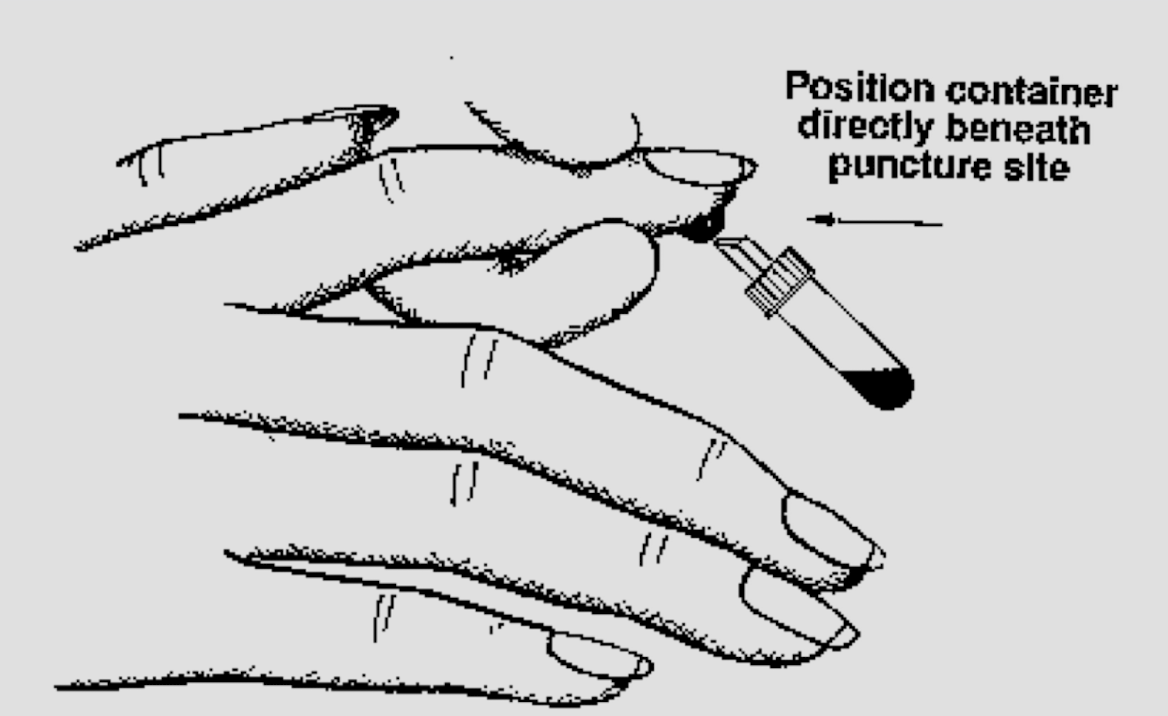
where should microtainer be positioned to collect blood from finger
positioned directly beneath puncture site, patient palm down
order of draw for microcapillary blood containers
gas tubes
slides
EDTA (purple top tube) - platelets
Heparin (light or dark green top tube)
Serum (red top or amber tube w/ red top)
essential to minimize the effects of platelet clumping
procedure for filling microhematocrit/ microcapillary tubes
hold tube horizontally against drop and fill w/o introducing air spaces
plug opposite (dry) ends w/ caps or clay

neonatal collection - heelstick procedure
identify patient
put on gloves and warm the heel
position supplies
choose the site
must exercise care to avoid damaging the heel
perform puncture
wipe away 1st drop of blood
fill containers
place gauze, apply pressure, and elevate the heel
DO NOT APPLY BANDAGE
ensure bleeding has completely stopped (5-10 s; bleeding beyond 5 min report to physician)
dispose of lancet
remove gloves and wash hands
thank the patient, parent, or guardian - deliver specimens

microcapillary collection - coagulation samples
light blue-top tubes for coagulation tests must be filled to minimum fill line
9:1 ratio of blood:anticoagulant
If using a butterfly needle a discard tube must be collected first to prime the tubing
failure to use a discard tube will result in an incorrect ratio of blood:anticoagulant

should partially filled tubes be combined to make a full tube?
no, never
note: most lab policies state that an individual can only attempt two draws→ under such situation, have another phleb collect the sample
blood culture
diagnostic for bacteremia and septicemia
collect blood before or during fever spikes
perform venipuncture w/ butterfly (syringe is also acceptable)
aseptically prepare site for venipuncture → sterility is the most important part of collection
Blood culture - site preparation
perform 30-60 s friction scrub w/ Chloroprep (chlorhexidine gluconate, CHG)
some facilities use tincture of iodine
allow site to air dry
while site is drying, inspect bottles for visible defects, check expiration dates, and remove flip-off caps
cleanse the culture bottle tops using 70% isopropyl alcohol (DO NOT USE IODINE)
allow to air dry
what are the ways blood culture can be collected?
collected using butterfly needles into:
a 30 mL syringe or
directly draw into bottles using holder
what bottle in blood culture should be collected first when using butterfly needle?
aerobic bottle
butterfly tubing has air in it
how do syringe draws work for blood culture?
syringe must be removed to attach a transfer device
culture bottles are inserted in the same manner as tubes
bottles must be mixed by inversion as soon as they’re removed from the holder
what bottle in blood culture should be collected first when using needle and syringe?
anaerobic bottle first, then aerobic bottle
air bubbles rise to the top of the syringe barrel → pure, air-free blood sits at tip and is pushed out first
anaerobic bottles go first to completely block any trapped air from entering the O2 free environment
blood culture - optimum vol. for adults vs. children
adults: 8-10 mL per bottle
peds: 1-3 mL per bottle
blood culture - optimum number of bottles for adults vs. peds
Adult: one culture includes 1 aerobic and 1 anaerobic bottle
patients <30 lbs should have one pediatric bottle collected
blood culture - short draw rule
if the draw is difficult, and you realize you can’t get the full 16-20 mL needed for both bottles, prioritize the aerobic bottle only, and put all available blood into it (up to 10 mL)
-most bacteria that cause infection are aerobic
What is the Glucose Tolerance Test (GTT) used for
screening for type 2 diabetes and gestational diabetes
GTT/ OGTT (oral glucose tolerance test) procedure
patient fasts overnight ← first specimen
baseline (fasting) glucose is drawn
the patient is given a determined dose of glucose to drink (75-100 g)
adult dose: 75 g
children= 1 g/kg of body weight
pregnant women= 50-100 g
blood is then collected (timing specified by clinician) at:
2 hrs for Type 2 diabetes screening in adults
1 hr for low-risk pregnant women (50 g glucose bev is given)… sometimes called oral glucose challenge test (OGCT)
1, 2, & 3 hours for high risk pregnant women or women positive in the 50 g screening stage (100 g glucose bev is given)
Paternity Testing
performed to determine or exclude paternity
chain of custody protocol and form
photo ID of all parties - mother, child, alleged father
blood samples of buccal (cheek swabs)
Chain of custody
chain of custody
documentation tracking the specimen from time of collection until results are reported
identifies all individuals that collected, handled, transported, and tested specimen
if documentation is incomplete, legal action can be compromised
Therapeutic Drug Monitoring (TDM)
establishes and maintains drug dosage at therapeutic level and avoids drug toxicity
typically used for drugs w/ narrow therapeutic ranges
Trough (minimum)
30 min or just prior to administration of drug
w/i the therapeutic range
Peak (maximum)
after giving the drug; varies w/ drug and method of administration, times will be noted on the requisition
30 min, 60 min, or 120 min
legal specimens
typically for toxicology or forensic studies such as drug screen, alcohol analysis, or DNA testing
Chain of custody form (CCF)/ Custody and Control Form (CCF) required
patient identification and collection require a witness (such as law enforcement officer, corporate rep, or authorized medical staff member
Blood alcohol (ethanol) specimens - physician ordered for treatment purposes
chain of custody not required, follow standard protocol
Blood alcohol (ethanol) specimens - ordered in connection to on-the-job injury, employee insurance programs, and employee drug screening
chain of custody required
skin prep: do not use alcohol-based disinfectant
specimen requirements: gray-top sodium fluoride tube; fill tube until vacuum is exhausted and do not remove stopper
employee drug screening
required by many healthcare organizations, sports associations, and major companies
may be random
may detect a specific drug or screen for up to 30 drugs
typically performed on urine rather than blood
Chain of custody (CCF) is required
does physician request have to be documented for every instance of HIV testing?
exception is for needlestick/splash exposures → imperative to get tested immediately
what information must be given in Delaware before HIV testing
explanation of test — purpose, potential uses, limitations, meaning of results
explanation of procedure
explanation about AIDS and other manifestations of HIV infection
risk behaviors for transmission of HIV infection
Point of Care Testing - Blood Glucose Monitoring
utilized to monitor glucose levels in diabetic patients and determine insulin coverage
variety of monitors
proper training is required for each monitor
TIMING IS CRITICAL
POCT - Capillary Blood Gases (CBGs)
pH, partial pressure of CO2, oxygen saturation, and partial pressure of oxygen
rarely collected on adults (done for infants and young children)
warming the site for 5-10 min before collection is necessary to increase blood flow and arterialize the specimen
Seal both ends of the capillary tube after collection of the blood
POCT - electrolytes
sodium, potassium, chloride, bicarbonate ion, ionized calcium
usually in STAT situations (e.g. ED) or in ICUs
several types of handheld or mobile testing devices
POCT - Cardiac markers/lipids
troponin - myocardial infarction (MI)
BNP (B-type natriuretic peptide)
Congestive Heart Failure (CHF)
Chronic obstructive pulmonary disease (COPD)
CRP (C-reactive protein) - inflammation
Lipid panels - CHOL, TRIG, LDL, HDL