3. Lipids & Lipoproteins
 Call Kai
 Learn
 Practice Test
 Spaced Repetition
 Match
 Flashcards
 Knowt Play
1/40

There's no tags or description
Looks like no tags are added yet.
41 Terms
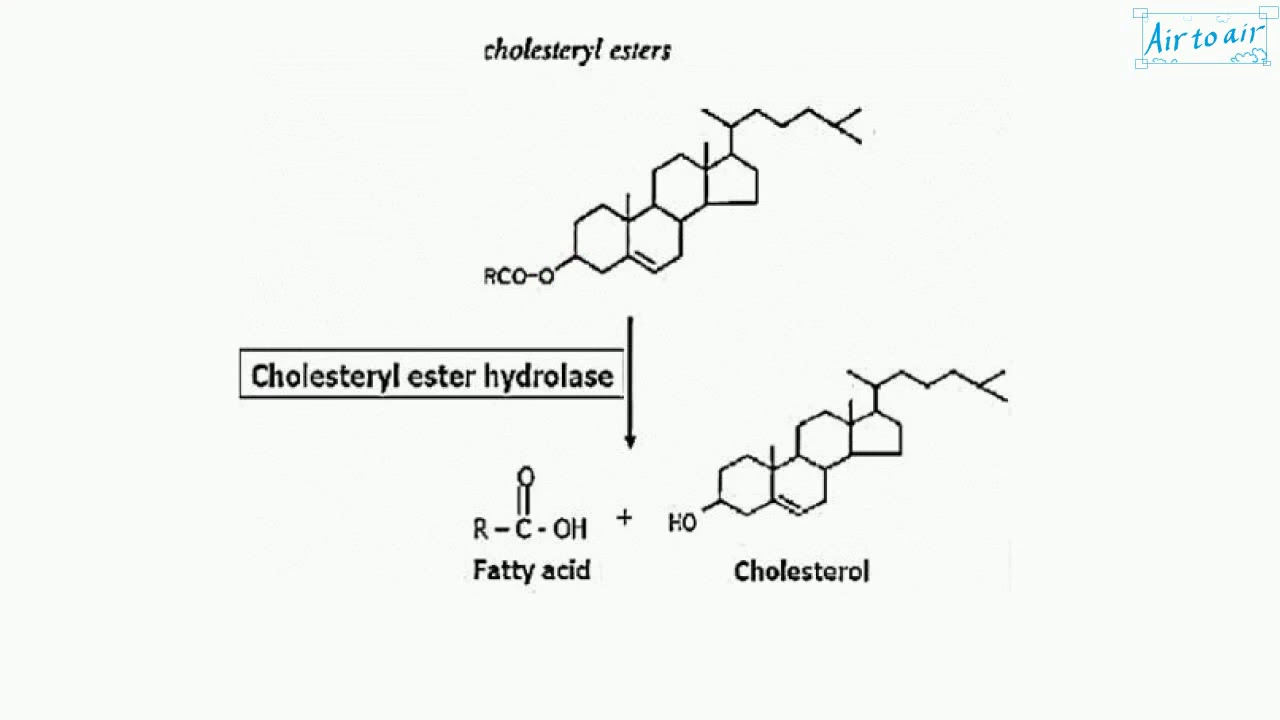
What are the 2 lipid products that are released when lipids are broken down?
fatty acids or alcohols that can join with them to form esters (aka cholesterol ester)
What is the hydrophilic portion of a fatty acid?
a carboxylic acid group (COOH)

What are the 4 primary functions of lipids?
critical structural component of bio membranes
store excess calories
provide readily available energy reserves
can be essential vitamins/hormones (Vit A,D,E,K)
What is the major storage form of fat in the body?
triglycerides
Describe the structure of cholesterol
27 C atoms
Slightly polar b/c of a free OH at C3
flat rigid structure that polarizes light

Describe the structure of bile acids. What is their primary role in lipid metabolism?
24 C atoms, C24 carboxyl group, OH groups (4)
promote fat absorption in the intestine as an emulsifier (detergent)

What must happen in order for lipids to be transported in blood?
Lipids must combine w/ apolipoprotein (apoproteins)
What are the 3 primary functions of an apoprotein?
maintain structural integrity of lipoprotein
activate lipid metabolism enzymes
be recognition signals for cell surface receptors

Lipoproteins are divided into 7 classes based on what 3 features?
size
apoprotein composition
lipid composition
What are the 7 classes of lipoproteins?
Chylomicrons, Chylomicron remnants, VLDL, IDL, LDL, HDL, Lp(a)
How are Low-Density Lipoproteins (LDL) formed? What 2 things can take up the LDL?
formed by lipolysis of VLDL
liver & peripheral cells via LDL receptors
Which apoproteins are released from LDL? What are the 2 ways those apoproteins can be utilized in lipid metabolism?
Apo-C & Apo-E
Can be 1) Taken up by circulating HDL 2) Degraded into their A.A. constituents
What 2 organs can synthesize High-Density Lipoproteins (HDL)? What is it capable of removing?
liver & small intestines
capable of removing excess cholesterol from peripheral cells back to the liver for removal (good cholesterol)
What apoproteins does HDL contain?
A-1 (E and CII buried inside)
What is Apo A-1 a cofactor for? And what does the enzyme it cofactors with do?
LCAT (Lecithin cholesterol acyltransferase)
Esterifies a FA to a cholesterol molecule (opposite of cholesterol esterase)
Where are apoproteins synthesized and which lipoproteins are they packaged with?
liver
HDL & VLDL
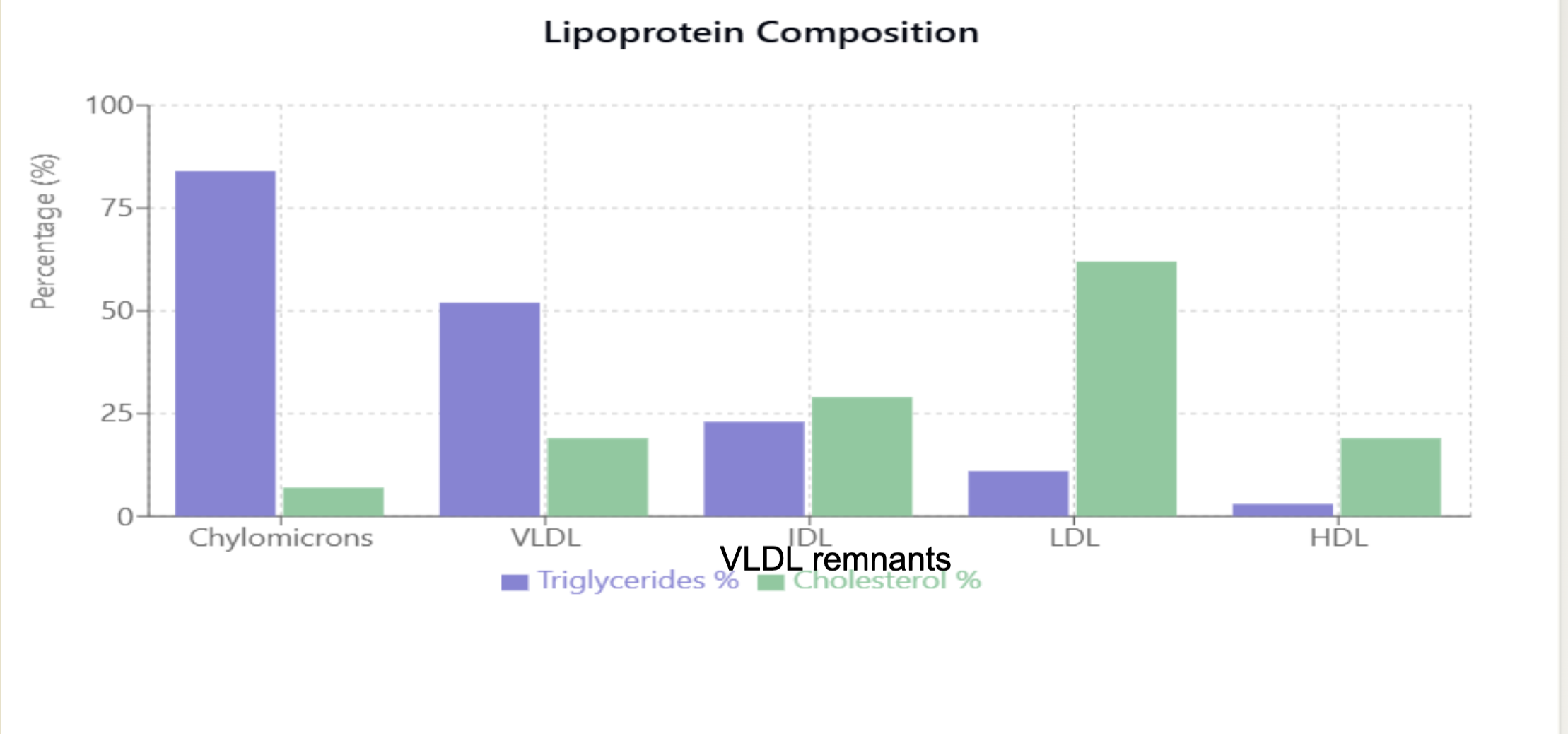
Out of the chylomicrons, VLDL, IDL, LDL, and HDL, which lipids are more predominant?
Triglycerides: Chylomicrons & VLDL
Cholesterol: IDL, LDL, HDL
For lipoprotein electrophoresis, what is the order from the cathode end to anode end?
Chylomicrons, LDL (β), IDL/VLDL, Lp(a) (Pre-β), HDL (α)
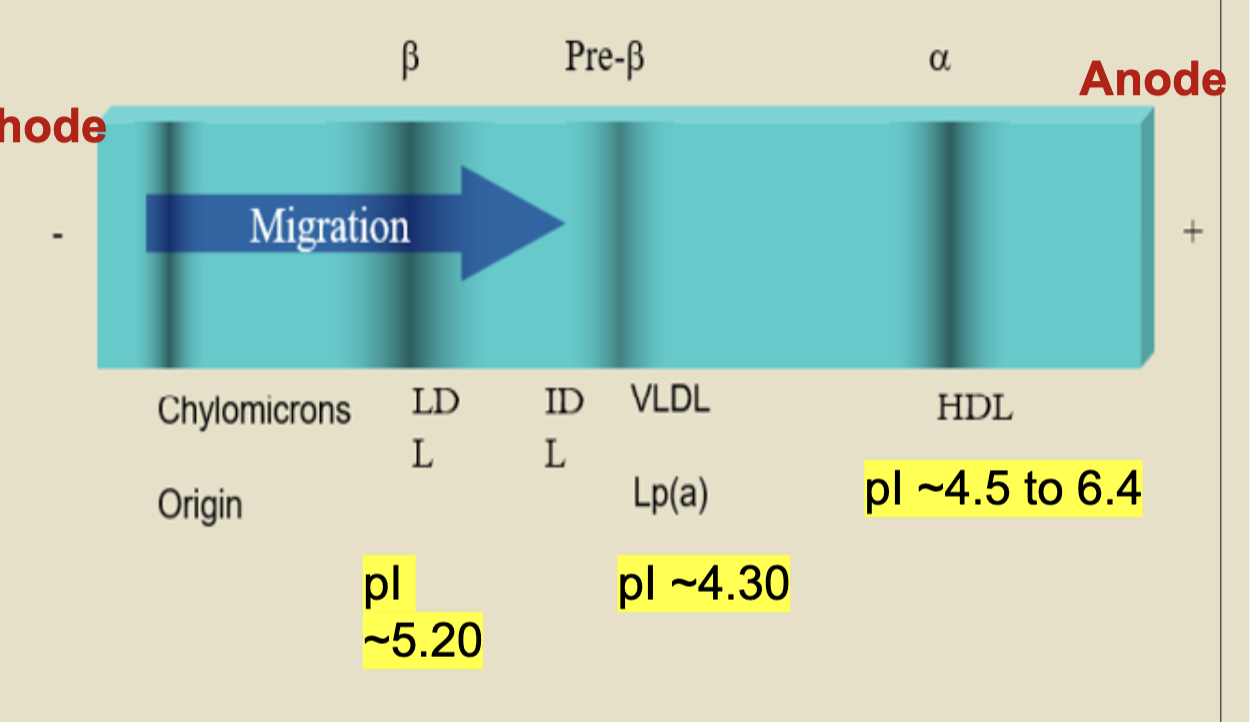
What charge does the lipoprotein carry if 1) pH > pI 2) pI > pH? What is the pH of the electrophoresis?
pH > pI: protein carries net negative charge and migrates toward anode
pI > pH: protein carries net positive charge and migrates towards cathode
8.6
Describe the Lipid Absorption Pathway (6 steps)
Bile acids (which are amphipathic) form micelles around either triglyceride or cholesterol ester
Formation of micelles allow either lipase or cholesterol esterase to hydrolyze the lipid
Triglycerides broken down into glycerol + 3 fatty acids. Cholesterol ester broken down into cholesterol + fatty acid.
Either are absorbed into the enterocyte (epithelial lining cells of intestines) via passive transfer or w/ transporters
Once in the enterocyte, they are re-synthesized with apoproteins A1,B48,CII, and small amounts of E to form chylomicrons.
They are secreted into intestinal lymphatics, ultimately → blood

Describe the Exogenous Metabolism Pathway (4 steps)
Chylomicrons w/ Apo-B48 & Apo-A enter the bloodstream
HDL provides the chylomicrons w/ Apo-C and Apo-E for further metabolism
Lipase breaks down triglycerides → Chylomicron remnants with ApoB-48 and Apo-E
Remnant taken by the liver (which has B&E receptors)

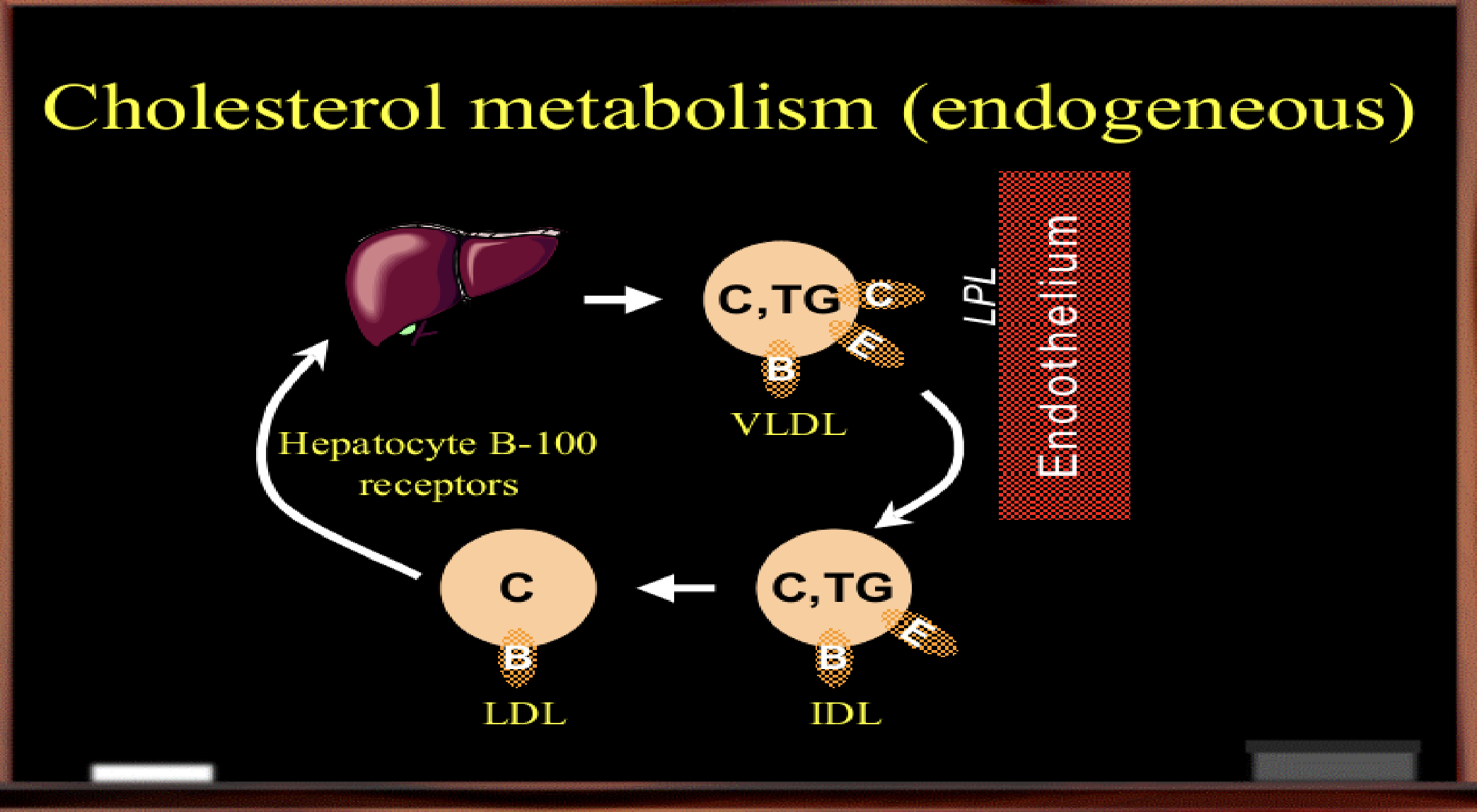
Describe the Endogenous Metabolism Pathway
Cholesterol & Triglycerides produced in the liver are packaged into VLDL with Apo-B100, Apo-C, and Apo-E
VLDL released into the bloodstream
VLDL’s undergo lipolysis by lipoprotein lipase → becomes IDL
Further lipolysis transforms IDL → LDL which only has Apo-B100 apoprotein left
LDL taken by the liver or tissues (which has B receptor for Apo-B100), completing cycle
What is coronary artery disease (CAD) a result of?
Life-long process of atherosclerosis (deposition of lipids in various tissues within the body)
What are the 7 risk factors for atherosclerosis?
>45 years old in men, >55 years old in women
family history of CHD
Hypertension (aka high blood pressure)
Diabetes
Low HDL, high LDL & total cholesterol
severe obesity & physical inactivity
stress
What are the lab guidelines for desirable lipid levels for TC, LDL, HDL, and triglyceride?
Total cholesterol: ≤ 200 mg/dL
LDL: ≤ 100 mg/dL
HDL: ≥ 50 mg/dL
Triglyceride: < 150 mg/dL
How is Lp(a) acquired and what is it “known as”?
genetically inherited
silent killer
What is Lp(a) structured similarly to? What is the mechanism that makes it so dangerous?
similarly structured to plasminogen
inhibits plasmin formation (which degrades incidental clots) by blocking plasminogen activators → increased risk of circulatory blocks
What are the 3 populations in which high HDL levels are associated with?
pre-menopausal women, people who exercise regularly, and people who maintain a healthy weight
What is the relationship between 1) estrogen and total cholesterol. 2) HDL in menstruating women and LDL
both have inverse relationships. If estrogen ↑, total cholesterol ↓. If HDL is ↑, LDL is ↓
What are the 3 forms of treatment for lipid disorders?
statin drugs: ↑ HDL and ↓ LDL
fibrate drugs: ↓ secretion of VLDL
cholestyramine: ↓ plasma cholesterol
What is the sample of choice for testing lipids & how long must a fast be for triglycerides?
serum
12 hours minimum
What does it mean when your sample is visibly lipemic? What does it mean if the lipids float on top of the serum?
means triglycerides MUST be elevated (>300 mg/dL)
Chylomicrons present if they float
What are the 4 reactions for triglyceride analysis?
triglycerides + H2O + lipase → fatty acids + glycerol
glycerol + ATP + glycerol kinase → glycerol-1-phosphate + ADP
glycerol-1-phosphate + O2 + glycerol phosphate oxidase → DHAP + H2O2
H2O2 + dye precursor + peroxidase → H2O + quinonimine dye
What are the 2 potential issues that can happen with triglyceride analysis? Why is glycerol used instead of triglyceride for the standard?
free glycerol can accidentally be read/calculated as triglyceride
contaminants like Vit. C or bleach can react w/ H2O2 or the dye
large error can occur if detergent or lipase step doesn’t work
What are the 3 reactions for total cholesterol analysis?
cholesterol ester + H2O + cholesterol esterase → cholesterol + fatty acid
cholesterol + O2+ cholesterol oxidase → cholestenon + H2O2
2H2O2 + reduced dye + peroxidase → 4H2O + oxidized dye
What are the 3 steps to HDL analysis?
Precipitate LDL & VLDL w/ phospho-tungstate, heparin + Mn+2, or dextran + MG+2
Centrifuge to separate supernatant HDL from precipitate
Measure cholesterol from HDL using same rxn as total cholesterol analysis
What must be considered when doing HDL analysis?
Because there is much less HDL compared to total cholesterol, a larger aliquot must be used
What are the steps to the alternative reaction for HDL analysis?
Mix serum with a detergent that dissolves only HDL particles
LDL & VLDL coated but not dissolved
Apply same color reagent to free cholesterol from HDL & follow same steps as total cholesterol analysis
What is the advantage & disadvantage of the alternative reaction for HDL analysis?
advantage: only 1 combination reagent → easily automated
disadvantage: lack of specificity for HDL for unusual patients
What is the assumption when doing the LDL calculation? What is the equation for calculating LDL?
That all triglyceride is present as VLDL IF TRIGLYCERIDE IS <400 mg/dL
Total Cholesterol = HDL + LDL + VLDL (triglyceride/5)
How is LDL measured asides from the calculation? What are the 2 details for the assay?
Direct Immunoassay for LDL
Latex beads coated w/ Ab’s against VLDL & HDL apoproteins (most like Apo-C & Apo-E) → only LDL left in solution
LDL in supernatant is measured