Medical Terminology Chapter 4 Textbook
 Call Kai
 Learn
 Practice Test
 Spaced Repetition
 Match
 Flashcards
 Knowt Play
1/292

Earn XP
Description and Tags
The Muscular System
293 Terms
what percentage of body heat does muscle movement generate
85
the muscular and skeletal systems are sometimes jointly referred to as the
musculoskeletal system
how many muscles in the human body
more than 600
between what percentages do muscles make up of the body's weight
40-45
long, slender cells that make up muscles
muscle fibers
band of connective tissue that envelops, separates, or binds together muscles or groups of muscles
fascia
plural of fascia
fasciae, fascias
term meaning pertaining to muscle tissue and fascia
myofascial
narrow bands of nonelastic, dense, fibrous connective tissue that attach muscles to bones
tendons
bands of fibrous tissue that form joints by connecting one bone to another bone
ligaments
attaches muscles to the bottom of the patella
patellar tendon
attaches the gastrocnemius muscle to the heel bone
achilles tendon
sheet-like fibrous connective tissue resembling a flattened tendon that connects muscles together or to a bone
aponeurosis
plural of aponeurosis
aponeuroses
three types of muscle tissue
skeletal, smooth, myocardial
skeletal muscles are also known as _____ muscles because we have conscious control over them
voluntary
skeletal muscles are also known as _____ muscles because, under a microscope, the dark and light bands in the muscle fibers created a striped appearance
striated
medical term meaning striped
striated
smooth muscles are also known as _____ muscles because they are under the control of the autonomic nervous system
involuntary
smooth muscles are also known as _____ muscles because they do not have a striped appearance under a microscope
unstriated
smooth muscles are also known as _____ muscles because they are found in hollow structures such as those of the digestive and urinary systems
visceral
medical term meaning relating to the internal organs
visceral
smooth muscles are found in large internal organs with the exception of what organ
heart
the constant contraction and relaxation of _____ muscle causes the heart to beat
myocardial
the stimulation of a muscle by an impulse transmitted by a motor nerve
muscle innervation
motor nerves control the body’s _____ muscular contractions
voluntary
medical term meaning pertaining to the relationship between a nerve and a muscle
neuromuscular
all muscles are arranged in _____ pairs
antagonistic
medical term that refers to working in opposition to each other
antagonistic
the tightening of a muscle
contraction
when a muscle contracts, the _____ of the muscle enlarges
belly
when a muscle returns to its original form
relaxation

the movement of a limb away from the midline of the body
abduction
medical term meaning to lead
duct
a muscle that moves a body part away from the midline
abductor

the movement of a limb toward the midline of the body
adduction
a muscle that moves a body part toward the midline of the body
adductor

term that means decreasing the angle between two bones by bending a limb at the joint
flexion
what bends a limb at a joint
flexor muscle

term that means increasing the angle between two bones or the straightening out of a limb
extension
what straightens a limb at a joint
extensor muscle
the extreme or overextension of a limb or body part beyond its normal limit
hyperextension

the act of raising or lifting a body part
elevation
the _____ muscles of the face raises the corners of a mouth into a smile
levator anguli oris
a ____ is a muscle that raises a body part
levator

the at of lowering a body part
depression
the ______ lowers the corner of the mouth into a frown
depressor anguli oris
a _____ muscle lowers a body part
depressor
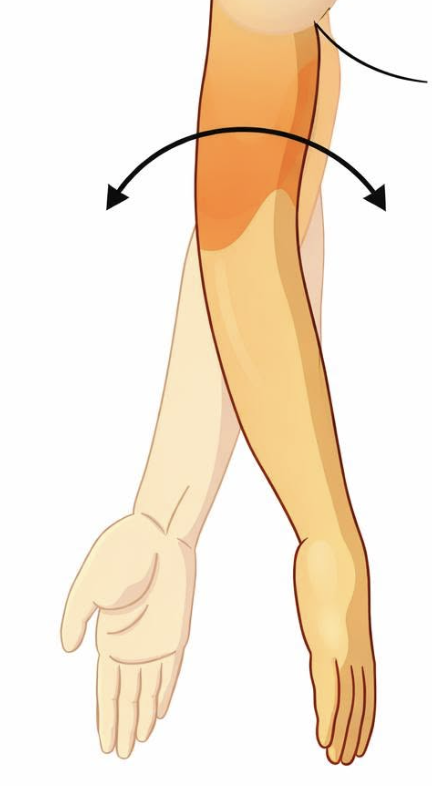
a circular movement around an axis such as the shoulder joint
rotation

the circular movement at the far end of a limb
circumduction
an imaginary line that runs lengthwise through the center of the body
axis
turns a body part on its axis
rotator muscle
the group of muscles and their tendons that hold the head of the humerus securely in place as it rotates within the shoulder joint
rotator cuff

the act of rotating the arm or the leg so that the palm or the sole is turned forward or upward
supination

the act of rotating the arm or leg so that the palm or sole is turned downward or backward
pronation
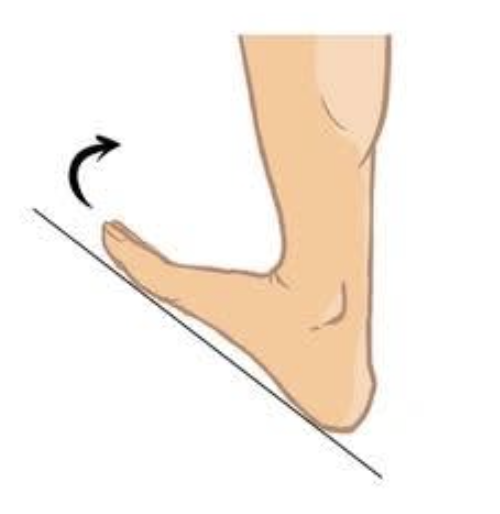
the movement that bends the foot upward at the ankle, decreasing the angle between the top of the foot and the front of the leg
dorsiflexion

the movement that bends the foot downward at the ankle, increasing the angle between the top of the foot and the front of the leg
plantar flexion
medical term meaning pertaining to the sole of the foot
plantar
medical term that describes some muscles located near the surface, just under the skin
superficial
the point where a muscle begins, located nearest the midline of the body or on a less movable part of the skeleton; the less movable attachment
origin
the point where a muscle ends by attaching to a bone or tendon; the more movable attachment, the farthest point from the midline of the body
insertion
what muscle helps bend the neck and rotate the head
sternocleidomastoid muscle
the muscles that make flexion of the wrist possible
flexor carpi muscles
the muscles that make estension of the wrist possible
extensor carpi muscles
a thick, fan-shaped muscle situated on the anterior chest wall
pectoralis major
medical term meaning relating to the chest
pectoral
a large muscle toward the outer side of the thigh, a part of the quadriceps group
vastus lateralis
medical term meaning toward the side (in the context of describing a muscle)
lateralis
latin word for “huge”
vastus
medical term meaning toward the midline (in the context of a muscle)
medialis
a muscle toward the midline of the thigh, part of the quadriceps group
vastus medialis
medical term meaning slanted or at an angle
oblique
the external oblique and internal oblique muscles have a _____ alignment
slanted
medical term meaning in straight alignment with the vertical axis of the body
rectus
the rectus abdominis and rectus femorus have _____ alignment
straight
a ring-like muscle that tightly constricts the opening of a passageway
sphincter
what closes the anus
anal sphincter
medical term meaning in a crosswise direction
transverse
the transverse abdominis muscle has a _____ alignment
crosswise
what muscle, formed from two divisions, flexes the upper arm
biceps brachii
what muscle, formed from three divisions, extends the upper arm
triceps brachii
the largest muscle of the buttock
gluteus maximus
a muscle located on the shoulder, shaped like an inverted triangle like the greek letter delta
deltoid muscle
muscles of the hamstring group (from lateral to medial)
biceps femoris, semitendinosus, semimembranosus muscles
primary functions of the hamstrings
knee flexion, hip extension
what muscle, located in the forehead, raises and lowers the eyebrows
frontalis muscle
the frontalis muscle is also known as the
occipitofrontalis muscle
what muscle moves the lower jaw up and back to close the mouth
temporalis muscle
what muscle, which is one of the strongest in the body, moves the lower jaw up to close the mouth when chewing
masseter
what muscle makes up the bulk of the chest muscles, lying under the breast in females
pectoralis major
what muscles flex and rotate the vertebral column
external oblique muscles
what muscles flex the spine, support the abdominal contents, help breathe, and rotate the spine
internal oblique muscles
what muscle helps flex the trunk, assists in breathing, and supports the spine
rectus abdominis
what muscle is engaged when a person laughs or coughs
transverse abdominis
what muscle forms the muscular cap of the shoulder
deltoid muscle
what muscle moves the head and shoulder blade
trapezius muscle
what muscle extends the leg at the knee
rectus femoris
the quadriceps femoris muscle is made up of how many muscles
4
what two muscles that are included in the quadriceps femoris muscle flex and extend the leg at the knee
vastus lateralis, vastus medialis
the calf muscle that flexes the knee and bends the foot downward
gastrocnemius