Energy Resources
 Call Kai
 Learn
 Practice Test
 Spaced Repetition
 Match
 Flashcards
1/15

There's no tags or description
Looks like no tags are added yet.
16 Terms
solar energy
Energy transformed from sunlight (Example: Sun)

Geothermal energy
Using heat trapped in the Earth's crust to create heat and electricity
wind power
Using moving air (wind) to turn a turbine in a generator and create electricity.
energy transformation
Change of energy from one form to another (Example: Gasoline to Car)

nuclear fusion
The combining of an atom's nuclei into a single larger nucleus (Example: Hydrogens from the Sun)

fossil fuels
Coal, oil, natural gas, and other fuels that are ancient remains of plants and animals. (Example: Coal)

hydroelectric power
Electricity generated from the energy of moving water (Example: water dam)

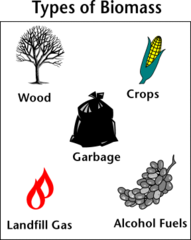
biomass
Plant materials and animal waste used as fuel (Example: Animal waste and dead plants)
renewable resource
A natural resource that can be replaced at the same rate at which the resource is consumed (Example: Solar, wind, water, biomass and geothermal)

non-renewable resource
A natural resource that is not replaced in a useful time-100 years or less (Example: Fossil fuel)

Advantages & Disadvantages: Geothermal
A: Plentiful (lots of it)/cost effective
D: vents are not widely available
Advantages & Disadvantages: Wind
A: Cheapest form of renewable energy
D: amount of energy varies (changes)
Advantages & Disadvantages: Solar
A: Little maintenance/ not moving parts
D: inefficient when cloudy/ expensive start up
Advantages & Disadvantages: Biomass
A: Can be found almost everywhere
D: Less concentrated and more expensive
than fossil fuels
Advantages & Disadvantages: Tidal
A: Reliable and predictable
D: Provides power where there is little
need for it/ barrages trap and kill fish
Advantages & Disadvantages: Hydroelectric
A: Can be used for irrigation
D: Can cause flooding/ may kill fish