MediaLab Micro Pics
 Call Kai
 Learn
 Practice Test
 Spaced Repetition
 Match
 Flashcards
 Knowt Play
1/25

There's no tags or description
Looks like no tags are added yet.
26 Terms

Ancylostoma duodenale:
“Old World Hookworm”
Pair of teeth
Infections indigenous in Western Africa and many Euro countries

Hymenolepsis dimunata:
Lacks polar filaments

Tinea solium tapeworm:
Brain cysts turn into protoscolices (hydatid sand) and eventually mature to Adult T. solium tapeworm


Fusobacterium nucleatum:
Grows ANABAP
GNB with tapered ends
Indole POS
H2S POS

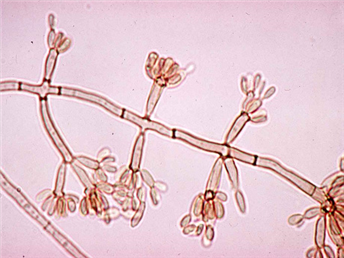
Fonsecaea pedrosi:
Cause chromomycosis


Iodamoeba butschlii:
Non-pathogenic

Ancylostoma duodenale:
Found in stool


Fasciola hepatica:
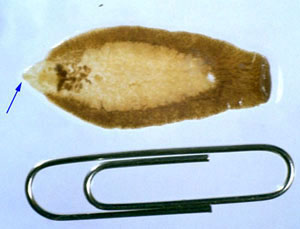
Fasciola hepatica:

Trichinella spiralis encysted larva

Trichinella spiralis encyst larva

Schistosoma mansoni
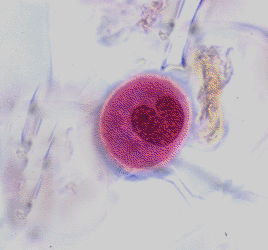
Balantidium coli:
Ingest water/food contamination with infective cysts
Cyst and troph covered in cilia
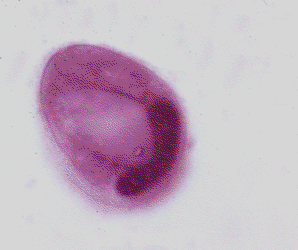
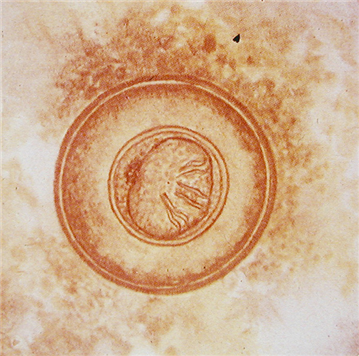
Hymenolepsis spp
H.nana is smaller and has filaments
H. dimunata is larger and no filaments

Loa loa:
Microfilaria
Sheath
Continuous row of nuclei extends to tip, end are irregularly spaced

Beauveria:
Insect pathogen
Rare in humans
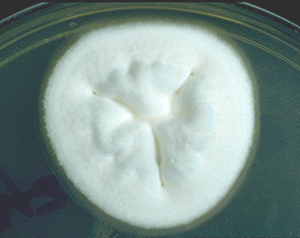

Motile
Polar tufts of flagella
Produce yellow pigment
Burkholderia cepacia

Wuchereria bancrofti:
225 um in length
Phillipines

Paragonimus westermani:

Histoplasma capsulatum:
3 days to grow


Taenia species egg

Plasmodium falciparum

Hymenolepsis dimunata

Candida dubliensis:
Thrush associated with AIDS

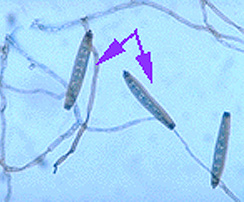
Exserohilum species


Phialophora verrucosa
