Chapter 2: Dispute Settlement
 Call Kai
 Learn
Learn Practice Test
 Spaced Repetition
 Match
Match Flashcards
 Knowt Play
1/59

There's no tags or description
Looks like no tags are added yet.
Name | Mastery | Learn | Test | Matching | Spaced | Call with Kai | Chat |
|---|
No analytics yet
Send a link to your students to track their progress
60 Terms
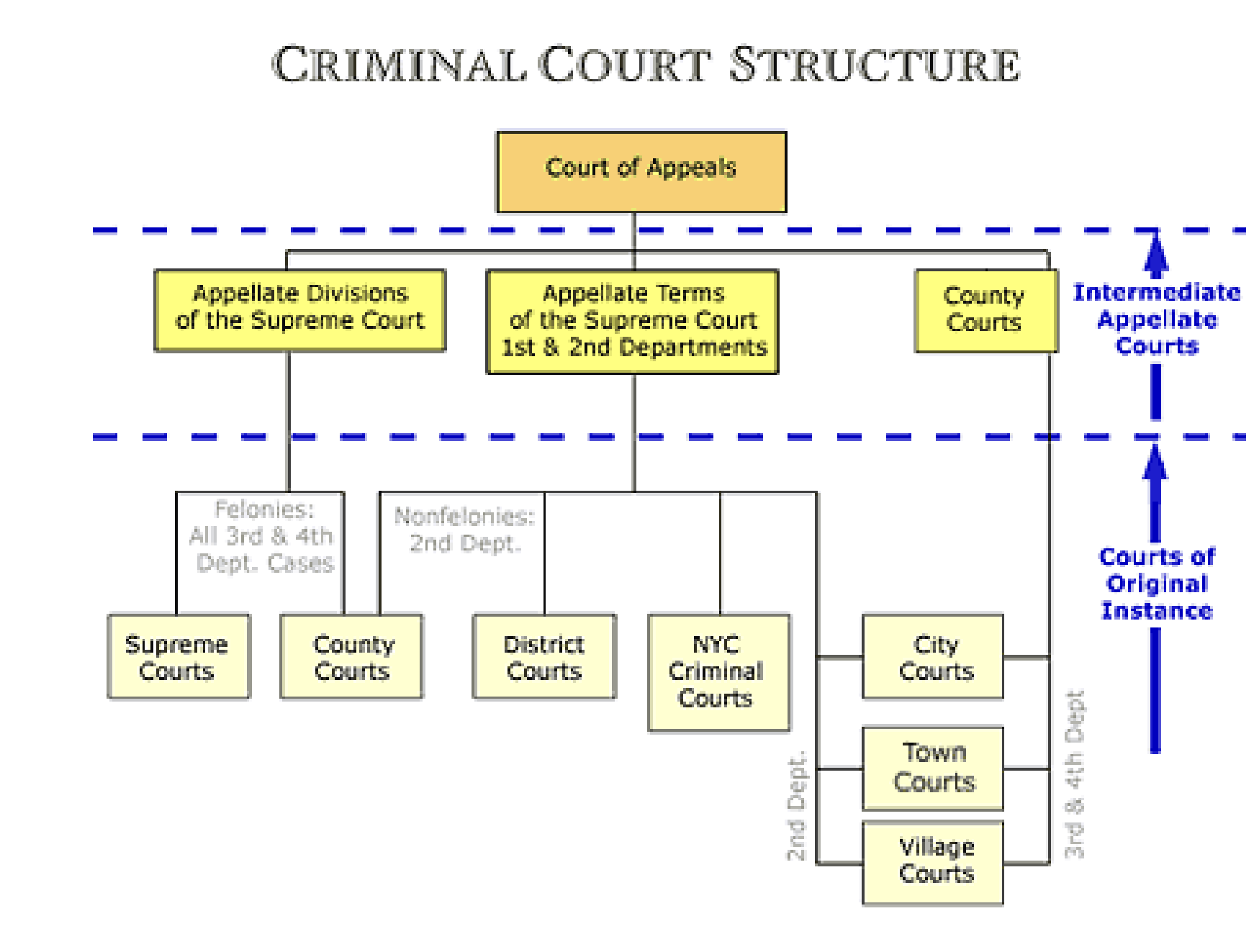
NY State Criminal Court Structure
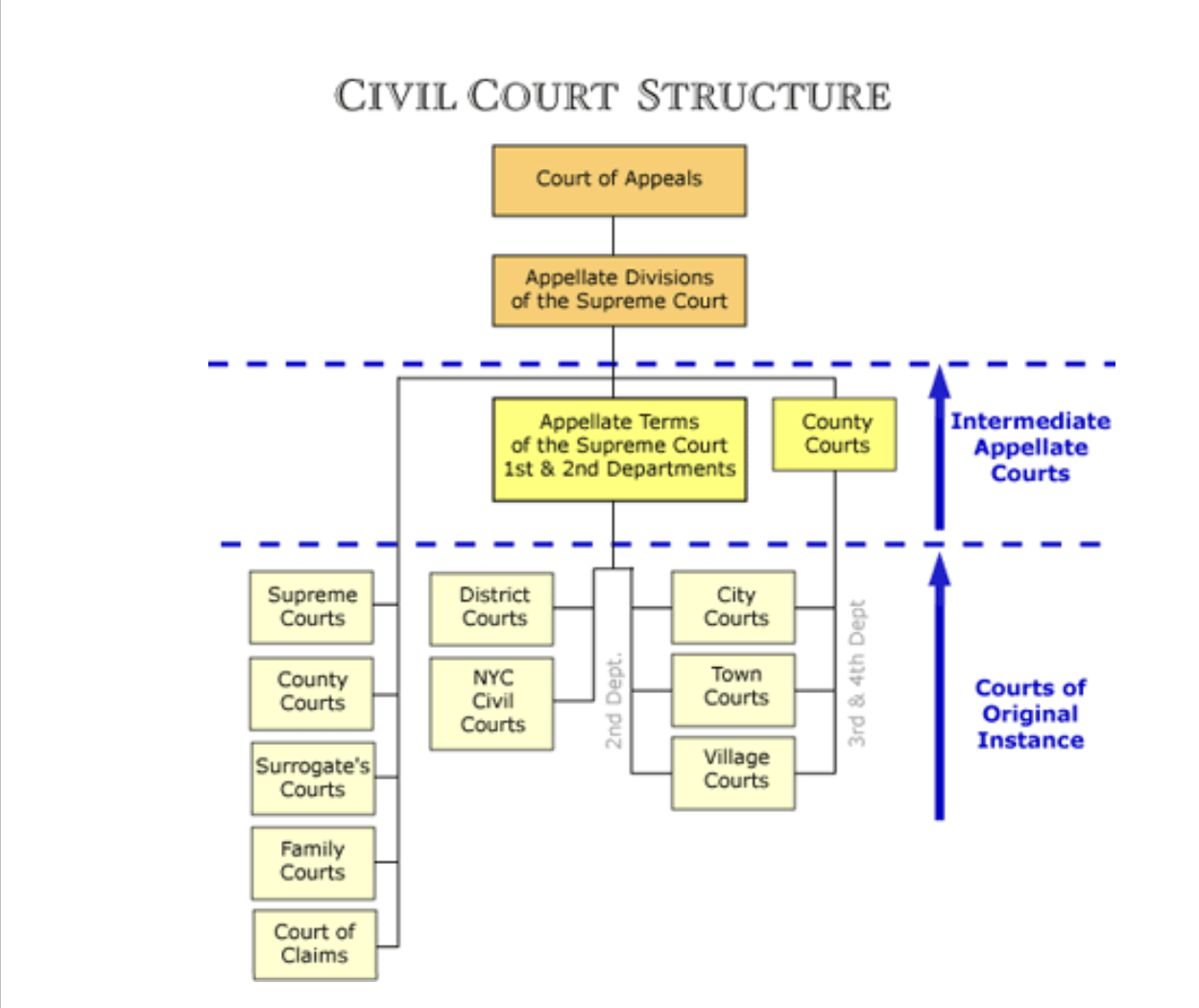
NY State Civil Court Structure
Inferior courts
not courts of record (no transcripts of proceedings)
without a record, there’s no appeal
may be called municipal courts in urban areas and justice of peace courts in rural areas
small claims courts - handle civil matters involving a limtied amount of money (informal)
trial courts
courts of general jurisdiction (not limited by the amount of civil damages that can be awarded or the criminal penalties that can be imposed
courts of record
appeal courts
hear cases that have been appealed from trial court decisions or state administrative agency rulings
federal courts

diversity cases
if parties to the dispute are citizens of different states (if the dispute is 75,000 or more, plaintiff has the option of choosing to be heard in state or federal court)
conflict of laws
provide rules for a court to follow in deciding which state’s laws to apply
district court
most lawsuits with few exceptions must be started in district courts
special courts
ex tax courts hear appeals from IRS decisions
Court of Appeals
an appeal from a district court is taken here
13 of them (12 have general appellate federal jurisdiction but 1 is for D.C. alone, the 13th one is for specialized federal cases)
usually heard by 3 judges, but some may be heard of all judges of the circuit
writ of certiorari of the Supreme Court
cert is granted if
there have been conflicting decisions in similar cases by different courts of appeal
or from the highest court of a state where a right is claimed under the Constitution
or where the validity of a federal statute is in question
litigation
where one or both parties file a lawsuit with the expectation that a court will receive the dispute
usually a last resort after negotiation/mediation have failed
moot cases
events occurring after the filing of the lawsuit have made a decision beside the point
standing
courts only permit a plaintiff to bring a lawsuit if they have standing
to meet this standard a plaintiff must show that
they suffered an actual injury
that is traceable to the challenged conduct of the defendant
that the injury could be redressed by a favorable judicial decision
class action lawsuits
when a defendant’s actions have injured many plaintiffs
protect against repetitious claims that could result in inconsistent results if tried individually
1 or more members of a class may sue or be sued as a representative of a class if
if the class is so numerous that joinder of all members is impracticable
there are questions of law or fact common to the class
the class or defenses of the representative parties are typical of the claims or defenses of the class
the representative parties will fairly and adequately protect the interests of the class
Class Action Fairness Act (CAFA)
Congress enabled this in response to concerns that the actions were undermining the national judicial system, the free flow of interstate commerce, and the concept of diversity jurisdiction
limits the amount of fees attorneys may receive, etc
jurisdiction
the authority of the court to hear and determine disputes
subject matter jurisdiction
can only hear cases involving certain types of controversies, such as tax disputes or juvenile matters
some are also limited by the amount of damages being sought or the penalty to be assessed
personal jurisdiction
minimum contacts generally are met when
the defendant is a resident of the court’s territory
the defendant has a physical presence in there
the defendant has purposely availed itself of business in the corut’s territory
the defendant has a committed a crime in tort there
long arm rule
a state’s summons may be delivered to defendant out of state if that defendant
Commits a tort
Signs a contract in that state
Does business with that state
general jurisdiction
when the defendant’s contact with the court’s territory is so continuous and systematic as to render it essentially at home in the forum state
specific jurisdiction
when the injuries triggering the litigation arose out of and are related to activities that are significant and purposefully directed by the defendant at residents of the forum
venue
venue rules are established by the states
these rules tell the country where the plaintiff must file suit (ex a criminal case must be filed in the country where the crime took place)
forum non conveniens
doctrine permits a court, upon petition by the defendant, to dismiss the lawsuit when it believes it would be more convenient and fair to have the case tried in anoter forum
3 step test for forum non conveniens
is there another forum with subject matter jurisdiction and personal jurisdiction over the defendant?
Do the private factors (access to evidence, courts of summon witnesses, need to view physical premises, and the enforceability of the court’s judgment favor the other forum?
Do the public factors (court congestion, relevance of the dispute to the community, and familiarity of the court with the law governing the dispute) favor the other forum?
exclusive (mandatory) clause of the forum selection clause
requires that ant lawsuit must be filed only in the designated court
nonexclusive (permissive) clause of the forum selection clause
permits suit to be brought in designated forum but does not prevent a plaintiff from being somewhere else instead
civil procedure
procedural law - the body of legal ruls governing the conduct of the case

pleadings
first documents filed with the court and they start and define the lawsuit
inform the parties of each other’s claims and they form the basis for trial
the complaint
first step in filing a lawsuit is the filing of the complaint
must contain sufficient facts to show that the plaintiff is entitled to some legal relief and to give the defendant reasonable notice of the nature of the plaintiff’s claim
the answer
defendant makes an appearance by filing an answer to the complaint (usually done by the defendant’s attorney)
if the defendant fails to appear the plaintiff is entitled to default judgment or winning everything requested
a defaulting party may be able to persuade the court to vacate or overturn a default judgment and conduct a trial if they can show
the default was due to negligence or some other unintentional reason (not willful)
the defaulting party had a reasonable chance of winning (meritorious defense) if a trial were held
the non defaulting party will not suffer undue prejudice
affirmative defense
a rule of law enabling the defendant to win even if all the plaintiff’s allegations were true
counterclaim
a new claim stating that the plaintiff owes defendant damages because of harm resulting from the incident alleged in the complaint
motion to dismiss
if it is clear that the plaintiff has no causes, it would be wasteful for the case to continue and the motion would be granted
reply
in some jurisdictions, the plaintiff is allowed or required to reply to ana affirmative defense or counterclaim
discovery
the time during which the parties gather the evidence they will use at trial to prove or disprove the allegations
both parties have equal access to the facts
deposition
an examination under oath in the presence of the attorney for the other party
interrogatories
answer written questions under oath
pre trial conference
designed to narrow issues to be proved at trial or to facilitate a settlement (in judge’s chambers); stipulate the facts and negotiate as well
directed verdict
judge grants the motion only if plaintiff’s evidence is clearly insufficient
preponderance of evidence
plaintiff shows that a claim is more likely than not to be true
hung jury
cannot come to a unanimous verdic
writ of execution
orders the sheriff to seize and sell enough of the defendant’s property to satisfy the judgment
writ of garnishment
designed to reach things belonging to the debtor that are in the hands of third parties such as wages, bank accounts, etc
basis of appeal
a party must show that the court made an error of law or that the evidence did not support the court decision
must file an appeal with proper appellate court within period of time established by the statute
transcript of entire trial must be prepared
what attorneys do for an appeal
attorneys must submit a brief or written argument supporting their claims
sometimes attorneys ask to make oral arguments and if granted they have a limited amount of time and judges frequently interrupt with questions
to successfully appeal
parties must show that their errors were material (important enough to possibly change trial outcome)
apepal decisions
based on majority rule
prior decisions are either affirmed, reversed, or reversed and remanded in which a new trial is needed with the new interpretation of the law
Alternative Dispute Resolution (ADR)
growing trend is collaborative counselors (specially trained people, usually lawyers who are engaged in settlement negotiations)
mediation
used when negotiation is failing
third party is chosen to assist in settling the matter and they act as a facilitator
mediation agreement - when mediation is successful
not binding
arbitration
third party decides the outcome (ex commercial contracts with arbitration clauses)
arbitrator is usually an expert on the subject matter
Federal Arbitration Act (1925)
makes both the agreement of parties to arbitrate and resulting arbitrationa ward enforceable in court
mini trial
designed to refocus a commercial dispute as a business problem and executives meet with lawyers to negotiate a contract
summary jury trial
similar to mini trial, but conducted under court guidance (includes 6 member mock jury and the judge meets with parties after to help reach a settlement
private judging
some parties avoid trial by hiring their own judge
hired judge (often retired) renders a binding opinion after hearing proofs and arguments
ombudsperson
an individual appointed within an organization to settle disputes, to private panels, and to small claim courts
mediation/arbitration
third party is first a mediator, then an arbitrator