Lab 11 - Animal Diversity II - Ecdysozoa & Metamorphosis
 Call Kai
 Learn
 Practice Test
 Spaced Repetition
 Match
 Flashcards
 Knowt Play
1/39

There's no tags or description
Looks like no tags are added yet.
40 Terms
Protosomes
Lophotrochozoa (aquatic invertabreates)
Ecdysozoa (Nematoda, Arthopoda )
Ecdysozoa
Have a 3 layered cuticle
has an exoskeleton and they grow by molting
Include arthopods and nematodes
Incomplete metamorphosis
At juvenile stages do the organisms look like their adults
basically the babies are smaller forms of adults
Arthopods, reptiles, and humans
Complete metamorphosis
organism undergoes dramatic changes in physical transformation
frogs butterflies
larva to adults and pokemon
Nematoda
Free living in soil
less than 1mm
not segmented
psuedocolom and complete digestive track, they eat and poop out of two holes
Arthopoda
Exoskeleton made from chitin
has different segments called tagmata
grow by ecdysis
ecdysis
shedding of outer layer of exoskeleton/ molting
Chelicerata
Spiders
two tagmata
Cephalothorax and abdomen
6 pairs of apendenges
4 pairs of walking legs, pedipalps, fanged chelicrae
pedipalps
Reproductive organs of spider family
chelicrae
First two pair of appendages of Chelicerata/ spiders
Cephalothorax
Fused head with thorax
abdomen
section of organism with main organs
Tagma
term for body segment
Myriapoda
Centipedes and milipedes
Two tagma
head and trunk
millipedes
Deteriorates
2 pairs of walking legs per segment
Centipedes
often Venomous and poisonous
one pair of legs per segment
Crustacea
Lobster, Crayfish, isopods, and barnecules
two tagma
Cephalothorax and abdomen
has two pair of antennae
Insecta
3 tagma
Abdomen, head, and thorax
3 pairs of walking legs
usually two pairs of wings
most abundant and diverse
thorax
chest of orgnaism
Rostrum
Raised nose part of cray fish
Carapace
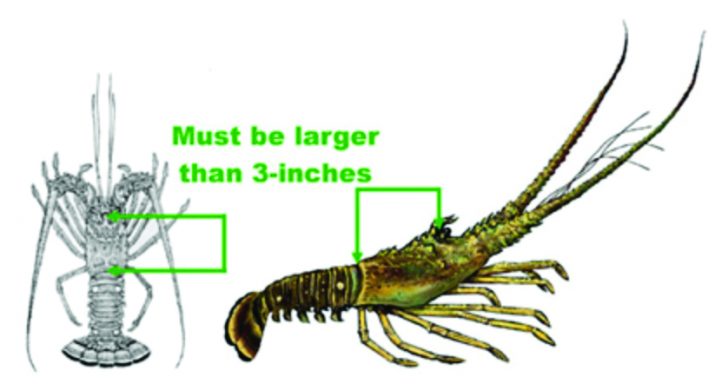
somites
segments of arthopod
Antennules
smaller first antennae used to smell chemicals in the water
Antennae
used to smell chemicals and also feel their environment
Mandibles
chewing parts of face of arthropods, used to help bite, cut and break up food
Maxillae
two leaf like parts of mouth that lets in food and water

Maxillipeds
feeding appendages that lets in food and water

Chelipeds

Swimmerets

Uropods

Telson
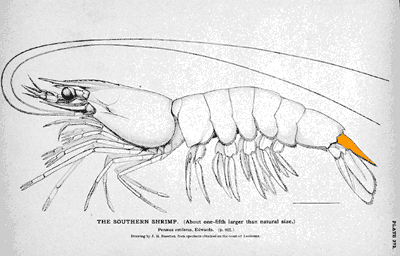
Pyloric stomach
digests food and filters out inedible parts of food
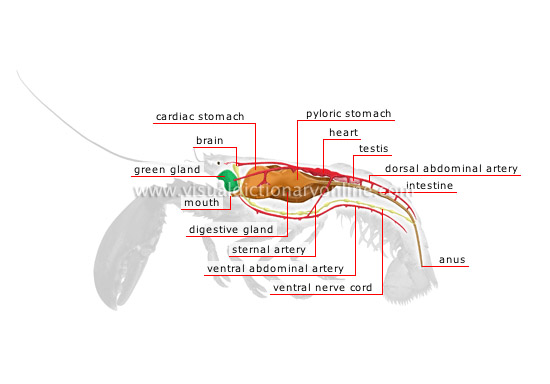
Cardiac stomach
grinds food before digestion continues

Gastric mill
basically the gizzard that helps to break down food

Digestive glands
secretes enzymes and acids to help break down the food

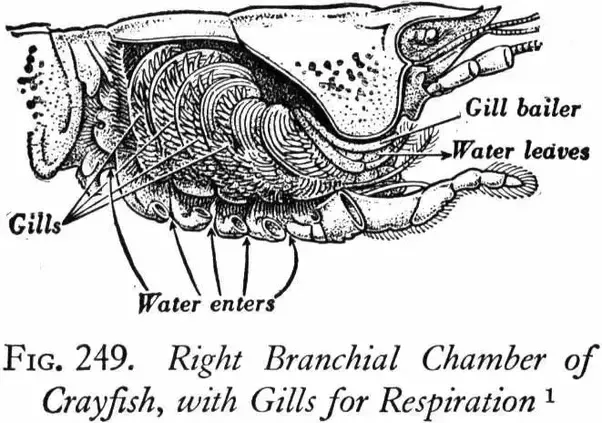
Gills
brings in fresh water an extracts O2 molecules from water
Heart
Pumps blood throughout the body

Mandibular muscles
moves mouth parts when eating and they allow crayfish to crush food when eating with mandibles
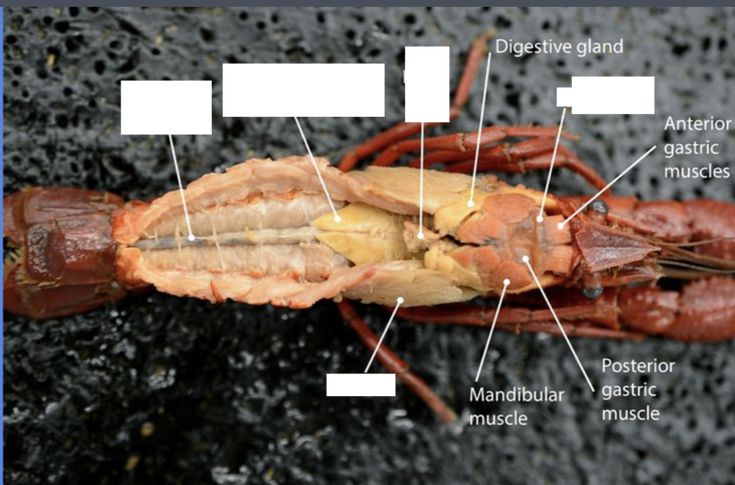
Green glands
kidneys of the crayfish, they filter out wastes and salt from the organism’s blood

eyes
used by the animal to see their surroundings