Test 4 Marine Bio Study Guide
 Call Kai
 Learn
 Practice Test
 Spaced Repetition
 Match
 Flashcards
 Knowt Play
1/43

There's no tags or description
Looks like no tags are added yet.
44 Terms
mesenteric filament
thickened, thread-like/ribbon-like structure found inside cnidarians such as corals and sea anemones
helps with:
digestion
feeding
defense and competition
symbiont
organism that lives in close, long-term physical association with another species (the host)
dinoflagellate
single-celled, mostly marine eukaryotic organisms (protist) that typically moves using whip-like flagella and often lives as part of the oceans plankton
zooaxanthellae
microscopic, photosynthetic algae that live inside the tissues of marine animals like corals
cryptobenthic
tiny, bottom-dwelling organisms that stay hidden in the cracks of crevices, and rubble of reefs or the seafloor
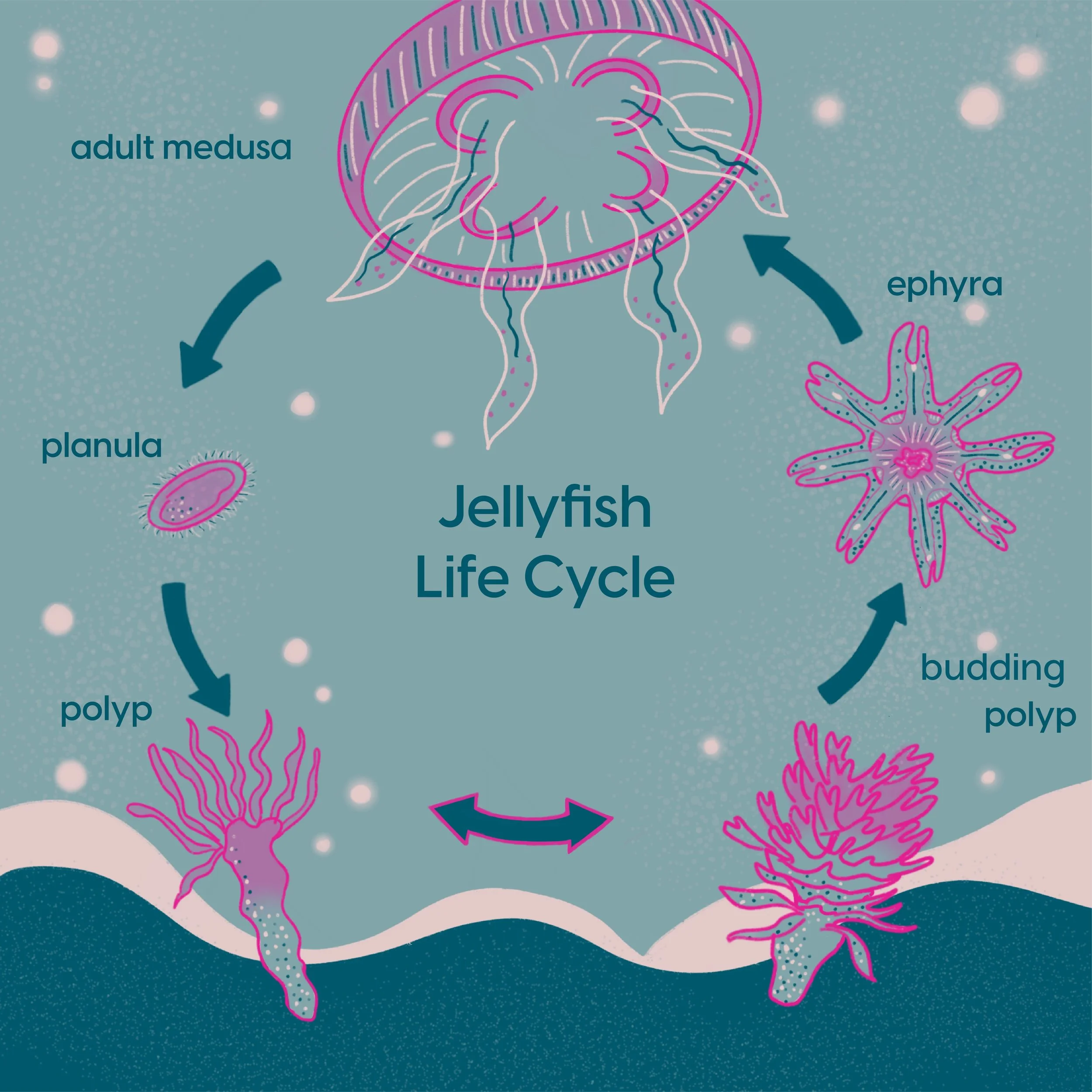
medusa
free-swimming, umbrella/ bell-shaped, body form of jellyfish or marine animal in the phylum Cnidaria

planula
tiny, free-swimming larval stage of marine animals in the phylum Cnidaria
photosynthesis
when an organisms uses the sun and CO2 for energy
chemosynthesis
when an organism uses chemicals for energy
holotypic
single physical specimen use dot officially name and describe a new species
dissolved organic
tiny, microscopic remnants of once-living organisms (such as carbon, nitrogen, and phosphorus compounds) that are completely dissolved in seawater
matter budding
type of asexual reproduction where a new organism grows directly out of the body of a parent organism
substrate
the surface or material on the ocean floor where marine organisms live, attach, or crawl
coral bleaching
when stressed corals expel the tiny colorful algae called zooxanthellae living inside their tissues causing the coral to turn white.
stony coral tissue loss disease (SCTLD)
fast-spreading, deadly disease that kills the soft living tissue of hard, reef-building corals
microfracturing
replant
physically moving and attaching nursery-grown marine organisms- like corals, seagrass, or mangroves- back into the ocean to restore damaged habitats
how to corals fight
when do corals fight
why do corals fight
explain the ways coral can reproduce
sexually and asexually
sexual- results in the release of planktonic planula larvae for dispersal into new locations
asexual- allows for growth of a colony of polyps from a single polyp
what are coral atolls
an atoll is a circular reef surrounding a central lagoon
sand cays an islands may be part of the atoll
what role does subsiding islands have in the process of forming coral atolls
countershading
when the doral (top) of a fish is darker than the ventral (bellow) of a fish
mesophotic
twilight zone of tropical an subtropical oceans, located between 100 and 500 ft
vertical migration
when animals move from shallow to deeper parts of the ocean (up and down)
deep scattering layer
marine snow
producer
an organism that makes its own food for energy (autotrophic)
consumer
organism that consumes other organisms for energy (heterotrophic)
halal
abyssal
benthis
deepest zone; Benthos means Bottom
polymetallic nodules
what is a fringing reef
smallest and most common for of reefs
dev as narrow strips along the shore
consist of inner reef flat
growth on the reef flat is slower
growth on the outer reef slope is more intense
what is a barrier reef
dev along coasts, often father from shore
how do coral atolls form
dev when a volcanic island is formed
coral begins as a fringing reef around the newly formed island
weathering erodes on the island
islands soon disappears below the water surface, leaving only the outer band of coral surrounding a lagoon
the round fringing reefs becomes an atoll.
coral reef predators examples
fishes (butterfly fished), sea stars(crown-of-thorns [Acanthaster])
coral reef grazer examples
fishes, sea urchins
largest two atolls
in the Maldives (Indian Ocean) and the Marshal islands (pacific)