Quiz 1 Chinese Art History
 Call Kai
 Learn
Learn Practice Test
 Spaced Repetition
 Match
Match Flashcards
 Knowt Play
1/14

There's no tags or description
Looks like no tags are added yet.
Name | Mastery | Learn | Test | Matching | Spaced | Call with Kai | Chat |
|---|
No analytics yet
Send a link to your students to track their progress
15 Terms
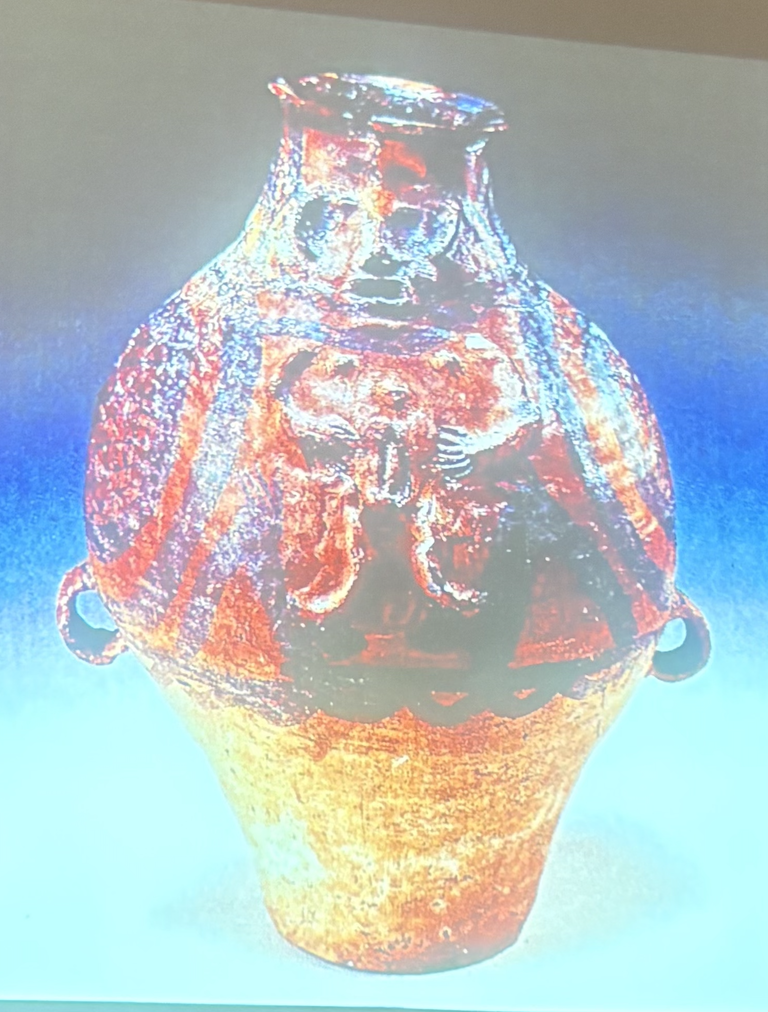
Reproductive Vase
Machang Phase
Qinghai Province
3rd millennium
Material: Clay
Use: Vessel used commonly for ceremonial/decorative purposes
Symbol: Nude woman

Goddess Head
Hongshan culture
4 millennium BCE
Liaoning Province
Material: Clay & jade eyes
Use: rituals
Symbol: Face with inlaid green jade eyes

Royal Jade Cong
Liangzhu culture
3rd millennium BCE
Zhejiang Province
Material: Jade
Use: Ritualistic object used in ceremonies (status object)
Symbol: Human (small face) riding animal (large face). Human wears feathered crown and beast has clawed limbs.
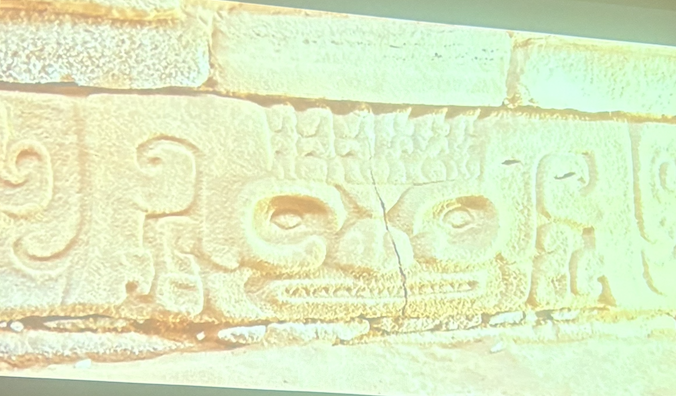
Stone reliefs in the “Palace Platform”
Shimao culture
3rd millennium BCE
Shaanxi Province
Material: Stone
Use: Decoration and rituals
Symbol: Abstract human and animal forms. A beast, shows social order, cross cultural exchange.

Pouring cup / jue / bronze tripod vessel
Erlitou culture
19th - 16th century BCE\
Henan Province
Material: Bronze, Mold Casted
Use: Ritualistic drinking vessel
Symbol: Represents status and ceremonial importance.

Kneeling Tiger-Human made of Jade
Late Shang culture
14th - 11 Bce
Henan Province
Material: Jade
Use: Ritualistic object, possibly for burial (found in burial site)
Symbol: Animal motif of tiger. Represents the connection between humans and the spiritual realm. RITUAL POSE

Bronze Fangding square caldron with taotie
late shang culture
13th century BCE
Henan Province
Material: Bronze, Mold Casted
Use: Ritualistic cooking and serving vessel. Was in the tomb of Fu Hao
Symbol: Taotie mask is a stylized animal mask, represents mythical beast. Ancestral worship and social hierarchy.

Standing Figure
Sanxingdui
1600 - 1046 BCE
Sichuan Providence
Material: Bronze Casted (very big)
Use: Religious or ceremonial purposes. shows religious/political authority
Symbol: Human with sharp features. Raised pedestal is shaped like an elephant. Seems like it should hold something.
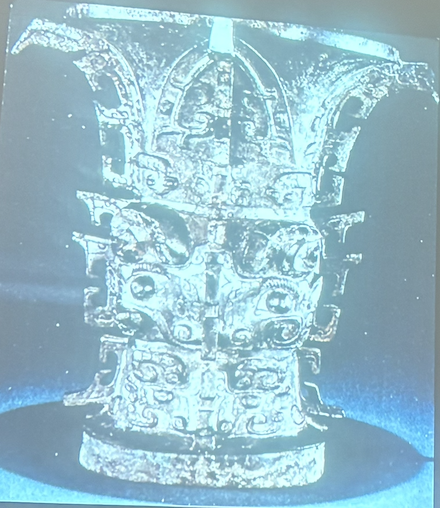
He-zun
Zhou
11th Century BCE
Western Zhou Dynasty
Material: Bronze
Use: Ritual wine vessel, often used in ancestor worship.
Symbol: The design features a geometric pattern and face-like forms, representing the connection to the divine. Has Toati (beast face).

Hu-gui
Zhou
857 - 828 BCE
Material: Bronze, piece mold technque
Late Western Zhou Dynasty
Use: Storage vessel for food or wine, used in ritual contexts.
Symbol: Often decorated with intricate designs and features. Zoomorphic handles (Dragons). Potential Calligraphy
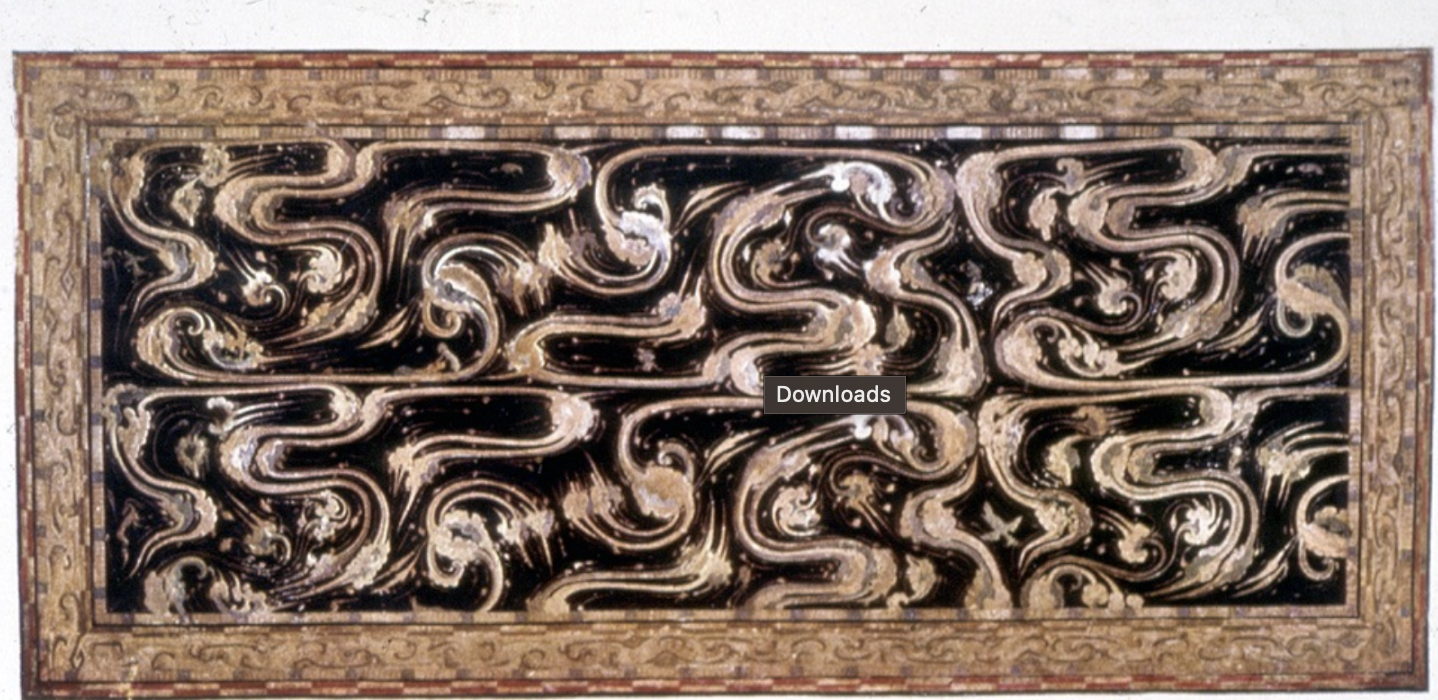
Mawangdui Tomb 1
Han Dynasty
168 BC
Hunan Province
Material: Black Lacquered background
Use: 2nd layer of coffin. Rich burial goods including textiles, lacquerware, and a range of artifacts reflecting belief systems and daily life of the era.
Symbol: Swirling Clouds Background and mythological creatures fighting eachother. Cosmos?? could represent heaven

Queen Mother of the West
Eastern Han Culture
1st - 2nd c. CE
Sichuan Providence
Material: Molded pottery bricks (tiles)
Use: Decorative
Symbol: First time God represented as human figure. Tiger on one side and Dragon on the other. Always has animals around her. It represents afterlife. Queen Mother is apart of money trees

Teracotta Figures (First Emperor’s Tomb at Lintong)
Qin Dynasty
3rd BCE
Shaanxi Province
Material: Painted terracotta
Use: Burial objects meant to accompany the emperor into the afterlife, showcasing the army and various figures representing different professions.
Symbol: Represents the vastness of the emperor's power, with life-sized soldiers that reflect the military strength and organization of the Qin Dynasty. The order of how the sculptures are laid out were how they were sent to war