R&U Systems 2
 Call Kai
 Learn
Learn Practice Test
 Spaced Repetition
 Match
Match Flashcards
 Knowt Play
1/12

There's no tags or description
Looks like no tags are added yet.
Name | Mastery | Learn | Test | Matching | Spaced | Call with Kai | Chat |
|---|
No analytics yet
Send a link to your students to track their progress
13 Terms

Urinary tract infection
Infection secondary to pathogenic microorganisms
Risk Factors:
• Female anatomy (shorter urethra)
• Sexual activity
• Birth control- specifically diaphragms and spermicidal agents
• Menopause
• Anatomical urinary tract problems
• Blockages – kidney stones or enlarged prostate
• Suppressed immune system
• Catheter use
• Recent urinary procedure
TYPES OF UTI
Lower UTI
Cystitis: bladder
Prostatitis: prostate
Urethritis: urethra
Upper UTI
Pyelonephritis: kidneys
Interstitial Nephritis: kidney tubules
Renal Abscesses
LOWER URINARY TRACT INFECTION
Bacteria gain access to lower urinary tract → Evade host defensive mechanisms
Due to:
• Immunosuppression
• Decreased acidity of urine
• Reflux of urine
• decreased mucosal/IgA/prostatic secretions
• damage to lining of system, etc.
all of which are a risk of infection!!!
#1 cause: e.coli
UTI signs and symptoms
Kidneys
Back or side pain
High fever (infection)
Shaking and chills
Nausea
Vomiting
Bladder
Pelvic pressure
Lower belly discomfort
Frequent, painful urination
Blood in urine
Urethra
Burning with urination
Discharge
Elderly = confusion
Urinalysis and urine culture
If bacteria found in UA → Pt will need a urine culture and sensitivity (C & S)
Why?
which type of antibiotic is given (ONLY TREAT AFTER URINALYSIS
before do a general antibiotic

UTI treatments and prevention
Antibiotics - to treat the cause
Commonly used for simple UTIs:
• Trimethoprim and sulfamethoxazole (Bactrim, Bactrim DS)
• Fosfomycin (Monurol)
• Nitrofurantoin (Macrodantin, Macrobid, Furadantin): proactively
• Cephalexin
• Ceftriaxone
+ Phenazopyridine (Pyridium)- for symptoms: To relieve pain, burning, urgency and frequency; turns urine a crazy color and will stain.
PATIENT EDUCATION: PREVENTION OF UTI
• Drink plenty of liquids, especially water.
• Try cranberry juice.
• D mannose
• Wipe from front to back.
• Empty your bladder soon after having sex. Also drink a full glass of water to help flush bacteria.
• Avoid potentially irritating feminine products: deodorant sprays, douches and powders
• Change birth control method
GLOMERULONEPHRITIS
Definition: inflammation of glomerular structures
What happens in the glomerulus? Filtration through the membrane
Etiology: exact cause unknown but immune reaction causes antibody-antigen complexes (hypersensitivity type III) to get trapped in the basement membrane.
Now things that shouldn’t get into Bowman’s Capsule do
Types
Acute, chronic
Primary – usually due to Group A Beta-hemolytic strep (GABHS)
Secondary – some other disease triggers – like SLE
Signs & Symptoms
• Hematuria- blood in urine
• Proteinuria- protein in urine
• Azotemia – waste products stay in blood because nephron isn’t filtering them out
• Fatigue
• Oliguria – dramatic decrease in urine output
• Edema – protein spilled into urine
• Hypertension – kidney isn’t regulating NA-K like normal
• Decreased GFR (Quickly pushing fluids through)
• Increased glomerular membrane permeability; change how fluids flow out and
Glomerulonephritis treatment
Acute
• Symptomatic support
• Resolution
Chronic
• Permanent scarring
• Can lead to renal failure
• ACE inhibitors → protect blood flow into the kidneys
• Corticosteroids → decrease inflammation → less scar tissue
• Diuretics → remove excess fluid
• Diet changes → eating less protein, Na, & K
• If renal failure: Dialysis
Pyelonephritis
Inflammation of the kidneys (tubules, interstitium, pelvis)
Etiology
Acute: ascending infection (from GU)
• Gram-negative bacteria (E.Coli) most common
Chronic
• Reflux (fluid going back up into kidneys) and infection
Signs & symptoms
• Fever, chills, malaise
• Back pain (CVA tenderness = costovertebral angle bottom of rib cage)
• Cloudy urine, foul odor
• Dysuria, → frequency & urgency
• WBCs & protein in urine
• Elevated WBC in CBC and maybe serum
• Chronic = change in ability to concentrate urine
• What will specific gravity and urine osmolality look like?
specific gravity will go down, and will be diluted
Waste cannot leave body if unable to dilute
PYELONEPHRITIS TREATMENT
Antibiotics:
• Trimethoprim-sulfamethoxazole (TMP-SMX)
• Amoxicillin or Augmentin
• Ceftriaxone or cephalexin
• Ciprofloxacin or levofloxacin: achilles tendon rupture
Hydration:
• IVF
Symptom management:
• Pain
• Nausea

Kidney Labs
Creatinine
• Normal range: 0.6-1.2 mg/dL
• Waste product from digestion of protein and normal breakdown of muscle tissue: workout normal muscle tears.
• Healthy kidneys filter creatinine from blood
Blood urea nitrogen (BUN)
• Normal range: 8-20 mg/dL
• Liver produces ammonia (contains nitrogen)
• Nitrogen combines with carbon, hydrogen and oxygen = urea
• Healthy kidneys filter urea from blood
• If elevated but creatinine isn’t- usually dehydration
Creatinine and BUN ↑ when kidneys are stressed
Glomerular filtration rate
• Measures kidney function
• Decreases with kidney disease and age
A 35-year-old woman presents with high fever, chills, dysuria, flank pain, and nausea. Physical examination reveals costovertebral angle (CVA) tenderness on the right. Urinalysis shows pyuria, bacteriuria, and white blood cell casts. A diagnosis of acute pyelonephritis is made.
Which of the following best explains the underlying pathophysiology of this condition?
A. Direct invasion of renal glomeruli by viral pathogens
B. Immune-mediated destruction of renal tubules
C. Ascending infection of the urinary tract leading to inflammation of the renal parenchyma and pelvis
D. Crystal deposition within the renal tubules causing tubular obstruction and necrosis
C. Ascending infection of the urinary tract leading to inflammation of the renal parenchyma and pelvis
a is glomerulonephritis
Chronic renal failure
• Chronic renal failure is the deterioration & destruction of nephrons with progressive loss of renal function
• Renal function lost cannot be regained
• Function well below our anatomic reserve
• Most common causes of CRF = long term uncontrolled DM & HTN
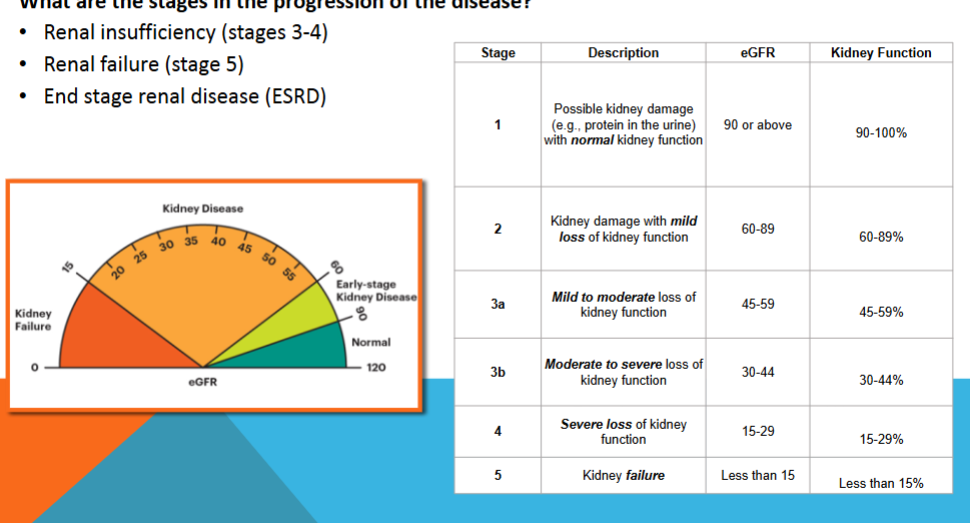
What are the stages in the progression of the disease?
• Renal insufficiency (stages 3-4)
• Renal failure (stage 5)
• End stage renal disease (ESRD

Diminished renal reserve
Renal Insufficiency
headaches
nocturia/polyuria
GFR-25% of normal
Increase BUN and serum creatinine
weakness and fatigue


End Stage
shallow yellow discoloration pruritus & uremic frost
CNS depression, peripheral neuropathy
anorexia, N/V, GI bleeding peptic ulcer disease
hyperglycemia, hyperlipidemia, gout
psychological changes, withdrawal, depression, psychosis
anemia-bleeding
hyperparathyroid, amenorrhea, infertility, impotence, renal osteodystrophy, GFR less than 10%
Hemodialysis
Uremic Frost

Chronic Renal Failure complications
CHRONIC RENAL FAILURE: ALTERED HOMEOSTASIS
Problems associated with CRF reflect inability of the kidneys to perform necessary functions
Waste excretion
Fluid & electrolyte balance
Acid-base regulation
Vit D synthesis
Erythropoietin synthesis
Regulation of BP
CHRONIC RENAL FAILURE COMPLICATIONS
1) Accumulation of nitrogenous wastes (urea, creatinine, uric acid)
Azotemia
2) Declining ability to produce urine
Oliguria, anuria, uremia
3) Electrolyte imbalances
Hyperkalemia
4) Fluid imbalance
HTN, Increase risk of HF
6) Decreased erythropoietin production
Anemia
7) Acid-base imbalance
Acidosis
8) Decreased activation of vitamin D
Hypocalcemia
Increased phosphorous