NUSC 2200 - Preconception
 Call Kai
 Learn
Learn Practice Test
 Spaced Repetition
 Match
Match Flashcards
 Knowt Play
1/31

There's no tags or description
Looks like no tags are added yet.
Name | Mastery | Learn | Test | Matching | Spaced | Call with Kai | Chat |
|---|
No analytics yet
Send a link to your students to track their progress
32 Terms
Impact Aging Has on Female Fertility
After age 35 fertility decreases because decrease of quantity and quality of OVA.
Women have a lifetime of 7 million OVA but only 400-500 mature throughout reproductive years. OVA can experience chromosomal damage from oxidation, radioactive particles and aging.
35+ Higher risk for disorders from chromosomal defects and lower natural conception rates. 50+ 3 fold higher risk of low birth weight, 3 fold higher risk of preterm birth and 2 fold risk of infant mortality.
Impact of Aging on Male Fertiltiy
Sperm production beings from puberty and continues to old age, fertility declines with age. 40+ paternal age higher incidence of autism in offspring. Reduced sperm quality, lower sperm motility and increased rates of DNA damage.
Hormone Pituitary Stimulation
Hormone Gonadotropin-releasing hormone (GnRH) stimulates the release of Follicle-stimulating hormone (FSH) and Luteinizing hormone (LH) from the anterior pituitary gland.
GnRH (Gonadotropin-Releasing Hormone)
Hypothalamus (base of the brain)
Master controller for reproduction system. Tells anterior pituitary gland to synthesize and release FSH and LH.
FSH (Follicle-Stimulating Hormone)
Anterior pituitary gland
Female - Stimulates the growth and maturation of ovarian follicles in the ovaries during the early part of menstrual cycle. Also tells developing follicles to produce estrogen.
Male - Acts on the Sertoli cells in the testes to stimulate sperm production
LH (Luteinizing Hormone)
Anterior pituitary gland
Female - A rapid spike in LH triggers ovulation, the release of mature egg from the ovary. After ovulation the LH converts the empty follicle into the corpus luteum which secretes progesterone to maintain the uterine lining.
Male - Acts on the leydig cells in the testes to stimulate the production of testoterone.
Estrogen
Stimulates the release of GnRH during the follicular phase, promotes follicle growth and maturation, increase vascularity and nutrient storage in uterine lining and stimulates the thickening of the uterine wall.
Progesterone
Known as the “progestational” hormone, it prepares the uterus for a fertilized ovum, increases the vascularity of the endometrium, maintains pregnancy, stimulates cell division of fertilized ova, and inhibits the action of testosterone.
Trend for Obesity in the US Population Since the 1990s
25% or higher for obesity in all states. 74% adults are overweight or obese. 43% men and 64% women meeting waist criteria for metabolic syndrome.
Foods or Nutrients to Reduce in the American Diet
Added sugars (limit to less than 10% of total daily calories starting at age 2; maximum 10 grams per meal).
Saturated fat (limit to less than 10% of total daily calories).
Sodium (limit to less than 2,300 mg/day).
Highly processed, refined carbohydrates (e.g., white bread, packaged breakfast cereals, chips, cookies).
Sugar-sweetened beverages (sodas, fruit drinks, energy drinks).
Artificial flavors, petroleum-based dyes, artificial preservatives, and low-calorie non-nutritive sweeteners.
Alcohol intake.
Foods or Nutrients to Increase in the American Diet
High-quality, nutrient-dense protein foods from both animal (eggs, poultry, seafood, red meat) and plant sources (beans, peas, lentils, legumes, nuts, seeds, soy).
Full-fat dairy products with no added sugars (3 servings per day for a 2,000-calorie diet).
Colorful, nutrient-dense whole vegetables (3 servings per day) and whole fruits (2 servings per day).
Fiber-rich whole grains (2 to 4 servings per day).
Healthy fats rich in essential fatty acids and omega-3s (olive oil, avocado, nuts, seeds, butter, beef tallow).
Fermented foods to support the gut microbiome (sauerkraut, kimchi, kefir, miso).
Water for hydration.
Egg Production
Females are born with a fixed lifetime supply of approximately 7 million immature eggs. No new ova are formed after birth. During the reproductive years, only about 400 to 500 ova mature and are released via cyclic ovulation during the menstrual cycle.
Sperm Production
Sperm production (spermatogenesis) begins during puberty and continues continuously throughout a man's lifetime into old age. The maturation process of sperm takes approximately 70 to 80 days.
Females - Obese
High estrogen, high free-testosterone, high leptin, low Sex Hormone-Binding Globulin (SHBG), insulin resistance (>35), high inflammation
Suppresses GnRH, preventing FSH/LH release. High insulin causes excess ovarian testosterone production. Lack of SHBG leaves elevated free testosterone and estrogen, preventing egg maturation and ovulation.
Males - Obese
Low testosterone, low SHBG, high leptin, high FSH, high estrogen, high insulin (>40), high inflammation, oxidative stress.
Suppresses GnRH and FSH/LH release. High free estrogen (due to low SHBG) prevents sperm maturation. High insulin causes sperm DNA damage. Reduced sperm count/motility and increased malformed sperm
Nutrition-Related Factors That Impair Fertility in Males and Females
Both Sexes: Weight loss >10-15% of normal weight; inadequate body fat or excessive central body fat; inadequate antioxidant status (selenium, vitamins C and E); extreme levels of exercise; high alcohol intake; oxidative stress; celiac disease; diabetes.
Females: Vegan diets; poor iron stores; high-fiber diets combined with low fat intake; eating disorders (anorexia nervosa, bulimia nervosa).
Males: Inadequate zinc status; heavy metal exposure (lead, mercury); high intake of soy foods (which may lower sperm count).
Hormones Related to Body Fat and Effect on GnRH Signaling
Leptin and Estrogen: Both hormones are produced or influenced by adipose tissue. Elevated levels in obesity or severely reduced levels in underweight status disrupt normal pulse secretion of GnRH from the hypothalamus.
Without normal GnRH pulses, the anterior pituitary does not release proper amounts of FSH and LH, preventing follicle/egg maturation in females and disrupting sperm production/testosterone regulation in males.
Biological Basis for Being Underweight on Fertility and Treatment
Low body fat reduce estrogen and leptin synthesis. Weight loss greater than 10-15% of normal weight leads to hypothalamic amenorrhea, anovulatory cycles and short luteal phases in females
Males, sperm viability and motility decreases when weight drops 10-15% below normal and sperm production ceases at >= 25%
Treatment: The primary treatment is weight restoration via a healthful, energy-dense diet. Gaining 6 to 11 pounds typically restores normal hormone levels and fertility. Fertility drugs like Clomid are ineffective in underweight women until body weight is restored.
Non-Nutrition Factors That Can Impair Fertility in Males
Heavy metal exposure (lead, mercury, cadmium, manganese).
Halogen and glycol exposure (pesticides, antifreeze, de-icers).
Estrogen exposure in environmental chemicals (DDT, PCBs).
Excessive heat to the testes (elevated scrotal temperature).
Anabolic steroid abuse (causes testicular atrophy and absence of sperm).
Severe psychological stress and sexually transmitted infections/PID.
High Insulin Levels and Impact on Fertility in Women
Stimulate the ovaries to overproduce androgens (testosterone).
Suppress the synthesis of Sex Hormone-Binding Globulin (SHBG) in the liver.
The resulting excess of free testosterone prevents ovarian follicles and eggs from maturing properly, leading to anovulation and irregular menstrual cycles (commonly seen in PCOS)
RED-S
RED-S occurs when athletes do not consume sufficient calories to support their exercise energy expenditure. Key factors/consequences include:
Low energy availability leading to amenorrhea / menstrual dysfunction (due to decreased LH and lack of estrogen).
Low bone mineral density (increased risk for osteopenia/osteoporosis and fractures).
Performance decline, chronic fatigue, and increased risk of injury.
Risk Factors for Insulin Resistance
Obesity and central (abdominal) obesity.
Physical inactivity.
Small size / low birth weight at birth.
Leading Cause of Female Infertility
Polycystic Ovary Syndrome (PCOS), affecting 5–10% of women of childbearing age.
Dietary Treatment for Celiac Disease
Strict lifelong elimination of gluten from the diet (avoiding wheat, rye, and barley). All foods labeled "Gluten-Free" must contain less than 20 parts per million (ppm) of gluten. Correction of underlying nutrient deficiencies (e.g., iron, folate, vitamin D, calcium, B12) is also required.
Celiac Disease
Gradual (months to years after exposure).
Autoimmune response to gluten proteins (gliadin, secalin, hordein).
Villous atrophy / flattening of small intestinal lining.
Celiac-specific antibodies present in serum.
Must avoid wheat, rye, and barley for life.
Wheat Allergy
Rapid (minutes to hours after exposure).
IgE-mediated allergic reaction specific to wheat proteins.
No damage to small intestine.
Wheat-specific IgE antibodies present in serum.
Must avoid wheat; rye and barley are tolerated.
Non-Celiac Gluten Sensitivity
Variable.
Non-autoimmune, non-allergic adverse reaction.
No damage to small intestine.
Absence of celiac/allergic antibodies.
May only need to restrict wheat; rye/barley often tolerated.
BMI Ranges for Weight Status
Underweight: < 18.5kg/m²
Normal Weight: 18.5-24.9kg/m²
Overweight: 25.0--29.9kg/m²
Obese: 30.0kg/m^2
Obesity Class I: 30.0-34.9kg/m²
Obesity Class II (Very Obese): 35.0-39.9kg/m²
Obesity Class III (Extremely Obese): 40.0kg/m²
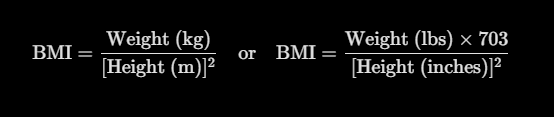
BMI Formula
BMI = (Weight (kg))/(Height (m))²
BMI = (Weight (LBS)) x 703)/(Height(inches))²
Type 1 Diabetes:
Results from autoimmune destruction of insulin-producing pancreatic beta-cells (~10% of cases). Absolute insulin deficiency.
Type 2 Diabetes:
Characterized by insulin resistance where cells fail to respond normally to insulin; circulating insulin levels are initially high, but pancreatic beta-cell dysfunction may develop over time.
Caffeine Recommendations for Preconception and Pregnancy
Preconception: High caffeine intake delays time to conception (300 mg/day reduces conception chances by ~27%, 500 mg/day reduces it by ~50%). Preconception intake should generally be restricted.
<200 mg/day March of Dimes
<300 mg/day WHO / Health Canada