an introduction to psychopathology: concepts, paradigms and stigma (chapter 1 - Davey) | Quizlet
 Call Kai
 Learn
Learn Practice Test
 Spaced Repetition
 Match
Match Flashcards
 Knowt Play
1/50

There's no tags or description
Looks like no tags are added yet.
Name | Mastery | Learn | Test | Matching | Spaced | Call with Kai | Chat |
|---|
No analytics yet
Send a link to your students to track their progress
51 Terms
psychopathology
- the study of deviations from normal or everyday psychological or behaviour functioning, sociocultural factors may be gender, culture, ethnicity, and poverty
- in depth study of mental health problems
clinical psychology
- the branch of psychology responsible for understanding and treating psychopathology
demonic possession
- historical explanations of psychopathology often alluded to the individual being possessed in some way
- often linked to religion
- treated with rituals e.g. exorcism
-> had effect of increasing the problems
medical model
- attributes normal behaviour to physiological, biochemical, or genetic causes -> assumes that something is broken, classifies
- since 17th century with dualism
- somatogenic hypothesis: causes or explanations of psychological problems can be found in physical or biological impairments
- psychiatry: a scientific method of treatment that is based in medicine, the primary approach of which is to identify the biological causes of psychopathology and treat them with medication or surgery
advantages of the medical model
- improved and enhanced science
- there are biological explanations and differences between people that have a mental disorder
- puts psychology on the map as being science
disadvantages of the medical model
- approach is very reductionist - can not capture the complexity (e.g., feelings)
-> doesn't take experience into account: does not recognise that it might be a traumatic/bad experience that causes the mental health problems
- implies "something is not working properly and needs to be fixed"
-> however often no biological cause but experiences
-> can be stigmatizing
- not take into account that disorders can be extreme forms of normal behaviour
-> e.g. someone with an intellectual disability can show disruptive behaviour not related to this intellectual disability but just by normal learning processes
- classification: disorders based on clustering of symptoms and not based on causes of symptoms
asylums
- were hospices for people with mental health problems
(≠ community care -> outside hospitals)
- root of modern stigma, as the public could buy tickets to the asylum to watch inmates as a form of entertainment
- mentally ill individuals were often confined to asylums or given lifelong custodial care, which turned into a problem as the number increased
modern approaches of mental health care focus on compassion, support and empowerment
social breakdown syndrome
- state of patients with confrontational/challenging behaviour, physical aggressiveness and a lack of interest in personal welfare and hygiene
- occurred as a result of untrained asylum staff who resorted to restraint as the main form of 'treatment'
moral treatment
- approach to the treatment of asylum inmates
- developed by the Quaker movement in the UK
- abandoned usual treatments to understanding the individual by hope, moral responsibility, and occupational therapy
milieu therapies
- first attempts to structure the hospital into therapeutic communities
- attempted to create a therapeutic community to develop productivity, independence, responsibility and feelings of self-respect
token economy
- reward system -> receive social tokens for certain behaviour (reinforcement), serious gains in improvement
- legal difficulties with withholding desired materials...
assertive community treatment programmes
- help people recovering from psychotic episodes with their medication regimes, psychotherapy, etc., met in own environment
- teams can consist of nurses, doctors, psychologists, ...
assertive outreach
- a way of working with groups of individuals who do not effectively engage with mental health services
- aim: build a long-term relationship between client and mental health services within the client's own environments
- nowadays often just acute treatment in hospitals and later try to give treatment in natural environment
defining psychopathology
- study of deviations from normal or everyday psychological or behavioural functioning
- hard to define normal and abnormal behaviour
- terminology important, e.g. not use "abnormal psychology"
abnormal psychology
- an alternative definition of psychopathology, albeit with stigmatizing connotations to not being "normal"
service user groups
- group of individuals who are end users of the mental health services provided by, for example, government agencies such as the NHS
four ways of defining psychopathology
1. deviation from the statistical norm
2. deviation from cultural norms
3. maladaptive behaviour
4. defining psychopathology in terms of the degree of distress and impairment
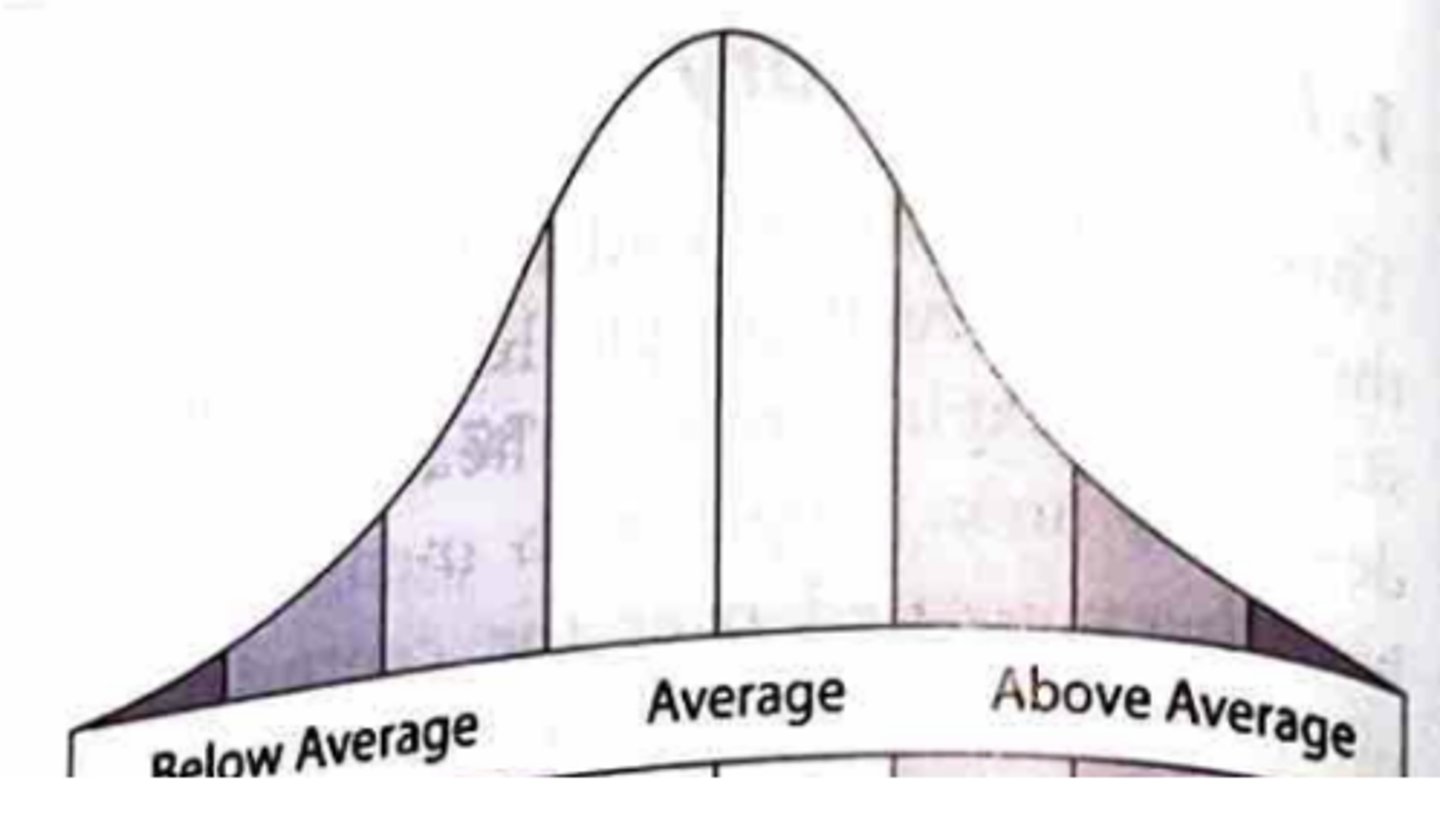
1. deviation from the statistical norm
- the mean, average or modal example of a behaviour
- but: abnormality still subjective judgement and statistical way of diagnosing is neither consistent nor reliable (e.g., depression is not rare, but still a serious issue)
- reliable, but the difference between normal and abnormal is arbitrary and doesn't take into account pos deviations like high intelligence
2. deviation from cultural norms
- unsuitable, because…
- they differ in what is considered socially normal and acceptable (soviet thought someone who is against regime is schizophrenic…)
- cultural factors seem to affect how psychopathology manifests itself (can’t be indicator as it is cause)
- two examples:
1. ataque de nervios: a form of panic disorder found in Latinos from the Caribbean
2. seizisman: a state of physiological paralysis found in the Haitian community
3. maladaptive behaviour
- may involve behaviour that threatens the health of the individual and others -> problem: not all maladaptive behaviours are due to psychopathology, instead it may serve a protective/ adaptive function, such as spider phobia
- harmful dysfunction: assumption that psychopathology is defined by the 'dysfunction' of a normal process that has the consequence of being in some way harmful
-> problem: studies suggest that mental health problems represent extreme forms of normal emotions
4. defining psychopathology in terms of the degree of distress and impairment
- expressed by the sufferer
+ allows client to judge their own 'normality' based on how well they are able to cope with their own lifestyle - no standards provided
- disorder does not necessarily cause distress
- pychopathology ≠ functioning/contributing society
explanatory paradigm
- several causes identifies bc. Humans are multifaceted and complex
- can be used to explain psychopathology both independently and supplementary to each other: genetic, biological, behavioural, psychological
biological models
- psychological disorders have a biological cause
- also known as the medical model
genetics
- study of heredity and the variation of inherited characteristics
- can be studied in three ways:
1. concordance studies -> probability with which family members or relatives will develop a psychological disorder depending on how closely they are related (how much genetic material they have in common)
2. twin studies (compare monozygotics and dizygotics)
3. studying offspring of twins -> less similar environment
- genetic importance for illness dependent on illness (sometimes sufficient if genes, sometimes contributing ...)
diathesis-stress model
- suggests a mental health problem develops because of an interaction between a genetic disposition and our interactions with the environment
heritability
- ranges from 0 to 1, with 1 meaning that when carrying the gene, it will also be expressed
molecular genetics
- approach that seeks to identify individual genes that may be involved in transmitting psychopathology symptoms
- e.g., through genetic linkage analysis (compare patterns of known inheritances of gene locations with inheritance of psychopathological symptoms)
- careful, because mostly symptoms are result of multiple genes
epigenetics
- research, whether it is possible that mental health can be influenced by changes in organisms due to modifications of gene expression (which, in turn, are elicited by environmental factors)
brain structure and function
- controls most of behaviour and thoughts
- two mirror-image hemispheres connected by corpus callosum
- cerebral cortex: outer, convoluted area
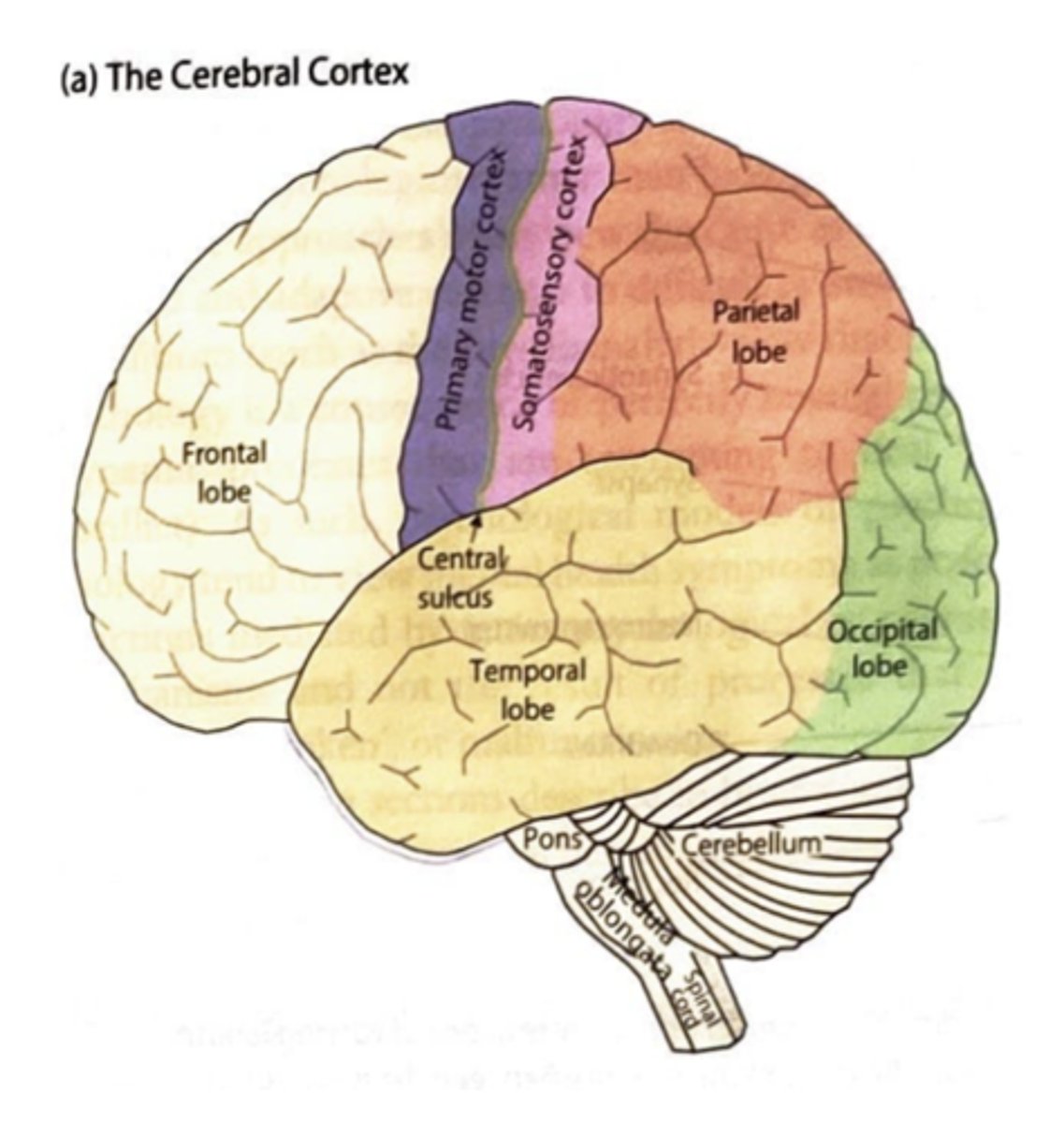
fissures divide cerebral cortex into four lobes
- occipital lobe
- temporal lobe
- parietal lobe
- frontal lobe
occipital lobe
- associated with visual perceptions
temporal lobe
- involved in hearing, memory, emotions, language, illusions, tastes, and smells
parietal lobe
- associated with visuo-motor coordination
frontal lobe
- controls voluntary movement, verbal expression, problem solving, will power, and planning
-> important part to look at for psychopathology (attention disorders, beh, ...)
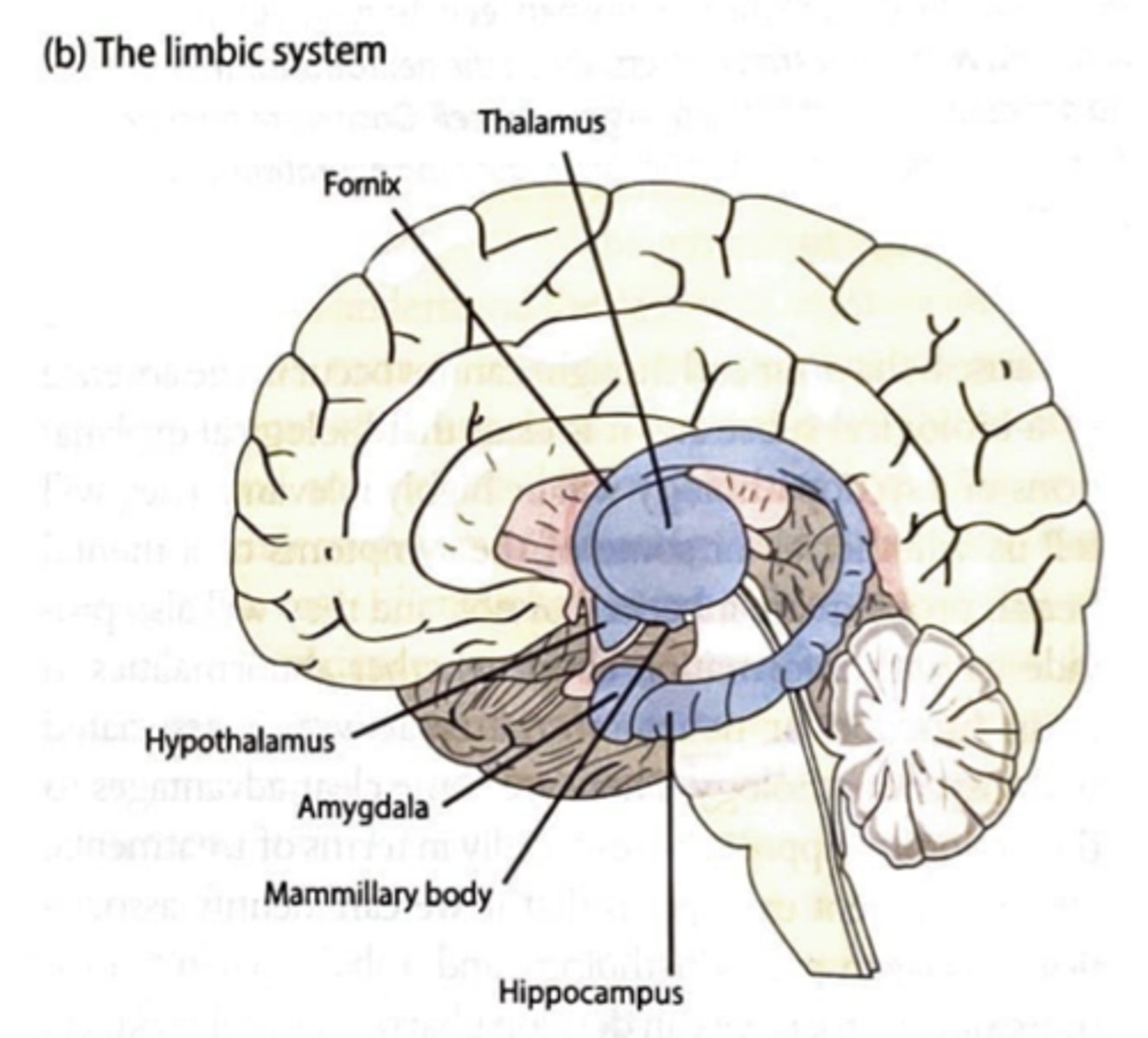
limbic system
- compromising of the hippocampus, mamillary body, amygdala, hypothalamus, fornix and thalamus
- thought to be critically involved in emotion and learning
brain neurotransmitters
- chemicals that help neurons to communicate with each other
- essential components of the mechanisms that regulate efficient and effective brain functioning (dopamine (schizrophrenie, psychotics...), serotonin (depression), norepinephrine (anxiety), GABA(anxiety))
psychological models
- see symptoms as normal reactions to conflicts
- Freud
- behaviour model
- cognitive model
- ...
psychoanalytical or psychodynamic model (Freud)
- explain both normal and abnormal psychological functioning and the idea that psychopathology can originate in childhood
- three components of the self: id, ego (rational), superego (control based on values)
- psychological health when the 3 are in balance, pathology when they are in conflict and formation of ego defence mechanisms to deal with conflict (e.g. denial, repression...)
- if one of the stages of development (from infancy to maturity) is implicated, it may lead to mental health issues in later life oral, anal, phallic, latency, genital
behavioural model
- learnt reactions to environmental experiences
- can be 'unlearned'
(limitations: most psychopathologies may be too complex to understand their shaping process and are difficult to modify)
learning theory
- classical conditioning: learning of an association between two stimuli (CS and UCS)
- operant conditioning: modification of behaviour as a result of its consequences through reinforcement (reward or punishment)
cognitive model
- psychopathology result of individuals acquiring irrational beliefs or unusual ways of thinking, processing etc. (Ellis & Beck)
- CBT: intervention for changing both thoughts and behaviour
- problem: rather than being cause of psychopathology, dysfunctional thoughts may also be symptoms
humanist-existential approach
- resolve psychological problems through insight, personal development and self-actualization
client-centred therapy (Rogers)
- empathy, unconditiona positive regards, supportive ...
- stressing the goodness of human nature
- assuming that if individuals are unrestricted by fears and conflicts, they will develop into well-adjusted, happy individuals
stigma
- things like hard to get a job etc. common and widespread problem
two distinct types (social stigma and perceived stigma/self-stigma)
- caused by misguided views and enforced by media
- high effect on well-being of individual and treatment
- eliminate by informing and creating intergroup contact
- people are NOT their disorders
- don'Time to Changet ask yourself which mental illness the patient has, but which patient has the mental illness
social stigma
- prejudicial attitudes and discriminating behaviour directed towards individuals with mental health problems as a result the psychiatry label they have been given
perceived stigma/self-stigma
- internalising by the sufferer of their perceptions of discrimination, can significantly affect feelings of shame and lead to poorer treatment outcomes
- these beliefs may be held by a wide range of individuals within society, including peers, family members, authorities, medical staff and are perpetuated by the popular media
- these stigmata may be addressed by improving intergroup relations (social psychology)
"time to change"
- a national UK programme aiming to promote awareness of mental health problems and to combat stigma and discrimination
classifying psychopathology
- the most widely adopted classification system is DSM-5 which is based on the medical model
- advantages and disadvantages the same as medical model
advantages of classifying psychopathology
- helps improve science
- improves communication
-> already have an idea when you say person with anxiety disorder
- needed for society: to structure mental healthcare
- helps effective treatment
-> can examine what works best for this specific group of people
disadvantages of classifying psychopathology
- assumes that disorders are discrete entities, but actually dimensions (e.g. extreme forms of normal behaviour, outcomes of normal learning processes etc.)
- classifies according to symptoms and not causes
- gives the assumption of explanation
-> people might say he hears voices -> he has hydrophilia; this is not an explanation as it is -> he hears voices he is classified as hydrophilia and not the other way around!
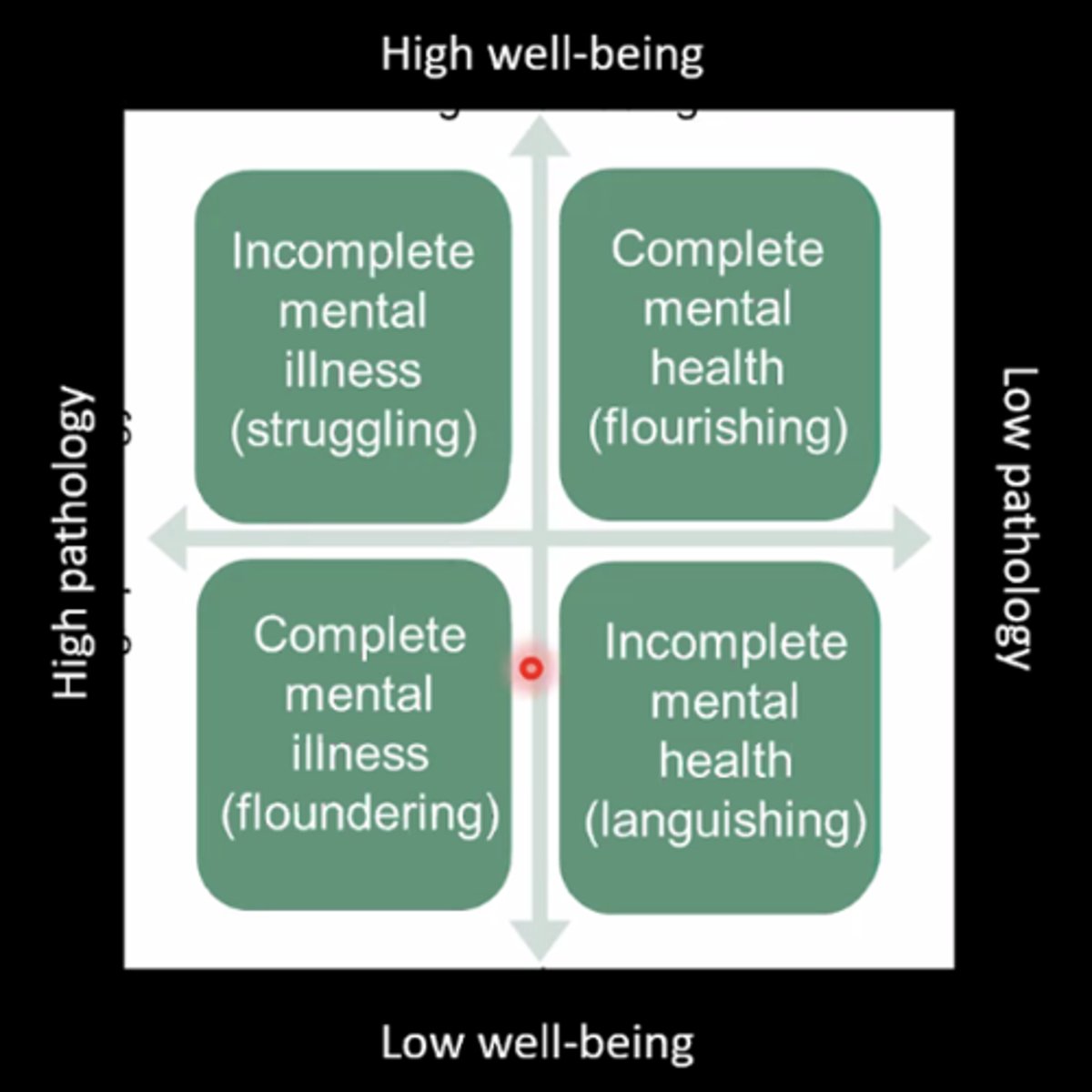
mental health quadrant