business strat chapter 3
 Call Kai
 Learn
 Practice Test
 Spaced Repetition
 Match
 Flashcards
 Knowt Play
1/39

Earn XP
Description and Tags
competitive advantage
40 Terms
what are two routes to superior profitability
operate in an attractive industry
establish a CA over rivals
strategic objective
build a position that allows firm to create more economic value than competitors & capture part of that value
what is CA
firm has CA when it earns or has potensh to each a persistently higher rate of profit than its rivals
economic profitability
industry attractiveness + competitive position
value created: perceived customer benefit - costs of providing it
value captured: prices, margins, bargaining power
how does CA emerge?
external sources of change
diff responses: some firms respond better than others
internal sources of change
external change & entrepreneurial response
same shock can have diff effects depending on firm’s start position
magnitude of change: larger = more potensh opportunity
initial diffs
ability to respond
internal change: innovation & creative destruction
innovation can create advantage for innovator & destroy incumbents’ advantage
strategic innovation: new products, experiences, delivery models, or ways of organising activities
creative destruction: innovations erode existing competitive positions
implication: CA is dynamic & must be renewed before rivals imitate or surpass it
consumer surplus
perceived benefits (B): customer’s max willingness to pay
includes functional utility, convenience, brand, perceived risk, & experience
price (P): firm chooses P within competitive constraints
consumer surplus = B - P
consumers buy when surplus is +ve & choose alternative with highest surplus
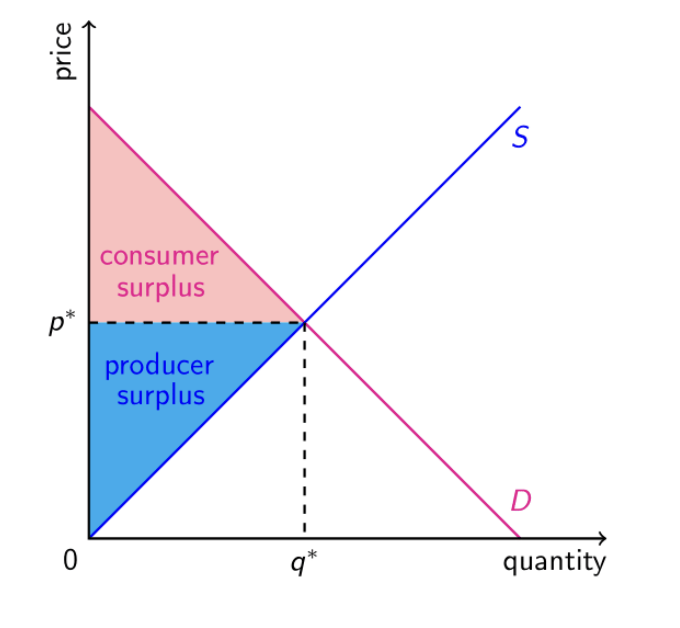
components of value creation
economic value created = consumer surplus + producer surplus
value created = willingness to pay - cost
CS = willingness to pay - market price
PS = market price - cost

value creation & competition
+ve value: product can have B-C > 0 & still fail to generate above-normal profits
competition: if many firms can offer something similar, competitive pressure lowers prices & transfers value to customers
CA: to earn superior profits, a firm must create more value than rivals or capture a larger share of it
diagnosing value creation
why does the firm exist?
what drives B & C?
how will they evolve?
ways to create more economic value than rivals
configure the value chain differently
perform similar activities better
cost advantage
type of CA
product or service similar to rivals’ but produced or delivered at lower cost
can support lower prices, higher margins, or both
differentiation advantage
type of CA
product or service perceived as unique & valuable
supports a price premium that must exceed cost of differentiation
porter’s generic strategies
internal analysis of competitive position
cost vs differentiation, industry-wide vs niche
cost leadership: industry-wide low costs
differentiation: industry-wide unique products
cost focus: low costs for a niche market
differentiation focus: unique products for a niche market
stuck in the middle: no coherence
cost leadership
key elements: efficient scale, design for manufacture, cost control, process innovation, selective outsourcing
organisational requirements: capital, process engineering, frequent reporting, tight cost control, quantitative incentives
differentiation
key elements: brand, design, quality, production innovation, customer experience
organisational requirements: marketing, creativity, cross-functional coordination, research, qualitative incentives
parts of achieving strategic coherence
risk: can produce high costs without enough willingness to pay
nuance: some firms combine efficiency & differentiation when activities reinforce one another
cost advantage
lower cost is not indiscriminate cutting → it is redesigning activities for efficiency
tradition: for decades, price was a central competitive weapon & EOS dominated analysis
new approaches: outsourcing, offshoring, re-engineering, lean production, & flatter structures
criterion: cost reduction should preserve perceived customer value & the firm’s future ability to compete
drivers of cost advantage (7)
scale: input-output relations, indivisibilities, specialisation
learning: individual & organisational
process
design
inputs
capacity
residual efficiency: culture, motivation, mgmt
using the value chain to analyse costs
separate activities
measure relevant weight / share of TC
identify cost drivers
detect linkages: how one activity affects costs elsewhere
choose the boundary: what to do internally vs outsource
redesign
automobile manufacturing value chain
activities: design, purchasing, manufacturing, assembly, logistics, marketing, distribution, after-sales
plant scale, automation, defects, capacity utilisation, suppliers, shared platforms
decisions: standardise components, reduce variety, outsource selectively, redesign processes, adjust capacity
differentiation advantage
offer something unique & valuable to buyers beyond simply offering a low price
what it is: a firm can charge a higher price when customers perceive greater value
condition: price premium must exceed cost of providing the differentiation
nuance: even standardisation products can differentiate through service, logistics, trust, or customer experience
supply side of profitable differentiation
resources & capabilities that create uniqueness
design, tech, input quality, employees, location, integration
consistency across differentiation attributes
demand side of profitable differentiation
understand needs & wants
identify what increases willingness to pay
ensure that perceived value > cost of differentiation
drivers of uniqueness for differentiation (8)
product
services
marketing
tech
inputs (quality)
people
location
integration (extent of control)
signaling, reputation, & types of goods
consistency: complementary package of attributes reinforces the value proposition
search goods: customers can access characteristics before buying: size materials, specifications
experience goods: quality is known after consumption (restaurants, education, software)
brand as a guarantee
brands reduce uncertainty & communicate expected quality
identification: brand identifies the producer & makes responsibility easier to attribute
investment: creates incentives to preserve quality & customer satisfaction
digital settings: in e-commerce & platforms, rep, reviews, & trust become part of differentiation
costs of differentiation
direct: higher quality inputs, more skilled employees, advertising, design, service, after-sales
indirect: more variety, complexity, coordination, delivery time, less standardisation
strategic design: one option is to postpone differentiation → customisation, service, or experience
tangible differentiation
observable characteristics
performance, durability, design, features, technical qualities
relatively easy to compare
intangible differentiation
social, emotional, psychological, or aesthetic value
brand, identity, trust, status, experience
potentially harder to imitate
differentiation vs segmentation
differentiation: how the firm competes → what makes its product or service unique & valuable
eg. consistency, reliability, status, quality, innovation
segmentation: where the firm competes → customer groups, locations, usage occasions, or product types
a firm can specialise in a segment without differentiating in it
sustainability of differentiation advantage
cost advantages are vulnerable: low-cost entrants, exchange rate shifts, or innovation can erode a cost position
sustainable differentiation: more defensible when based on resources, reputation, relationships, data, routines, or capabilities that are hard to imitate
using the value chain to differentiate
build the value chain: map the firm’s & customer’s chain
locate linkages: how an activity lowers customer cost or increases value in customer’s chain
identify uniqueness: which differentiation drivers exist in each activity
customer value chain
search
order
financing
use
service
resale / renewal
VRIO analysis
valuable: does it exploit opportunities or neutralise threats?
rare: is it controlled by few current or potensh competitors?
imitate: costly or difficult to imitate, substitute, or acquire?
organised: is the firm organised to exploit it?
what is VRIO for?
assess if resources & capabilities can sustain CA
helps identify source of advantage
determine if firm faces disadvantage, parity, temporary or unexploited or sustained advantage
types of resources to analyse
human: skills, knowledge, experience, leadership, culture
financial: internal funds, access to financing & investment capacity
physical: equipment, facilities, physical tech, tools
intangible: IP, brand, rep, data, routines, relationships
possible VRIO outcomes
comp disadvantage: no value
comp parity: no rarity
temporary CA: not costly to imitate
unexploited CA: not organised
sustained CA: all yes
how to conduct VRIO analysis
identify resources & capabilities
assess VRIO
interpret outcomes
design actions: protect, develop, or exploit valuable resources
close caps: adapt processes, incentives, & structure
review