Lab 3 Exam (ECG readings and Hematology)
 Call Kai
 Learn
Learn Practice Test
 Spaced Repetition
 Match
Match Flashcards
 Knowt Play
1/25

There's no tags or description
Looks like no tags are added yet.
Name | Mastery | Learn | Test | Matching | Spaced | Call with Kai | Chat |
|---|
No analytics yet
Send a link to your students to track their progress
26 Terms
Anti-A: Agglutination
Anti-B: No Agglutination
Anti-Rh: Agglutination
A+
Anti-A: Agglutination
Anti-B: No Agglutination
Anti-Rh: No Agglutination
A-
Anti-A: No Agglutination
Anti-B: Agglutination
Anti-Rh: Agglutination
B+
Anti-A: No Agglutination
Anti-B: Agglutination
Anti-Rh: No Agglutination
B-
Anti-A: Agglutination
Anti-B: Agglutination
Anti-Rh: Agglutination
AB+
Anti-A: Agglutination
Anti-B: Agglutination
Anti-Rh: No Agglutination
AB-
Anti-A: No Agglutination
Anti-B: No Agglutination
Anti-Rh: Agglutination
O+
Anti-A: No Agglutination
Anti-B: No Agglutination
Anti-Rh: No Agglutination
O-
Normal Sinus Rhythm
60 - 100 bpm

Tachycardia

Bradycardia

First-degree AV block

Second-degree AV block

Premature ventricular contractions (PVCs)
Extra systoles or QRS complex w/o preceding P-wave

Ventricular tachycardia
ECG has widened/distorted QRS complex that obscured the P wave.

Ventricular fibrillation

P-wave
The atria depolarizes and contracts, pushing the remaining blood into the ventricles.
QRS complex
Ventricles depolarize and contract. The tricuspid and bicuspid valves shut causing a buildup of ventricular pressure until the semilunar values open into the aorta or pulmonary trunk. Atrial repolarization is occurring during this period as well.
T-wave
Ventricles repolarize and relax. Semilunar values snap shut, allowing blood to fill the ventricles again.
Erythrocytes
Carries oxygen and carbon dioxide around the body.

Thrombocytes
Smallest formed units, derived from bone marrow. Makes up most of blood clotting and inflammation. Releases serotonin for vasoconstriction and growth factors which maintain and repair vessels walls.

Neutrophils
Active engulfers (phagocytes) and killers of bacteria/microorganisms
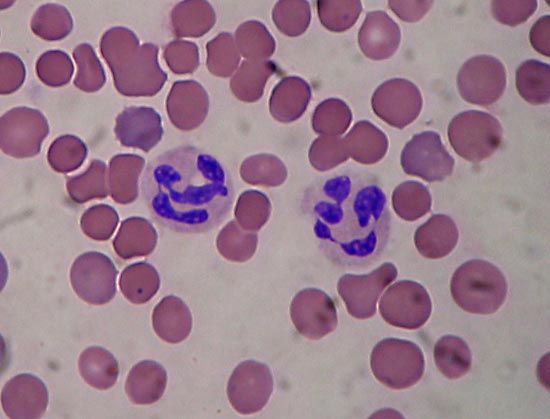
Eosinophils
Destroys eukaryotic pathogens, worm and fungal infections. Active in allergy and inflammation responses.

Basophils
Responsible for recruiting inflammatory cells (mast cells). They also release histamine to promote inflammation and diapedesis.

Lymphocytes
Involved in specific immune reactions to foreign matter.
T-cells: Activated T-cells modulate immune functions to kill foreign cells (cell-mediated immunity)
B-cells: Activated B-cells produce antibodies (humoral immunity)

Monocytes
Matures into macrophages and dendritic cells which are both phagocytic; trapping pathogens and participating in immune reactions.
