Electromagnetic Spectrum - Chemistry
 Call Kai
 Learn
 Practice Test
 Spaced Repetition
 Match
 Flashcards
 Knowt Play
1/16

There's no tags or description
Looks like no tags are added yet.
17 Terms
c = 3.0 * 10⁸ m/s
speed of light (constant)
f
the frequency of the electromagnetic wave (s-1)
λ
λ (Greek letter lambda) is the wavelength of the electromagnetic wave (m)
E
energy (J)
h
Planck's constant, relates the energy in one photon of electromagnetic radiation to the frequency of that radiation. h = 6.6 * 10⁻³⁴ J/wave
wavelength inversely proportional to frequency (c = λ * f)
waves with higher frequencies have shorter wavelengths, and lower frequencies have longer wavelengths.
frequency directly proportional to energy
E = h * f
wavelength inversely proportional to energy
E/h = c/ λ. or E = (hc)/ λ
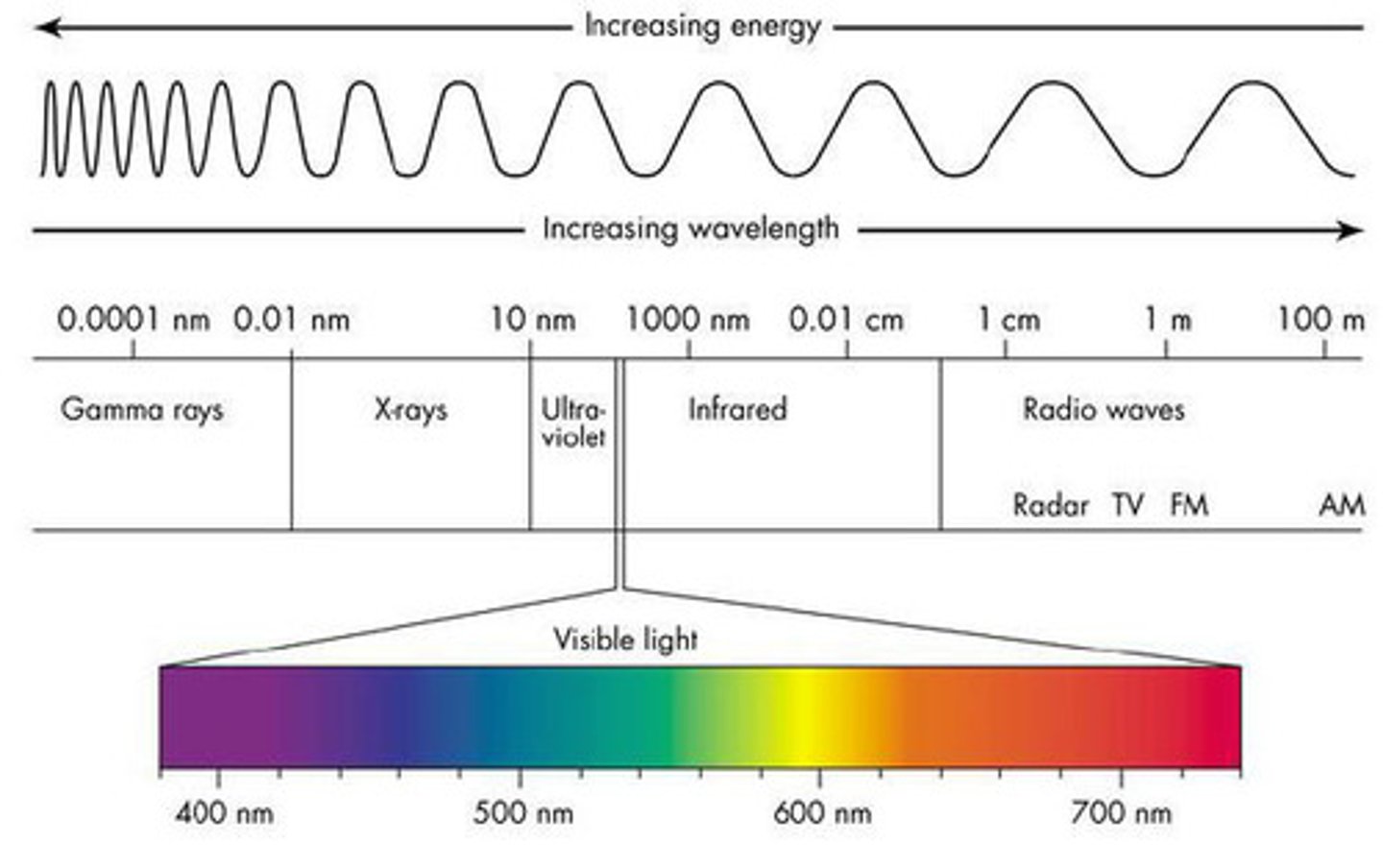
electromagnetic spectrum
the complete range of electromagnetic waves placed in order of frequency/wavelength
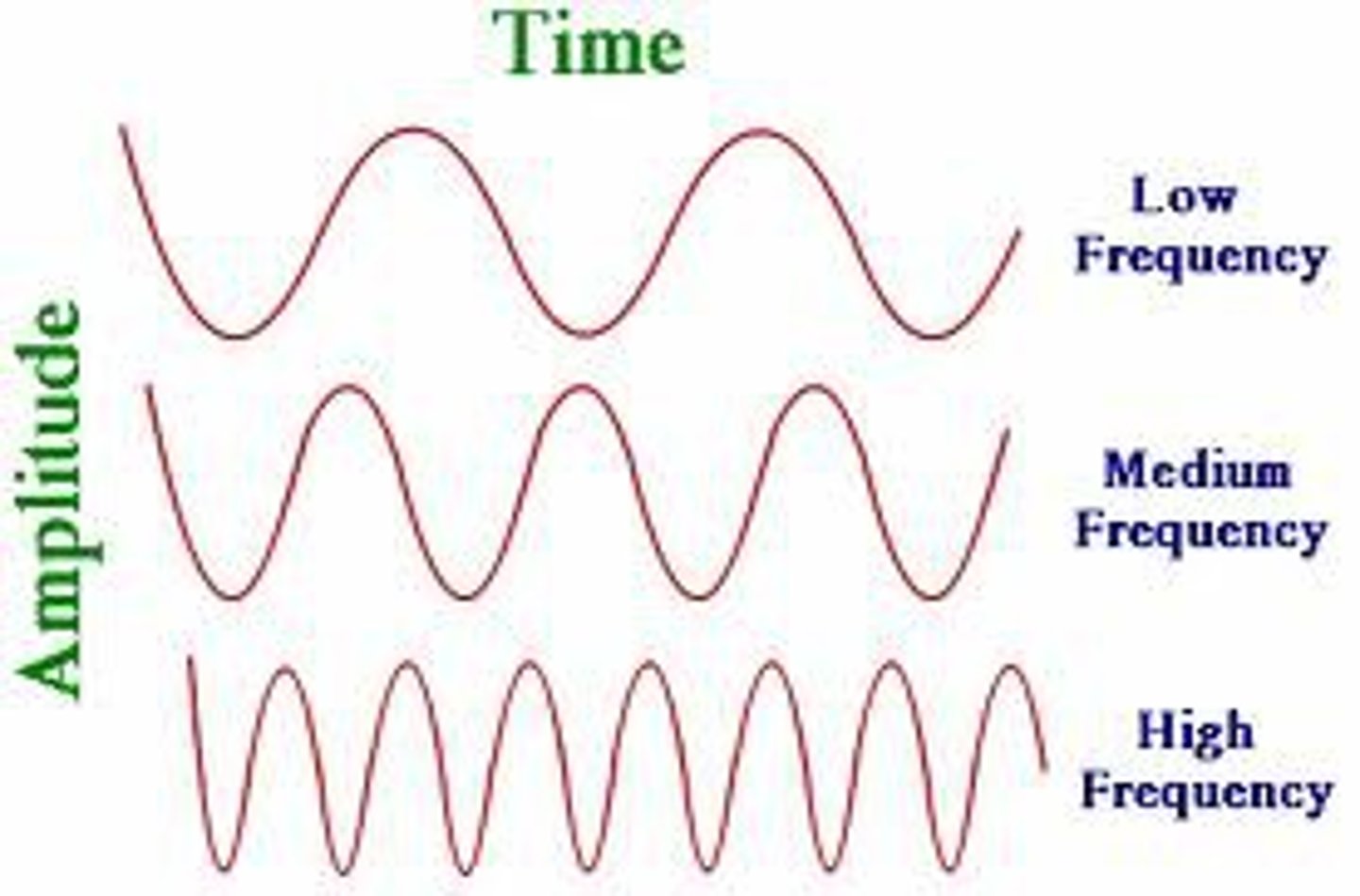
frequency
The number of complete waves that pass a given point in a certain amount of time
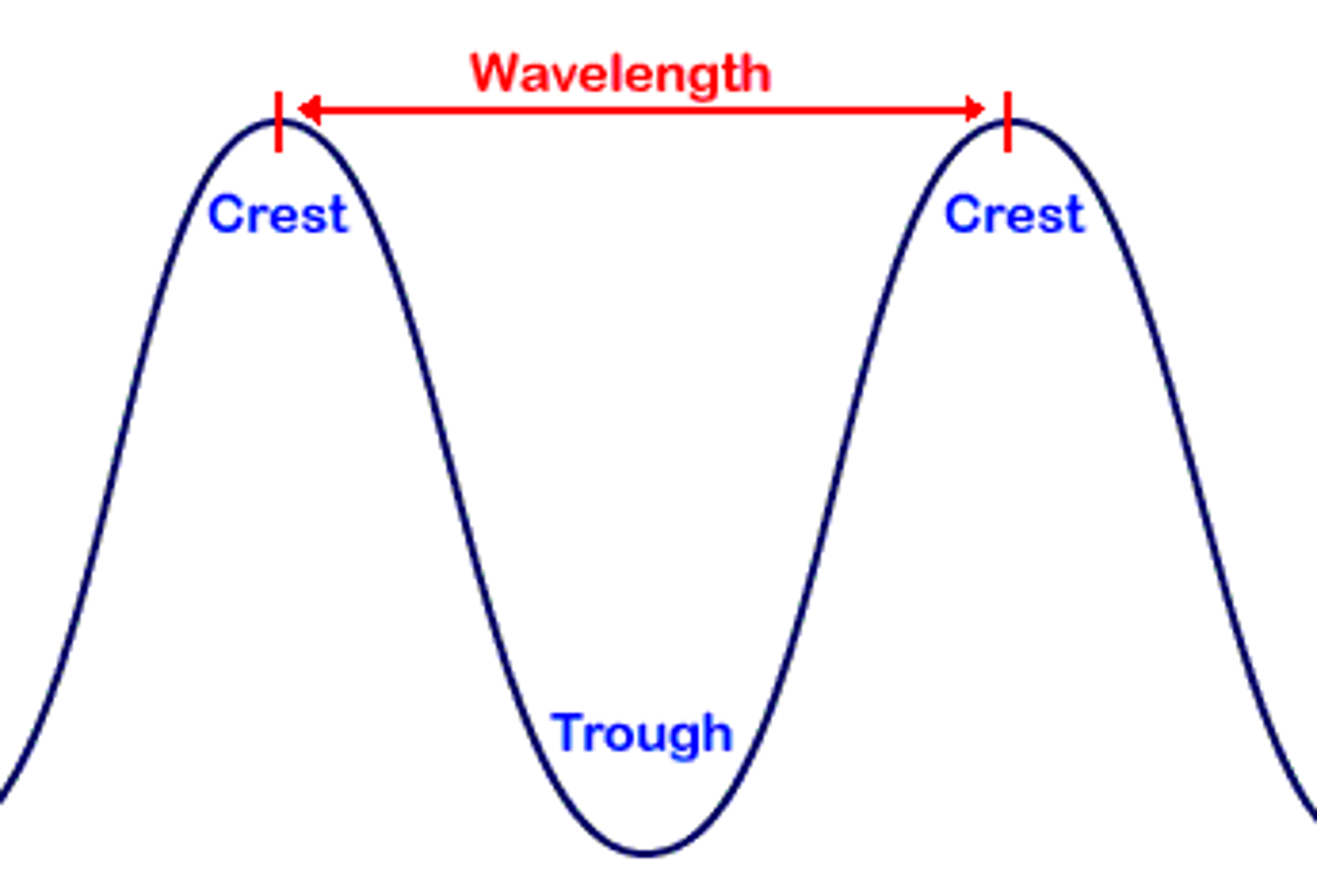
wavelength
The distance between two corresponding parts of a wave
visible light
electromagnetic waves that are visible to the human eye
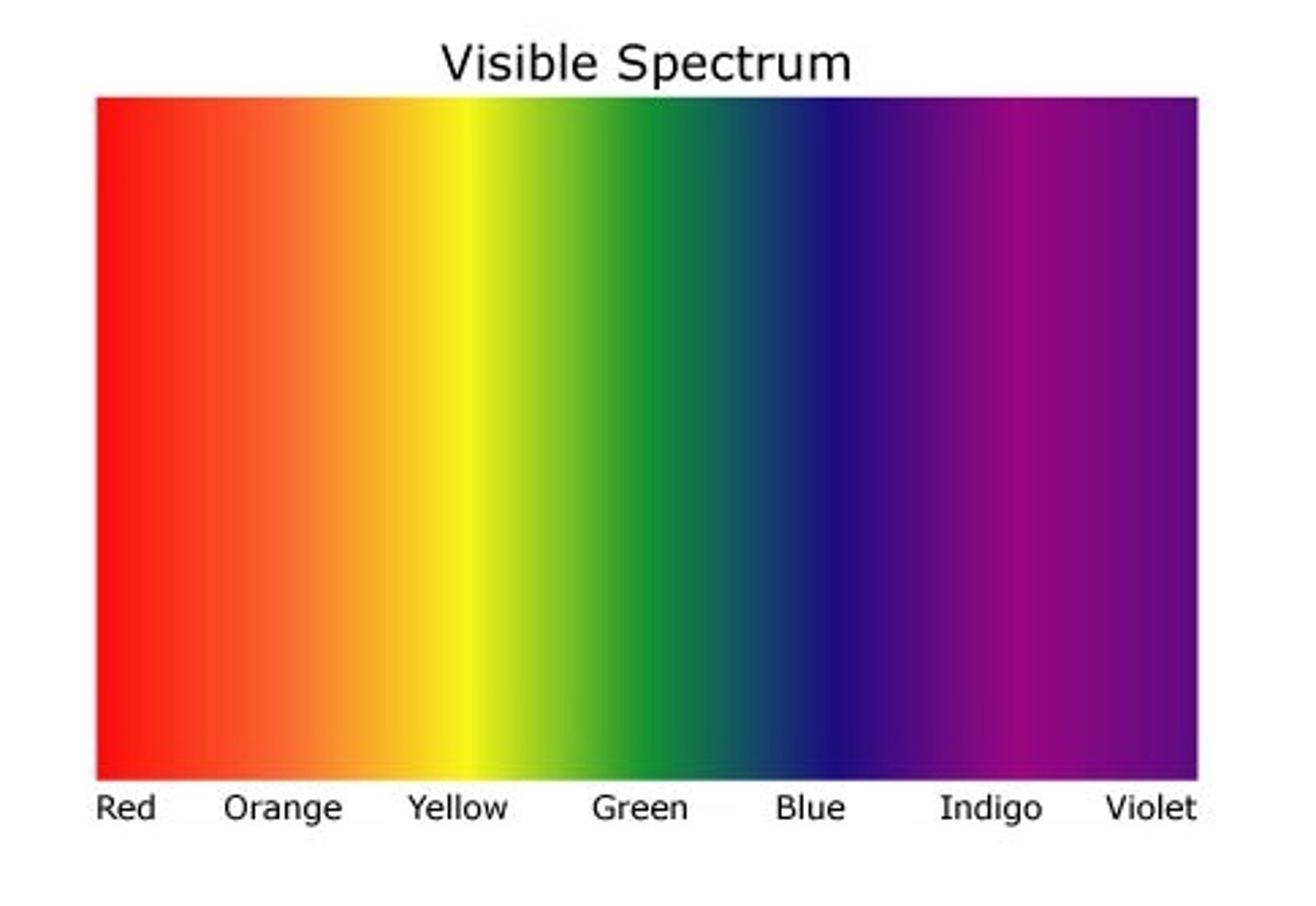
List the EM spectrum from long to short wavelength.
1. radio
2. microwaves
3. infrared
4. visible light
5. ultra violet
6. x-ray
7. gamma
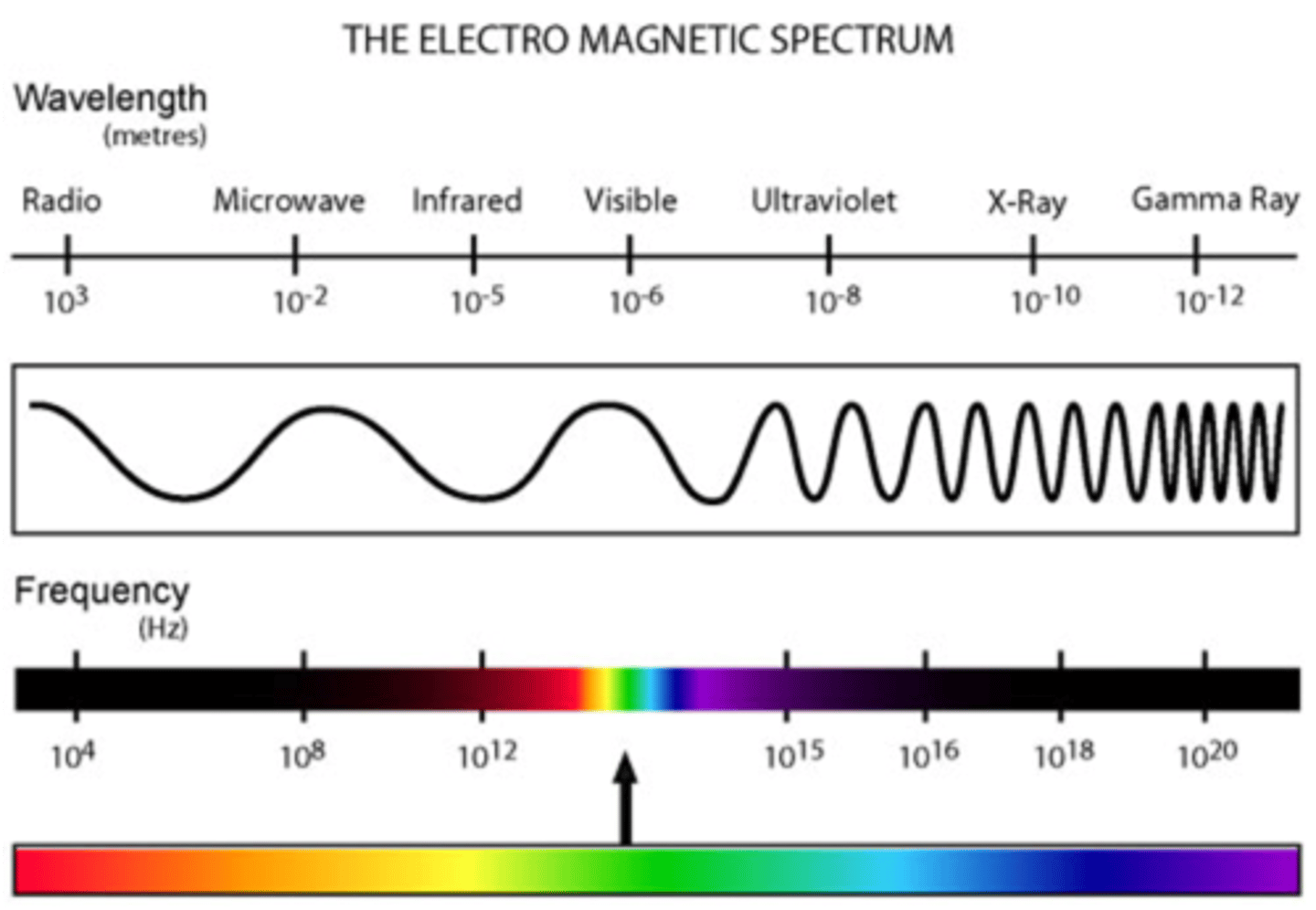
List the EM spectrum from least energetic wave to most energetic wave
1. radio
2. microwaves
3. infrared
4. visible light
5. ultra violet
6. x-ray
7. gamma
continuous spectrum
The broad rainbow-like pattern of light frequencies emitted by objects. The hotter the object, the more energetic (higher frequency, longer wavelength) is its spectrum. (A continuous spectrum can extend into and beyond the IR and/or UV areas of the EM spectrum.)

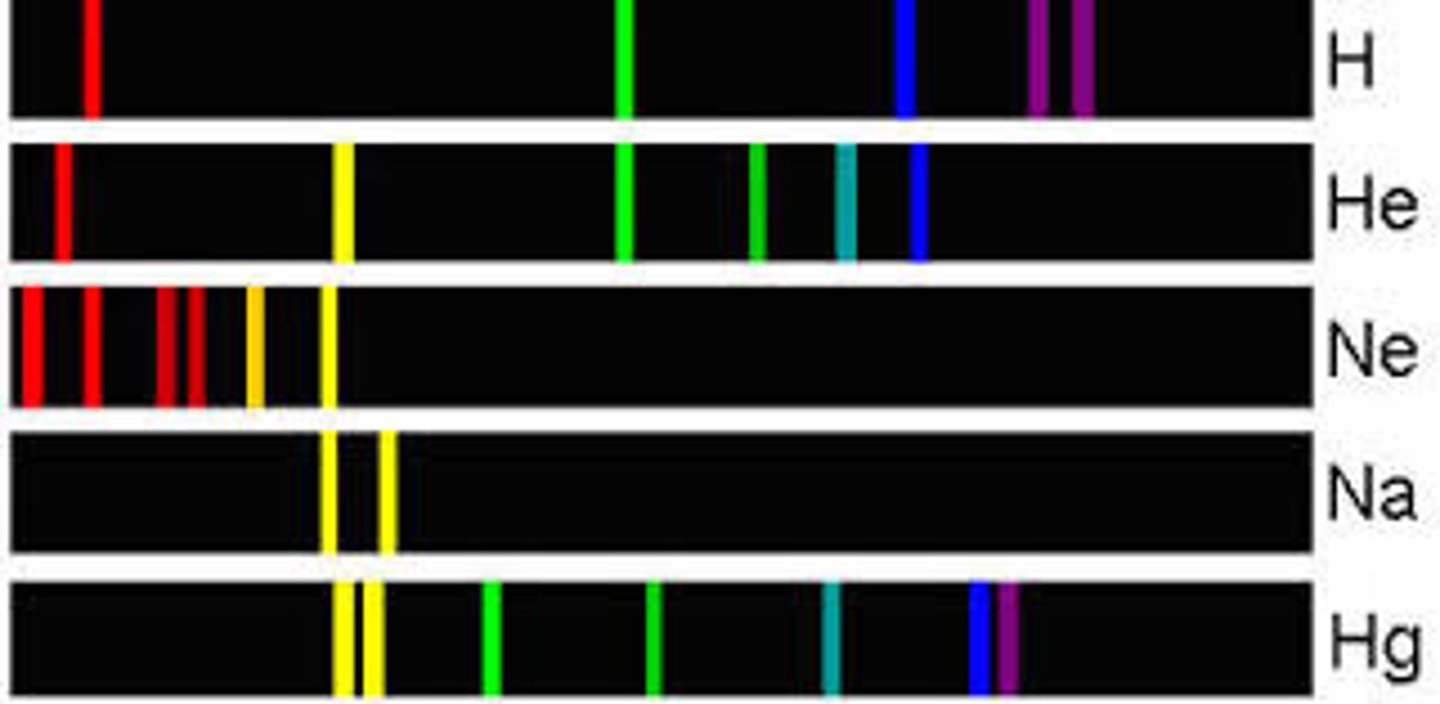
emission spectrum
Also called a line spectrum. The characteristic pattern of specific light frequencies emitted by a hot gas. It can be used to identify the composition of the gas.
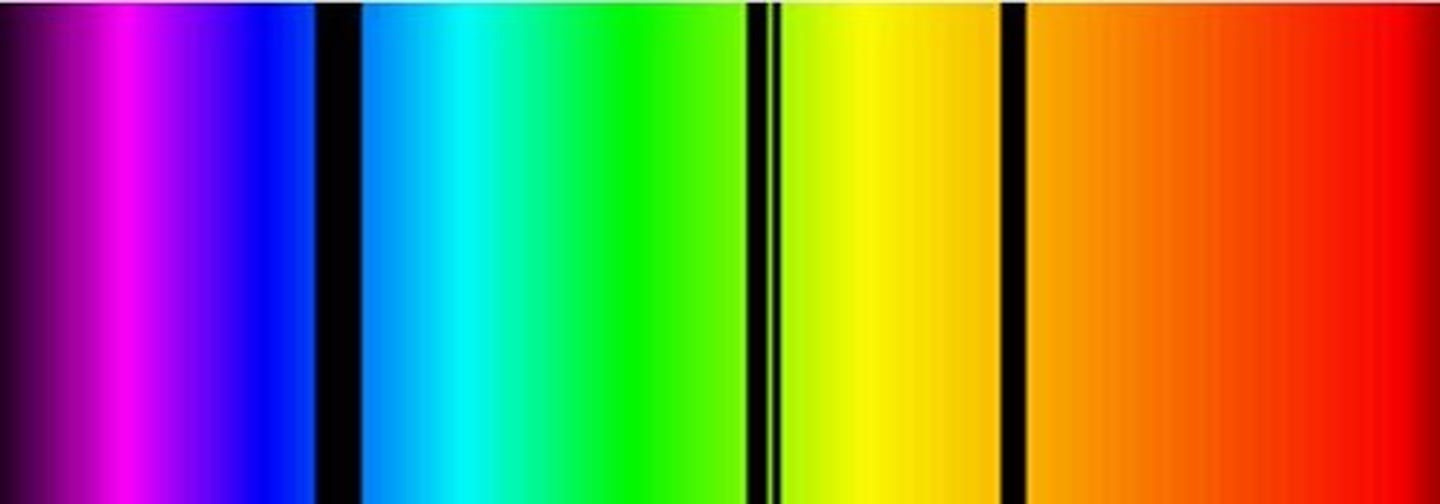
absorption spectrum
The characteristic pattern of black lines superimposed on a continuous spectrum. The black lines represent the absorption of specific frequencies of light by a cool gas and can be used to identify the composition of the gas.