BIOL 215-PRACTICUM 2
 Call Kai
 Learn
 Practice Test
 Spaced Repetition
 Match
 Flashcards
 Knowt Play
 Podcast
1/49

There's no tags or description
Looks like no tags are added yet.
50 Terms
diptera
Flies and mosquitoes. Adults have one pair of functional wings and a pair of balancing organs called halteres. Three pairs of legs; complete metamorphosis.

coleptera
Beetles, recognized by hardened forewings called elytra that cover the hindwings. Three pairs of legs; chewing mouthparts; complete metamorphosis.

lepidoptera
Butterflies and moths. Wings covered in tiny scales; larvae are caterpillars. Three pairs of legs; complete metamorphosis; adults often have a coiled feeding proboscis.

hymenoptera
Bees, wasps, and ants. Often have two pairs of membranous wings (ants may be wingless). Three pairs of legs; complete metamorphosis; many have an ovipositor, sometimes modified into a stinger.

orthoptera
Grasshoppers, crickets, and katydids. Enlarged hind legs for jumping, chewing mouthparts, three pairs of legs, and incomplete metamorphosis.

mantodea
Praying mantises with triangular, mobile heads and spiny, grasping front legs used to catch prey. Three pairs of legs; chewing mouthparts; incomplete metamorphosis.

blattodea
Cockroaches and termites. Cockroaches typically have flattened bodies and long antennae; termites are often social. Three pairs of legs; chewing mouthparts; incomplete metamorphosis.

hemiptera
True bugs, aphids, and cicadas. Piercing-sucking mouthparts; many true bugs have partly hardened forewings. Three pairs of legs; incomplete metamorphosis.

odonata
Dragonflies and damselflies with large eyes, long abdomens, and two pairs of net-veined wings. Predatory; aquatic nymphs; incomplete metamorphosis.

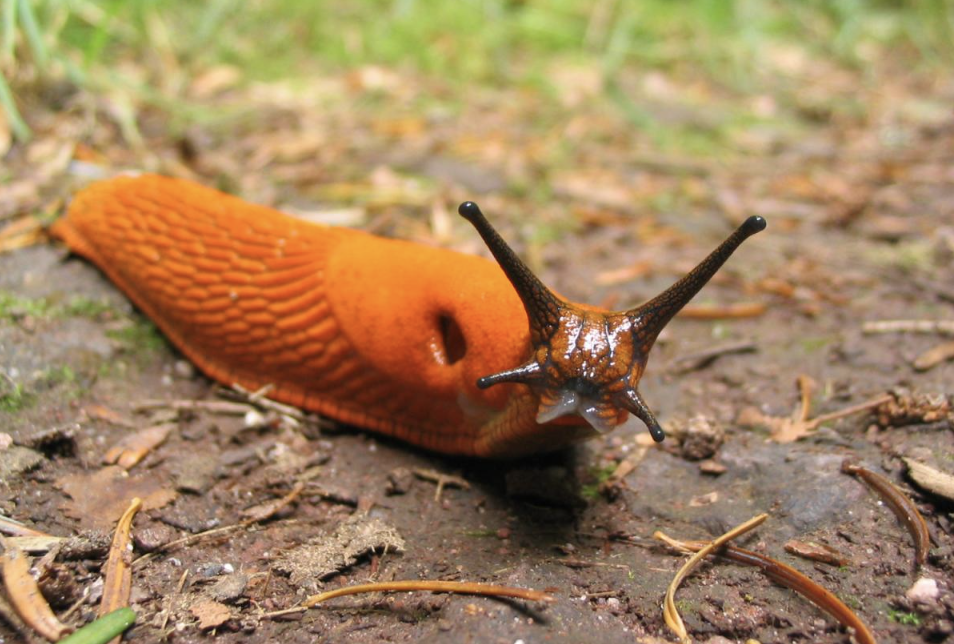
Mollusca
Phylum of soft-bodied invertebrates including snails, slugs, clams, mussels, octopuses, and squids. Most have a muscular foot, visceral mass, and mantle that often produces a shell. Bilateral symmetry; coelomate; complete digestive tract; many have a radula for feeding. Aquatic or terrestrial.
Myriapoda
Arthropods including centipedes and millipedes. Long, segmented bodies with many pairs of legs, one pair of antennae, and a hard chitinous exoskeleton. Centipedes have one pair of legs per body segment and are predators; millipedes usually have two pairs per apparent segment and feed mainly on decaying plant material. Breathe through tracheae; grow by molting.

Arachnida
Spiders, scorpions, ticks, and mites. Adults usually have four pairs of legs, no antennae, and no wings. Body often divided into two main regions; not insects.

Annelida
Phylum of segmented worms, including earthworms, leeches, and polychaete worms. Bilateral symmetry; triploblastic; coelomate; segmented body; complete digestive tract in most; closed circulatory system in many. Aquatic or terrestrial. Sexual or asexual reproduction depending on species.

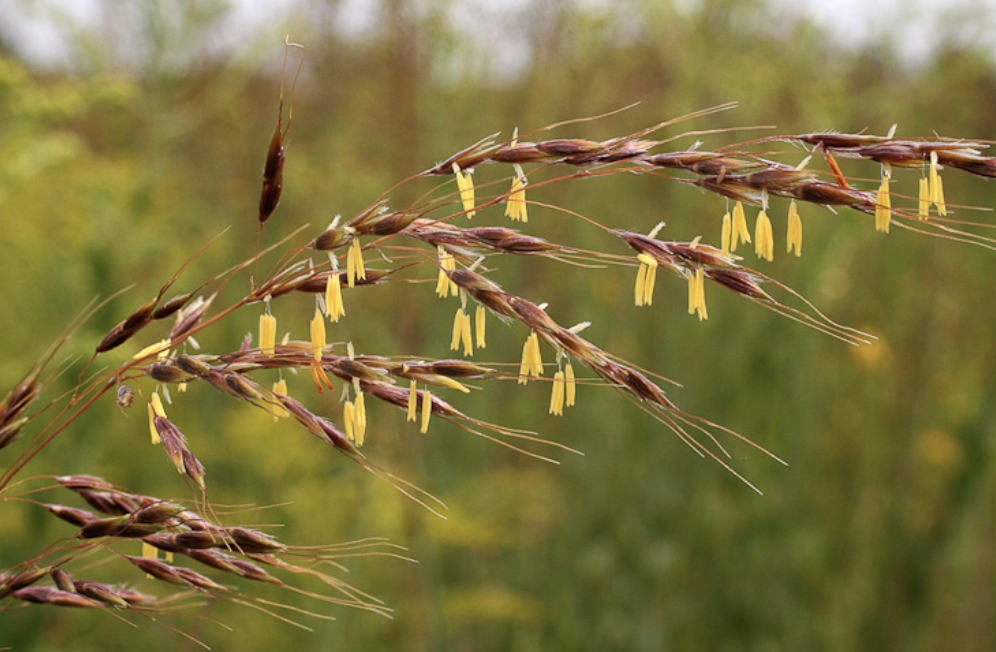
poaceae
Grass family. Narrow leaves with parallel veins, jointed stems, and flowers grouped into spikelets. Monocot; produces seeds, often called grains.
lilioid monocot
Lily-like monocot with flower parts often in multiples of three and leaves usually showing parallel veins. Produces flowers, pollen, ovules, and seeds.

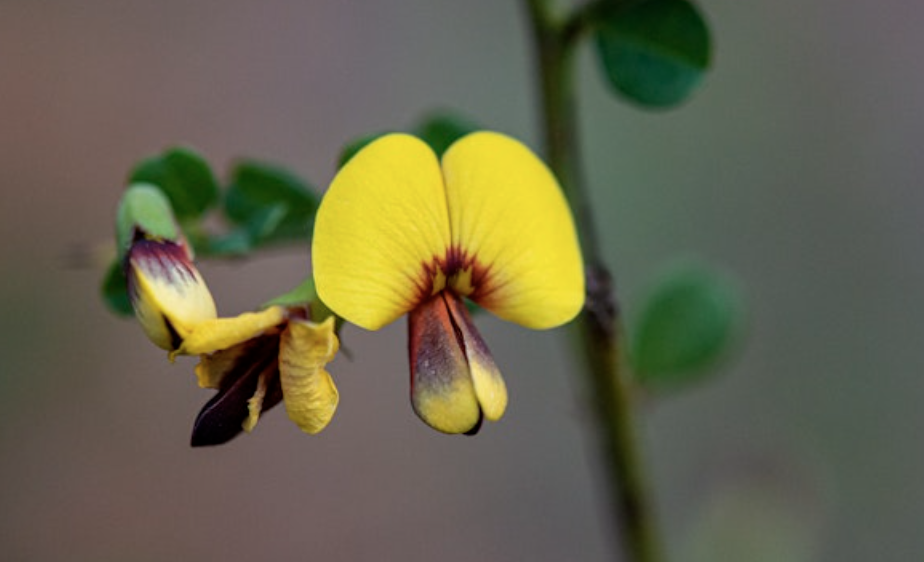
fabaceae
Pea or legume family, recognized by pea-like flowers and fruit pods; leaves are often compound. Eudicot; produces flowers and seeds.
brassicaceae
Mustard family with four petals arranged like a cross and often six stamens (four long, two short). Eudicot; produces flowers and seeds, often in elongated siliques.

asteraceae
Daisy family with a flower head made of many tiny florets that looks like one flower. Eudicot; produces flowers and seeds, often with a pappus for dispersal.

papaveraceae
Poppy family, often with showy petals of 4 or 6 and many stamens. Eudicot; produces flowers and seeds, commonly inside capsule-like fruits.

lamiaceae
Mint family with square stems, opposite leaves, 2 upper and 3 lower petals. Eudicot; produces flowers and seeds.

rosaceae
Rose family, including roses, strawberries, and apples. Flowers often have five petals and many stamens. Eudicot; produces flowers and seeds in varied fruit types.

boraginaceae
“forget me nots”; Family often recognized by hairy leaves and coiled flower clusters, with flowers commonly in groups of five. Eudicot; produces flowers and seeds.

caryophyllaceae
Pink or carnation family, often with opposite leaves, swollen stem nodes, and five petals that may be notched. Eudicot; produces flowers and seeds.

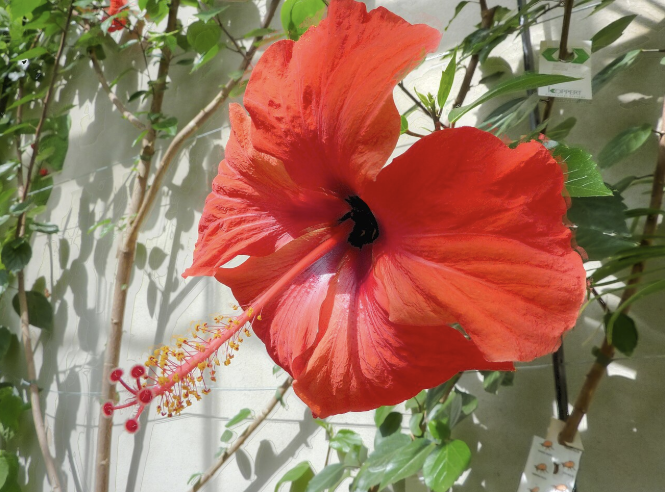
malvaceae
Mallow family, including hibiscus and cotton. Often has five showy petals and stamens fused into a column. Eudicot; produces flowers and seeds.
ericaceae
Heath family, including blueberries and heathers. Often has leathery leaves and urn-shaped or bell-shaped flowers. Eudicot; produces flowers and seeds.

Onagraceae
Flowering plants with usually 4 petals, often 8 stamens, and an inferior ovary. Leaves usually alternate. Fruit often a long capsule. Angiosperm eudicot; vascular; dominant sporophyte (2n); heterosporous; produces flowers, pollen, ovules, and seeds. Sex expression varies by species.

leafy liverwort
Small, nonvascular plant with tiny leaf-like structures arranged in rows along a stem.
Dominant gametophyte (n);
homosporous;
dioecious

thalloid liverwort
Flat, lobed green body with no true leaves or stems. Nonvascular;
dominant gametophyte (n);
homosporous;
dioecious

hornwort
Nonvascular plant with a flat green thallus and long, horn-shaped sporophytes.
Dominant gametophyte (n);
homosporous;
monoecious

moss
Nonvascular plant growing in green cushions with tiny leaf-like structures and spore capsules on stalks.
Dominant gametophyte (n);
homosporous;
dioecious

lycophyte
Vascular plant with small leaves (microphylls) and sometimes cone-like strobili. Dominant sporophyte (2n); homosporous or heterosporous depending on group; produces spores.

Polypodiaceae
Fern family, polypodium, with fronds and typically round sori (spore clusters) on the underside of leaves. Vascular;
dominant sporophyte (2n);
homosporous;
monoecious

dryopteridaceae
Wood fern family, polystichum. Ferns with divided fronds and round sori (spore clusters) on the undersides of leaves. Vascular;
sporophyte dominant (2n);
homosporous;
monoecious
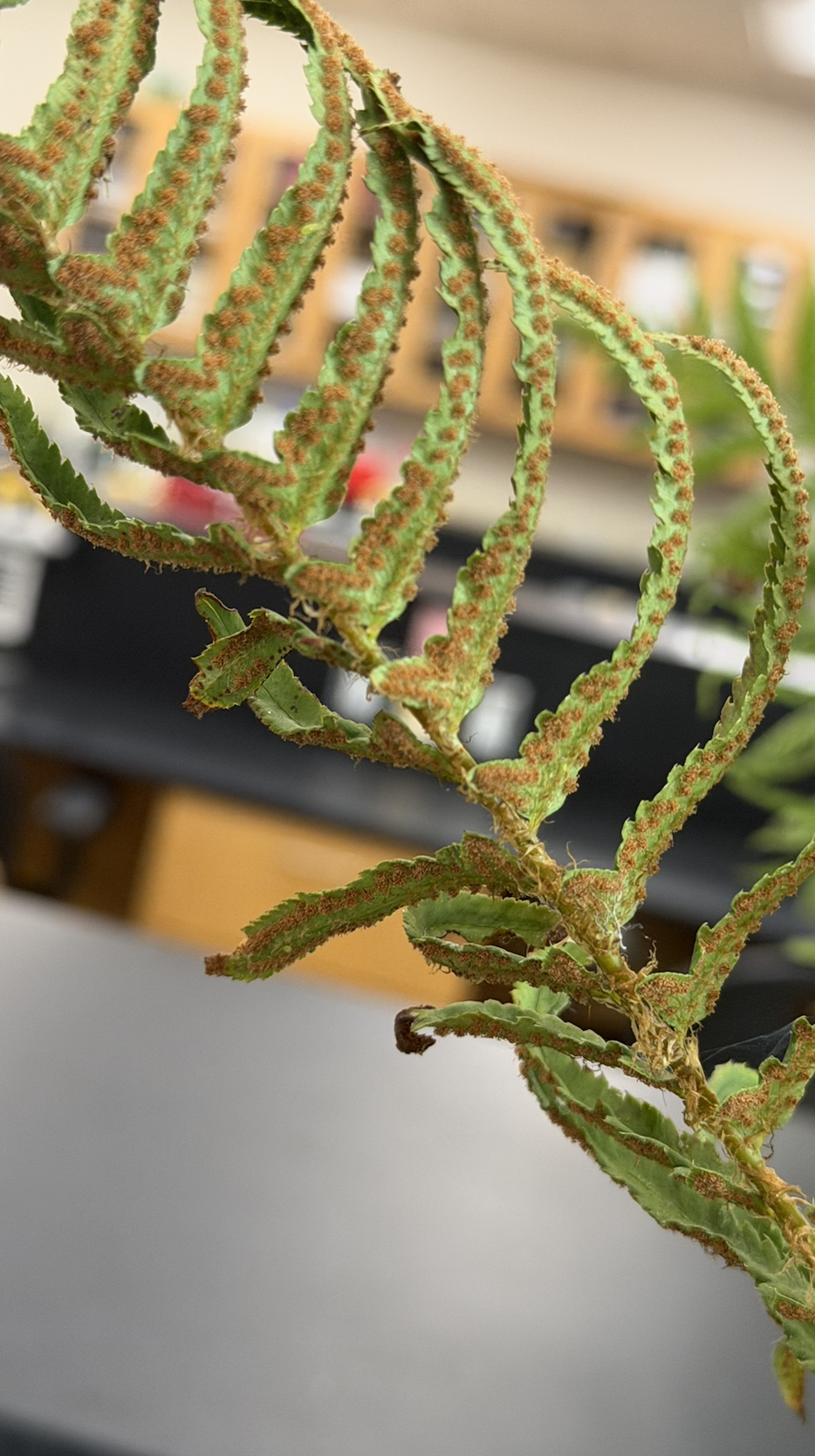
Aspleniineae
Fern suborder, including many common ferns such as spleenworts. Recognized by leafy fronds with sori (spore clusters) on their undersides. Vascular;
dominant sporophyte (2n);
homosporous;
monoecious

Blechnaceae
Fern family often recognized by long, narrow rows of sori on the underside of fronds. Vascular;
dominant sporophyte (2n);
homosporous;
monoecious

Salviniales(azolla)
Order of floating aquatic ferns, including Salvinia and Azolla. Vascular;
dominant sporophyte (2n);
heterosporous;
dioecious

Cycad
Palm-like gymnosperm with a thick trunk, stiff feather-like leaves, and large cones. Vascular; dominant sporophyte (2n); heterosporous; produces pollen and ovules that develop into seeds. Usually dioecious.

Gingko
Gymnosperm recognized by fan-shaped leaves with branching, forked veins. Vascular; dominant sporophyte (2n); heterosporous; produces pollen and ovules/seeds; dioecious; male leaves- lobed, female leaves- not lobed(picture)

Pinaceae
Conifer family including pines, firs, and spruces. Usually needle-like leaves and woody cones. Vascular; dominant sporophyte (2n); heterosporous; produces pollen and seeds; usually monoecious.

Cupressaceae
Conifer family including cypresses, junipers, and arborvitae. Often has scale-like leaves and small cones. Vascular; dominant sporophyte (2n); heterosporous; produces pollen and seeds; monoecious or dioecious.

Echinodermata
Marine invertebrates including sea stars, sea urchins, sand dollars, and sea cucumbers. Adults usually have five-part radial symmetry, a water vascular system, and tube feet. Deuterostomes; coelomate; bilaterally symmetrical larvae; sexual reproduction usually involves external fertilization. Diploid adults (2n).

Crustacea
Arthropods including crabs, shrimp, lobsters, and crayfish. Usually aquatic, with two pairs of antennae, a hard chitinous exoskeleton, jointed appendages, and a body often divided into cephalothorax and abdomen. Usually have gills; 5 or more pairs of legs in many familiar forms. Grow by molting.

Xiphosura
Marine chelicerate arthropods known as horseshoe crabs. They have a hard, horseshoe-shaped exoskeleton, a long pointed tail (telson), and five pairs of walking appendages. They have no antennae and breathe using book gills. Their body has a prosoma and opisthosoma. They molt as they grow.

Cnidaria
Aquatic invertebrates characterized by radial symmetry and specialized stinging cells called cnidocytes, which contain structures called nematocysts. They have a simple body with one digestive opening and two main forms: polyp and medusa. They are diploblastic, have no true organs for circulation or respiration, and can reproduce sexually or asexually.

Porifera
sponges, their bodies contain many pores and channels that filter water to obtain food and oxygen. They lack true tissues and organs and usually have asymmetrical bodies. They have specialized cells called choanocytes that move water and capture food. Adults are sessile, and their skeleton may contain spicules or spongin fibers.

monocot
Flowering plant with one seed leaf, parallel leaf veins, fibrous roots, and flower parts in multiples of 3. Vascular; sporophyte dominant (2n); produces flowers and seeds.
dicot(eudicot)
Flowering plant with two seed leaves, net-like leaf veins, usually a taproot, and flower parts in 4s or 5s. Vascular; sporophyte dominant (2n); produces flowers and seeds.
gametophyte vs. sporophyte
ploidy level; Gametophyte - (n), Sporophyte - (2n)
homosporous vs. heterosporous
spore sizes; homosporous - one spore size, heterosporous- two spore sizes(microspores & megaspores)
monoecious vs. dioecious
“one house” vs. “two houses”; monoecious - both male/female parts on one plant, dioecious- male/female parts on separate plants