The Choking Horse
 Call Kai
 Learn
 Practice Test
 Spaced Repetition
 Match
 Flashcards
 Knowt Play
1/37

There's no tags or description
Looks like no tags are added yet.
38 Terms
predispositions to choking
-bolting→ rapid ingestion
-improper chewing
-FB
-inadequate water intake
-heavy sedation and eating
-oesophageal disease and other probs
diet causing drooling/ hypersalivation
-consume legumes with fungus (rizoctonia leguminicola)
-oral PBTZ with clenbuterol
dental causes of drooling/ hypersalivation
-caries or cavities → so do full oral exam to assess this
obstructive abnormality causing drooling/ hypersalivation
-retropharyngeal lymphadenopathy
-malformation, injury, oedema
-pharyngeal disorders
-palate disorder
-guttural pouch disorder
-oesophageal problems

painful causes of drooling/ hypersalivation
-teeth issues
-trauma to mandible
-stomatitis/ glositits
temporohyoid OA
temporo mandibular osteopathy

causes of stomatitis/ glossitis
fb most common (glossitis)
plant material, metal
ulcerative stomatitis
phenylbutazone toxicity
blester beetle
vesicular stomatitis
viral
bacterial
actinobacillus lignieresi

complete neuro exam causes of choke
-rabies
-viral encephalitis
-veminous encephalitis and EPM
-botulism and tetanus
-meningitis
-cerebral oedema
-brainstem haemorrhage
-CNS masses
muscular causes of choke
-HYPP
-NMD
-PSSM
-masseter myositis
-hypocalcaemic tetany/eclampsia
-myotonia
-rectus capitis ventralis rupture
-white snake root toxicity
-megaoesophagus
clinical presentation of choke
-regurgitation food, water, and saliva
-ptyalism
-hysphagia
-coughing
-repeated head extensions or retching
-anxiety
Distention
Crepitus
Ptyalism
Clinical signs of complications
where see distention
left jugular furrow (right side some horses)
crepitus over the oes area?
oesophageal rupture
ptyalism
drooling
clinical signs of complications
-dehydration→ bc salva lost
-RR/abnormal pattern
-fever
-other
clinical exam for choke
-GPE
-palpate neck and thoracic inlet
-oral exam
-thoracic auscultation (aspiration pneumonia)
-NG intubation
clinical pathology findings
-hydration status (PCV/TP, urea/creatinine)
-CBC (inflam?)
-electrolytes
-acid base status
sedation for endoscopy
-xylazine
-detomidine
-topical lidocaine
how long must endoscope be to view length of oesophagus
200cm
endoscopy used to do
-irrigation and insufflation
-mucosal defects
-changes in lumen size
normal looking oesophagus on endoscope
pale pink to whute grey and longitudinal folds
contrasts for radiography
-barium (iodinated for rupture)
-double contrasts
barium as contrast admin
-barium paste PO
-liquid barium by cuffed NG tube
double contrast for radiology admin
-liquid barium by cuffed NG tube under pressure
-best definition
spontaneous resolution of choke (medical management)
-remove feed and water
-iv fluids
-NSAID or analgesic to manage fever and pain
-store without bedding
-sedation (xylazine, detom, butorph, acp)
-oxytocin for proximal obstruction
why sedate
relax oes
assisted resolution
-oesophageal lavage and drainage
-aggressive oesophageal lavage
how to oesophageal lavage and drainage
-sedate with detomidine
-head below thoracic inlet→ lets it come through nose
-repeated attempts at 8-12 hour intervals with supportive care
how to aggressive oesophageal lavage
-cuffed nasotracheal and nasosophageal tube
-decreased likelihood of aspiration
-greater mechanical advantage
-standing or under GA
if GA for assisted resolution, how is that helpful
-minimise aspiration
-aid relaxation
once obstruction relieved, how to prevent re obstruction
-repeat endoscopy to assess mucosal damage
-fusiform dilation predisposes to reobstruction
-leave without feed then small quantity soft feed 48hrs post
-give electrolytes and water
-anti inflams (nsaids)
-broad spec antibiotics
why broad spec antibiotics to prevent re obstruction
aspiration pneumonia likely if long time obstruction
surgical treatment for choke
oesophagotomy
oesophagostomy
Longitudinal Esophagotomy with primary closure
-stand with tube in place
-approach based on lesion
-incise 5cm distal to lesion
-indwelling tube
-pelleted slurry then leave to 2nd intention healing
common complication of oesophagostomy
laryngeal hemiplegia
complications of obstructions
-aspiration pneumonia
-oesophageal ulcer
-oesophageal stricture
-megaoesophagus
-diverticula
-oesophageal rupture
what is in pic

stricture
what is in pic
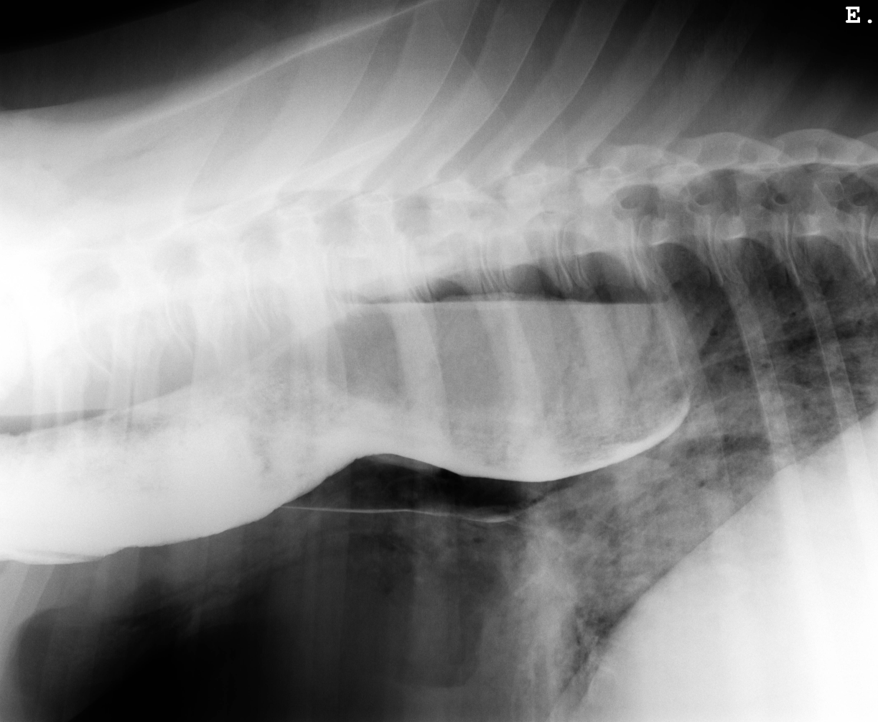
megaoesophagus
what is in pic

diverticula
-small pouch that protrudes from organs wall


what is in pic

oesophageal rupture