muscle/tendon pathology
 Call Kai
 Learn
 Practice Test
 Spaced Repetition
 Match
 Flashcards
 Knowt Play
1/23

There's no tags or description
Looks like no tags are added yet.
24 Terms
Speed’s test (bicipital paratenonitis or tendinosis)
standing
shoulder foward flexed to 90, elbow extended, palm up
push down at the wrist

yergason’s test (biceps tendon subluxation/ligament intactness to hold tendon in bicipital groove)
standing
shoulder IR, elbow flexed to 90, forearm pronated
examiner pulling into ER and supination, patient resists

abrasion sign (general rotator cuff, tendons are frayed)
seated
shoulder abducted to 90
rent test (general rotator cuff, tendon tear)
seated
arm at side, palpate acromion
elbow flexed to 90, shoulder extended
IR and ER the arm

whipple test (general rotator cuff partial tear or superior labrum)
stands
shoulder flexed to 90, elbow extended, thumb up
adduct arm
push down at the wrist

champagne toast position (supraspinatus)
seated
stabilize scapula
shoulder IR, flexed to 30
elbow flexed to 30
push arm down and pack, patient resists

drop arm test (supraspinatus, rotator cuff tear)
seated
elevate shoulder to 90 abduction, elbow extended
patient holds for 10 sec and then lowers down arm
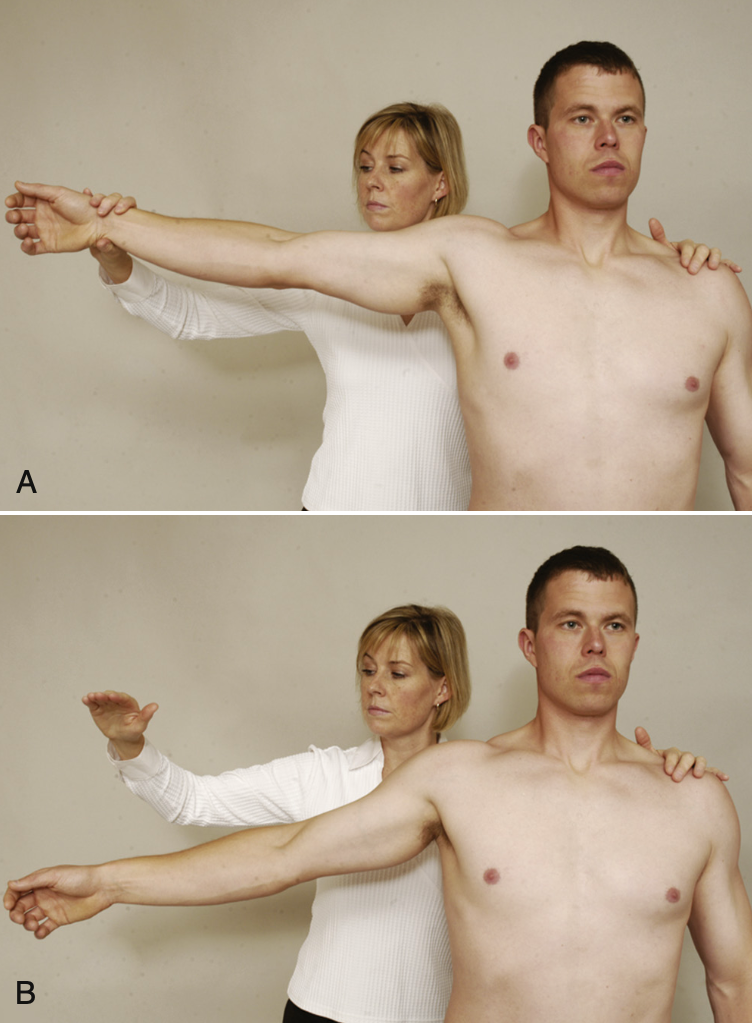
“empty can” test (tear of supraspinatus or neuropathy of suprascapular nerve)
shoulder abducted to 90 (scaption), thumbs down
pushing down at the wrist

Bear hug test (subscapularis)
standing
hand is on opposite shoulder
examiners hand is underneath patients, attempting to pull patients hand off shoulder
stabilize at elbow

belly press/abdominal compression/Napolean test (subscapularis)
standing
hand placed on stomach
examiners places hand underneath patients hand, attempt to lift hand off of stomach

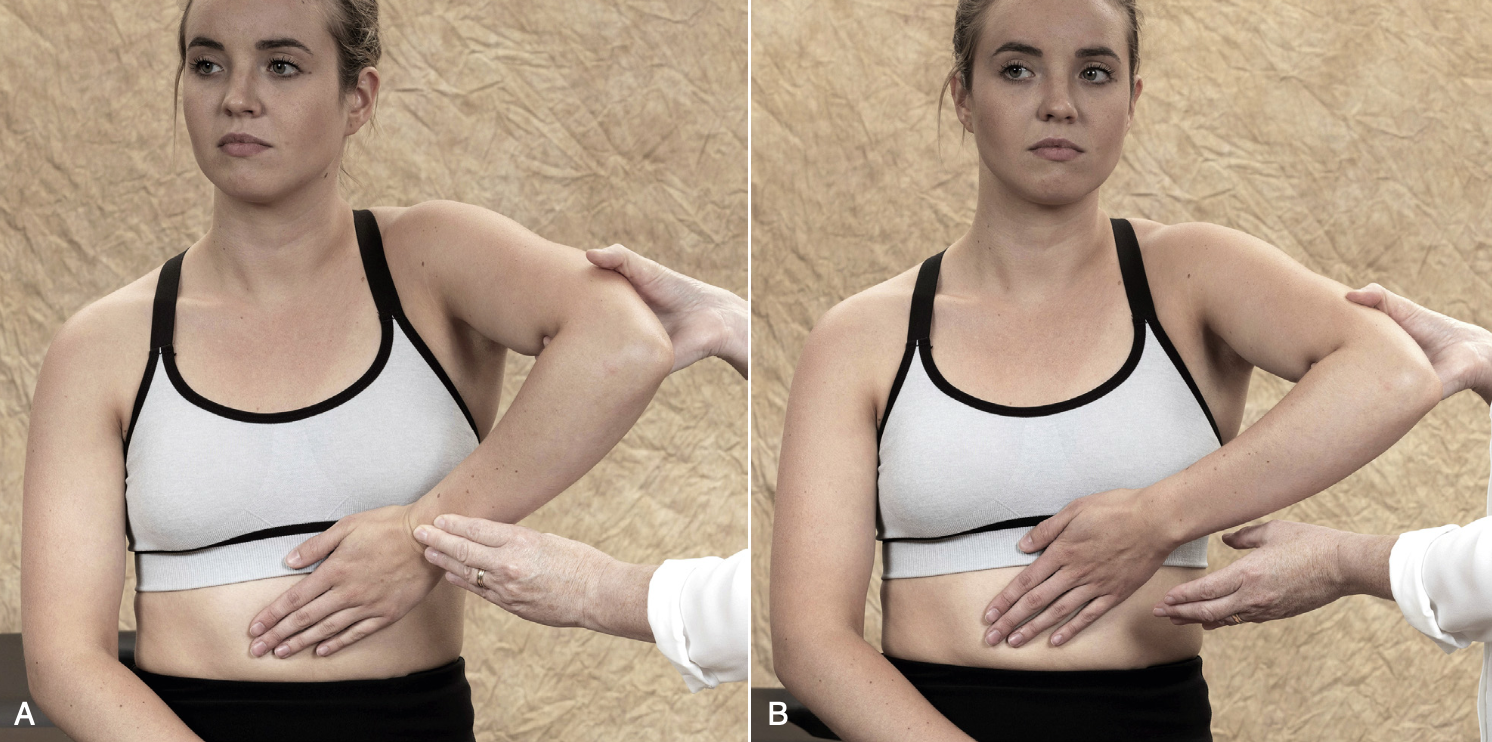
Belly-off sign (subscapularis)
seated
hand placed on stomach
put arm into full IR
ask patient to hold position, then let go
Lift-off sign/Gerber’s test (subscapularis)
standing
hand placed on to lower back
ask patient to try and lift hand off of their back

Medial rotation lag or “spring back” test (subscapularis)
stands
hand placed on to lower back, lift arm/hand off of their back
ask patient to hold position

dropping sign (infraspinatus, full rupture)
standing
arm at side, externally rotated to 45, elbow flexed to 90
push into IR, patient should resist

infraspinatus test (infraspinatus, partial test)
standing
arm at side, ER neutral, elbow flexed at 90
push into IR, patient should resist

lateral rotation lag sign (infraspinatus)
seated
shoulder abducted to 90, elbow flexed to 90
put into ER, ask patient to hold

Hornblower’s sign (Teres Minor)
standing/seated
shoulder abducted to 90 (scaption), elbow flexed to 90
patient ER arm against resistance
second way to do test:
standing
arms at side
patient asked to bring hands to mouth (arm will abduct to reach mouth if +)

Trapezius test position 1 (upper trap)
seated
shoulder abducted to 90, elbow extended
examiner push arm down and head away

Trapezius test position 2 (mid trap)
prone
shoulder abducted to 90, elbow flexed
patient retract scapula and hold against resistance

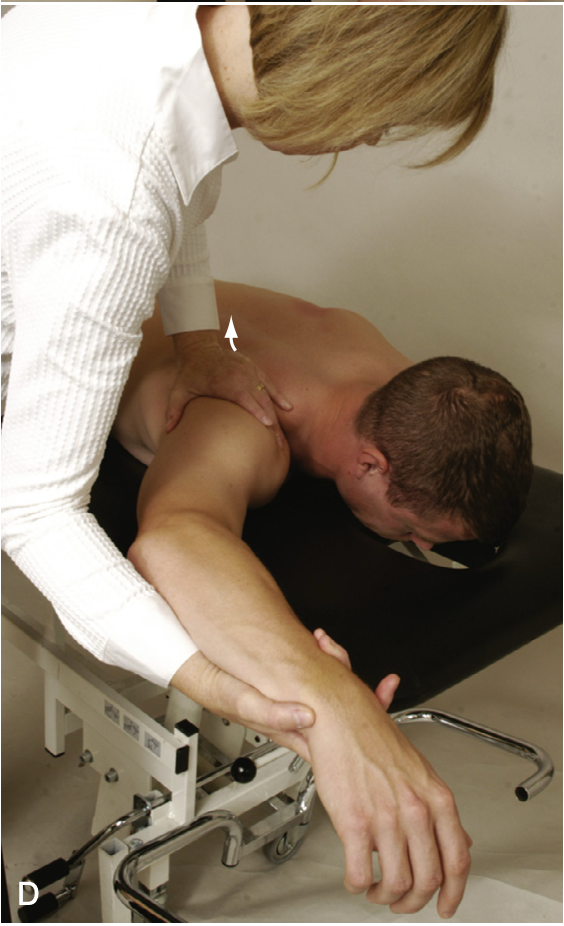
Trapezius test position 3 (lower trap)
prone
shoulder abducted overhead
pull scapula down and in, patient holds against resistance
Punch out test (serratus anterior)
standing
shoulder foward flxed to 90, elbow extended
patient “punches out” and holds position
examiner apply force to push arm back

pectoralis minor contracture test (pec minor)
supine
arms at side
looking at distance from acromion to table

pectoralis major contracture test (pec major)
supine
hands behind head
arms should be able to lay flat against table

latissimus dorsi tight test (latissimus dorsi)
supine
arms overhead
then knees to chest
