Minerals
 Call Kai
 Learn
 Practice Test
 Spaced Repetition
 Match
 Flashcards
 Knowt Play
1/49

Earn XP
Description and Tags
iridescent multi-colored tarnish (often called "peacock ore") when exposed to air or acid.
50 Terms

Aventurine
aventurescence, a distinct shimmering or glistening optical effect caused by light reflecting off tiny, flat mineral inclusions inside the stone
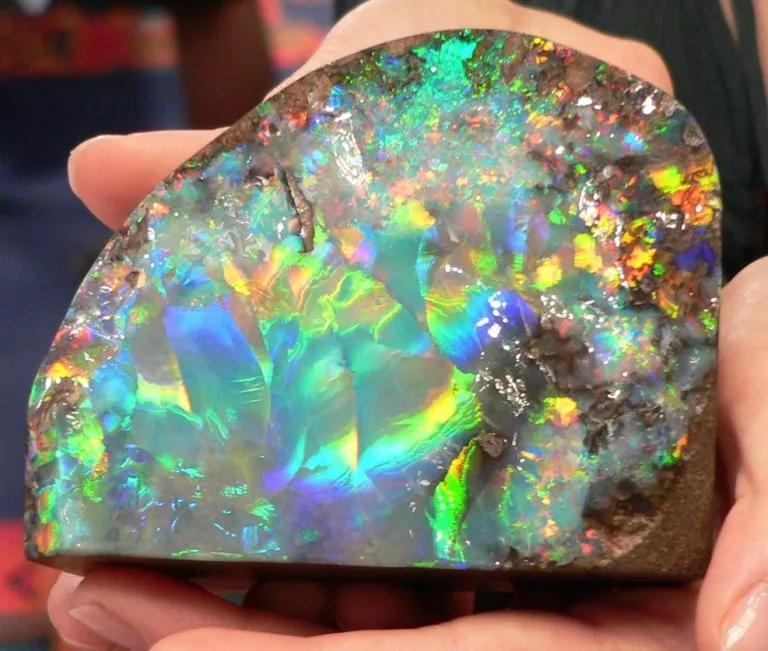
Opal
play-of-color (or opalescence)—an optical effect where flashes of spectral colors dance, shift, and roll across the stone as the viewing angle changes. [1, 2]

Ulexite
A mineral known for its fibrous structure and optical properties, often called "TV stone" due to its transmission of images.

Amethyst
A variety of quartz characterized by its purple color, often used in jewelry.

rock crystal
(clear, colorless quartz) are its transparent to ice-like clarity, a Mohs hardness of 7 scratches glass, and a conchoidal fracture

Biotite
Dark mineral perfect basal cleavage splits into thin transparent sheets
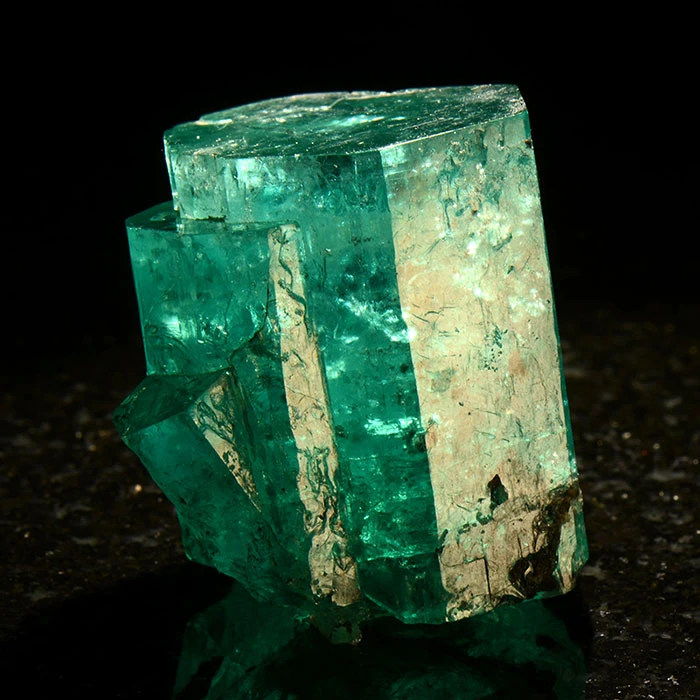
Beryl
Hexagonal (6 sided) prismatic crystal, high Moh’s hardness 7-8, glassy

Albite
Polysynthetic twinnning (striations) - fine parallel lines/grooves on clevage surface. pearly white color

Agate/Chalcedony
Geocentric parallel color banding/stripes. waxy to vitreous luster

Citrine
Yello-orange (caused by Iron), vitreous (glassy) luster, Moh’s hardness 7

Milky Quartz
Cloudy opaque to translucent to white; vitreous to waxy luster;

Rose Quartz
massive habit (occurring as large, interlocking anhedral masses without well-formed crystal faces) and a milky, cloudy pink color caused by microscopic, aligned fibrous inclusions of a dumortierite-like silicate mineral

Muscovite
perfect basal clevage - splits into thin, transparent, elastic/flexible sheets - lighter colors

Epidote
yellow-green to pistachio-green colored; glassy/vitrous luster; Moh’s hardness 6 to 7

Labradorite
Labradorescence iridescent play of colors in the light; when not catching light it is greyish - black

Labradorite
Labradorescence iridescent play of colors in the light; when not catching light it is greyish - black

Amazonite
light green to teal coloration with marbled grid like pattern of white streaks

Almandine
deep red, brownish red, puple-red colored; high density; isometric crystal habit
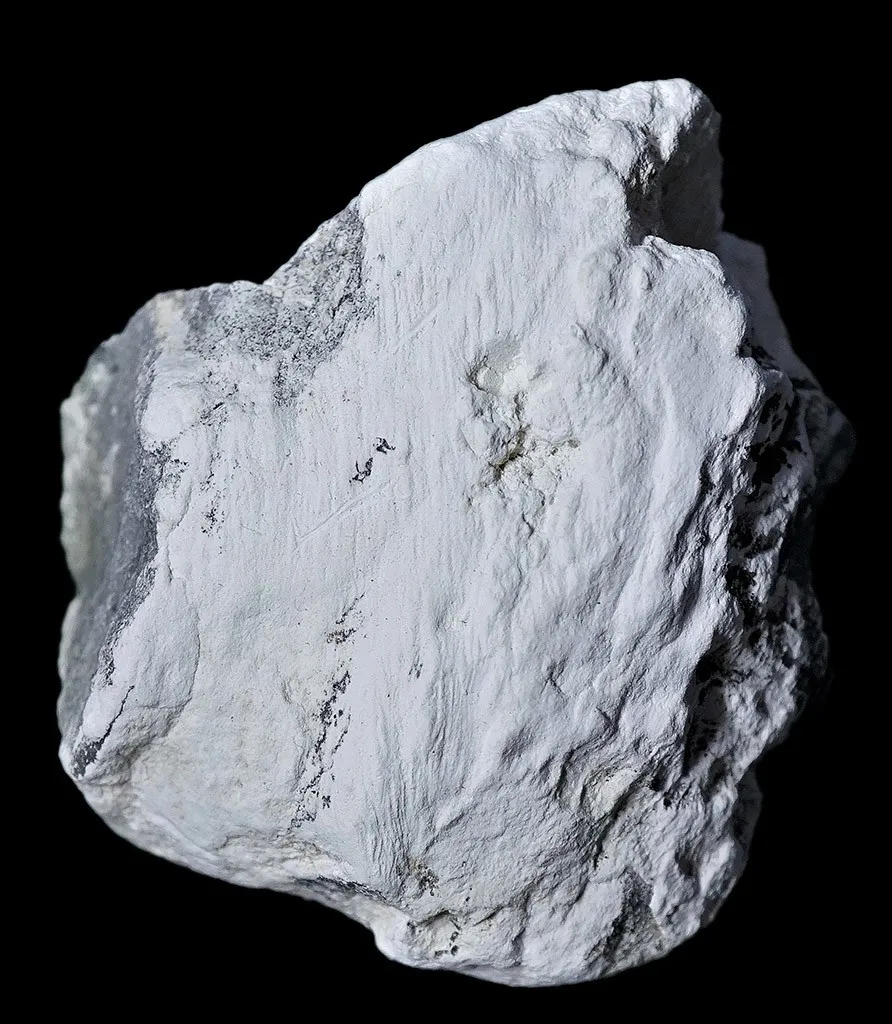
kaolinite
bright white to offf white to grey; sticks to tongue as it absorbs moisture (tongue grabber)

Olivine
olive green to yellow green; vitreous luster and conchoidal fracture

Sodalite
deep royal blue, distinctive white or grey marbling and veins; absence of golden pyrite

Talc
softest mineral on Earth! moh’s hardness 1

Galena
Lead grey color, bright metallic luster, high density, perfect cubic clevage

Orthoclase
two clevage planes intersecting at 90 deg; Moh’s hardness of 6- monoclinic crystal system; no cross hatch twinning - chemically similar to Microcline

iridescent multi-colored tarnish (often called "peacock ore") when exposed to air or acid.

Grossular
Isometric crystals; forms dodecahedral (12-sided) or trapezohedral (24-sided) crystals, Moh’s hardness 6.5 - 7.5; No clevage

Kyanite
Anisotropic hardness - soft (4-4.5) along the length and hard ( 6.5 - 7) along width of crystal; mottled blue color

Augite
prismatic cleavage in 2 directions producing square (8-sided) crystal cross sections

Staurolite
cruciform (cross shaped) twinning - crystals inter-grow at 60 - 90 deg forming ‘x’ or ‘+’ - fairy crosses

Topaz
Moh’s hardness 8 (harder than quartz); basal clevage; high specific gravity 3.4-3.6 (heavier than quartz

Pyrite
brassy yellow; forms symmetrical cubes; looks like gold, but very hard. hard and brittle'; can spark when struck sharply against steel/stone
microcline
tartan/cross hatch twinning under microscope; Triclinic crystal system - chemically similar to orthoclase
Barite
Unusually high specific gravity (density) for a non-metallic mineral, giving it a heavy "heft" in the hand.
Sphalerite
dodecahedral cleavage, combined with a distinctive resinous (waxy/amber-like) to adamantine luster and a light yellow to yellowish-brown streak
Celestite
delicate sky-blue color
Alabaster
is its extreme softness; it can easily be deeply gouged or scratched by a human fingernail
Selenite
y:Soft enough to be scratched by a fingernail; exhibits a luminous, moon-like glow and chatoyant or fiber-optic light channeling.
Corundum
Hardness of 9 on the Mohs scale; it is the second-hardest naturally occurring mineral on Earth, surpassed only by diamond
satin spar
Composed of fine, tightly packed, parallel interlocking fiber bundles rather than clear plates
Fluorapatite
(Ca₅(PO₄)₃F) is its hexagonal crystal habit (usually appearing as six-sided prisms) combined with its baseline Mohs hardness of 5
Goethite
brownish-yellow to yellowish-brown streak,
Hematite
characteristic rust-red to reddish-brown streak, even if the mineral specimen itself looks completely metallic grey or black.
Magnetite
strong magnetism
Fluorite
:Strong fluorescence under ultraviolet (UV) light (the phenomenon of "fluorescence" was actually named after fluorite), as well as perfect octahedral cleavage.
Copper
:Malleability and ductility ( alongside high thermal and electrical conductivity.
Malachite
vibrant, multi-toned green coloration combined with concentric or wavy light-and-dark green banding
Calcite
Vigorous effervescence (fizzing) when exposed to weak acids, and strong birefringence (double refraction)
Aragonite
is a metastable polymorph of calcium carbonate that features a higher density and a more compact crystal framework than its more common relative, calcite.
Fluorite
:Strong fluorescence under ultraviolet (UV) light (the phenomenon of "fluorescence" was actually named after fluorite), as well as perfect octahedral cleavage.
graphite