Running a business
 Call Kai
 Learn
 Practice Test
 Spaced Repetition
 Match
 Flashcards
 Knowt Play
1/43

There's no tags or description
Looks like no tags are added yet.
44 Terms
What is an entrepreneur
Someone who has an original idea for a product and starts a business in hopes of making profit
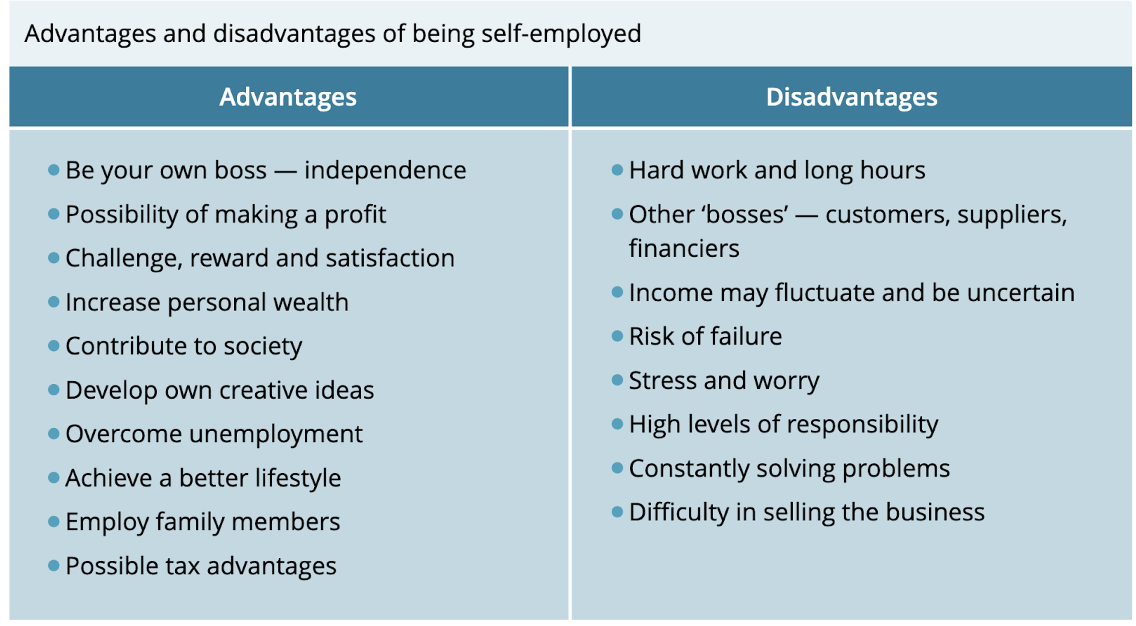
What are the advantages of disadvantages of being an entrepreneur?
What are the four characteristics of an entrepreneur?
See and take advantage of an opportunity
Establish a shared vision: everyone can work together to accomplish goal
Demonstrate initiative, innovation and resilience
Appreciate the role of failure in success
What is a business opportunity?
Something that a person can see as an avenue to success, often when someone they can provide goods/services in a different or better way e.g. Baraka woman (modest clothing for middle-aged people)
What are the key considerations involved in planning and organising a business? (5)
Market research
Location
Demographics
Competition
Target markets

What is market research?
Collecting and analysing information about customers and business opportunities available
Collecting info about the needs and wants of customers helps creates a better marketing plan, reducing risk of failure
What is location?
Location affects profits
May want physical location with constant flow of people walking past e.g. main street
Online presence
Home-based business
Maximise profits, minimise costs
What is demographics?
Population characteristics that affect customer spending e.g. gender, age
Helps identify businesse’s possible customers
What is competition?
Be aware of competition
Mindful of strategies implemented by competition
Respond with ‘sustainable competitive advantage’ (strategy to ensure an edge over competition for a long period of time)
What are target markets?
Identify target market
Group of customers business intends to sell its products to
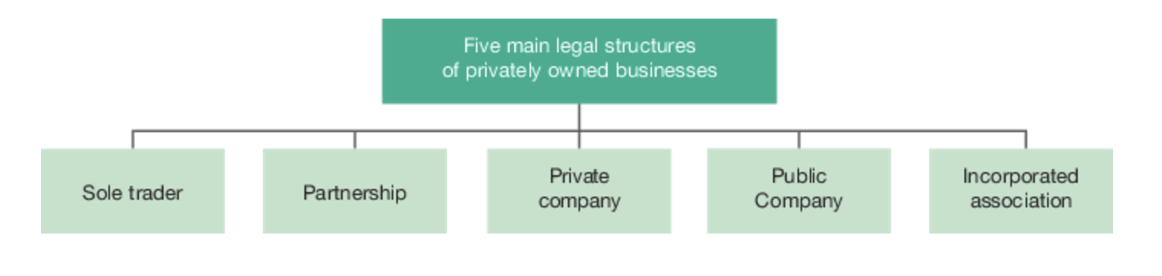
What are the five main legal structures of privately owned businesses?
Sole trader, partnership, private company, public company, incorporated association
Difference between unincorporated and incorporated business
Unincorporated - No separate existence from its owner, if owner dies so does business
Unincorporated business: Sole trader, partnership
Incorporated - Business is its own legal entity, therefore can be sued, own and sell property, and has perpetual succession (still go on when owners change)
Incorporated business: Private company, Public company, Incorporated association
What is a sole trader?
Business owned and operated by one person
Has unlimited liability: personally responsible for all debts, may have to sell a car
What is a partnership?
Operated from 2-20 people
Common for people with similar skills to form a partnership e.g. lawyers
Also personally responsible for business’s debts
What is a private company?
2-50 people
Often family owned
Limited liability
Shareholder only loses money they have invested into the business
What is a public company?
Unlimited number of shareholders
Shares publicly listed on ASX
Limited liability
What is an incorporated association?
5+ people
Registered with NSW Fair Trading
Small-scale, non-profit, non-commercial
Only conduct business in the state they are registered in
Legal identity separate to members, provides protection
Small community groups register because simple + affordable
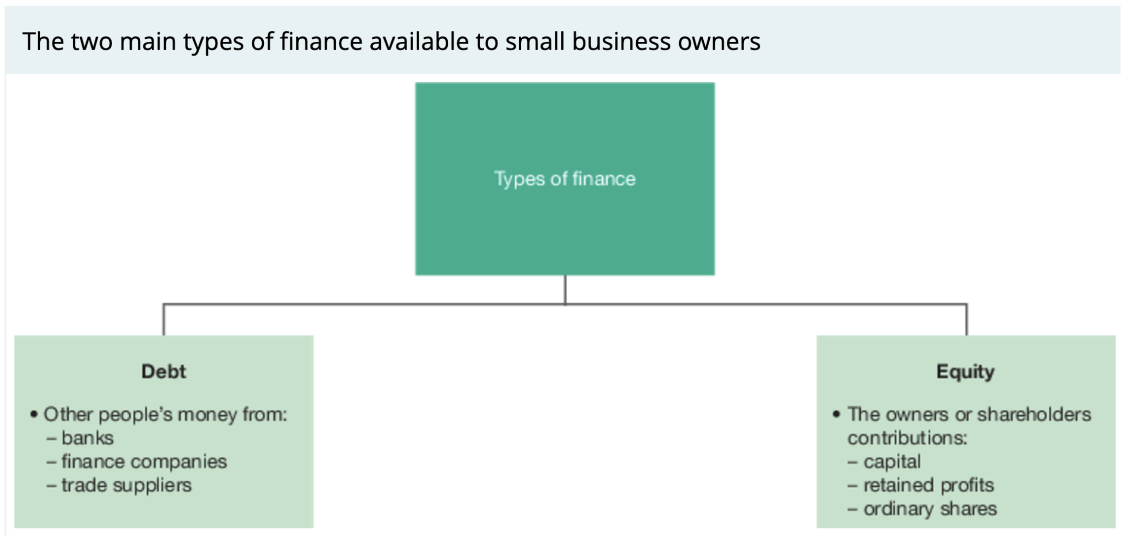
What are the two ways a business can be financed?
Debt
Equity
Debt: Good because owner doesn’t have to sell parts of the business for money, also taxation advantages.
Equity: Good because money doesn’t have to be repaid unless owner leaves the business. Also chapear because no interest payments.
what is a laon?
Loan - agreement to borrow a set amount of money that needs to be repaid within a certain period of time
Can be secured or unsecured
Secured: offer an asset for security e.g. car, if you don’t repay money, lender can sell car to get their money back (lower interest)
Unsecured: no asset offered, high interest rate
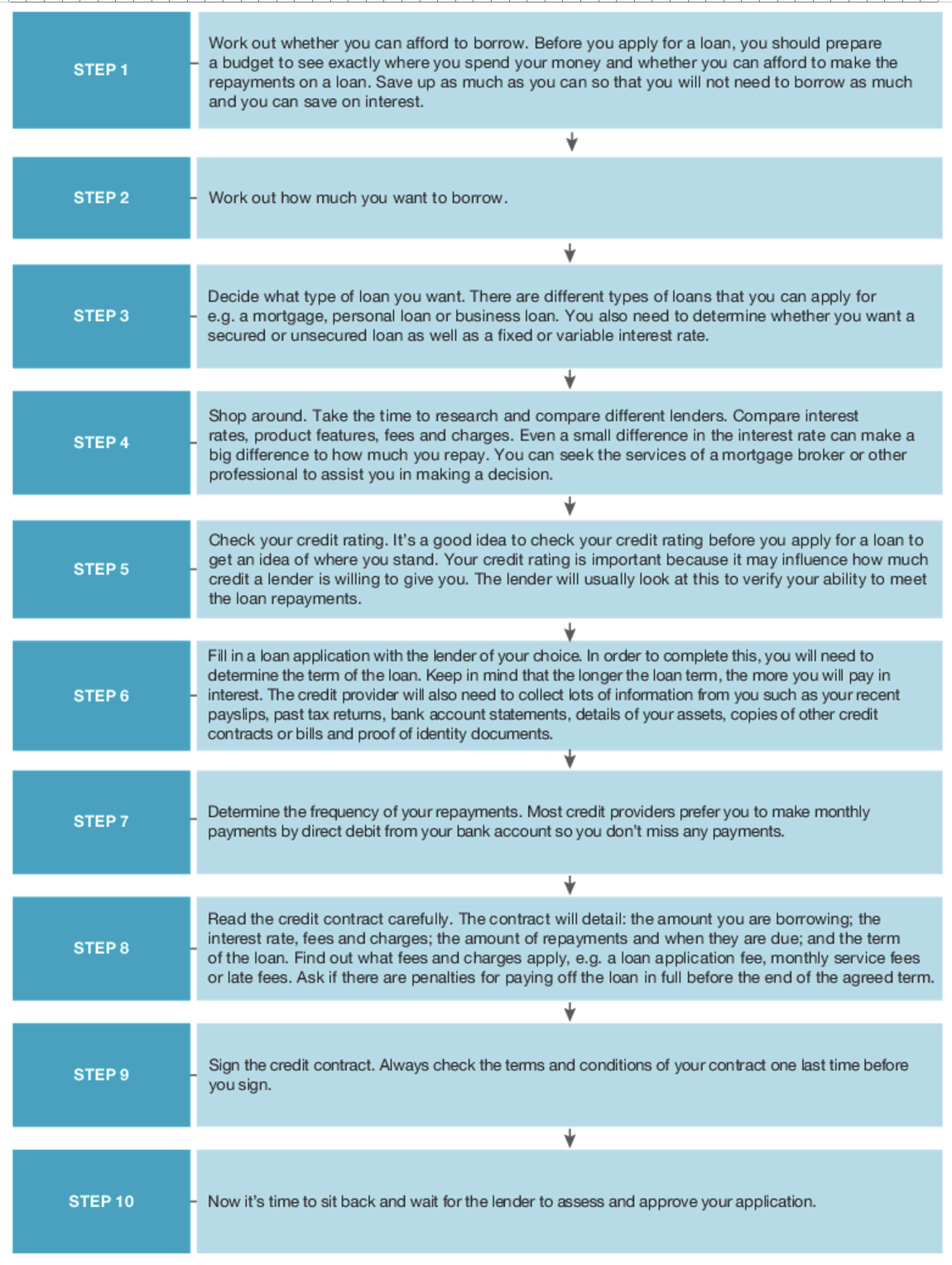
How to prepare for a loan application?
See if you can afford to borrow
Decide how much you want to borrow
Decide on a type of loan
Look at different lenders
Check credit rating (influences lender)
Fill in a loan application
Determine frequency of payments (weekly, monthly)
Read credit contract carefully
Sign credit contract
Wait for application to be approved
What is a prospectus?
Prospectus:
Legal document issued by company offering securities up for sale
Makes investors aware of the risks of the investment
Protects company from future accusations that it did not disclose enough information about he securities
Corporations Act has a general disclosure test, but not checklist
History of the business
Company’s business model
Risks
Description of the management
Financial info details of the offer
What are the three main ways of going into business?
Setting up a new business
Purchasing an existing business
Purchasing a franchise
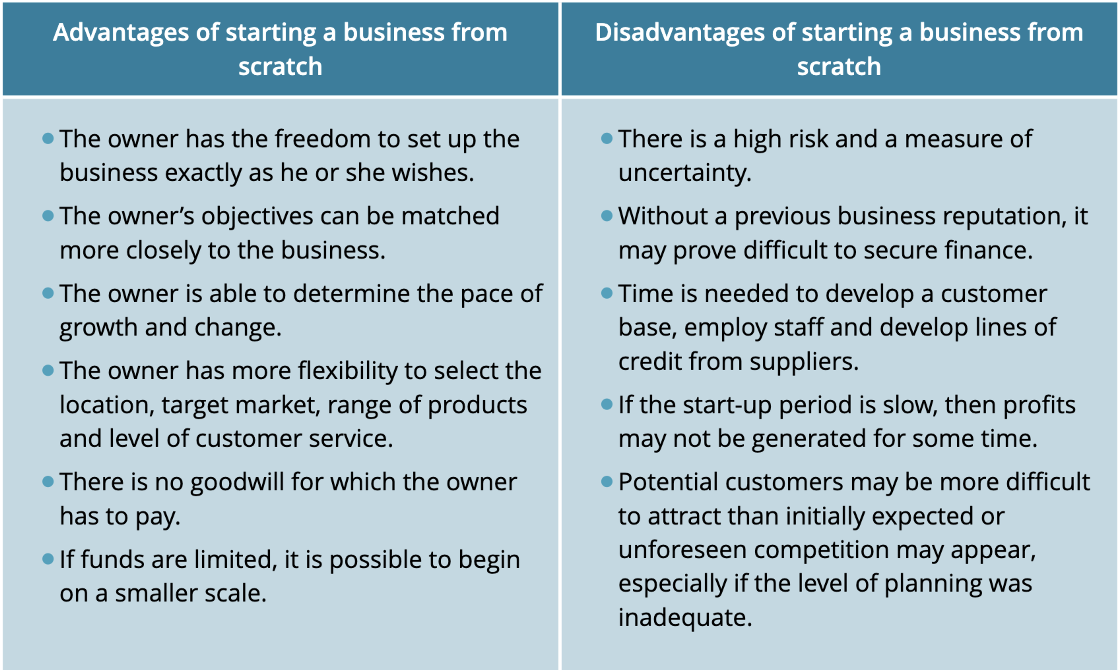
Advantages + Disadvantages of setting up a new business from scratch
Good when someone has created something new and wants to market their invention e.g. the Bathroom Brothers
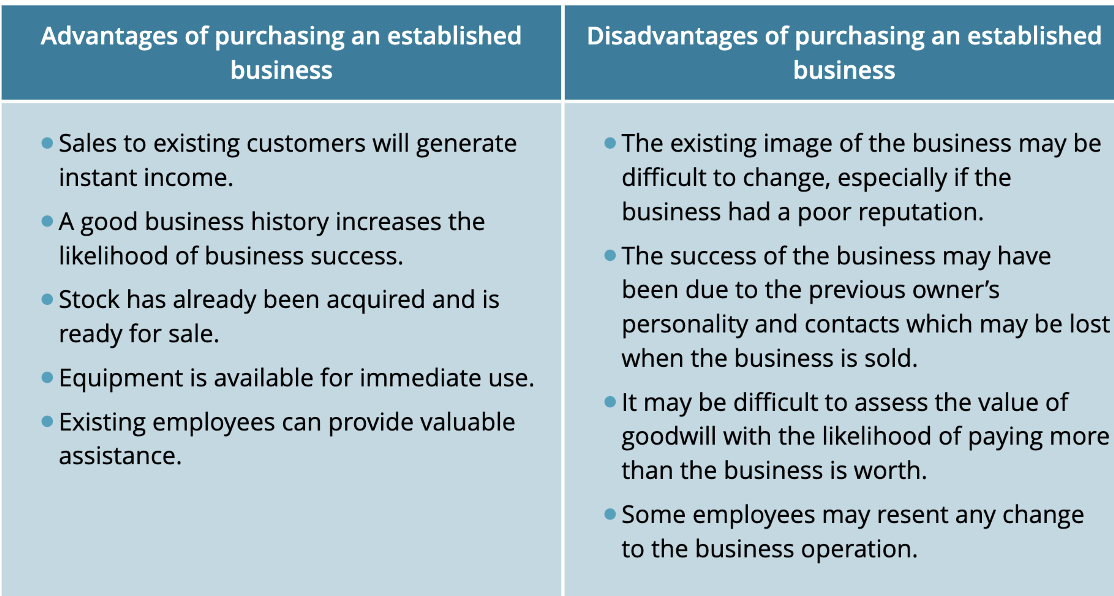
Advantages + Disadvantages of purchasing an existing business
Everything comes with the business e.g. stock, staff, existing customer base
Make sure to figure out why they’re selling, business might be sus
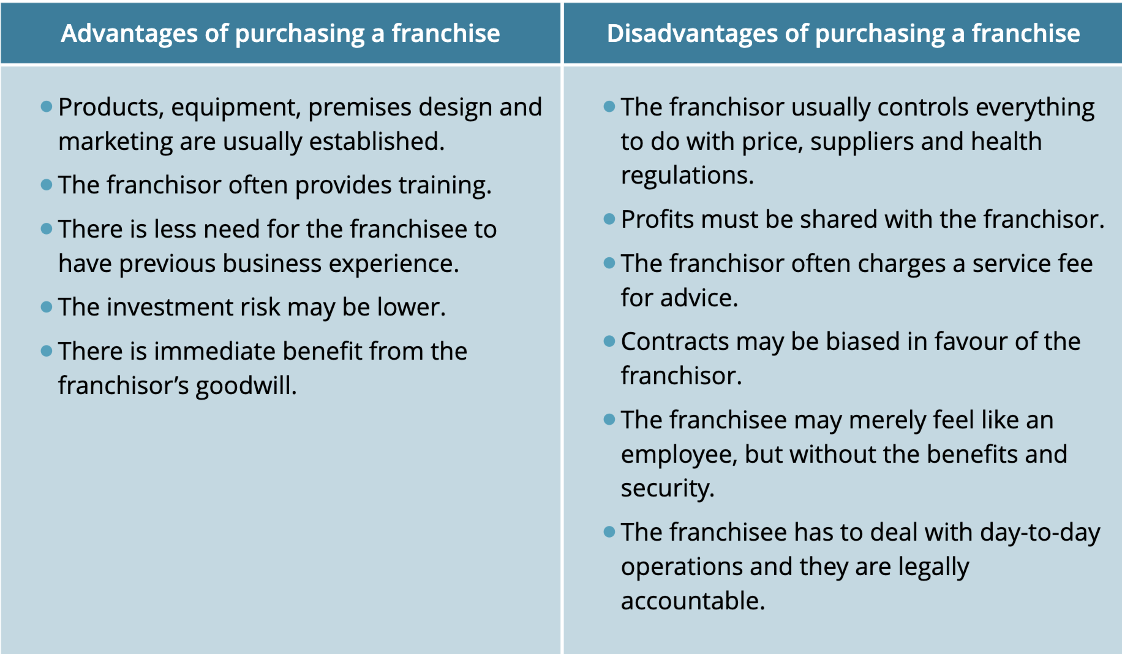
Advantages + Disadvantages of franchising
Person (franchisee) buys the right to use the business name and distribute goods and services of an existing business (franchise)
What are 4 important planning considerations when opening up a business
Staffing
Good staff is important for the success of the business
Take your time on recruiting
Recruit in lots of ways, e.g. newspapers, social media, company websites
Location
Maybe too close to competitors
Cost
Visible to others
Equipping premises
Owners need to make sure they have the right equipment
Furniture, technology etc.
Important considerations when equipping
Cost
Where to purchase equipment
How to maintain equipment
Obtaining realistic valuations
Important to determine current worth of business
Get important info, e.g. business history
Always good to get professional advice
What are some factors contributing to the success of a business?
Good | Bad |
|
|
What are the regulations affecting businesses (government)
Federal government regulations: Not engaged in anti-competitive practices
State government regulations: Abiding by work, health and safety regulations
Local government regulations: Health regulations
What are the three main regulations?
Work health and safety
Taxation
environmental regulations
What is work, health and safety?
Employer legally responsible for implementing health and safety practices in the workplace
WHS Act 2011 mainly covers this
Must establish WHS committees
Provide a safe system of work to protect employees
Put in control measures if they can’t eliminate a health of safety risk, e.g. PPE
What is taxation? (and four kinds of taxation)
Compulsory payment of a proportion of earnings to the government
Different types of tax:
PAYG income tax - imposed on employee
Company tax - paid on earnings of company
GST - 10% on most services and goods in australia
Fringe benefits tax - paid by employer for benefits they gave to an employee e.g. work car
What are environmental regulations?
In Australia:
Environment Protection and Biodiversity Conservation Act 1999 (EPBC Act) is the main environmental law
Focused on protecting nine matters of environmental significance e.g. great barrier reef
In NSW:
Environment Operations Act 1997 (POEO Act) main environmental law
Administered by Environment Protection Authority
Partners with businesses, government and community to reduce pollution and protect the environment
Can fine/sue businesses that break the law
What is corporate social responsibility?
The way a company considers the financial, environmental, and social impacts of its decisions
Try to increase profit while providing for the greater good of society
E.g. ensure business is corruption free, minimise waste and pollution
What are some organisations that provide support to small businesses?
Trade associations
Government (+ gov websites)
Accountants
What is the purpose of maintaining financial records?
Inform decision making
Fulfil legal requirements
Meet tax obligations
Obtain funding or loans
Manage cash flow
Business owners need to keep records for a set amount of time depending on business structure
There are FOUR key business documents. What are they?
Profit and loss statement
Balance sheet
Cash flow
Taxation Records
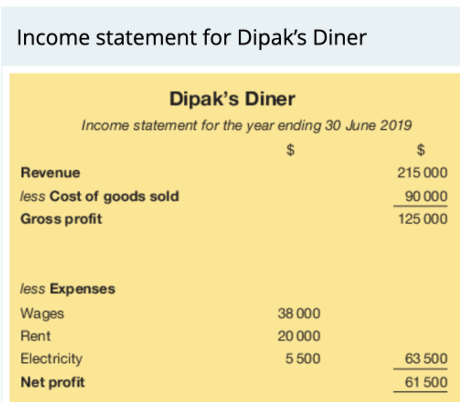
What are profit and loss statements?
Summary of income and expenses
To prepare one:
Record revenue
Record cost of goods sold
Calculate gross profit
Record total expenses
Find net profit or loss
What are balance sheets?
Calculates value of assets
Current assets: used up or change in a year
Non-current assets: last longer than a year
Calculates value of liabilities: debts owed by a business to others
Current: less than a year
Non-current: longer than a year
Owner’s equity: represents money owner has invested into the business
LHS should equal RHS: assets = liabilities + equity
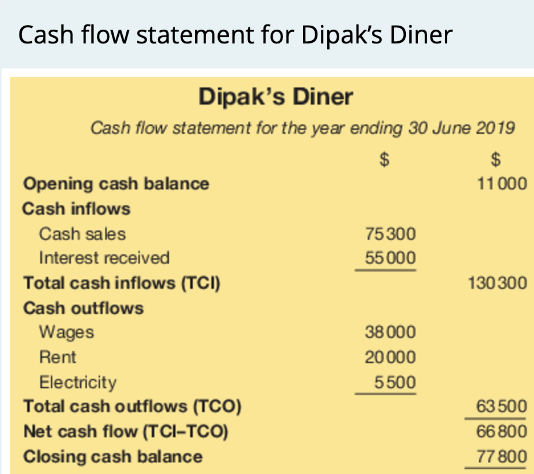
What is cash flow
Movement of inflows and outflow
Helps calculate surplus or deficit in cash
What are taxation records?
businesses’ need to keep certain taxation records depending on their situation
e.g. payments business has received, tax-deductible gifts
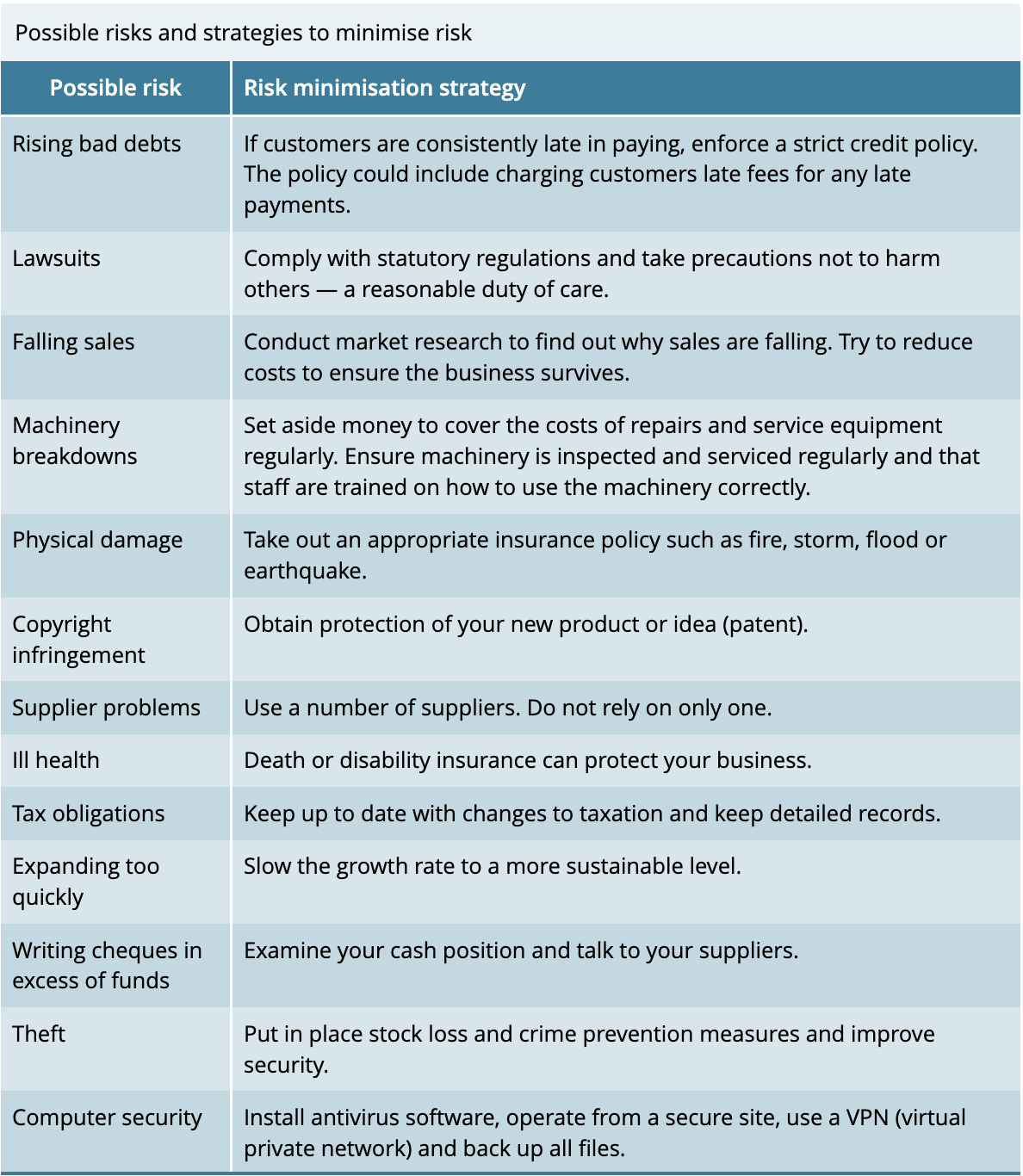
What are some strategies to minimise insolvency/bankruptcy
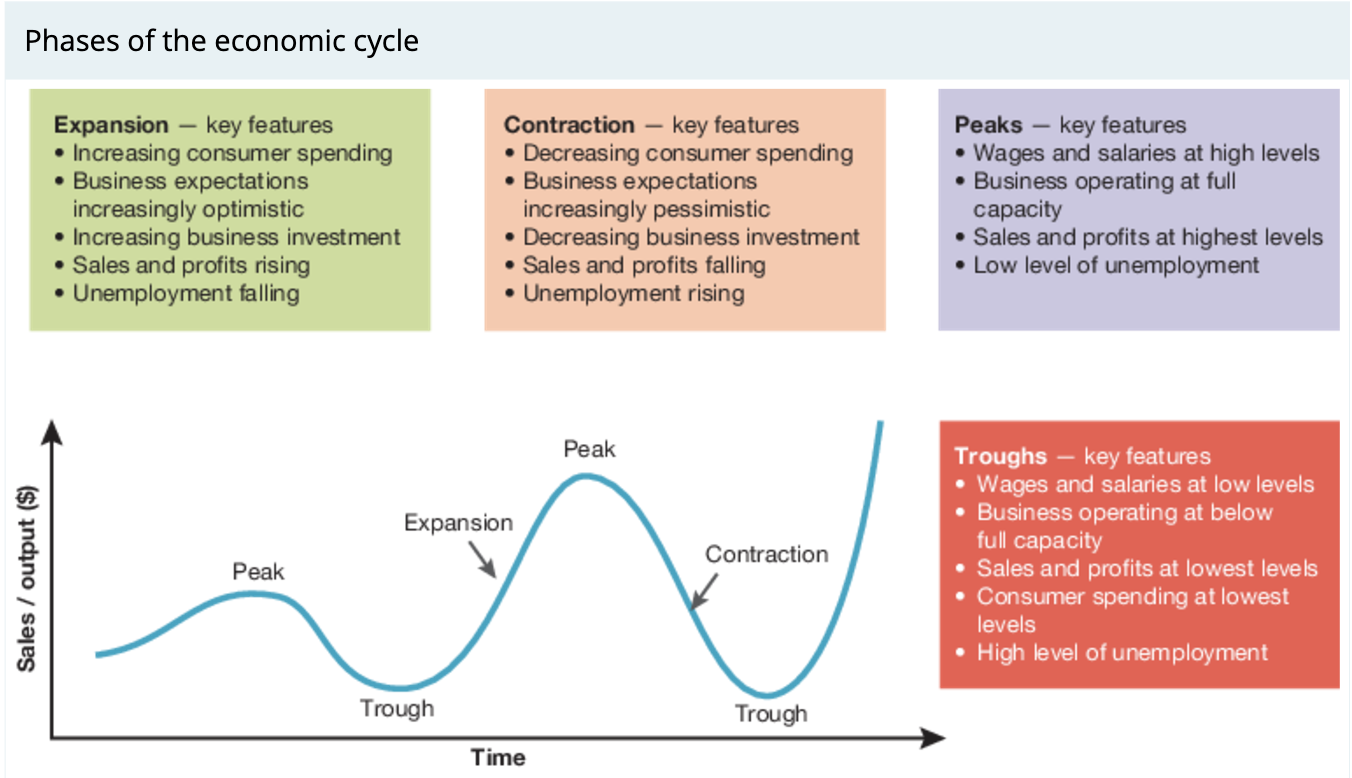
Explain the business cycle 🔄
Australian economy experiences ‘booms’ and ‘busts’ that are referred to as the business cycle.
prosperity ➡ recession ➡ prosperity
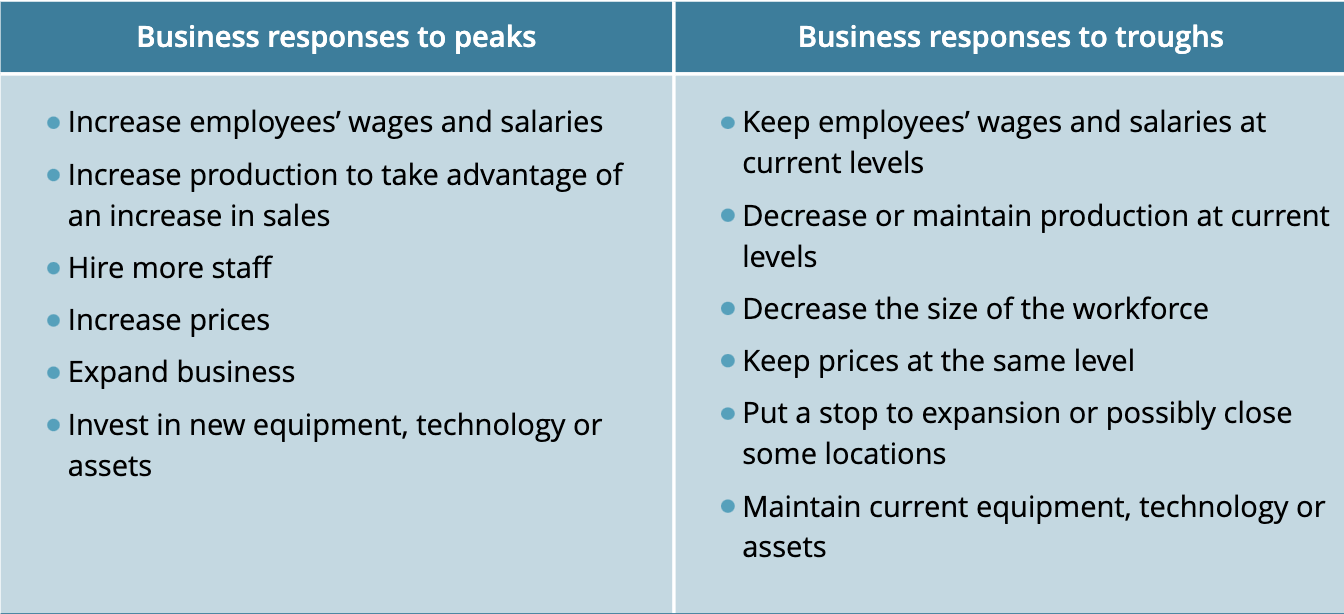
How do businesses respond to peaks and troughs in the economy
What are the four main business functional areas?
Operations
Human Resources
Finance
Marketing