ch3
 Call Kai
 Learn
 Practice Test
 Spaced Repetition
 Match
 Flashcards
 Knowt Play
1/16

Earn XP
Description and Tags
Need to know how to figure out Entomology Examples
17 Terms
PMI
the time between death and discovery
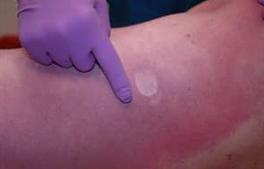
Livor Mortis – Postmortem Lividity - Hypostasis
•Settling of blood once the heart has stopped.
•Blood remains fluid after death rather than coagulating due to enzymes that are released from capillary walls.
•Initially, blood remains in vessels but when cells breakdown, the blood moves into the surrounding tissue.
•In tissue, blood pigment becomes “fixed”.
•Discoloration is normally purple or reddish purple but may be affected by other conditions.
•Carbon monoxide – cherry red
•Bacterial action or certain drugs – yellow to greenish
Rigor Mortis – Stiffening of the Body
•Occurs in muscles when energy molecules (ATP) are depleted to 85% or lower normal concentration
•Rigidity it the muscle is enhanced by the release of calcium in the cell and the build up of lactic acid.
cadaveric spasm: occurs immediately at death in muscles under extreme stress.

Rigor Mortis Considerations
•Cold can delay onset and prolong time frame; heat can accelerate time frame
•Rigor is accelerated in muscles with high activity prior to death
•Individuals with little muscle mass and tone may never show rigor mortis
•Eyelids may enter rigor in as little as 10 minutes
Livor Mortis Considerations
Accelerated by heat; slowed by cold
•Occurs in all organs
•Can be confused with bruising
•Bruises do not blanch prior to fixation
Algor Mortis Considerations
•Body Size (surface area to volume ratio)
•
•Clothing/coverings
•
•Surface that body is on
•
•Water vs air
•
•Medical condition
•
•Ambient temperature
•
•Air flow
Fresh (Initial Decay) – 0 to 3 days
•Physical changes discussed in part 1 occur
•Autolysis occurs
•Bacteria in the gastrointestinal tract utilized food material (little to no sign of bloating)
•Flies arrive within minutes and begin to lay eggs around body openings
Putrefaction (Bloat) – 4 to 10 days
•Bacteria have utilized any food matter in the GI tract and now breakdown the tissue itself.
•Oxygen is depleted; bacterial action occurs in an anaerobic environment.
•Bacterial production of gases causes bloating of body.
•Cadaverine
•Putrescene
•Methane and Hydrogen sulfide gas
•Pressure from gas build up causes fluid purge from orifices.
•Maggots obvious and form roiling masses.
•The maggot masses tear apart soft tissue and activity can cause increase in temperature.
•Beetles, mites, and ants are attracted to the remains.
•Flies continue to lay eggs.
Parasitic wasps arrive. Together with some beetle species, they prey on the maggots.
•Skin slippage occurs
Black Putrefaction (advanced decay) – 10 to 20 days
•Bacterial activity breaks through body wall and body collapses.
•Fluid from body is released.
•Insects such as mites and silverfish are attracted to liquid surrounding body.
•Skin has dislodged; exposed areas turn dark.
•Multiple generations of insect larvae exist.
Pupae are found around body as mature maggots migrate away to undergo metamorphosis
Butyric Fermentation – 20 to 50 days
•Soft tissue has been removed.
•Remains dry out.
•No longer strong odor of cadaverine and putrescene.
•Insects are mostly beetles, ants, and cheese flies.
Fungus activity (mold) will occur in humid environments.
Dry Decomposition – 50 days to 1 year (or more)
•Skeletonization occurs.
•Hair, bone, and teeth are the most difficult remains to breakdown.
•Tineid moths and mites breakdown hair.
•Ants act on bones.
Forensic Entomology
•Urban entomology – affecting man-made structures and aspects of the human environment
•Stored product entomology – infesting stored commodities (grain, flour, etc.)
•Medicocriminal entomology – focuses on violent crime and abuse
Medicocriminal Entomology
•Deals mainly with the examination of insects/arthropods collected from or near corpses
•Determination of PMI
•Location of site of death
•Connection to possible cause of sudden death
•Involvement in traffic accidents
Criminal neglect/abuse
Scene Protocol
•Observation of the scene – indoor/outdoor; habitat (urban, rural, vegetation)
•
•Weather notation – temperature (ambient, body, soil), precipitation, exposure
•
•Insect collection
•Adults on body and surrounding area (air, soil/ground)
•Larvae from body
•Pupae
•Insect samples are collected in duplicate – living and preserved
•Insects are identified according to type and developmental stage found at scene
Insect Development
•Developmental rate is dependent on temperature.
•
•Each species has a threshold temperature below which there is no development.
•
•Above the threshold, a specific about of time is required to achieve each defined stage.
•
•Time to develop is directly proportional to temperature.
•
•Entomologists look at heat in thermal units and measure development in terms of Accumulated Degree Hours (ADH).
Insect Development Categories
Hemimetabolous or Incomplete Metamorphosis
Holometabolous or Complete Metamorphosis
adipocere
The body's fats (triglycerides) break down into fatty acids, which react with surrounding minerals (like calcium and magnesium) to create a natural soap.
Hard to tell the age of the body