Lecture 9 - Contemporary & societal issues in mental health
 Call Kai
 Learn
 Practice Test
 Spaced Repetition
 Match
 Flashcards
 Knowt Play
1/20

There's no tags or description
Looks like no tags are added yet.
21 Terms
equity definition
individuals receive the same level of support, regardless of their demographics, or clinical characteristics
equity importance
reduces mental health disparities - addresses gaps by ensuring marginalised groups have sufficient support
improves access to care - removes barriers like cost, stigma and geographic inaccessibility
enhances outcomes - tailored care is person centred increasing engagement
promotes social justice - addresses disparities rooted in systemic injustice
Economic and social benefits
examples of social determinants
economic circumstances - income, poverty, employment
living environments - housing, neighbourhoods
social relationships - family, community
education and opportunity - access to education, employment and opportunities
social inequalities - discrimination, exclusion
social determinant consequences
upstream
downstream
these can accumulate across the life course, interact with individual psychological and biological factors, and create unequal risks of mental health difficulties
upstream
upstream = macro level considerations at a regional/national level
poverty and economic inequality
housing policies and availability
education and employment inequalities
discrimination and social exclusion
downstream
downstream
financial insecurity and chronic stress
unstable or unsuitable accommodation
reduced opportunities and insecurity
isolation, distress and barriers to support
mental health across different groups
men
women
ethnic minorities
LGBTQIA+
neurodiversity
intersectionality
intersectionality - these factors do not operate independently; their interactions can shape experiences in ways that cannot be understood by considering each separately
men
june 2024 - male suicide rate 15.7 per 100,000 compared to 3.8 for females, men accounted for 74.9% of suspected suicides
contributing factors:
gendered expectations - norms surrounding self-reliance, emotional control and masculinity can influence how distress is experienced, expressed and communicated
social circumstances - social isolation, belonging and interpersonal relationships can influence mental health and suicide risk
systemic barriers - how services recognise distress, engage with men and respond to their needs can influence help-seeking and engagement
mens mental health over a life course

psychosocial and sociocultural influence on women’s mental health
roles of women in society, stereotypes, and body image
gender-based violence and trauma
higher exposure to interpersonal stressors
structural gender inequalities
stigma around menstruation and reproductive health
women’s mental health over a life course
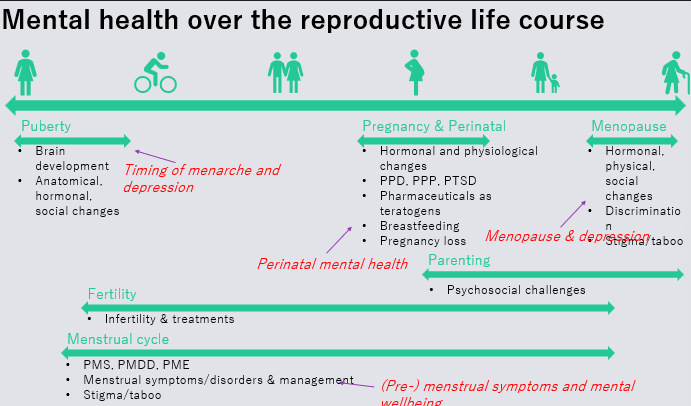
menstrual health disorders and symptoms
symptoms like heavy menstrual bleeding and period pain
disorders like endometriosis, fibroids and PCOS
associated with lower quality of life, non-attendance at school/work and higher rates of mental disorders
stigma/taboo --> menstrual illiteracy --> under-diagnosis
ethnic minorities
covid-19
ethnic bias in AI generated clinical records
covid-19
GILLARD et al, ONS
ethnic minority workers were overrepresented in several occupations associated with increased COVID-19 mortality, including frontline and public-facing roles
heightened anxiety about COVID-19 alongside experiences of racism, discrimination and concerns about unequal healthcare treatment
existing socioeconomic disadvantage, social isolation and disruptions to mental health services created additional challenges for some individuals
ethnic bias in AI generated clinical records
SHAROFF et al
llama 3.2 generated approx. 24 as many marijuana references for Afro-Caribbean profiles as for White British
model introduced drug-related information not justified by the clinical profiles
such biases could influence clinical assessment, documentation and subsequent care if outputs were used uncritically
LGBTQIA+
higher reported rates of depression, anxiety, self-harm and suicidal thoughts
discrimination, rejection and social exclusion
the HIV/AIDS crisis illustrated the consequences of homophobia, stigma, fear and exclusion
homosexuality was historically considered a mental health disorder
neurodiversity
research suggests autistic adults experience high rates of co-occurring anxiety (27%) and depression (23%) - HOLLOCKS et al
960,000 open referrals potentially relating to ADHD assessments in June 2026
lower school connectedness was associated with increased anxiety, depression and behavioural difficulties among children with dyslexia
cultural competence
awareness of one’s own cultural worldview, knowledge of different cultural practices, and cross-cultural skills
ensures treatment is respectful and responsive to the cultural needs of the patient
promoting this reduces disparities in mental health care and improves outcomes
principles of recovery-oriented practice
hope and optimism
person-centred care
empowerment
strength-based approach
respect and dignity
principles of trauma-informed care
safety
trustworthiness and transparency
peer support
sensitivity
reducing retraumatisation risk