kidneys
 Call Kai
 Learn
 Practice Test
 Spaced Repetition
 Match
 Flashcards
 Knowt Play
1/84

There's no tags or description
Looks like no tags are added yet.
85 Terms


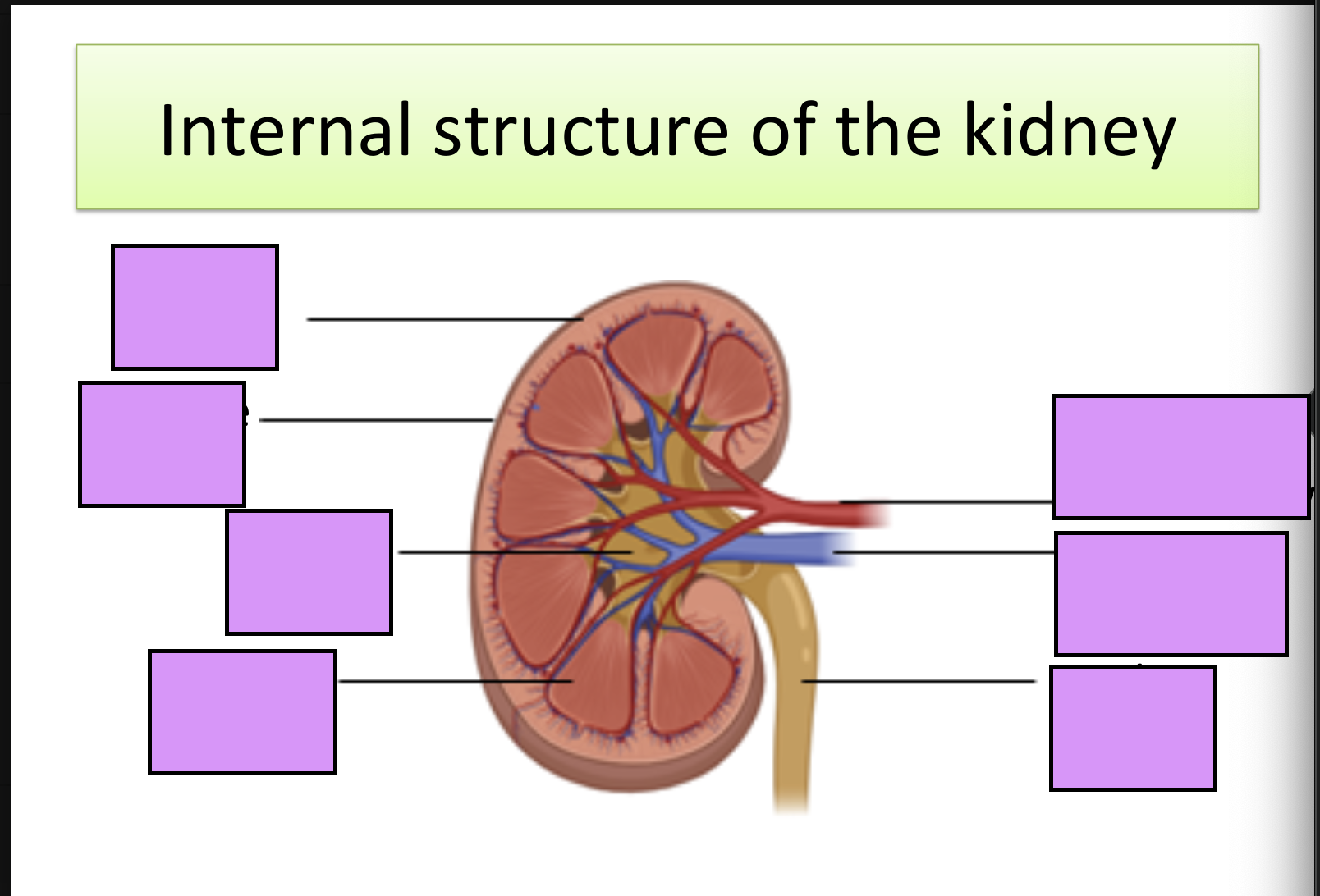

what does the cortex do?
ultrafiltration of blood carried out b the nephrons in the Bowmans capsule
Dense capillary networks called the Glomerulus which receives blood from renal artery
what does medulla do?
contains tubules of the nephrons to form renal pyramids
what does the pelvis do?
renal pyramids project into a central space called the pelvis
urine passes from the pelvis into the ureter
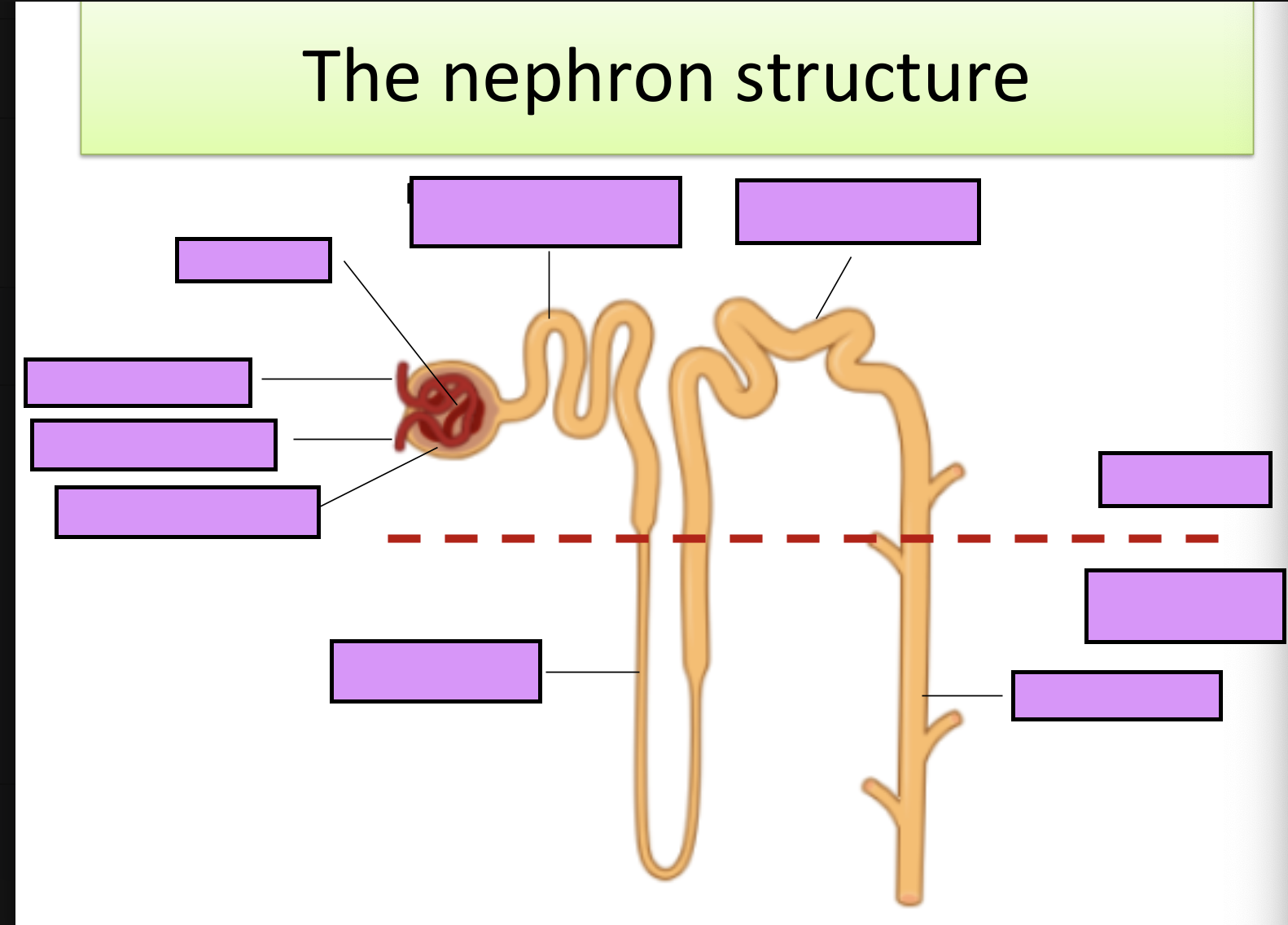

where does the nephron start?
Bowman’s capsule
where does ultra filtration occur?
Bowman’s capsule
what part of nephron does selective reabsorption?
Proximal convoluted tubule
what part of nephron does ultrafiltration?
Glomerulus
Efferent arteriole
Afferent arteriole
Bowman’s capsule
what part of the nephron does reabsorption of water (counter-current)?
Loop of Henle
what part of nephron does reabsorption?
distal convoluted tubule
what does afferent arteriole do in ultrafiltration?
blood from renal artery
what does filtrate do in ultrafiltration?
passes into nephron (water, glucose, amino acids, urea and inorganic ions)
what does glomerulus do in ultrafiltration?
bundle of capillaries under high pressure
liquid and small molecules (filtrate) forced out into Bowman’s capsule
what does efferent arteriole do?
smaller diameter than afferent arteriole
large molecules e.g protein and blood cells stay in the blood
what does the pedicels do as part of podocytes in ultrafiltration?
wrap around the capillaries forming slits that make sure any cells/platelets that get through do no get into the tubule


what are features of endothelium of blood capillary?
very thin
perforated with thousands of pores of about 10nm diameter
provides a barrier to cells but not plasma proteins
what are features of basement membrane?
meshwork of collagen and glycoproteins fibres
water and small molecules can pass through
proteins are too large and are repelled by negative charges on fibres
what are features of epithelium of renal capsule?
made of cells which are modified for filtration (podocytes)
what are features of podocytes?
each cell has many foot-like extension projecting from its surface
the extensions wrap around the capillaries of the glomerulus and interlink with extensions form neighbouring cells
these extensions fit together loosely leaving filtration slits about 25nm wide
the filtered fluid passes through the filtration slits
in ultrafiltrations the blood in the capillaries is separated from the lumen of the renal capsule by…
endothelium
basement membrane
podocytes
what does capillary endothelium do in ultrafiltration?
pores allow most molecules to pass through
what does the glomerular filtrate contain?
water
glucose
amino acids
urea
inorganic ions
what does basement membrane do in ultrafiltration?
prevents large molecules e.g proteins and blood cells from passing through
made up of collagen fibres and other proteins
what does podocytes do in ultrafiltration?
acts as an additional filter
have extensions called pedicels that wrap around the capillaries forming slits and making sure any cells, platelets that get through do not get into tubule
what does the glomerular filtrate contain?
water
glucose
amino acids
urea
inorganic ions
what is the glomerular filtration rate?
the volume of blood filtered in a given time
why is the filtration rate produce so much more fluid than is contained in urine?
because in proximal convoluted tubule a lot of useful substances are reabsorbed
what is selectively reabsorbed in the proximal convoluted tubule?
all glucose, amino acids, vitamins
most sodium and chloride ions
some water
what are some adaptations of the cuboidal epithelium for selective reabsorption in PCT?
microvilli for large surface area
mitochondria to provide ATP for active transport
close to capillaries
how does selective reabsorption take place in PCT for sodium ions and glucose?
active transport transfers sodium ions out of cytoplasms of epithelial cells into bloodstream using energy from active transport
so epithelium cells have low concentration of sodium ions so sodium ions diffuse from PCT into epithelial cells using a carrier protein (facilitated diffusion)
carrier proteins also transfer glucose molecules from fluid into epithelial cells (co-transport with Na+) and diffuses into bloodstream
how does selective reabsorption of water take in PCT?
by osmosis
how does selective reabsorption of glucose and amino acids take place?
diffusion into the blood capillary
what is effect of reabsorption of salts, glucose and amino acids?
reduces water potential of cells
increases water potential in tubule
water is reabsorbed into blood my osmosis
why is reabsorption is PCT described as selective?
most molecules cannot be reabsorbed without a specific co-transporter protein
what are features of the descending limb?
permeable to water
impermeable to solutes
what are features of the ascending limb?
impermeable to water
solutes have to be actively pumped
what are features of thin ascending limb?
impermeable to water
solutes can diffuse
what goes on in ascending limb?
impermeable to water (water stays on inside)
Na+ and Cl- pumped out by active transport into the medulla
creates low water potential in the medulla (high concentration of ions)
what goes on in descending limb?
lower water potential in the medulla than in descending limb
water moves out by osmosis
filtrate becomes more concentrated but can’t diffuse out (descending limb impermeable to them)
water reabsorbed by capillary network
what happens at bottom of ascending limb?
Na+ and Cl- ions are able to diffuse out into the medulla
ascending limb impermeabel to water
what goes on in collecting duct?
low water potential in the medulla (due to high concentration of ions)
water moves out of the collecting duct by osmosis
water absorbed by the capillary network
what is the loop of henle counter-current multiple mechanism?
solutes concentration at any part of ascending tubule is lower than that in the descending limb
causes a build up of salt concentration in the surrounding tissues
what happens if the distal convoluted tubule?
permeability of the walls to water are controlled by ADH
Na+ and Cl- are actively pumped out if body lacks salt
cells have a lot of mitochondria
plays a role in balancing pH of blood
what is osmoregulation?
control of water contents of the body to match the water requirements
e.g negative feedback involving osmorecepetors
what is negative feedback?
reversal of any change in internal environment to return to an optimum steady state
how does control systems work for negative feedback?
receptors cells detect a change in environment
coordination process info from receptors
effector, muscle or gland creates a response to return to optimum conditions
in negative feedback what happens if water levels are too low?
osmoreceptors in hypothalamus detect low water potential of blood
feelings of thirst so drink more water
posterior pituitary releases more ADH
kidney reabsorb more water so less concentrated urine
how is hypothalamus involved with ADH?
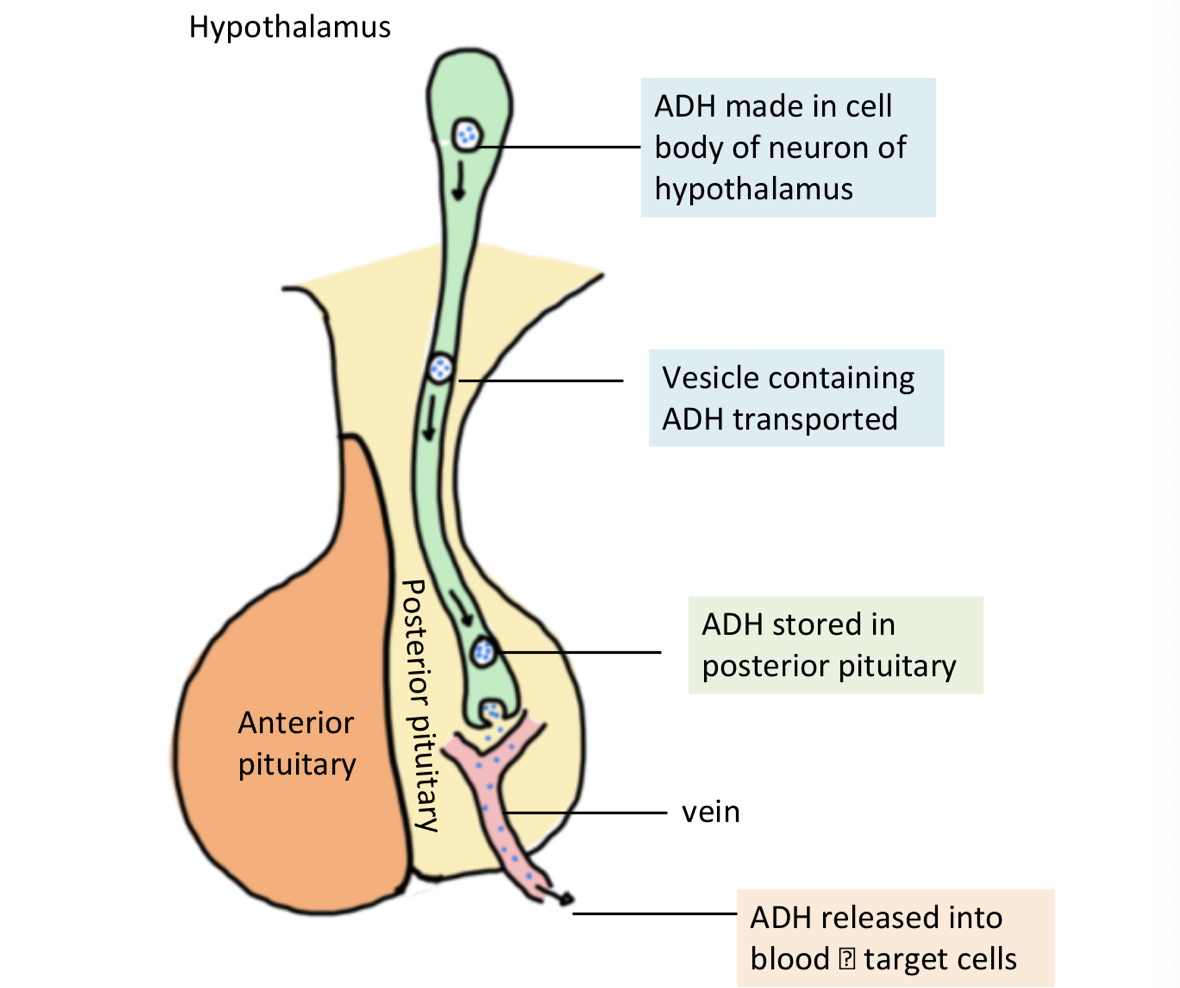
how Is pituitary gland involved with ADH?

how does ADH actually work?
In target cells DCT and collecting duct
ADH attaches to cell surface membrane of cells lining the collecting duct
triggers cyclic AMP (cAMP second messenger)
vesicles conturing aquaporins move to the plasma membrane
forming changes that allow water molecules to pass through into medulla of kidney
water then absorbed by capillaries
how can kidney failure be detected?
using Glomerular Filtration Rate (GFR)
the rate at which blood is filtered from the glomerulus into the Bowman’s capsule
what is measured in glomerular filtration rate and why?
creatinine in the blood is measure (units cm3min-1)
if levels of creatinine go up, indicates that kidneys are not working properly
why do we care about creatine?
creatine is water product of muscle turnover proceeded at fairly constant rate, filtered by blood and not reabsorbed
stable blood level of creatinine show kidneys are filleting effectively but if kidney function declines, creatinine builds up in blood
what are causes of kidney failure?
infection s(often by bacteria) causes swelling of kidneys which damages cells
interferes with Bowman’s capsule or reabsorption in the nephrons
prosecutes and tubules may be damaged
what are symptoms of kidney failure?
fever
pain in lower back or side
chills
pain when peeing
blood or cloudy pee that may smell bad
urgent or fréquent need to pee
what are causes of kidney failure?
raised blood pressure
genetic
what is the problem with raised blood pressure?
can damage the epithelial cells and basement membrane (proteins could fit through)
what is the problem with genetic?
polycystic disease is when kidney tissue is replace by cysts or damaged from pressure from cysts
what are effects of kidney failure?
hate products build up
less excess water removed from blood
electrolytes not balanced
less erythropoietin
what is problem with hate products build up?
urea if this builds up lead to weight loss and vomiting
what is problem with less excess water removed from blood?
parts of the body swell as fluid accumulates in the tissues
what are effects of electrolytes not balanced?
blood may be too acidic
calcium and phosphate imbalance so brittle bones
salt build up so more water retention
what is problem with less erythropoietin (hormone that stimulates RBC production)?
lack of haemoglobin in blood
causes anaemia
how would you treat kidney failure?
renal dialysis
-haemodialysis
-peritoneal dialysis
kidney transplant
scientists are studying possibility of xenotransplant
what is haemodialysis method?
patients blood passes through dialysis machine
uses a partially permeable membrane so blood flows on one side and dialysis fluid on the other
fluids flow in opposite directions to maintain concentration gradient
excess water and ions diffuse across membranes
what are the advantages of haemodialysis?
trained professionals can monitor any issues
contact with other patients emotional support
keeps patient alive until transplant possible
what are disadvantages of haemodialysis?
takes 3-5hrs and depends on disunion down concentration gradients
need 2-3 session a week, usually in a hospital
can feel unwell between appointments as waste builds up
patients need to manage their diets, eating little protein and salts
increased risk of blood infections
what is perineal dialysis method?
peritoneum is layer of tissue that lines abdominal cavity
a catheter is inserted into the peritoneum cavity and dialysis fluid is passed in and left there for several hours
urea and excess mineral ions pass out of the blood capillaries into the tissue fluid and out across the peritoneal membrane into the dialysis fluid which is drained off
what is advantage of peritoneal dialysis?
can be done at home and patient can carry on with normal life
can even do when you are asleep
what is disadvantage of peritoneal dialysis?
infection risk of peritoneum lining, may be difficult for some people to do themselves
what are features of kidney transplant?
donor needs to be from person with same blood and tissue type, if antigens are different immune system will attack
usually donated from a living relative
could come from someone who has recently died
what are advantages of kidney transplant?
cheaper to give a transplant then give dialysis for years
more convenient for patient than having to have lots of dialysis treatments and feeling unwell in between
what are disadvantages of kidney transplant?
major operation comes with risks
immune system may reject the new kidney
need to take immunosuppressants preventing patents from responding effectively to infectious diseases
lasts up to 10yrs
how can urine be useful?
test for drugs
test for some STIs
test for UTIs
test for diabetes
pregnancy tests
see how hydrated you are
how do pregnancy tests work if your pregnant?

how do pregnancy tests work if not pregnant?

wat is an anabolic steroid?
drug that builds up muscle tissue
anabolic reactions make larger molecules from smaller ones
why might an athlete take anabolic steriods?
increased strength
increased power
pressure to perform because of sponsorship deals
how can you test for steroids?

how does gas chromatography/ mass spectrometry work?
urine sample is vaporised
passes through column containing a polymer
different substances move through at different speeds so different substances are separated
mass spectrometer converts into ions depending on mass and charge
results compared with known substances
how can you test for recreational drugs?
can be done with test strips and urine
the drug bind tested for will bind to antibodies on test strips