3 - Brain Basics
 Call Kai
 Learn
 Practice Test
 Spaced Repetition
 Match
 Flashcards
 Knowt Play
1/40

There's no tags or description
Looks like no tags are added yet.
41 Terms
Central Nervous System (CNS)
brain + spinal cord
Peripheral Nervous System (PNS)
sensory and motor neurons that connect CNS to rest of the body
Sympathetic Nervous System
arousal and energy expenditure
part of ANS
Adrenal medulla
Secretes epinephrine and norepinephrine
remember ‘adrenaline’ **
Parasympathetic Nervous System
functions during relaxed state; secretes acetylcholine
Salvation; gastric, intestinal
apart of ANS
Neuroanatomical Orientations
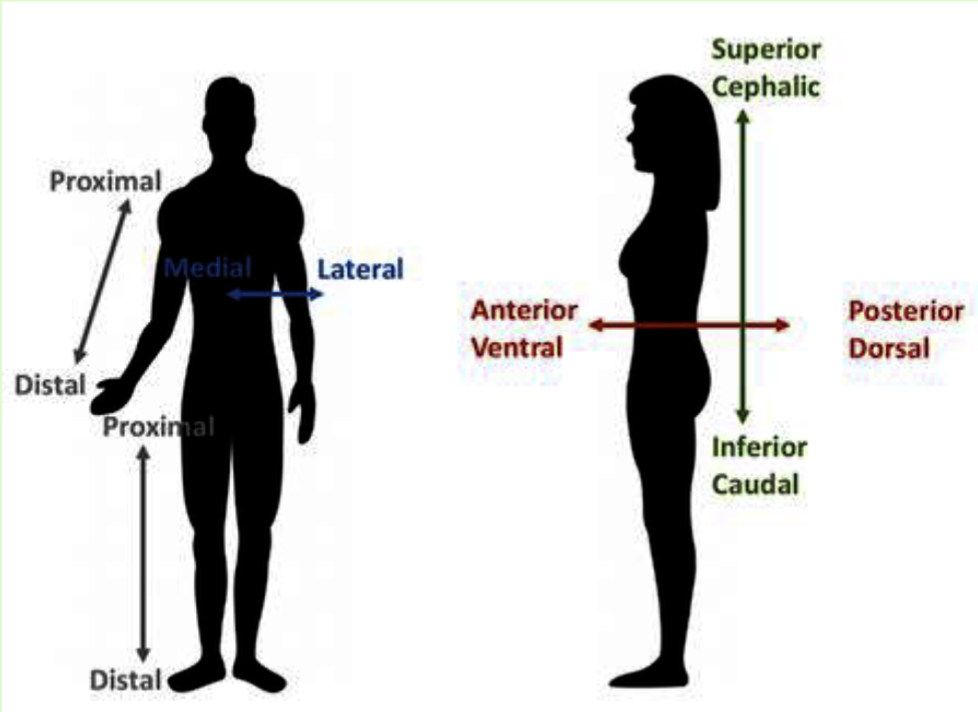
Coronal/Frontal Section
brain slice parallel to the forehead

Sagittal/Lateral Section
brain slice perpendicular to the ground and parallel to the temporal lobes

Transverse/Axial section
brain slice parallel to the ground

parts of brain
Forebrain
Midbrain
Hindbrain
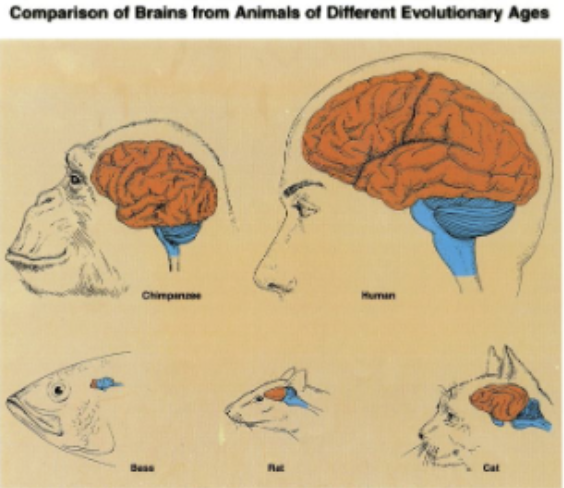
Cerebral Cortex
Mainly glia and cell bodies, contains 26 billion neurons
Larger size distinguishes humans from other animals
Frontal Lobe
speaking and muscle movements
making plans/judgments, emotional control
primary motor cortex
posterior part of frontal lobe that controls voluntary movements
Prefrontal Cortex
involved in formulating plans and making judgments
Parietal Lobe
surface of the body is “mapped” on the surface of the brain
includes primary somatosensory cortex
Occipatal Lobe
receives visual information from opposite visual field (primary visual cortex)
** remember optometrist/optics
Temporal Loobe
receives auditory information through primary auditory cortex
Dorsolateral prefrontal cortex (dlPFC)
working memory
cognitive flexibility
problem solving
rumination/worry
Ventromedial Prefrontal Cortex (vmPFC)
theory of mind (or “mindreading”)
self-perception
processing of risk and fear
behavioral control
decision making
Corpus Callosum
a large bundle of axons interconnecting corresponding regions of the association cortex on each side of the brain
Left Cerebral Hemisphere
More Analytical
recognition of events
Language
Mathematical computation
→ Projects to right side of body
Right Cerebral Hemisphere
More Creative
Synthesizing information
Pattern recognition
Ability to perceive whole things
Identifying emotional expression
→ Projects to left side of body
Limbic System
emotions and memory
Includes amygdala and hippocampus
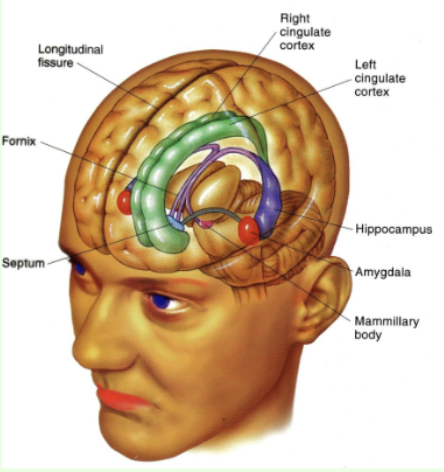
Amygdala
linked to fear and aggression
larger in conservatives
Hippocampus
important in memory
Anterior hippocampus
regulating behavioral inhibition in different contexts
PTSD linked to abnormal activity in this area
Anterior cingulate cortex (ACC)
Integrates cognitive and affective information
Processing conflicting information
Selective attention
Pain perception
Impulse control
Insular cortex
Body awareness
Sense of self
Emotional experience
Empathy, compassion
Addiction

Basal Ganglia
Upper part – action selection, motor sequencing, motor inhibition
Lower part – reward learning

Nucleus Accumbens
Reward center of the brain
dopamine from ventral tegmental area (VTA) and substantia nigra
Thalamus
Relay station for neural messages
directs messages to sensory receiving areas in the cortex; transmits replies to the cerebellum and medulla
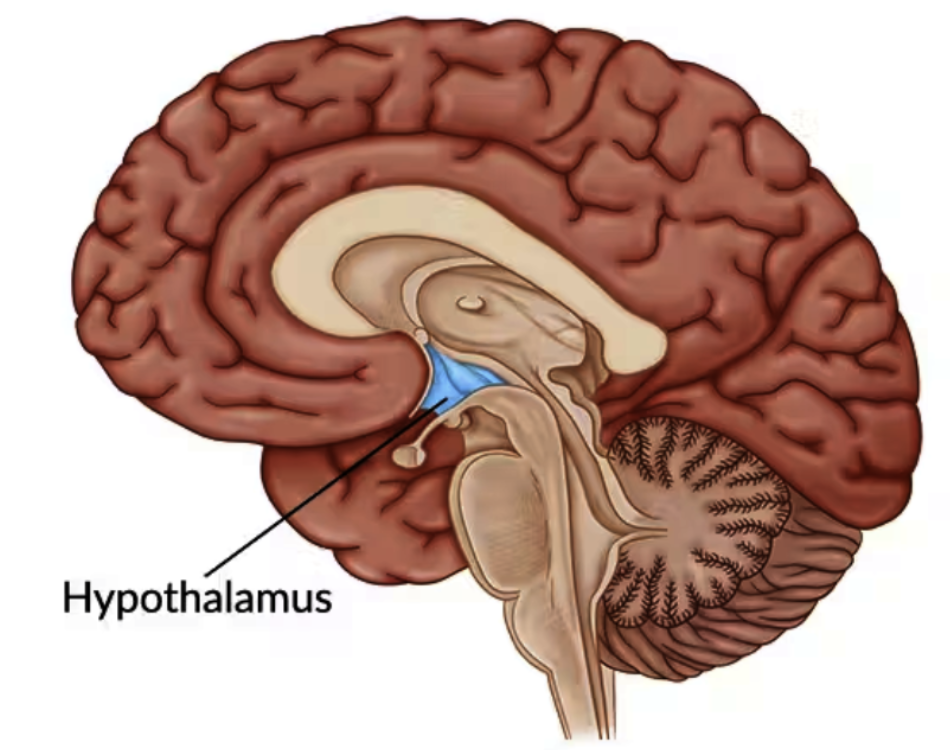
Hypothalamus
Survival behavior: “Four F’s”: fighting, feeding, fleeing, and mating
Controls:
autonomic nervous system
anterior and posterior pituitary glands
Pituitary gland
Secretes hormones that control other endocrine glands
ACC + PFC; Prefrontal cortex (PFC) + Anterior Cingulate Cortex (ACC) working together
guiding or inhibiting the limbic system
Sets goals
makes plans
directs actions
shapes emotions
Brain Stem
automatic survival functions

Reticular Formation
sleep
arousal
attention
vital reflexes
Pons
sleep and arousal
sensory analysis and movement
Medulla Oblongata
Controls vital functions, such as heart rate, breathing, and blood pressure
Cerebellum
voluntary movement and balance
Functional Connectivity
The brain works as a whole system
Attributing a function to just one part is a simplification
Default Mode Network (DMN)
brain areas that are active when participants in resting state