romantic to classical ballet/ 18th 19th centuries
 Call Kai
 Learn
 Practice Test
 Spaced Repetition
 Match
 Flashcards
 Knowt Play
1/22

Earn XP
Description and Tags
quiz #4
23 Terms
russian czars
made it possible for dance to flourish.
serfs
Who performed for their masters and visitors?
serf
An agricultural laborer bound to work on the lord’s estate
Bolshoi Theatre (Moscow)
Public performances can be traced back to 1759
The 1st dancing school was at a Moscow ORPHANAGE
Over 1/3 of the orphans became soloists in either or Moscow or St. Petersburg
Moscow separated itself from St. Petersburg because Moscow’s dance, opera, dramatic theatres were INFLUENCED BY THE CITY’S UNIVERSITIES; therefore, more superior.
Moscow had an advantage over St. Petersburg because it was allowed to develop more freely and was less influenced by the court
Maryinsky Theatre (St. Petersburg)
St. Petersburg was the nucleus of professional ballet theatre in Russia & was supported by the czars
Dance training was included in the military school’s curriculum
Imperial Ballet School was the direct ancestor of the present day VAGANOVA Choreographic Institute
Purpose of ballets? To glorify the power of the Russian state.
Maryinsky in St. Petersburg was closely associated with the court and included a training school
czar/tsar
A male monarch or emperor; The title of the ruler of Russia before 1917; a very powerful person
Arthur St. Leon
French dancer/choreographer/violinist/composer
Considered one of the best dancers of his time
Extraordinary ballon and elevation
Appointed company teacher at the Paris Opera Ballet (1851)
Developed a notation system
Divided his time between St. Petersburg and Paris
Choreographer of Coppelia (1870)
MARIUS PETIPA
born in France, but made fame in Russia
Son of a French dancer; brother to Lucien---both studied with their father
Acclaimed dancer in the Romantic form
While in Russia he created over 50 ballets: Don Quixote, La Bayadere, The Sleeping Beauty, Cinderella, Swan Lake, The Nutcracker
Collaborated with composer Peter I. Tchaikovsky and demonstrated Noverre’s theories of a cohesive ballet – set a new standard for classical ballet
Married Italian & French ballet in Russia and created a new style and school: THE RUSSIAN BALLET
Lev Ivanov
Russian dancer and choreographer born in Moscow
Admired for his character roles
Choreographed some of The Nutcracker for Petipa (who fell ill)
Choreographed Act II & Act IV of Swan Lake
Remained, unfortunately, in the shadow of Petipa (much like Blasis to Cecchetti)
Enrico Cecchetti
born in Rome into an Italian family
Dancer, mime, teacher
Most of career was connected with the Russian ballet
Developed a daily curriculum, which was his legacy to modern ballet
Authored book, A Manual of the Theory and Practice of Classical Theatrical Dancing (1922)-book became the curriculum basis of the Cecchetti Society, which was founded in England to train teachers
Pierina Legnani
born in Milan
Toured and danced in Russia
While in St. Petersburg, she performed 32 fouettés in Cinderella and then the famous 32 fouettés in Swan Lake
An inspiration to Russian dancers and they emulated her technical feats
Danced numerous Petipa ballets and set a new standard for the classical era
Virginia Zucchi
Italian dancer who studied with Carlo Blasis in Milan
Became famous in Russia & helped contribute to the development of the St. Petersburg ballet school
Teachings led the St. Petersburg ballet school to make greater demands of its dancers in terms of technical perfection
croise devant
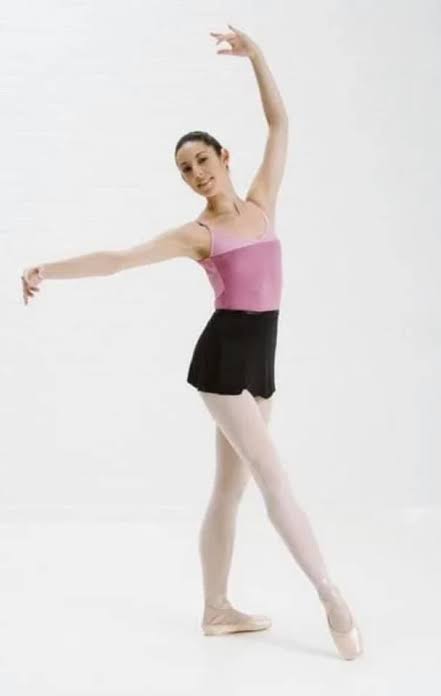
cd
croise derriere

cd
a la quatrieme devant

al
a la quatrieme derriere

al
a la seconde

ecarte devant

ed
ecarte derriere

ed
efface devant

ed
eface derriere

ed
epaule devant

ed
epaule derriere
