Urban 1
 Call Kai
 Learn
 Practice Test
 Spaced Repetition
 Match
 Flashcards
 Knowt Play
1/32

There's no tags or description
Looks like no tags are added yet.
33 Terms
Cityness
the quality, state, or essence of being or resembling a city
social interaction, movement of capital
Simone (reading)
urbanization
The physical environment and demographics
Processes of multi-scalar centralized population and infrastructure
growth that enhances urban characteristics and connectivity.
expansion of infrastructure, housing, roads, and the conversion of natural or agricultural land into built-up cities
urbanism
Way of life with distinctive values, attitudes
The social, cultural, and behavioral way of life experienced within an urban environment
The people and relations that are created in an urban environment
Lots of contradictions (kin yet foes) = Louis Wirth
population = relations but competitions and segregation
Density = social structure + community but comp for space
heterogeneity
Differentiation, social mobility , breakdown of rigid caste and class structures that leads to diverse social and cultural interactions.
modernity / modernism / modernization
Def: different aspects of how the world shifted from traditional, agrarian ways of life into the contemporary era (modern)
3 phases
Early, classical, contemporary
Spatial re/de contruction
It is paradoxical = it inspires hope buy also threatens to destory everything
Modernity something we experiences = berman
Where and built form of modernity = Lefebvre
all that is solid melts into air
Bermans Book on cultural and social experience of modernity
“To be modern is to find ourselves in an enviro~ment that promises us adventure, power, joy, growth, transformation of ourselves and the world-and, at the same time, that threatens to destroy everything we have, everything we know, everything we are""
need hope, but also threatens to destroy everything
Look at the past to see the future
the effect everyone - “unite all mankind”
it is paradoxical unity = “a unity of disunity”
Haussman's Paris transformation
Massive urban renewal that modernized a medieval Paris to capitalistic metropolis
creative destruction = destroy small streets = wider
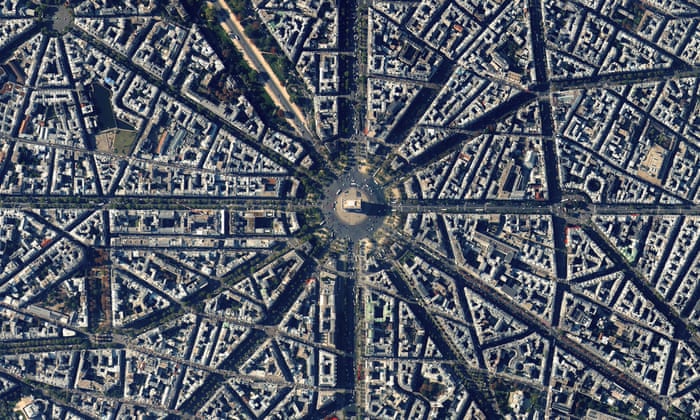
parks and green spaces
sewers = decreased cholera
all had the same style Haussmannuan facades
The buildings had a hierarchy from rich up to poor
Massive displacement with increased in rent and demolitions = moved to more working outer quarters
production of space
Def: space is not a neutral, passive container, it is an actively produced and continually shaped by social, political, and economic relations
Lefebvre
social/concrete (everyday life) vs abstract space (physical/built form of consumerism)
Socio-spacial processes through flow and movement
Method of reasoning = dialectical thinking
Space = shapes/limit activity, produced by social
representations of space
Physical or mental contractions of space
Maps
material / spatial practices
Physical day to day life of how space is used
how you walk across the street, the social norms,
spaces of representation
Applied meanings, area with emotional or cultural meaning doesn’t have to be physical
concrete space / abstract space
social/concrete (everyday life) vs abstract space (physical/built form of consumerism)
Abstract = limit how the audience can see = commodified and designed for commerce and profit
ex) shopping malls and plazas
Concrete = Lived and experienced by and for the people
messy, diverse, human expiernces
community garden or a public square for people
Lefebvre's conceptual triad

Conceived, perceived, and lived = triad of flow
Spatial practice
Physical day to day life of how space is used
Rep of Space
Created maps of space
Space of Representation/Representational space
Applied meanings
boosterism
Logan paper
The idea that do something just to help the city better/ often excessive promotion of a town
ex) When cities like Cape Town or global counterparts spend millions campaigning and painting an idealized picture of their infrastructure just to host the Olympic Games or World's Fair
use value / exchange value
Use value = what the consumer gains from it
House = A shelter and space to live
Exchange value =
House = money/rent
urban political economy
studies cities, towns, and other built-up areas + Shift from describe to understanding
Spatial structures, economic functions, and social dynamics of urban environments.
Gentrification, housing crises, transportation, urban sprawl, segregation, and climate resilience.
historical materialism
the physical structure, layout, and social divisions of a city are directly shaped by its economic system (the mode of production) and the need for capital accumulation
Built environment, class struggles, capitalism
the built environment as a physical manifestation of class struggle, capital accumulation, and historical change
It is for the capital not the people
ex) When industrial capitalism required faster circulation of goods and a way to move suburban workers to white-collar downtown jobs, post-WWII governments built massive highway systems. These highways physically tore through low-income, minority urban neighborhoods (which lacked political and economic power) to protect corporate downtown interests. The physical geography of the city was violently rewritten to serve the flow of capital.
mode of production
How we built or create a good - the social relations, the way of organizing,
Means +(distinction between) Social relations = mode
means of production
What we need to built or create a good = the resources
The owners VS Those who do not own resources
SURPLUS
Exploitation
primitive accumulation
the historical and ongoing process of separating workers from the means of production create a class of wage laborers
Enclosing common land => private
labour and surplus value (waged labor)
Waged Labour = capacity to work for a wage
Labour
The act
Labour power
Collective commodity
Surpluse Value
the difference between total exon value a worker creates and how much wage they are provided
wage must be less than what the product is worth
wage much be wage must be high enough for them to take part of the market
commodity fetishism
Appear as an object but is not seen as the full value and system of labour
ex) a tomato in a store
reproduction of labor power / social reproduction
Def: the “behind the scenes” of the labors daily and relations to sustain human life and promote the capitalistic processes
ex) transportation going to work
the built form
the physical elements, structures, and human-made arrangements that make up the tangible architecture of a city or settlement
capital switching (first circuit / second circuit / tertiary circuit)
the redirection of surplus capital from one sphere of the economy (or geographic location) to another to prevent or resolve crises of overaccumulation
Circuits of Capital
First Circuit
Production process (the production line)
Second Circuit
Reinvestment into the build environment = fixed
Third Circuit
labour/state
overaccumulation
there is to much capital relative to the opportunities available to reinvest in it
to fix = gotta change circus
suburbanization
The outward movement of people and capital into the outskirts of the city
type of spatial fix
Diversity, older houses, educated middle class values
loss of urban core ity = urban decay or econ polar
Suburbs
Political and geo independent = dependent on cities econ
frequently enforced racial and economic segregation, leaving minority and lower-income populations concentrated in underfunded central cities
spatial fix
Harvey
capitalism solves its economic crises and overaccump. by expanding into new geographical spaces and restructuring physical space
creative destruction
Capital must be fixed, but them becoming fixed (immobile, long lived) become a barrier for further accumulation = paradox
So you end up destorying it to recreate capital or leave for decay
fordism (as it relates to suburbanization)
Taylorism and Fordism =
Factory and manufacturing systems
New forms of disciplining and management for accumulation sake
Regime of accumulation
Effective demand (labours must be able to participate in market)
Reduce price = higher consumption
Social hierarchy within the production
Car production, decentralized industry,
Post WW11 = more subs
fordism (as it relates to suburbanization)
frequently enforced racial and economic segregation, leaving minority and lower-income populations concentrated in underfunded central cities
neoliberalism / neoliberalization
Neoliberalism is a political and economic ideology that favors free-market capitalism, privatization, deregulation, free trade, and reduced government spending
individuality = competition
neoliberal urbanism
Instead of treating cities as places to provide public services and social support, neoliberal urbanism treats cities as competitive business entities and command centers for global capital accumulation
An area built for competitive business and global capital accumulation
managerialism / entrepreneurialism
a foundational shift in how cities are governed, conceptualized, and managed under capitalism in Neoliberal
managerialism = City managers and bureaucrats act as service providers (WW2)
entrepreneurialism= (Harvey) market-oriented economic development, place promotion, and public-private partnerships (70s)