2.6 Subatomic Particles: Protons, Neutrons, and Electrons in Atoms
 Call Kai
 Learn
Learn Practice Test
 Spaced Repetition
 Match
Match Flashcards
 Knowt Play
1/16

There's no tags or description
Looks like no tags are added yet.
Name | Mastery | Learn | Test | Matching | Spaced | Call with Kai | Chat |
|---|
No analytics yet
Send a link to your students to track their progress
17 Terms
atomic mass unit (amu)
a unit used to express the masses of atoms and subatomic particles, defined as 1/12 the mass of a carbon atom containing 6 protons and 6 neutrons
protons and neutrons
Which two subatomic particles have a mass of approximately 1 amu?
electron
Which subatomic particle has an almost negligible mass?
equal, opposite
Charged subatomic particles are _____ (equal/opposite) in magnitude and ________ (equal/opposite) in sign.
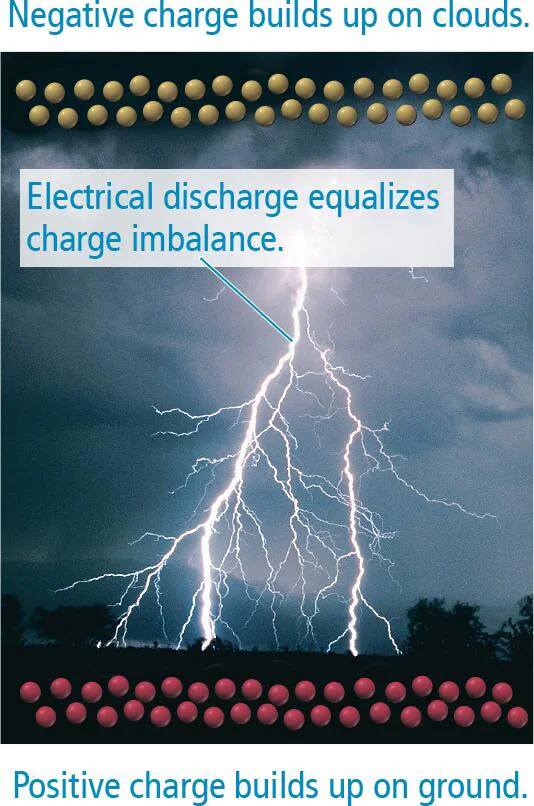
equalize
When matter does acquire charge imbalances, these imbalances usually ________ quickly, often in dramatic ways.
atomic number (Z)
the number of protons in an atom; defines the element
chemical symbol (X)
one- or two-letter abbreviation unique to each element listed directly below its atomic number on the periodic table
isotope
atoms with the same number of protons but different numbers of neutrons and consequently different masses
the same
Among an element’s isotopes, the size of the atoms is __________ (the same/different) because the nucleus where neutrons are located is minuscule compared to the atom itself.
natural abundance
the relative percentage of a particular isotope in a naturally occurring sample with respect to other isotopes of the same element
mass number (A)
number of protons (p) + number of neutrons (n)
AZX
isotope notation using mass number, atomic number, and chemical symbol
X-A
isotope notation using chemical symbol/name and mass number
ions
an atom or molecule with a net charge caused by the loss or gain of electrons
cations
positively charged ions
anions
negatively charged ions
differently than
Ions behave ______________ (similarly to/differently than) their corresponding atoms.