Abiotic Challenges: Water + Food
 Call Kai
 Learn
 Practice Test
 Spaced Repetition
 Match
 Flashcards
 Knowt Play
1/60

There's no tags or description
Looks like no tags are added yet.
61 Terms
Photosynthetic Organisms
Organisms that can produce their own food by performing photosynthesis. These organisms originated in water
Plant Adaptation to Land Methods
Reproducing in dry environment -alternation of generations, heterospory, seeds.
Structural support.
Acquiring water and transporting it throughout the organism.
Avoiding desiccation
Desiccation
The act of drying out
Nonvascular Evolution
The cuticle evolved to prevent desiccation.
bryophytes

bryophytes
small, non-vascular land plants (ex: mosses)
Vascular Evolution
Includes nonseed and seed plants:
Nonseed
evolution of lignin and vascular system
seedless vascular plants
Seed
evolution of heterospory and seeds
gymnosperms + angiosperms

evolution of nonseed plants to life on land?
evolved lignin and vascular system

evolution of seed (angiosperms + gymnosperms) plants to life on land?
evolution of heterospory (diff types of spores) and seeds

what did bryophytes use before the evolution of vascular tissue?
they moved water via diffusion down a concn gradient. it was v. slow
Vascular Tissue
Provides a conduit for water to move from the soil to the leaves.
xylem = moves water
phloem = moves food + sugars
Water Potential (Ψ)
Difference in potential energy between pure water and water in a system (helps move the water against gravity up a stem) Water moves from areas with higher to lower Ψ (from less negative → more negative)
4 types:
Osmotic potential
pressure potential
matric potential
gravitational potential
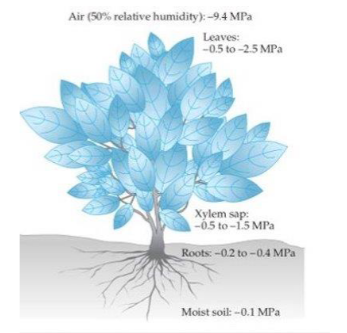
Gradient in Ψ
Provides the driving force for water to move from soil, through the plant, into the atmosphere.
Water moves from areas with higher to lower Ψ (from less negative → more negative) Air has lower water potential than soil

Osmotic Potential (Ψπ)
From dissolved solutes - major component in cells!
adding solutes will make the water go to area where they are cuz it lowers the water potential.
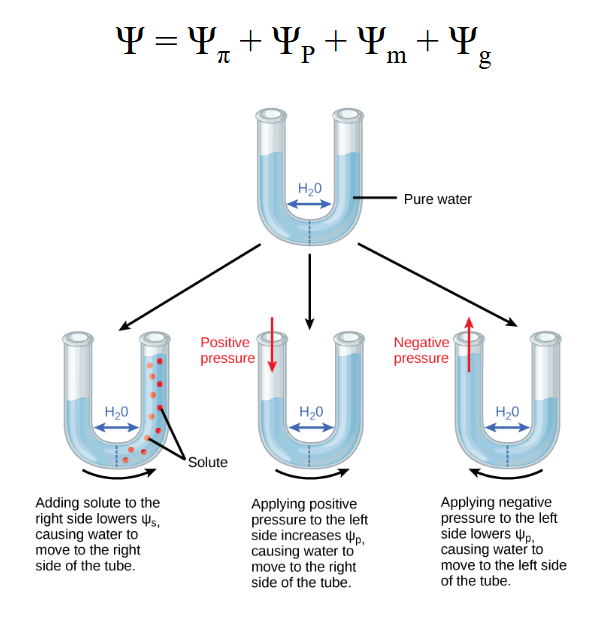
Pressure Potential (ΨP)
From hydrostatic and pneumatic pressures - turgor
applying positive pressure (squeezing) will cause the water to move to the other side
not super efficient

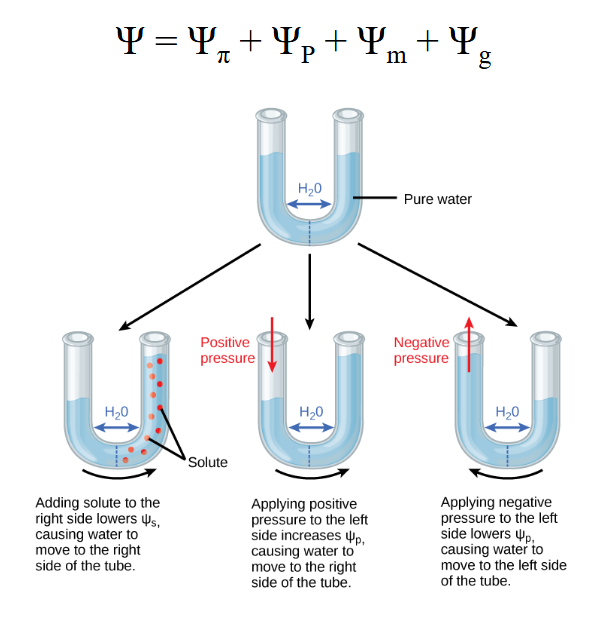
Matric Potential (Ψm)
Cohesive forces of water to other objects
applying negative pressure will make the water go up in that same side
H-bonds → works well
Gravitational Potential (Ψg)
Gravity so always pushing water down but we want it to go up

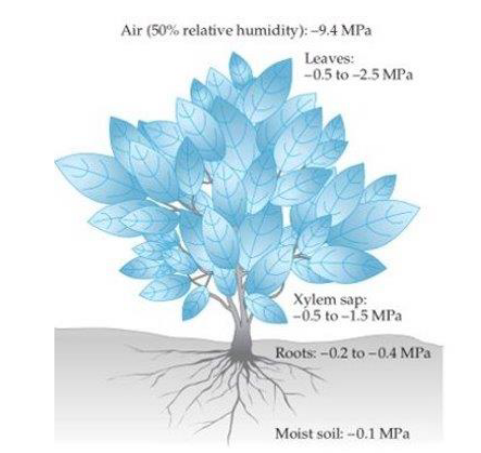
water potential goes from areas with _________ to areas with ________
higher → lower aka less negative → more negative
air has lower/more neg. water potential than soil → causes water to go up → can lead to evaporation from soil to atm
Mesophytes
Grow in regions with moderate soil moisture.
Affected by short, mild water shortages. Respond by closing stomata
Xerophytes
Grow in regions with frequent, extended droughts. (desert)
Possess adaptations to balance photosynthesis with water conservation
Hygrophytes
Grow in areas almost permanently saturated with water.
Must deal with hypoxic (low O2) conditions
what r some adaptations to drought and high temps (xerophytes)?
shading
avoidance strategy (ex: dormancy)
leaf abscission
underground water and food storage
bulb, corm, fleshy rhizome, tuber
physiological adapt.
leaf shedding, osmoregulation, resurrection, CAM photosynthesis
anatomical adapt
greater roots, succulent tissue in leaves/stems, photosynthetic stems
Shading
Plants grow some parts to shade other parts from sunlight (e.g. ribs in cacti) to reduce photosynthesis and evaporation.
adaptation to drought
Avoidance Strategy
Long-term seed dormancy can help plants avoid extensive droughts (e.g. desert superbloom)
drought adaptation
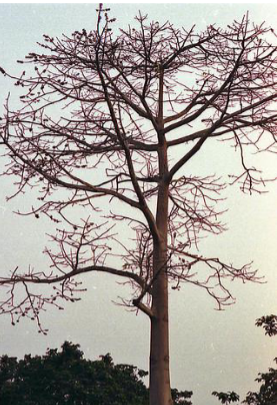
Leaf Abscission
During dry season: Helps plants minimize photosynthesis by shedding all their leaves.
water deficit triggers hormonal changes of older leaves, preserving weater for younger ones
(e.g. kapok tree)
Vegetative Dormancy
Some herbaceous plants die back during dry season, and only retain belowground structures (e.g. rhizomes, corm)
an adaptation to drought
what r some stem morphological adaptations plants use to adapt to drought?
help w underground water + food storage
bulbs
short, flat stem w food bearing leaves
corm
short, swollen underground stem w/ scaly leaves (asexual)
fleshy rhizome
thick underground stem
tuber
enlarged tip of rhizome contains food
Bulb
Short, flattened stem bearing fleshy, food-storage leaves (e.g. onions)

Corm
Short, swollen underground stem with thin, scally leaves protecting it (cormlets - asexual reproduction)

Fleshy Rhizome
Thick underground horizontal stem, serves as water and food storage (e.g. ginger)

Tuber
Enlarged tip of a rhizome containing stored foods (e.g. potato)

Morphological Adaptations
Adaptation of roots structure, modified leaves, etc
specialized roots that r alot more underground for drought conditions
succulent tissue in leaves/stems for drought
Anatomical Adaptations
Adaptation of photosynthetic stems, epidermal hairs, etc.
photosynthetic stems in cacti for drought
Physiological Adaptations
Adaptation of osmoregulation, CAM photosynthesis, etc
what types of roots can true xerophytes have?
have a greater root-to-shoot ratio than mesophytes (they invest more in roots). Can be:
shallow and extensive to take advantage of brief rains (ex: cacti have big SA to collect water when it rains).
Deep roots reaching the water table (phreatophytes w/ v. deep primary root to tap groundwater)
Succulent Tissue in Leaves or Stems
Reduced surface-to-volume ratio: reducing water loss while increasing water storage capacity.
sphereish so less SA:V. allows it to directly store more water in leaves and decrease evaporation in desert
Photosynthetic Stems
Can be only photosynthetic organ (e.g. cacti) or secondary for drought (e.g. palo verde)
ex: cacti have stem as photosynthetic organ so then leaves r free to do whatever, in this case they become prickly spines)
Osmoregulation
Involves the synthesis of solutes (e.g. proline) to lower the water potential of cells; preventing loss of turgor (hypotonic vs hypertonic)
used by some halophytes (“salt” plants that grow in saltwater or salty areas)
a physiological adaptation for true xerophytes
Halophytes
"Salt plants"
Resurrection Plants
Plants survive cellular desiccation via the coordinated modification of the cytoplasm and cell membrane. dies when dry and then come back to life when it rains (ongoing cycle)
a physiological adaptation of true xerophytes
Crassulacean Acid Metabolism (CAM) photosynthesis
A specialized form of C4 photosynthesis.
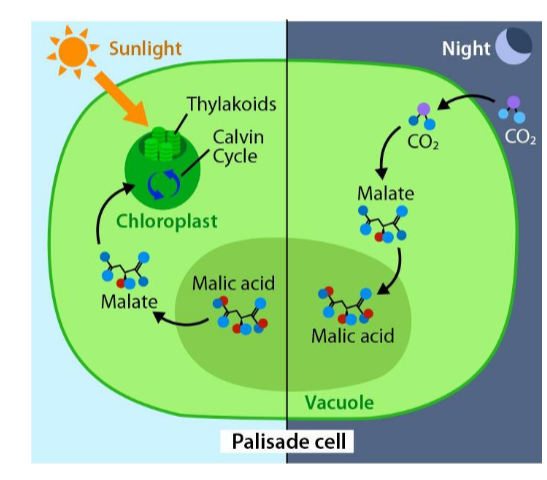
Temporarily separates the absorption of CO2 (nighttime) from the light-dependent reactions and Calvin cycle (daytime) which greatly decreases water loss cuz stomata opens at night!
carbon gets stored as malic acid in the vacuole and then converted to CO2 during day

what intermediate is stored btwn day and night time phases of CAM photosynthesis to make it possible?
carbon gets stored as malic acid in the vacuole, then converted to CO2 during the day
how is CAM diff than regular C3 photosynthesis?
in C3 → 2 phases happen at same time so stomata has to be open during the day
vs
CAM → can separate the daytime light-dep. phase and the nighttime absorption of CO2 so that stomata is open less and water loss is reduced

Hypoxia
Not enough oxygen when coping with wet conditions. This is dangerous because as soil becomes hypoxic, bacterial anaerobic metabolism produces toxic waste products, adding another stress
what happens in flooded soils?
oxygen diffusion is severely low cuz water compacts the soil and this also makes it hard for the roots to grow through the hard soil.
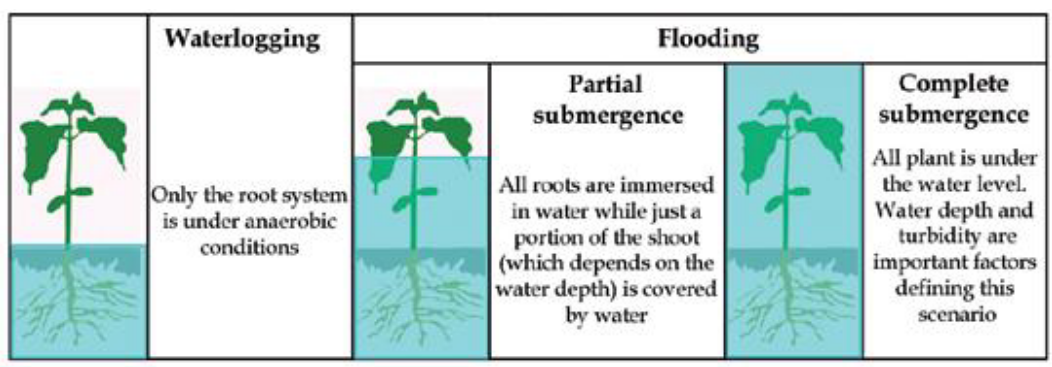
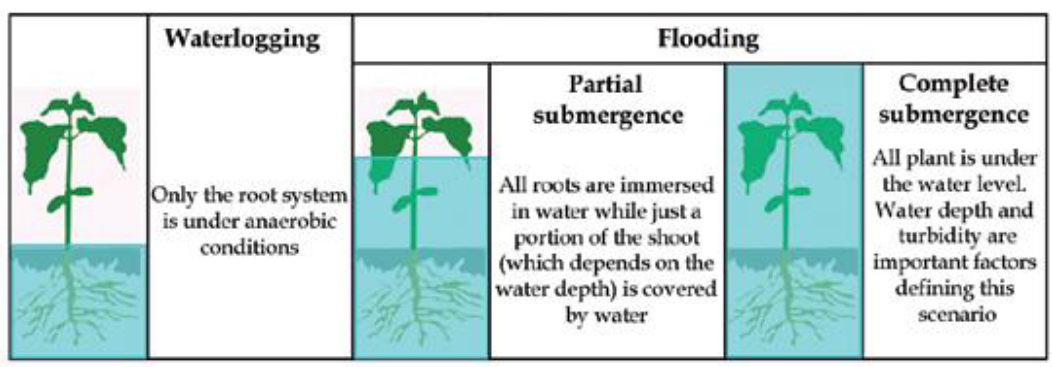
Waterlogging
Only the root system is under anaerobic conditions, stem is above water
Partial Submergence
All roots are immersed in water while just a portion of the shoot/stem is covered by water
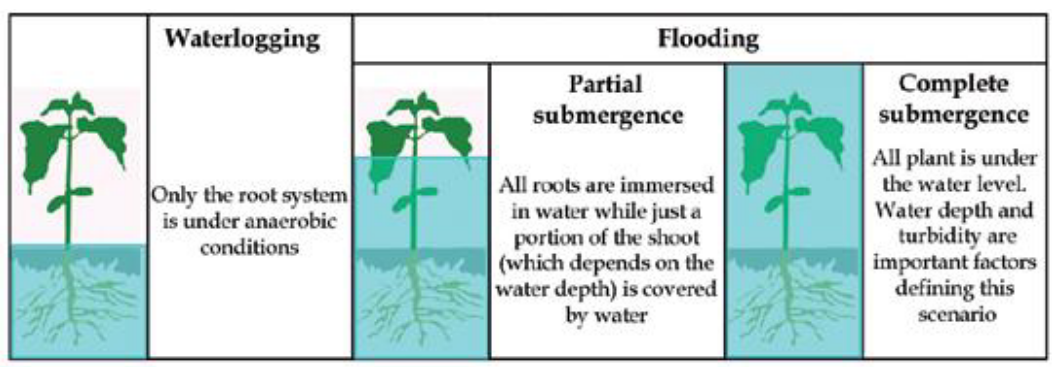
Complete Submergence
All plant is under the water level. Water depth and turbidity are important factors defining this scenario
what r some physiological responses of flood sensitive species being submerged in water?
they close stomata and reduce photosynthesis, reduction of water uptake → closure of aquaporins
this looks like drought-like responses cuz it can cause stuff like leaf abcission.
however flood tolerant species have better adaptations to maintain water relations
what r some morphological adaptations of flood tolerant species?
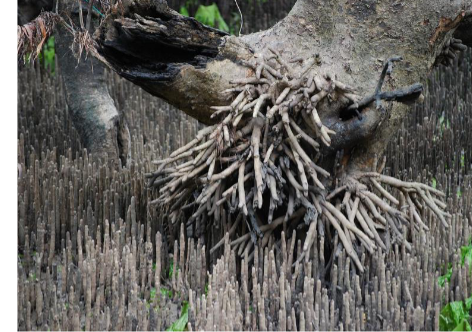
aerial root formation
roots that r above water and get oxygen
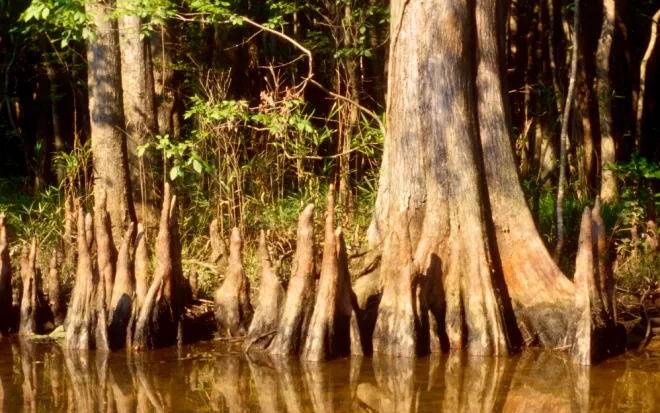
cypress knees
similar to aerial roots
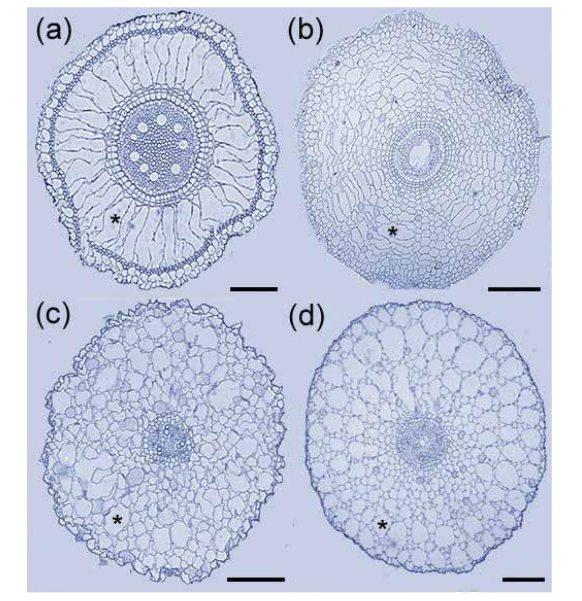
aerenchyma
modified spongy parenchyma that allows for gas exvhange btwn shoots and roots
lenticels
forms in aerial roots and lower parts of the stem to alloew for O2 intake
Aerial Root Formation
Several species form adventitious roots that remain above water and can transfer oxygen to submerged roots
a morphological adaptation of flood tolerant species
Cypress Knees
Vertical protuberances of roots that serve the same role as aerial roots
a morphological adaptation of flood tolerant species
Aerenchyma
Modified spongy parenchyma that allows for gas exchange between shoots and roots. This forms in the root cortex to allow diffusion of oxygen from the shoot.
a morphological adaptation of flood tolerant species
Lenticels
small porous structures that form in aerial roots and lower parts of the stem to allow for oxygen intake
a morphological adaptation of flood tolerant species

Aerenchyma generating mechanisms
Lysigeny
Schisogeny
Expansigeny

Lysigeny
Collapse and death of cells in the cortex
a type of aerenchyma generating mechanism
Schisogeny
The expansion of intercellular spaces
a type of aerenchyma generating mechanism
Expansigeny
Cell division and expansion
a type of aerenchyma generating mechanism
what r some anatomical + physiological adaptations in underwater roots?
Radial 02 loss (ROL) barrier
fermentative bypass
activation of antioxidant enzymes
Radial 02 Loss (ROL) Barrier
Prevents diffusion of oxygen to anoxic soil, retaining 02 in the root.
adaptation of underwater roots

Fermentative Bypasses
Ameliorate poisoning via accumulation of toxic byproducts. Specialized biochemical rxns to get rid of bad fermentation products from anaerobic bacteria
tolerance to toxins
adaptation of underwater roots
Activation of Antioxidant Enzymes
Helps buffer accumulation of reactive oxygen species by helping prevent oxidative stress + damage to roots.
adaptation of underwater roots