The milking parlour & mastitis
 Call Kai
 Learn
 Practice Test
 Spaced Repetition
 Match
 Flashcards
 Knowt Play
1/22

There's no tags or description
Looks like no tags are added yet.
23 Terms
What is the vacuum on to off ration of a milking machine?
2:1
on for twice as long as is off
Vacuum off, liner closed, milk flow stops & teat rests

Vacuum on, liner open, milk flows out

Label the cluster unit
Describe how milking machine works
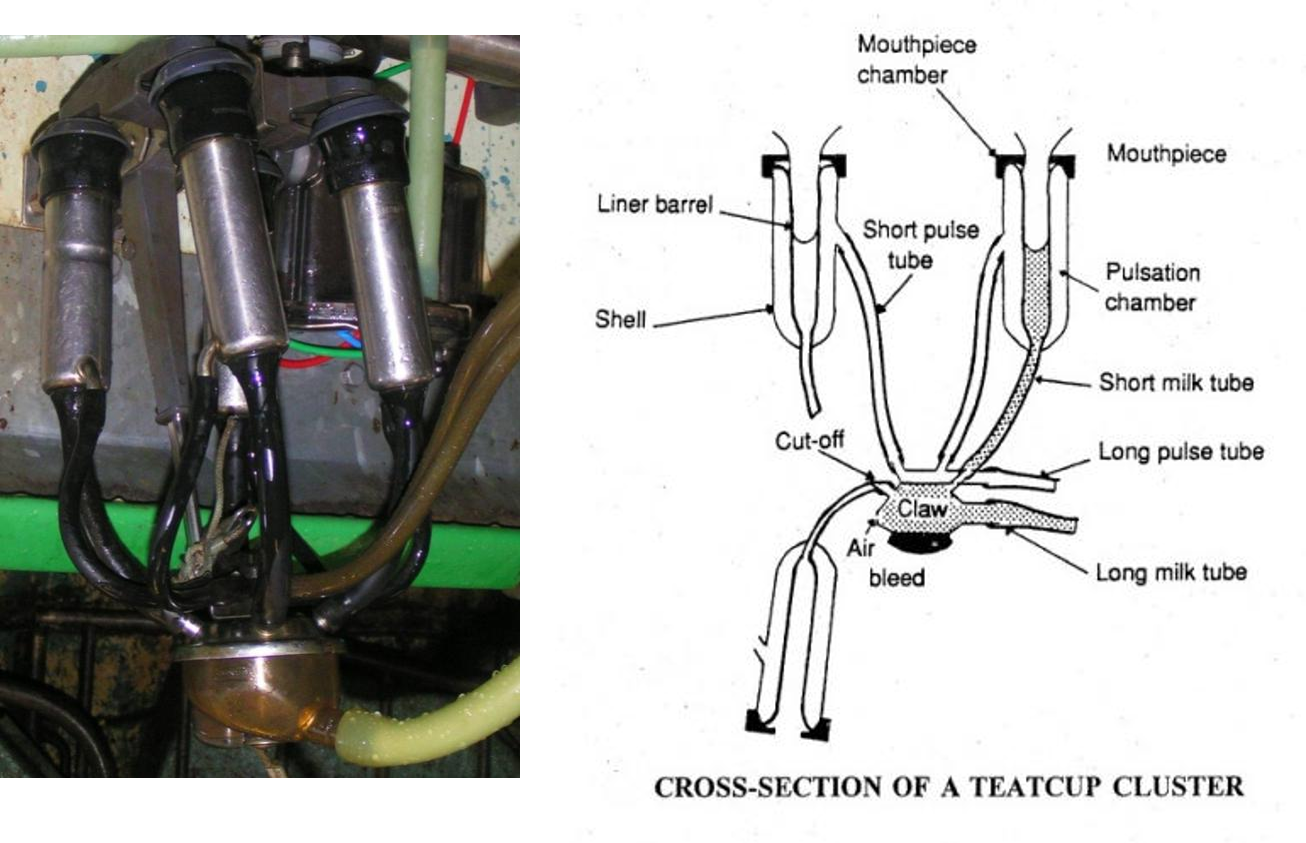

Milk removed by creating -ve pressure outside teat —> applying vacuum controlled by regulator
Cont. vacuum would stop circulation in teat so applied intermittently via pulsator liner —> opens & closes allowing teat to rest & circulation restored
How can the milking parlour cause mastitis?
Hygiene
Machine
Damage to teat & teat end can be vector for spread of infection
How can the milking machine cause transfer of infection?
Contam of liners
Wet milking —> milk flushed upwards into the teat canal, carrying pathogens with it
Inadequate vacuums
Fluctuating vacuums
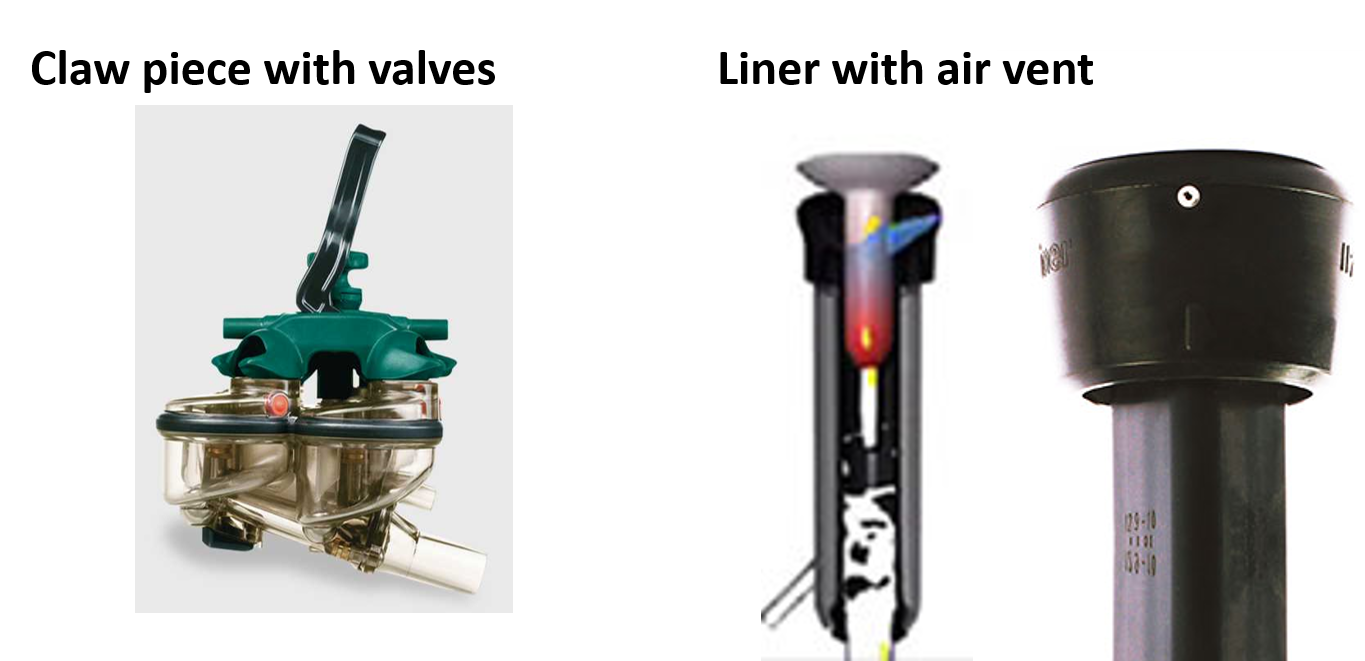
Blocked air bleed
cluster flush used between cows to prevent spread of pathogens
What are some common problems with milk machines?
Vacuum
Too high
Settings
Regulator not working (can hear hissing)
Fluctuating/ Inadquate
Inadequate pump
Holes in tubing
Liner slip/ clusters falling off
Inadequate vacuum reserve
Blocked air bleeds
Milk doesn't drain → teat end impacts/ fluctuating vacuums
Faulty pulsation
Poor circulation
Set too fast → poor circulation
Inadequate rest phase → poor circulation
holes in tubing → let air in & cause vacuum to fluctuate
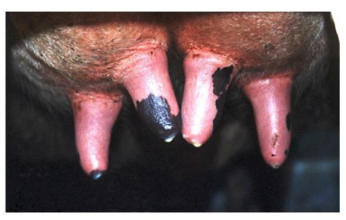
What will a faulty pulsator cause?
Blue teats
What simple tests can you carry out on milking machine?
Examine clusters
Blocked air bleeds
Cleanliness of liners
Wear of liners —> change q. 4-6 months / every 2000-2500 milks
Perishing/Holes in tubing
Vacuum gauge —> level & watch whilst milking and observe for fluctuations
Liners slipping —> see, hear “shh” sound inadequate vacuum (5%)
Watch cows
Paddling / kicking —> over milking, faulty vacuum / pulsators, excess vacuum, hard liners
Teat score
Ask wash up routine
Ask when serviced —> look @ invoice
List some things you can do for milking parlour hygiene?
Gloves
Premilking teat prep
Fore-milking (drawing out some to inspect, can make milk faster) —> early detection of mastitis & stim of milk let down reflex
Teat disinfection —> reduce mastitis esp strep uberis & E.coli (environmental)
Post milking teat dipping
Loafing time
Parlour management of clinically / subclinically infected cows
Milking order
Cluster disinfection
Parlour wash up routine
What common disinfectants can be used for the udder?
Chlorohexidine (non irritant, 0.35 to 0.5%)
Iodophors (0.1- 0.5%)
Chlorine dioxide (active in presence of faeces)
Hypochlorite (bleach, irritant, 4%)
check conc., contact time 30sec-2mins, thorough teat coverage (often not w/ sprays)
How can you teat prep pre-milking?
Disinfectant wipe
Wash (+ disinfect) & dry
Spray or dip cup with disinfectant
Foaming products
Teat brush

Ho does the milk ejection reflex work?
Oxytocin release from posterior pituitary from teat stimulation → contraction of myoep. cells in mammary gland
Secretion delay determines milking routine
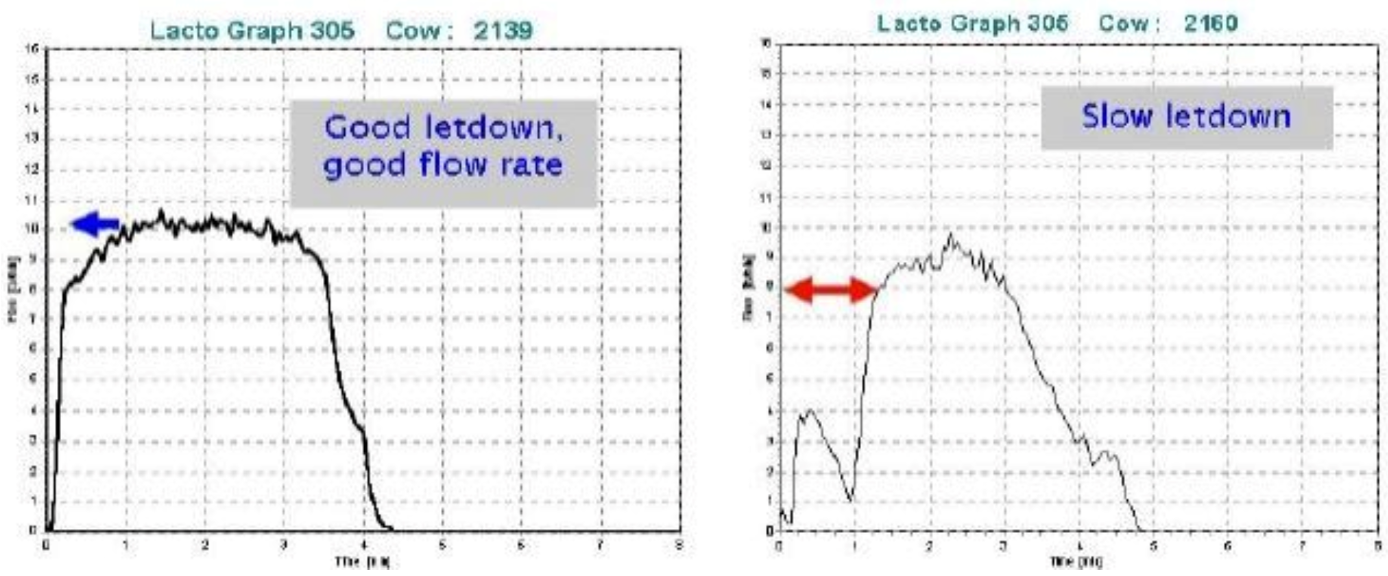
What does good letdown of milk flow look like? What can slow let down lead to?
Slow let down if there is not enough preparation (biphasic milking)
Increases teat end damage
Outline the milking routine
Clean (pre-dip / wipe)
Identify animal
Foremilk —> inspect for clots (legally required)
Leave 30-45 secs for oxytocin release & action
Wipe if pre-dipped
Cluster on
Check if milk flow reduced?
Cluster remove
Post milking teat dip applied
Loafing time to allow teat sphincter to close?
How is exchange of milk between quarters prevented
What is this showing?
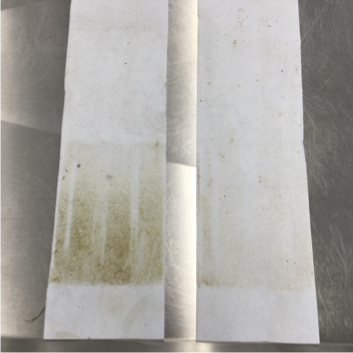
Milk filter analysis / bacteriology
Remove filter before cleaning cycle to get true picture
Changed q. milking
What is the purpose of post milking teat dipping?
Remove bacteria transferred to teats during milking
Key preventionof contagious pathogens
Staph aureus
Strept dysgalactiae
Strept agalactiae
Widely practiced
What are some teat dips?
Disinfectants
iodine
chlorhex
lactic acid
chlorine dioxide
ammonium compounds
Emollients for skin condition
Dye?
How are teat dips applied?
Dip pot
Spray
Cluster
How can loafing time help with mastitis?
Allow teat sphincter closure post milking
Prevent environmental infections
(30 mins in clean area but not if have lameness problems —> exacerbated)
What milking order would you do in an ideal world?
Milk least likely to be infected & most susceptible first
HEIFERS
FRESH CALVERS (do not know status?)
HIGH YIELDERS
LOW YIELDERS
HIGH CELL COUNT COWS
MASTITIC COWS
N.B STILL NEED TO DISINFECT CLUSTER
Identify cows w/ tail tape
What should you check to ensure appropriate cluster disinfection?
Water cleanliness
Chemical concentration
Dispensed volume
What problems can you get w/ parlour wash routine?
Not hot enough (>60C so tank needs to be 85-90C)
Not enough hot water 10-12L per unit
If Staph aureus —> hot wash every milking
How should you carry our a parlour investigation?
Milking machine
Observe cows
Observe vacuum gauge
Listen for liner slip
Teat score (minimum 20% of herd)
Observe parlour hygiene routines
Management high cell count & mastitic cows
Parlour wash up routine
Take milk samples for bacteriology