Chapter 10 Notes
 Call Kai
 Learn
Learn Practice Test
 Spaced Repetition
 Match
Match Flashcards
 Knowt Play
1/139

Earn XP
Description and Tags
axial muscles
Name | Mastery | Learn | Test | Matching | Spaced | Call with Kai | Chat |
|---|
No analytics yet
Send a link to your students to track their progress
140 Terms

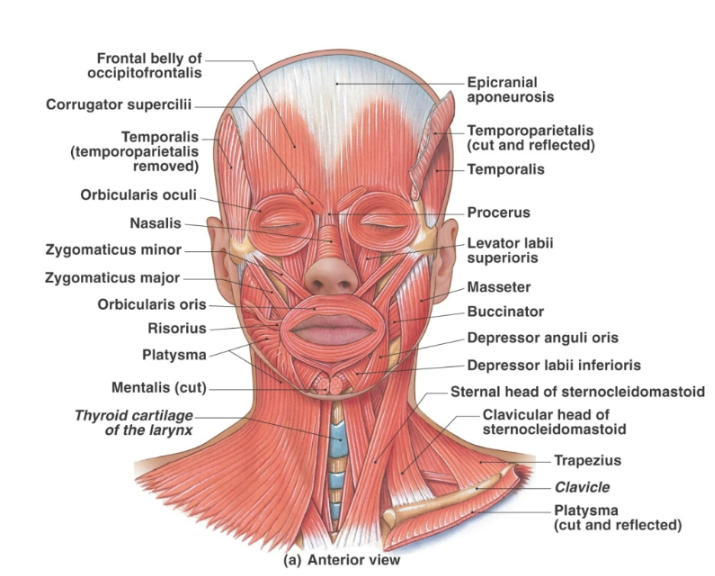
Epicranius (Occipitofrontalis)
Bipartite scalp muscle consisting of the frontalis and occipitalis
connected by the galea aponeurotica.
Alternating actions pull the scalp forward and backward

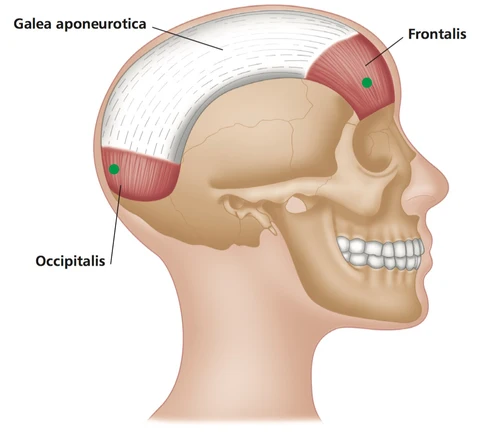
Galea aponeurotica
Cranial aponeurosis that connects the frontalis and occipitalis muscles
aponeurosis: a broad, flat sheet of dense fibrous connective tissue that attaches muscles to bones or other muscles.


What is the Frontalis (Frontal Belly) Origin
Galea aponeurotica

What is the Frontalis (Frontal Belly) Insertion
Skin of eyebrows and root of nose


What is the Frontalis (Frontal Belly) Action
Raises the eyebrows and wrinkles the forehead horizontally


Occipitalis (Occipital Belly) Origin
Occipital and temporal mastoid bones


Occipitalis (Occipital Belly) Insertion
Galea aponeurotica


Occipitalis (Occipital Belly) Action
Fixes the aponeurosis and pulls the scalp posteriorly


Orbicularis Oculi Origin
Frontal and maxillary bones and ligaments around orbit


Orbicularis Oculi Insertion
Tissue of eyelid


Orbicularis Oculi Action
Closes the eye and produces blinking and squinting


Zygomaticus major Origin
Zygomatic bone


Zygomaticus major Insertion
Skin and muscle at corner of mouth
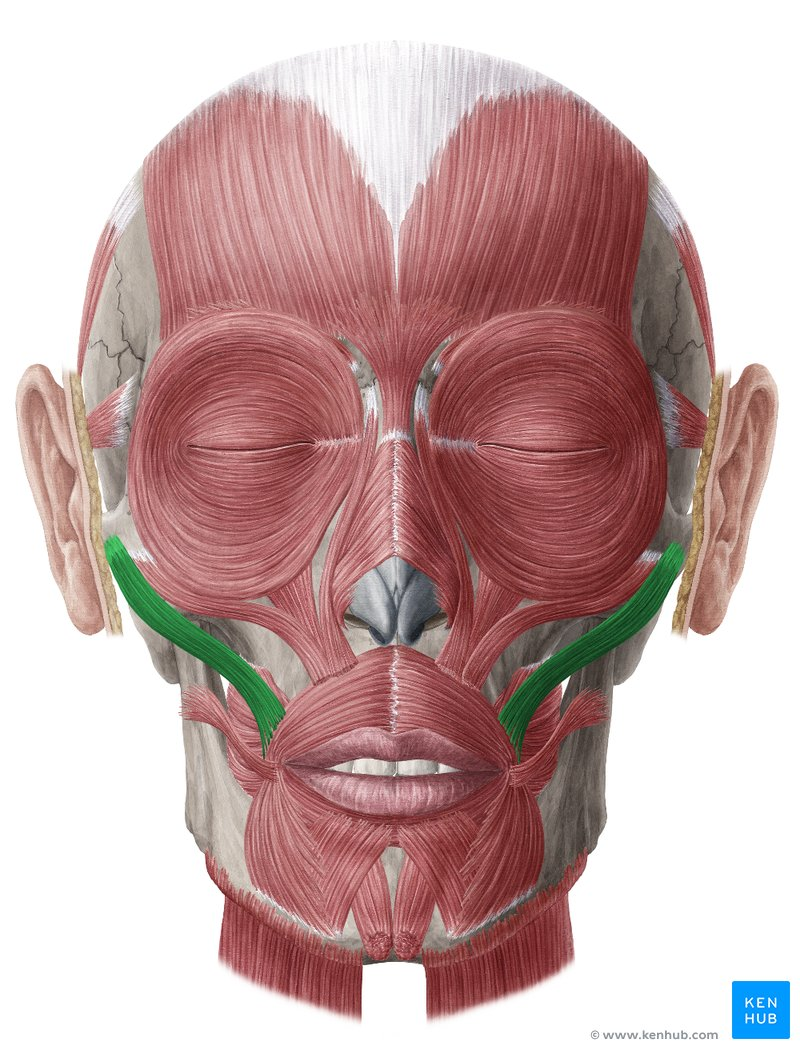

Zygomaticus major Action
Raises lateral corners of mouth upward as in smiling

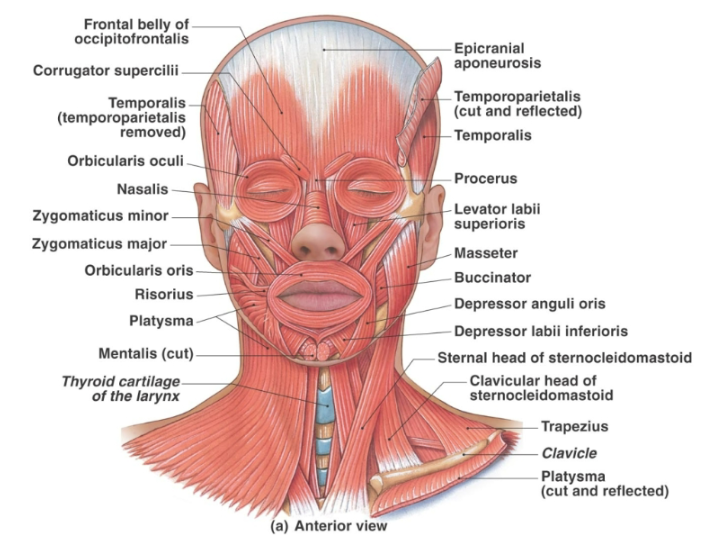
Risorius Origin
Lateral fascia associated with masseter muscle

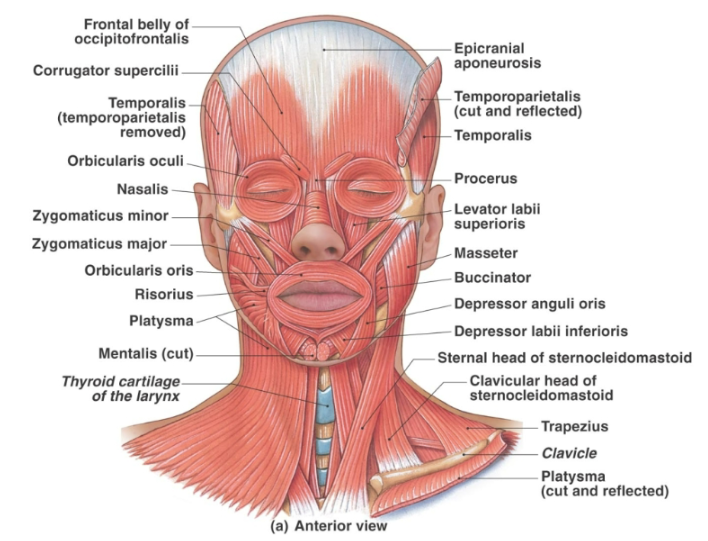
Risorius Insertion
Skin at angle of mouth


Risorius Action
Draws corner of lip laterally and tenses lips


Orbicularis Oris Origin
Arises indirectly from maxilla and mandible with fibers blended with other facial muscles

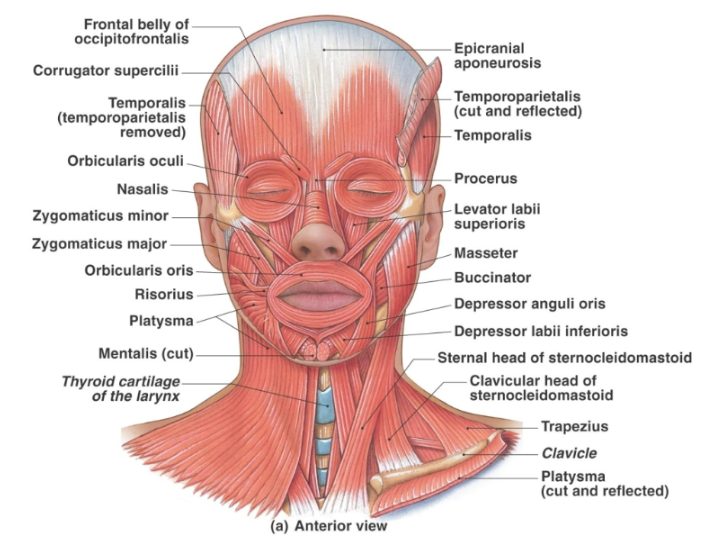
Orbicularis Oris Insertion
Encircles mouth and inserts into muscle and skin at angles of mouth

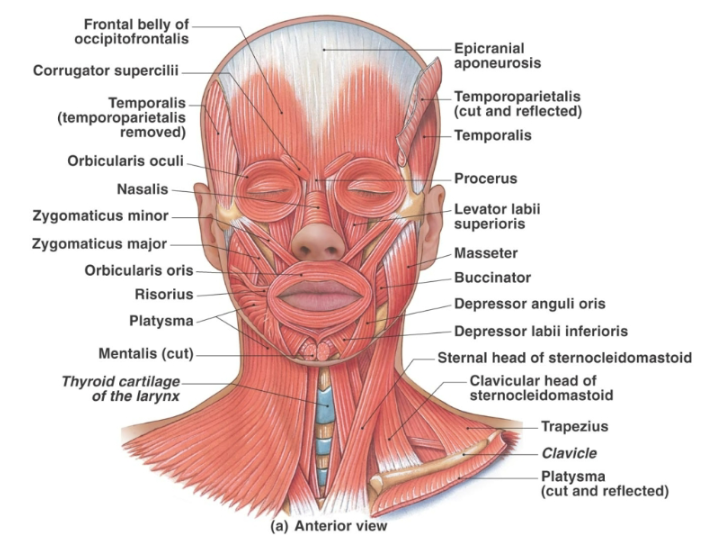
Orbicularis Oris Action
Closes, purses, and protrudes lips as in kissing and whistling


Mentalis Origin
Mandible below incisors


Mentalis Insertion
Skin of chin


Mentalis Action
Protrudes lower lip and wrinkles chin


Buccinator Origin
Molar region of maxilla and mandible
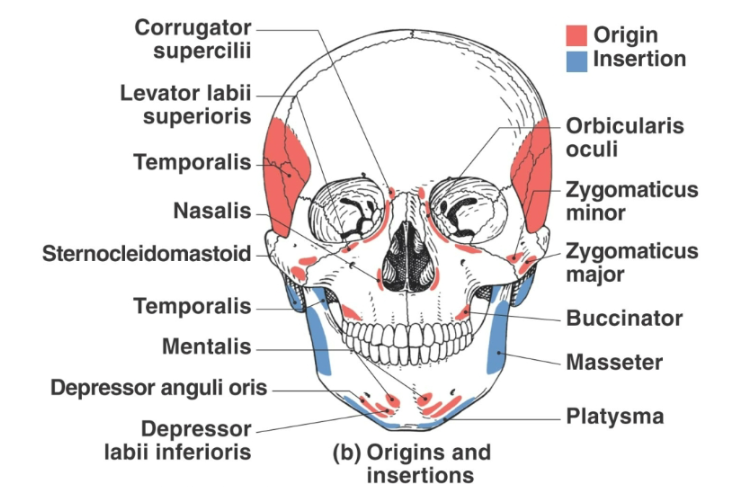

Buccinator Insertion
Orbicularis oris


Buccinator Action
Compresses cheek and keeps food between grinding surfaces of teeth during chewing
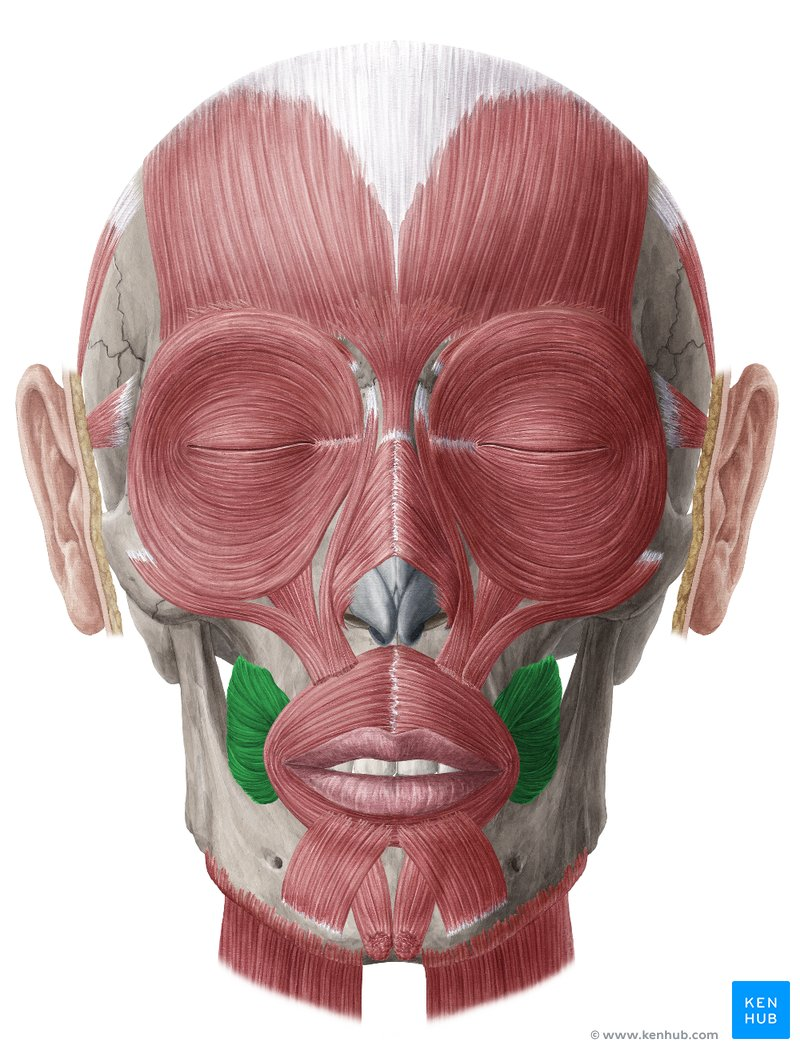

Platysma Origin
Fascia of chest over pectoral muscles and deltoid

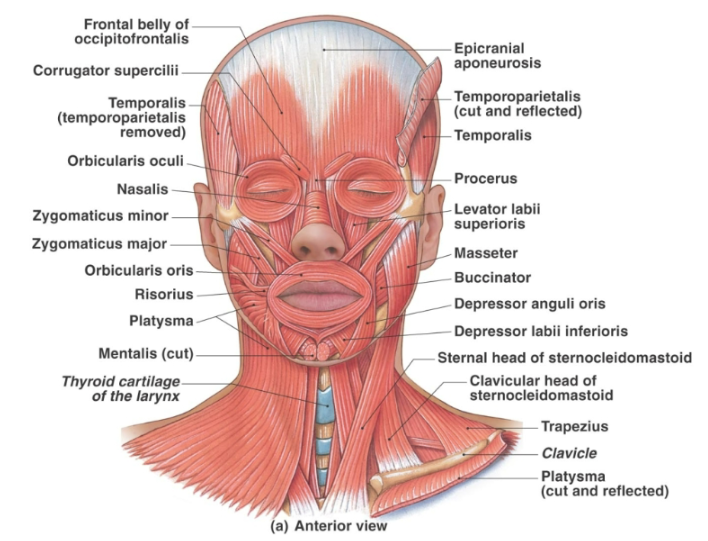
Platysma Insertion
Lower margin of mandible and skin and muscle at corner of mouth


Platysma Action
Helps depress mandible, pulls lower lip down, and tenses skin of neck
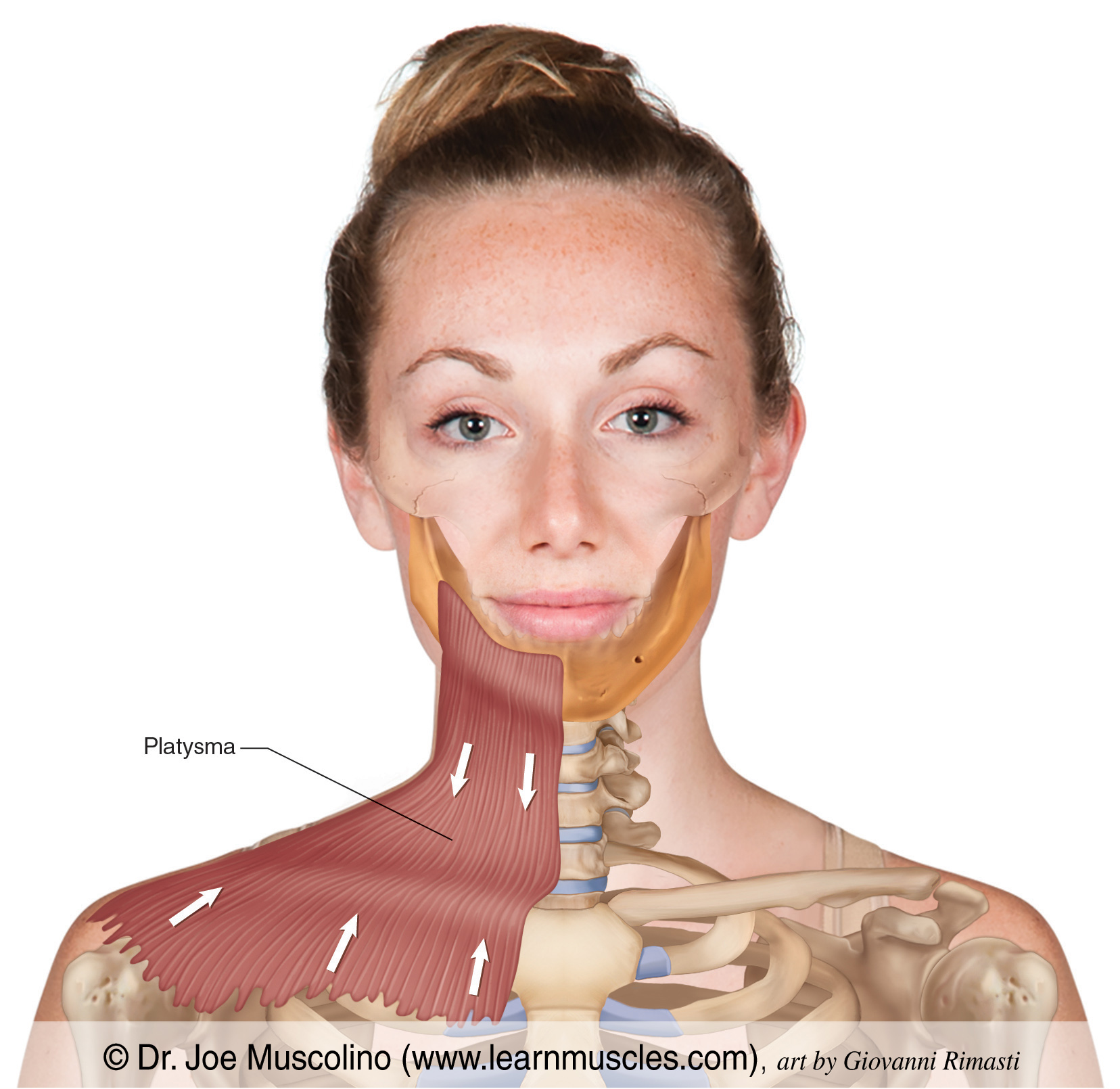

Masseter Origin
Zygomatic arch and zygomatic bone


Masseter Insertion
Angle and ramus of mandible


Masseter Action
Prime mover of jaw closure and elevates mandible


Temporalis Origin
Temporal fossa


Temporalis Insertion
Coronoid process of mandible through a tendon passing deep to zygomatic arch


Temporalis Action
Closes jaw and elevates and retracts mandible


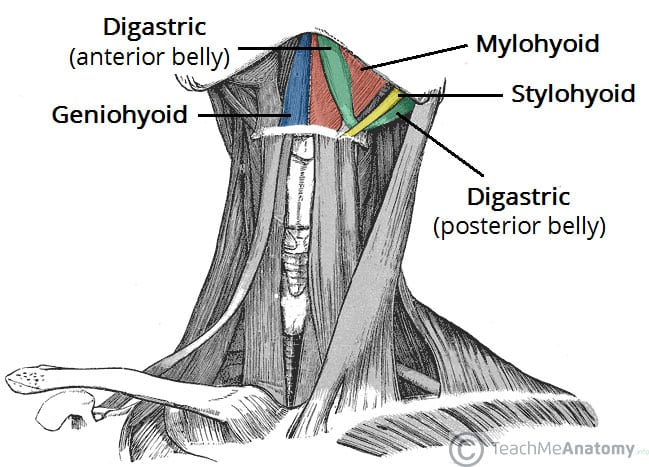
Suprahyoid Muscles
Muscles superior to the hyoid that…
form the floor of the oral cavity
anchor the tongue
elevate the hyoid
move the larynx during swallowing


Digastric Origin
Lower margin of mandible at anterior belly and mastoid process of temporal bone at posterior belly


Digastric Insertion
Connective tissue loop to hyoid bone


Digastric Action
Opens mouth and depresses mandible
elevates and steadies hyoid during swallowing and speech
Both the geniohyoid and the digastric muscles depress the jaw

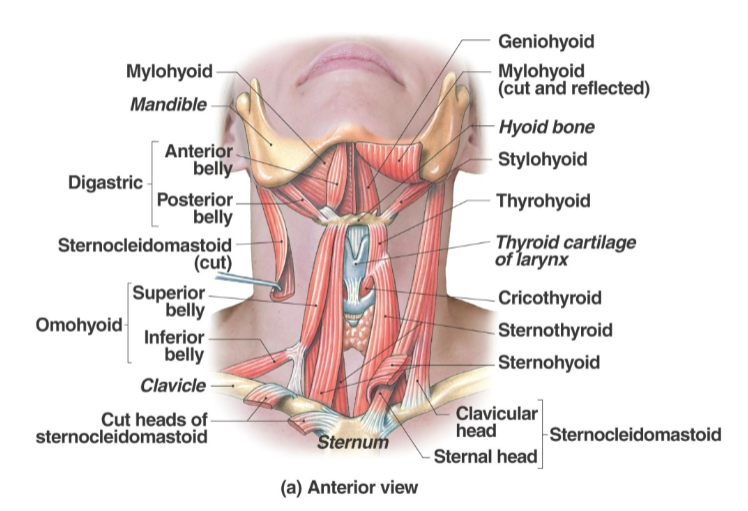
Mylohyoid Origin
Medial surface of mandible


Mylohyoid Insertion
Hyoid bone and median raphe


Mylohyoid Action
Elevates hyoid bone and floor of mouth to force food bolus into pharynx
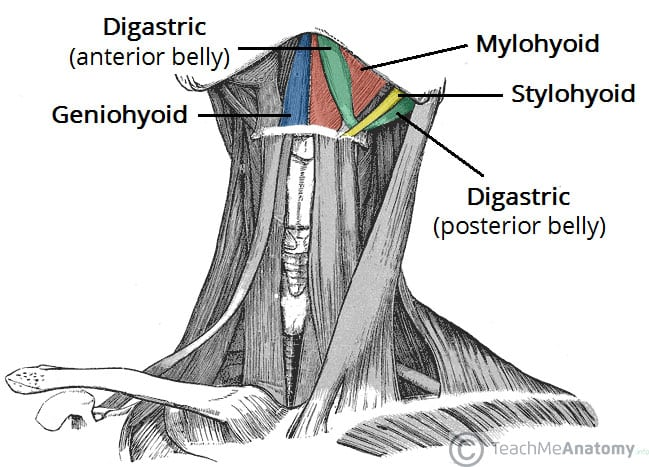

Geniohyoid Origin
Inner surface of mandibular symphysis


Geniohyoid Insertion
Hyoid bone
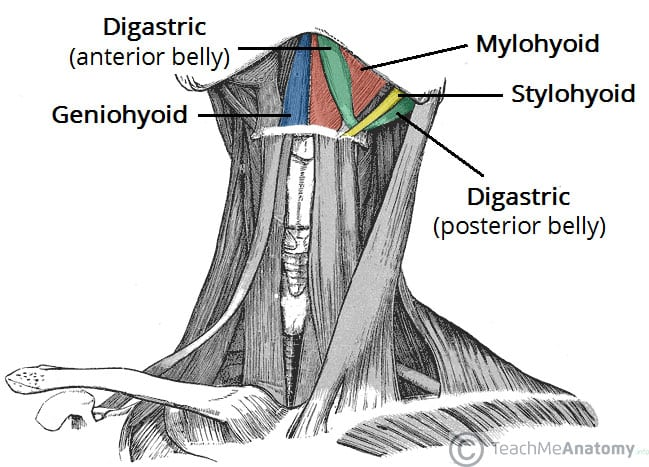

Geniohyoid Action
Pulls hyoid bone superiorly and anteriorly and shortens floor of mouth during swallowing

Infrahyoid Muscles
Straplike muscles that depress the hyoid bone and larynx during swallowing and speaking
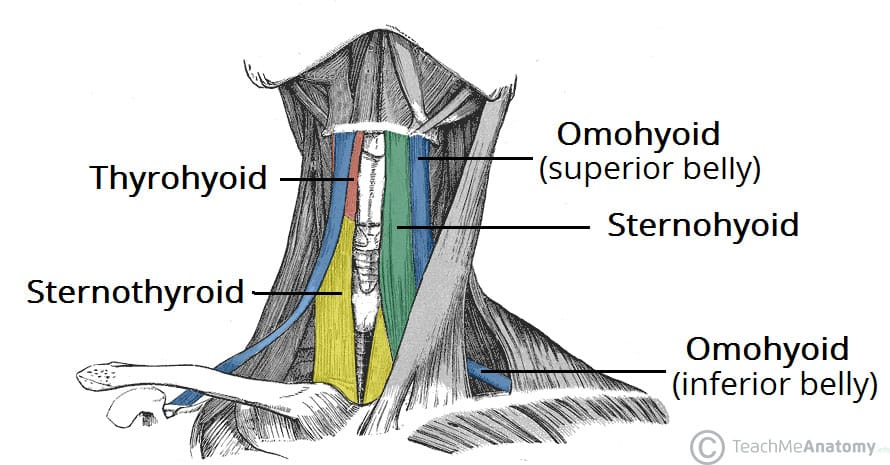
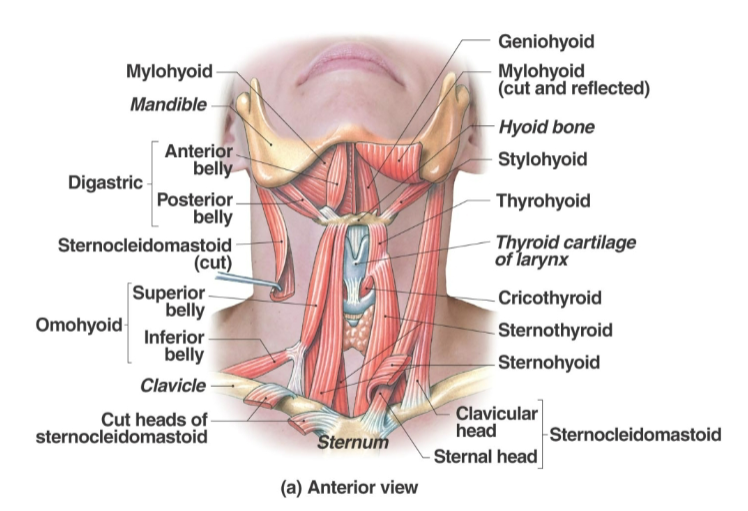
Sternohyoid Origin
Manubrium and medial end of clavicle


Sternohyoid Insertion
Lower margin of hyoid bone


Sternohyoid Action
Depresses larynx and hyoid bone when mandible is fixed
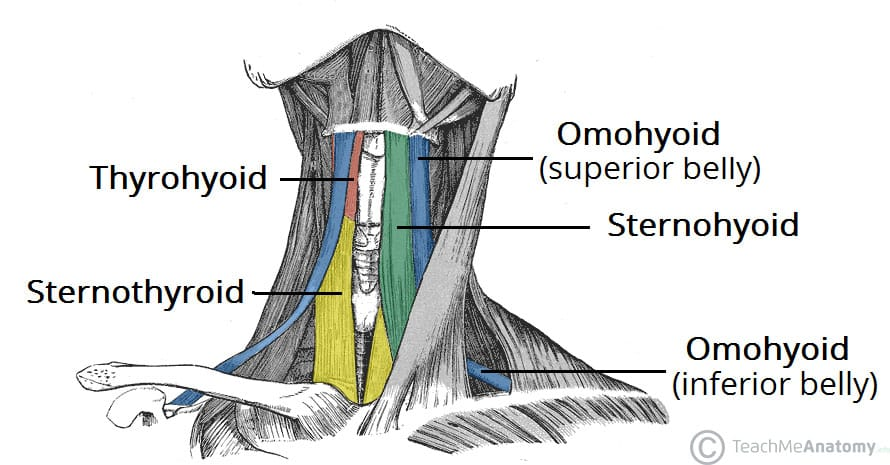
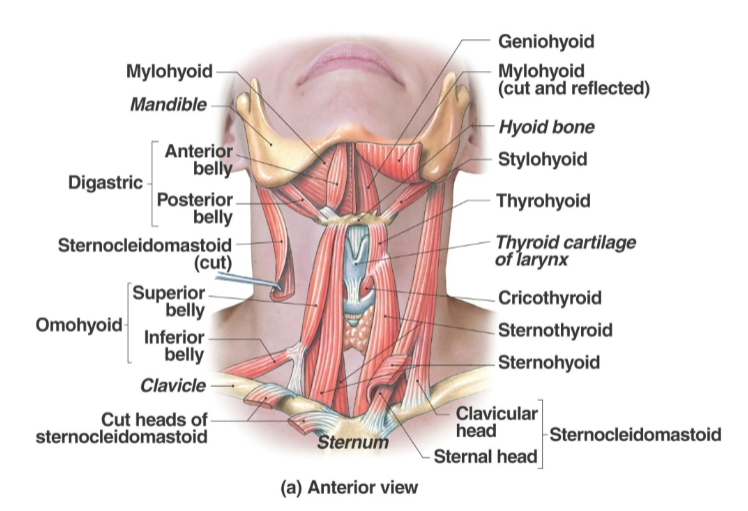
Sternothyroid Origin
Posterior surface of manubrium of sternum


Sternothyroid Insertion
Thyroid cartilage


Sternothyroid Action
Pulls larynx and hyoid bone inferiorly (depresses)

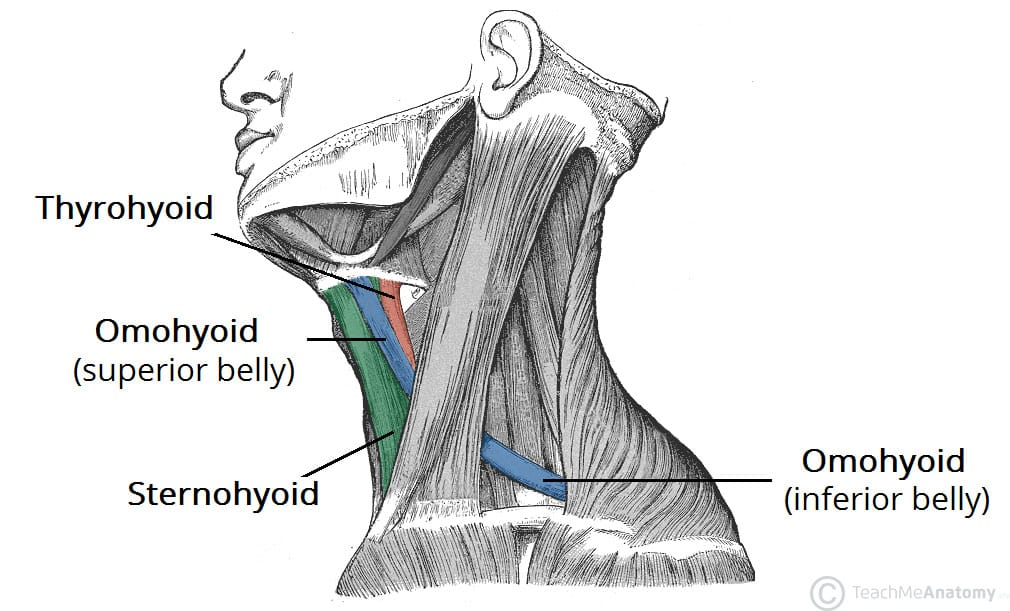
Omohyoid Origin
Superior surface of scapula


Omohyoid Insertion
Hyoid bone at lower border


Omohyoid Action
Depresses and retracts hyoid bone


Thyrohyoid Origin
Thyroid cartilage

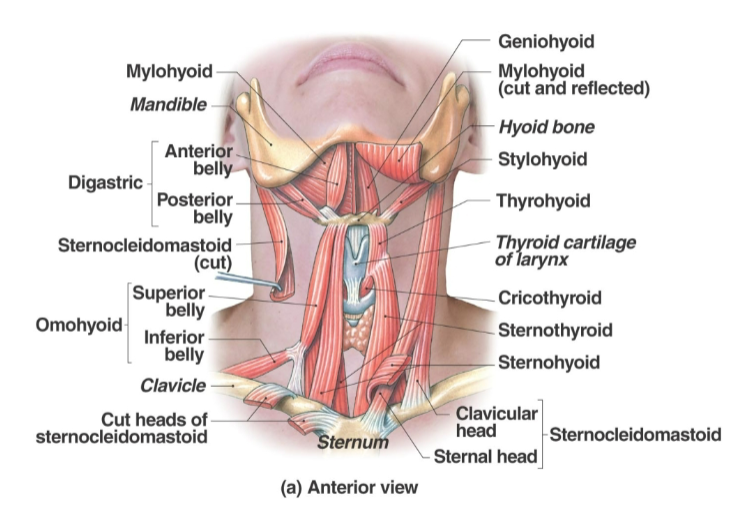
Thyrohyoid Insertion
Hyoid bone


Thyrohyoid Action
Depresses hyoid bone or elevates larynx when hyoid bone is fixed
Thyrohyoid is the only infrahyoid that elevates the larynx


Sternocleidomastoid Origin
Manubrium of sternum and medial portion of clavicle


Sternocleidomastoid Insertion
Mastoid process of temporal bone and superior nuchal line of occipital bone


Sternocleidomastoid Action
Flexes and laterally rotates the head.
Both sides flex neck while one side rotates head toward opposite shoulder and laterally flexes to same side
The muscle that flexes (contracts) is on the side opposite to where your face turns

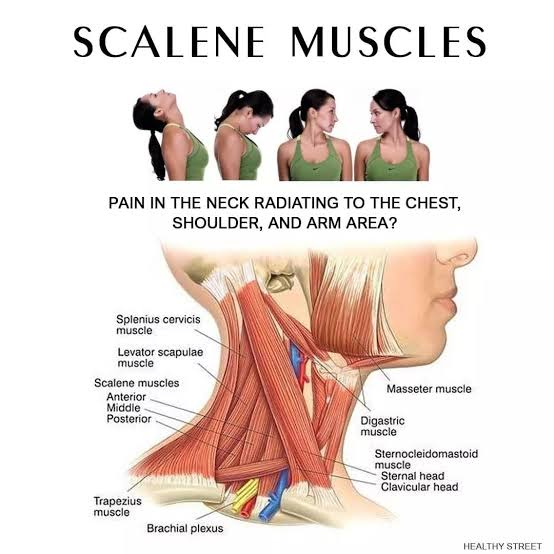
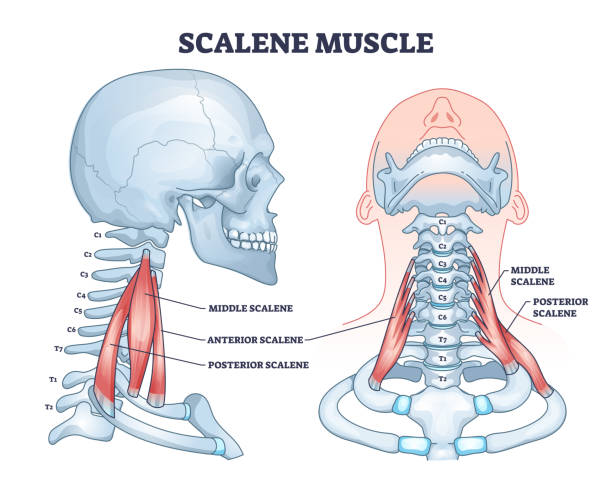
Scalenes Origin
Transverse processes of cervical vertebrae


Scalenes Insertion
Anterolateral surfaces of first two ribs


Scalenes Action
Elevate first two ribs during inspiration and flex and rotate neck

Splenius Origin
spinous processes of C7 through T6


Splenius Insertion
Mastoid process and occipital bone for capitis and transverse processes of C2 through C4 for cervicis


Splenius Action
Extends or hyperextends head. One side rotates and laterally bends head toward same side


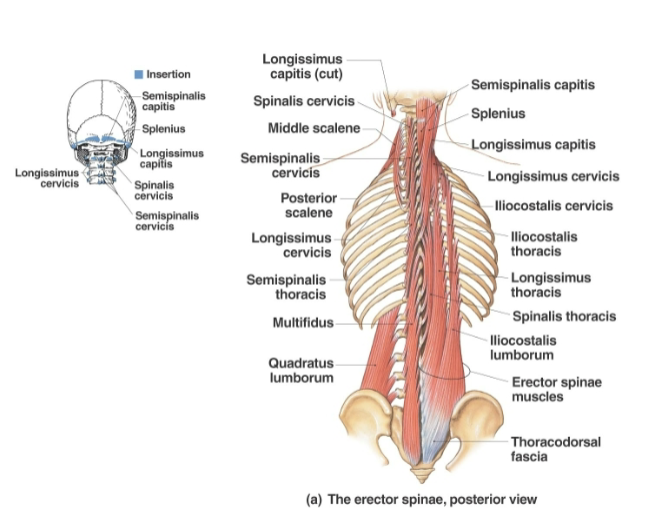
Erector Spinae
Intrinsic back muscle group and prime mover of back extension
consisting of…
iliocostalis
longissimus
spinalis
Lateral to medial order = Iliocostalis, Longissimus, Spinalis (I Like Spaghetti)


Iliocostalis Position
Most lateral muscle group of erector spinae extending from pelvis to neck


Iliocostalis Origin
ribs 3-6 for cervicis
inferior six ribs for thoracis
Iliac crests for lumborum


Iliocostalis Insertion
transverse processes of C6-C4 for cervicis
Angles of ribs for lumborum and thoracis


Iliocostalis Action
Extends and laterally flexes vertebral column and maintains erect posture


Longissimus Position
Intermediate erector spinae muscle group extending from lumbar region to skull


Longissimus Origin
Transverse processes of lumbar through cervical vertebrae
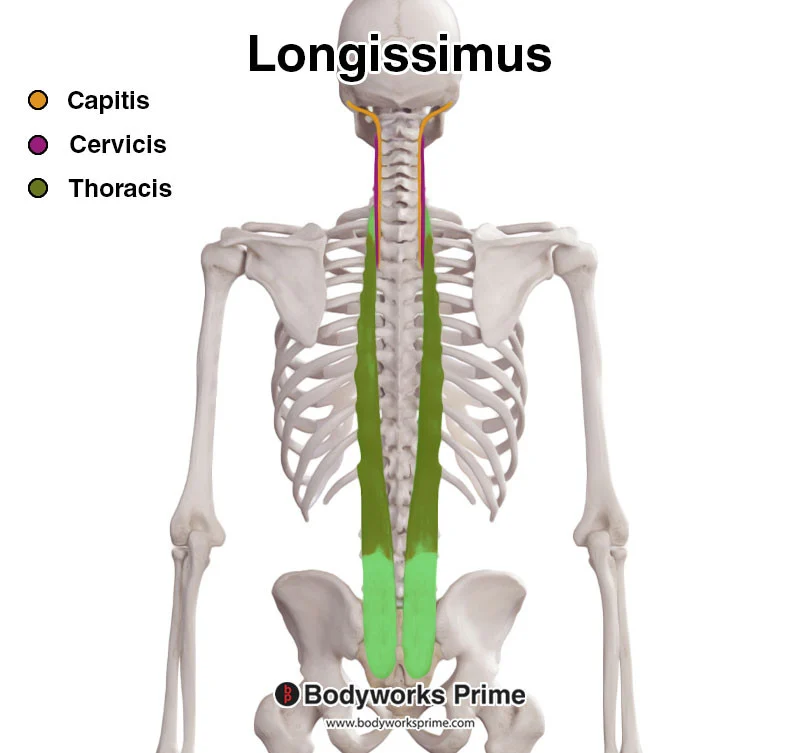

Longissimus Insertion
Transverse processes of thoracic or cervical vertebrae and ribs superior to origin.
Note: Capitis inserts into mastoid process

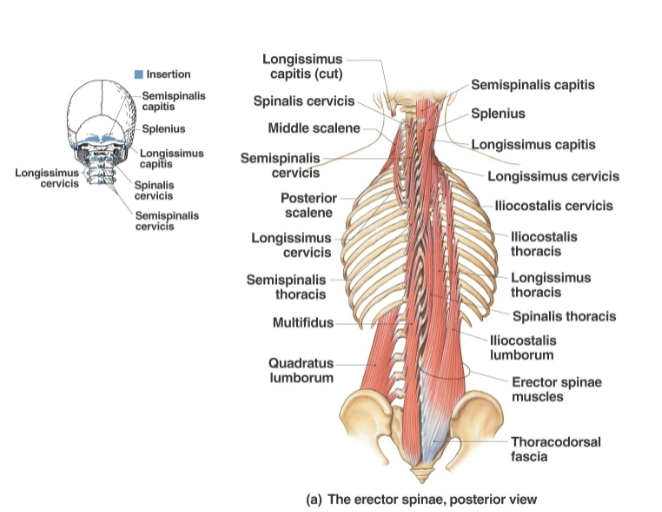
Longissimus Action
Extends and laterally flexes vertebral column.
Note: Capitis extends head and turns face toward same side


Spinalis Position
Most medial erector spinae muscle group
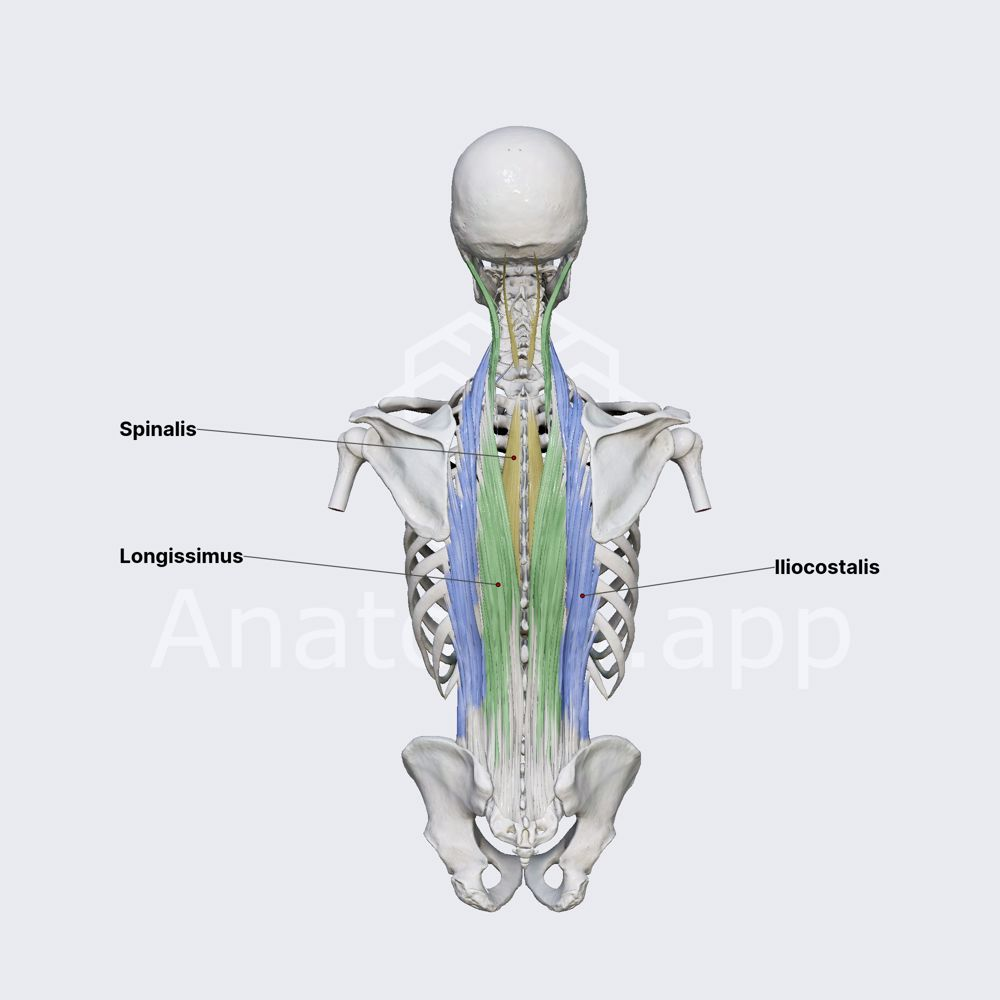

Spinalis Origin
Inferior spinous processes of upper lumbar and lower thoracic vertebrae


Spinalis Insertion
Spines of upper thoracic and cervical vertebrae
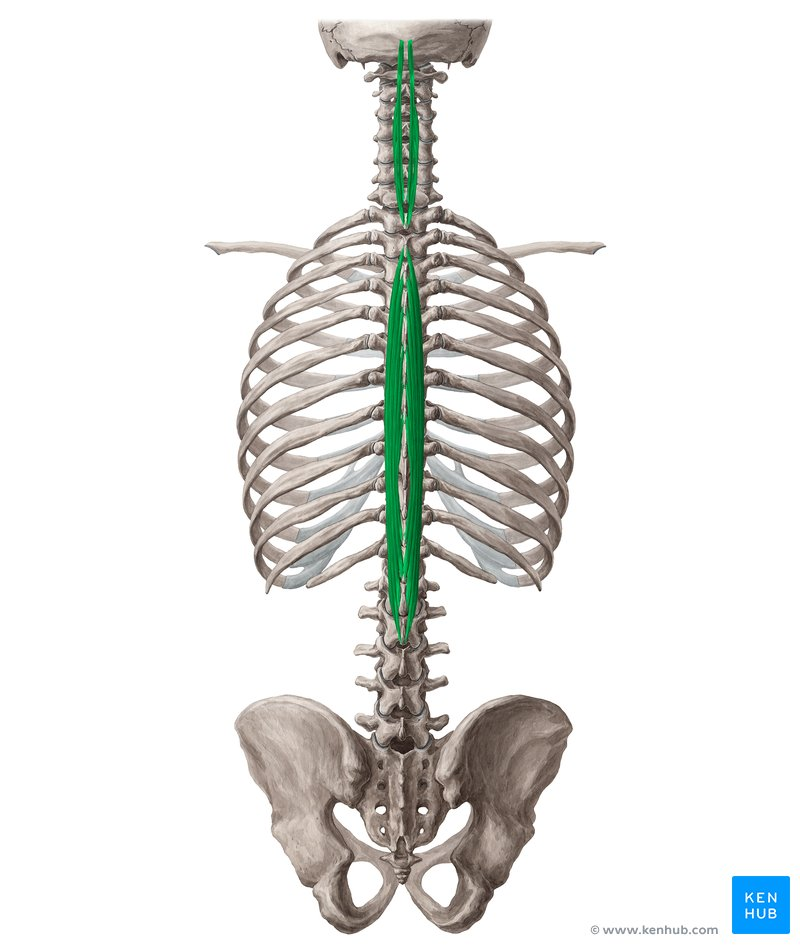

Spinalis Action
Extends vertebral column


Semispinalis Origin
Transverse processes of C7-T12


Semispinalis Insertion
Occipital bone for capitis
superior spinous processes of cervical and upper thoracic vertebrae for cervicis and thoracis


Semispinalis Action
Extends neck and vertebral column and rotates toward opposite side


Multifidus Origin
Sacrum and transverse process of each vertebra


Multifidus Insertion
Spinous process of 3rd of 4th more superior vertebra
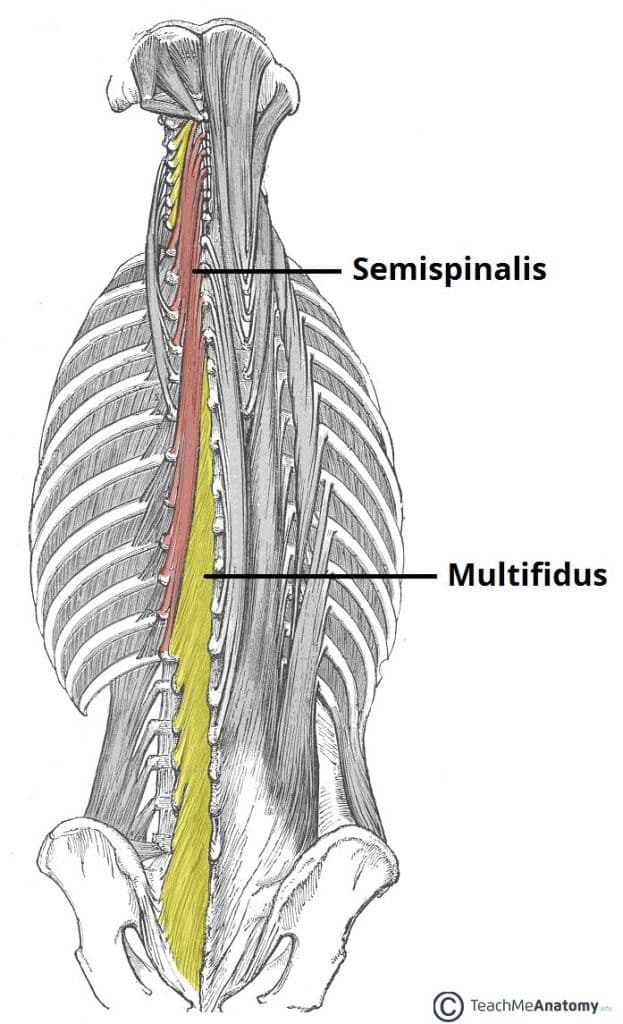

Multifidus Action
Extends vertebral column and rotates toward opposite side


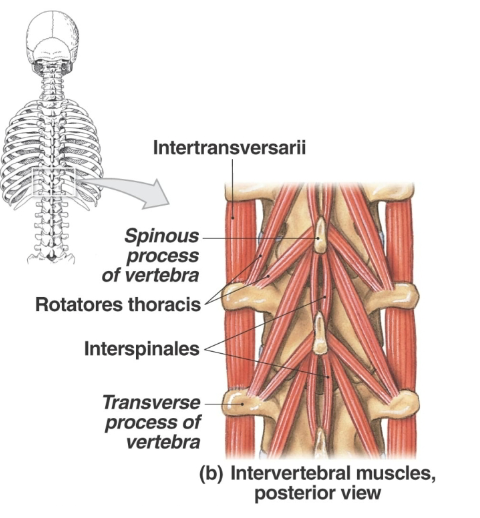
Interspinales Origin
Spinous process of each vertebra
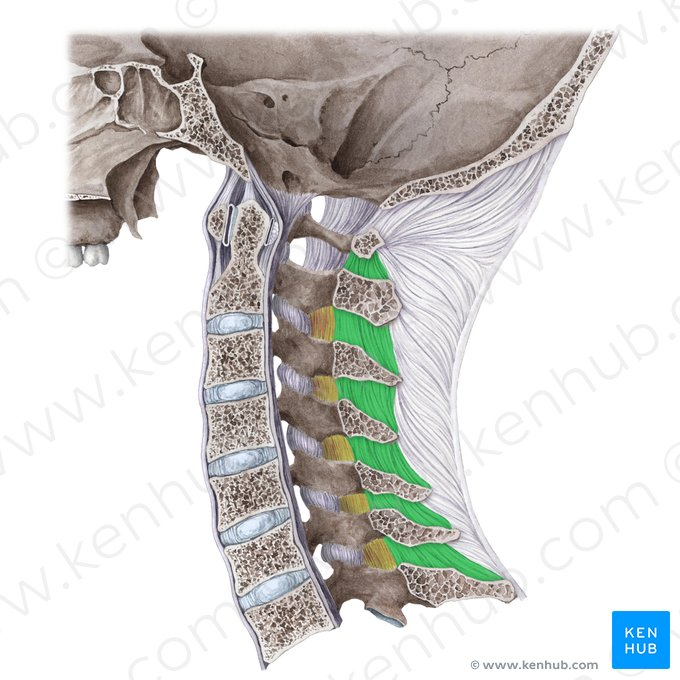

Interspinales Insertion
Spinous processes of more superior vertebra


Interspinales Action
Extends vertebral column
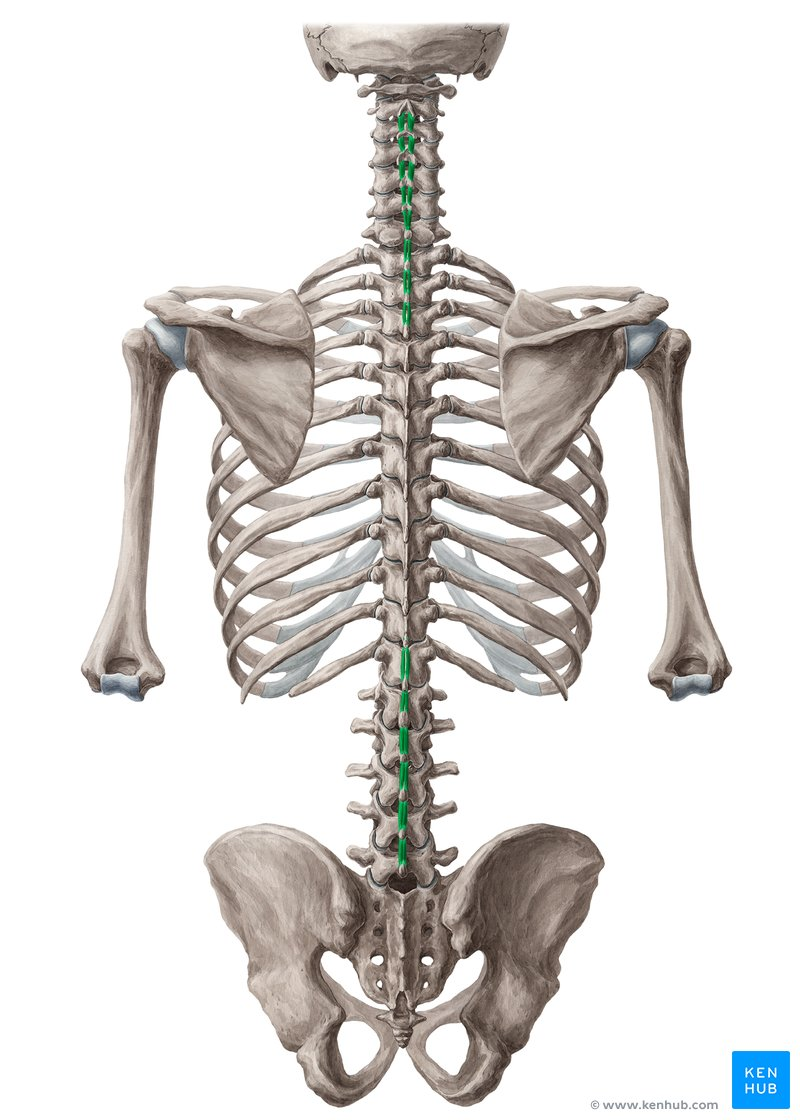
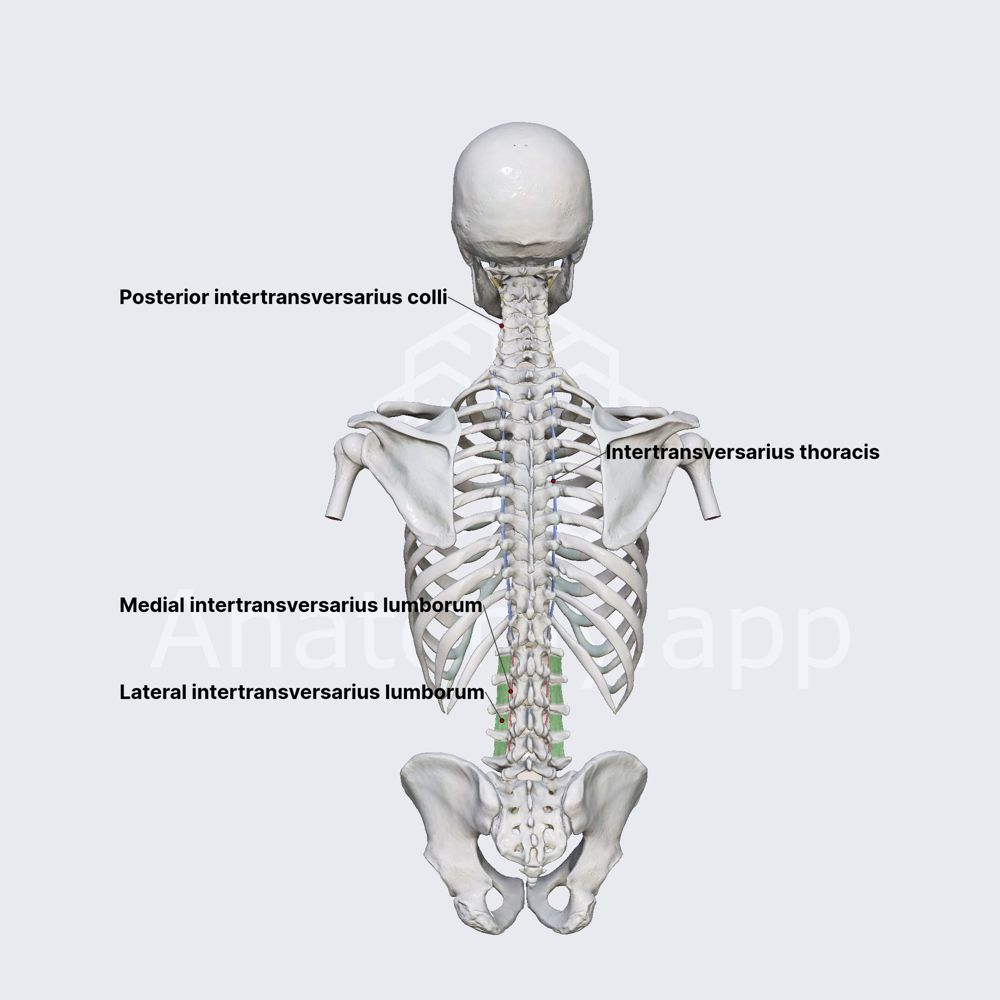
Intertransversarii Origin
Transverse processes of each vertebra
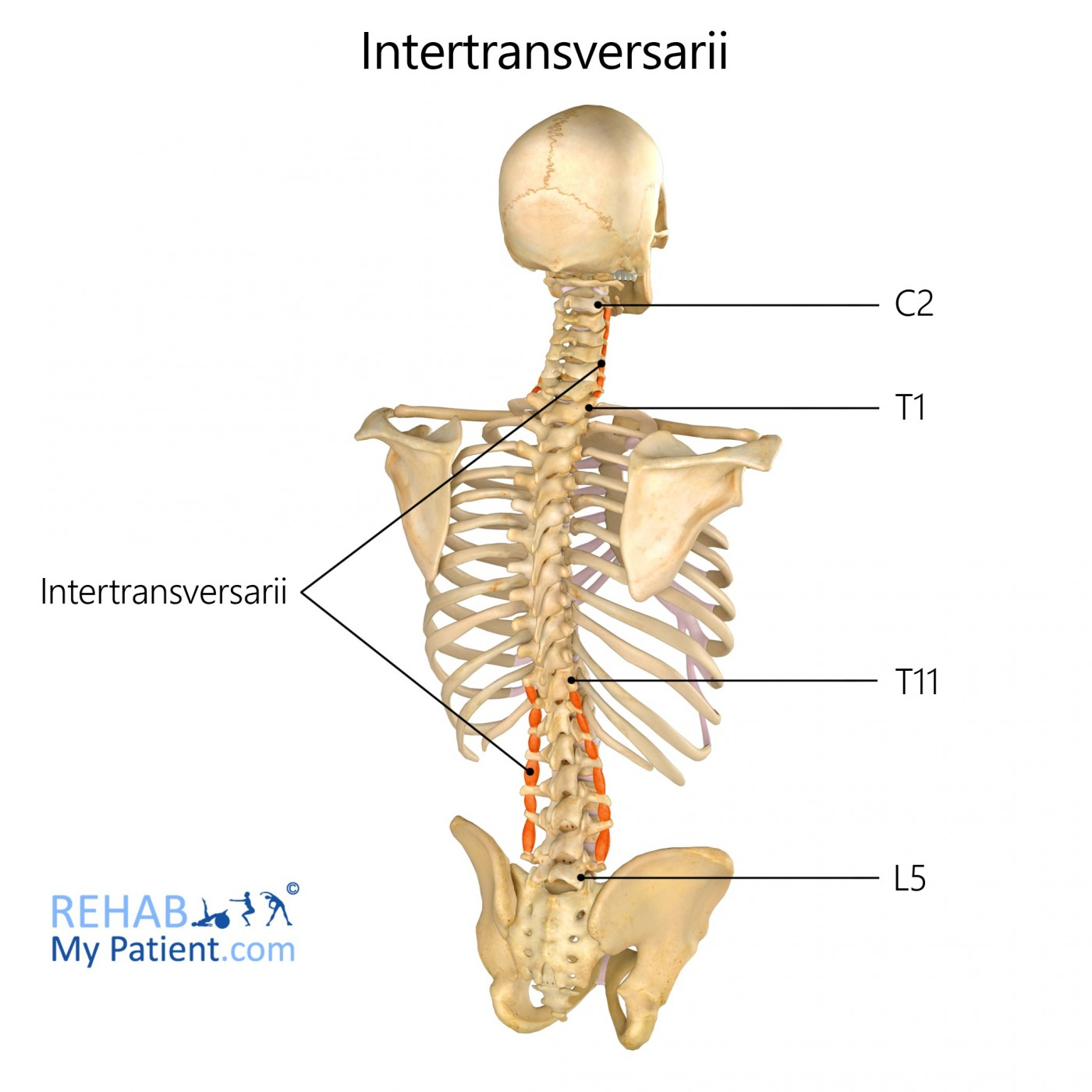

Intertransversarii Insertion
Transverse processes of more superior vertebra


Intertransversarii Action
Lateral flexion of vertebral column
Quadratus Lumborum Origin
Iliac crest and lumbar fascia


Quadratus Lumborum Insertion
Transverse processes of upper lumbar vertebrae and lower margin of 12th rib


Quadratus Lumborum Action
Flexes vertebral column laterally, depresses ribs, and fixes floating ribs during forced breathing


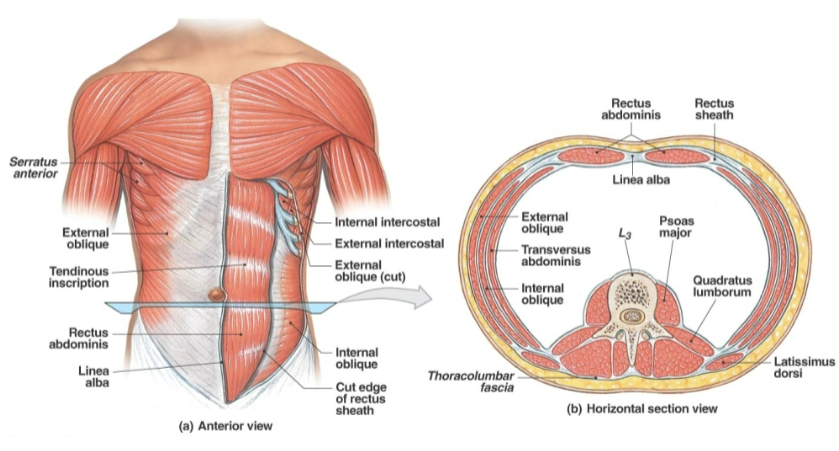
External Intercostals Origin
Inferior border of rib above


External Intercostals Insertion
Superior border of rib below

External Intercostals Action
Pull ribs toward one another to elevate rib cage and aid in inspiration


Internal Intercostals Origin
Superior border of rib below
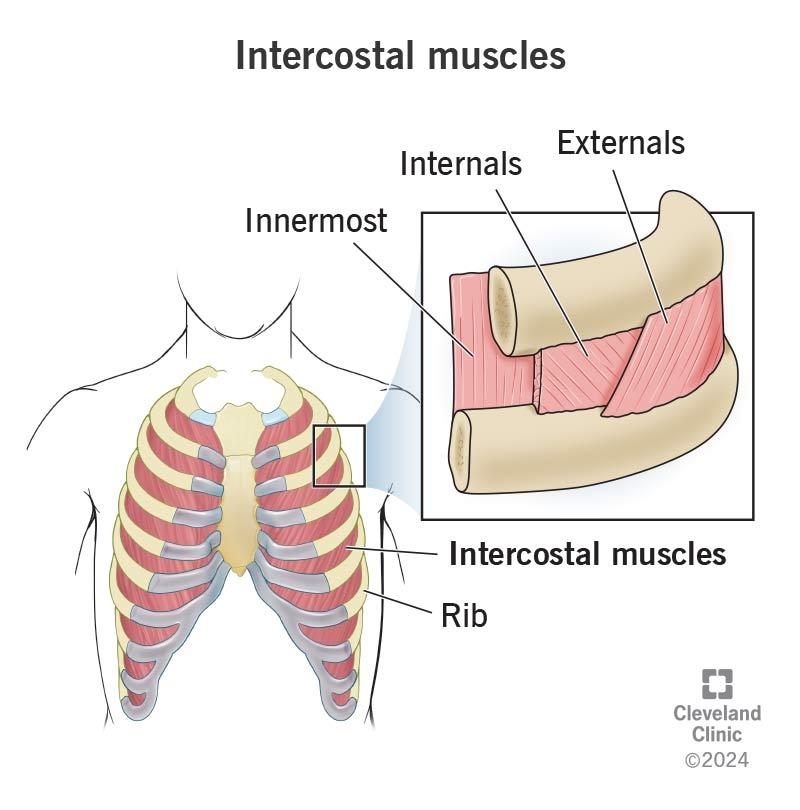

Internal Intercostals Insertion
Inferior border or costal groove of rib above
