Fates of Pyruvate
 Call Kai
 Learn
 Practice Test
 Spaced Repetition
 Match
 Flashcards
 Knowt Play
1/6

There's no tags or description
Looks like no tags are added yet.
7 Terms
Fates of Pyruvate (Definition of "Fate")
In the context of metabolism, the term fate refers to the potential outcomes for a potential outcomes for a particular molecule or what other molecule the atoms in the molecule will become part of as a result of metabolic reactions.
Multiple Fates of Pyruvate
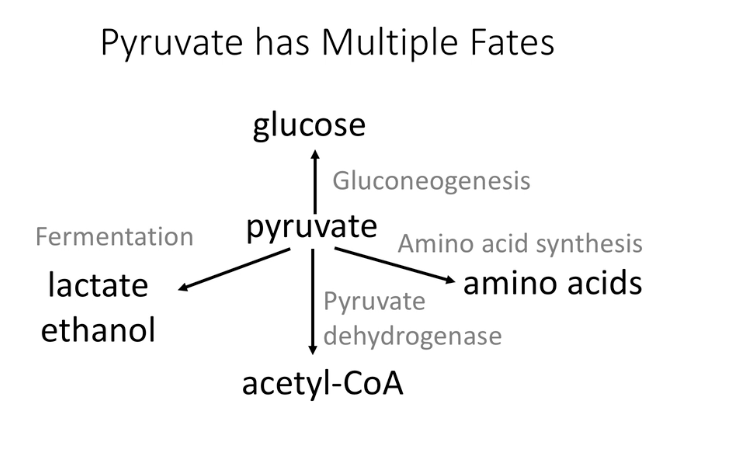
Pyruvate has multiple different fates.
Pyruvate is a substrate for gluconeogenesis which generates glucose.
Pyruvate generated by glycolysis can be used during fermentation to generate lactate or ethanol.
Pyruvate is a substrate for some amino acid synthesis pathways
pyruvate dehydrogenase catalyzes the conversion of pyruvate to acetyl-CoA.
Fermentation
Fermentation consists of the conversion of glucose to other molecules.
Fermentation includes glycolysis, which generates pyruvate and additional reactions which convert pyruvate into other molecules.
Two common products of fermentation are lactate or ethanol, but there are other types of fermentation. Most organisms and cells support one type of fermentation.
Human cells undergo lactate fermentation, which we will focus on in this course.
Fermentation is important in generating many foods that we eat including yogurt, kimchi, sauerkraut, wine, beer and bread.

Amino Acid Synthesis
Pyruvate is a precursor for the synthesis of some amino acids like Alanine, Valine, Leucine, and Isoleucine.
The breakdown of these amino acids can also generate pyruvate in a reverse process.

Acetyl-CoA and the Citric Acid Cycle
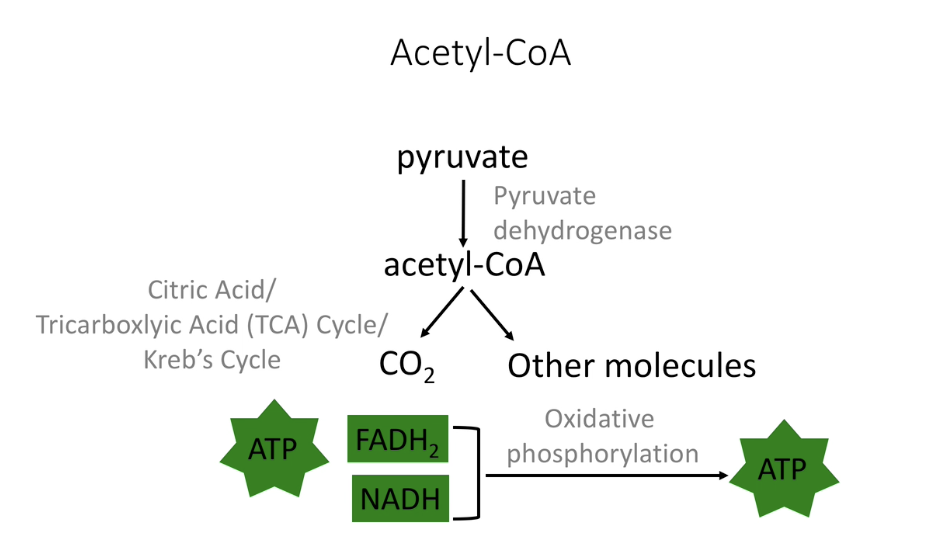
Pyruvate dehydrogenase converts pyruvate to acetyl-CoA.
Acetyl-CoA is converted to carbon dioxide by the citric acid cycle which is also called the tricarboxylic acid or TCA cycle or Krebs cycle.
In addition to carbon dioxide, the citric acid cycle also generates ATP and the reduced electron carriers FADH2 and NADH.
The reduced electron carriers can enter oxidative phosphorylation which generates large amounts of ATP.
Acetyl-CoA also has several other fates that lead to the synthesis of other types of molecules including lipids.
Regulation of Pyruvate Fate
how is it regulated
when is each pathway active
The fate of pyruvate is determined by the conditions and needs of a cell and organism.
The fate of pyruvate is not all or none.
Different pyruvate molecules in one cell can have different fates and simultaneously be converted to different types of molecules.
Pyruvate is used for gluconeogenesis to generate glucose under conditions when glucose is needed.
Similarly pyruvate is converted to lactate or particular amino acids if these molecules are needed.
Pyruvate is converted to acetyl-CoA when the citric acid cycle is active or other types of molecules generated from acetyl-CoA are needed.
One way in role of the citric acid cycle is to generate ATP directly and through oxidative phosphorylation.
If ATP is needed and oxygen is present, pyruvate is likely to be converted to acetyl-CoA which will enter the TCA cycle generating electron carriers for oxidative phosphorylation and synthesis of ATP.
If ATP is needed but the oxygen level is not sufficient for oxidative phosphorylation, pyruvate can be converted to lactate through fermentation.

Summary of Fates of Pyruvate
In summary four possible fates of pyruvate are glucose, lactate, amino acids, and acetyl-CoA.
Acetyl-coA is a substrate for the citric acid cycle which generates reduced electron carriers for the synthesis of ATP by oxidative phosphorylation.
The fate of pyruvate is regulated by the conditions and needs of the cell and organism