Roman Art
 Call Kai
 Learn
 Practice Test
 Spaced Repetition
 Match
 Flashcards
 Knowt Play
1/10

There's no tags or description
Looks like no tags are added yet.
11 Terms

Title: House of the Vettii
Date: Imperial Roman, 2nd century BCE- 1st century CE
Materiel: cut stone and fresco
Location: Pompeii, Italy
Form: No windows, access to outdoors comes from peristyle garden and atrium in the interior of the house. House is in axial symmetry and contains an impluvium (rain water basin) in atrium.
Contains elaborate frescos
Function: Private citizens home. Lack of windows, narrow entryway, and internal atrium and peristyle minimize exposure to street
Context: Two brothers, maybe freedman who were rich merchants, owned the house. Lavish house indicates wealth.

Title: Pentheus Room
Date: Imperial Room, 62-79 CE
Medium: fresco
Location: Pompeii, Italy
Function: Triclinium; dining room in Roman house
Form: Paintings almost designed to look like windows, as if the paintings are the landscape
Content: Main scene is of death of Greek hero Pentheus. Other scene is an infant Hercules strangling snakes..cuz like..what else would we be doing😭
Context: Pentheus opposed the cult of Baccus and was dismembered by a bunch of wild girls.😭Most people in those paintings have an abject lack of clothes
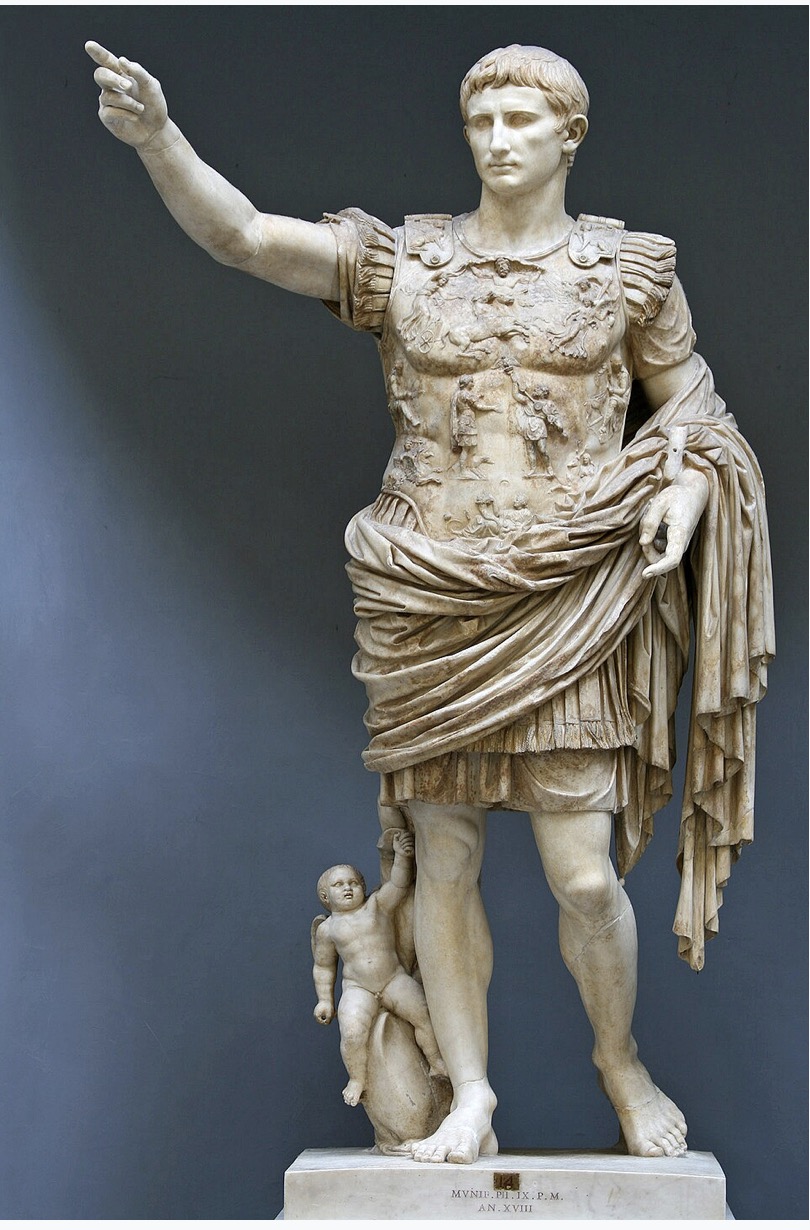
Title: Augustus of Prima Porta
Date: Imperial Roman, early 1st century CE
Material: marble
Location: Rome
Form: Figure is in contrapposto, is depicted as heroic and authoritative, and has an oratorical pose. Hair locks in a pincher formation identify him as Augustus
Function: May have been commissioned by either his wife or son to honor him either in life or after death
Content: Depocits him as almost god-like, with bare feet, and idealized imagery. Breastplate (intricate with symbols standing for different accomplishments/ characteristics) indicates he’s a warrior, robes indicate he is a civic ruler. Weird Cupid on a dolphin thingy represents Augustus’ decent from Venus, or his naval victory over Antony and Cleopatra
Context: art was used as a form of propaganda to make emperors and leaders look good

Title: The Colosseum
Date: imperial Roman 72-80 CE
Form: Accommodated 50,000 people Facade had several stories of engaged columns; first story has Tuscan, second story is Ionic, third story is Corinthian. Top level have brackets meant tk hold flagstaffs that also functioned an anchors for a retractable roof
Function: Stadium for wild and dangerous games like gladiator combat
Context: Illustrates what entertainment was like in Rome- bloody and violent. Entrances, staircases and seating selected by social class. Much of the marble was pulled off during Middle Ages and repurpose

Title: head of a Roman patrician
Date: 75-50 BC Republican Rome
Material: marble
Form: extremely realistic head, wrinkles and signs of age emphasized
Function: Used to adorns funerary alters, busts kept by families to honor deceased relatives
Context: Realism of portrayal shows Greek Hellenistic and Etruscan influences. Features may have been exaggerated to portray Roman Republican virtues: great wisdom, tenacity, stoicism etc

Title: Forum of Trajan
Artist/Architect: Apollodorus of Damascus
Date: 106-112 CE
Material: Brick and concrete
Location: Rome
Patron: commissioned by empower Trajan
Form: Large plaza surrounded with stoa like buildings on each side. Originally held an equestrian monument of Trajan
Function: Part of a bigger complex that included the Trajan markets and column and Basilica of Ulpia. Served as a massive gathering space for civil and political purposes
Context: Entire complex built from military spoils

Title: Basilica of Ulpia
Architect: Apollodorus of Damascus
Date: 112 CE
Material: brick and concrete
Location: Rome
Form: The nave is spacious, surrounded by 2 Apses at either short end, and double colonnaded side aisles on the long sides. The second floor has galleries (almost like lofts)
Function: Law courts held hear, apses were where judges sat
Context: Basilican structure can be traced back to Greek stoas. Ulpius was Trajan’s family name

Title: Trajan Markets
Date: 106-112 CE
Material: brick and concrete
Location: Rome
Form: Semicircular building held several levels of shops. Main area is groin vaulted, halls with shops are barrel vaulted
Function: Multilevel mall, originally had 150 shops
Context: Use of exposed brick indicates more wide accepting, brick used to be thought unsuitable for grand buildings

Title: Column of Trajan
Date: 113 CE
Material: marble
Location: Rome
Form: Tall hollowed out column with interior staircase. The base of column has oak wreath (victory). the narrative cycle wrapped around it telling the story of Trajan’s defeat of Dacians. Top of column has statue (used to be Trajan, now Saint Peter
Function: Vistors would walk up to viewing platform, base contains burial chamber of of Trajan and his wife
Content: Scenes on column depict preparation for battle, key moments of campaign against Dacians, and scenes from everyday life. Trajan appears 58 times in various forms
Context: Stood at far end of Trajan’s forum. Two libraries containing Greek and Roman manuscripts flanked the column

Title: Pantheon
Date: 118-125 CE Imperial Rome
Material: Concrete with stone facing
Location: Rome
Form: Exterior- Porch has Corinthian capitals and Facade has two pediments, one that is deeper behind the other so it’s hard to see. Interior- Circles and squares are unifying theme. The interior has thick round cupola walls, and there are square panels in the floor and coffers on the ceilings. Round oculus on ceiling lets light an air in like a spotlight The walls have 7 niches for statutes of gods.
Function: Traditonally thought to be a temple to all gods, recently thought to be dedicated to only some gods, Caesar or used for court rituals. Now it’s a Catholic Church
Context: Pantheon is from Greek meaning “all the gods” The interior symbolizes the vault of the heavens

Title: Lidovisi Battle Sarcophagus
Date: 250 CE Late imperial Rome
Material: marble
Location: Rome
Form: In horror vacui, where figures are crowded together with unusual proportions and little individuality, which abandons classical tradition. Chaos of battle
Function: Used for interment of dead, art indicated may have been commissioned by someone wealthy with a military background
Content: Depicted Roman army, portrayed as noble and heroic, battling barbaric Goths, portrayed as ugly. Roman general at top is portrayed as powerful and invincible with no helmet or weapons controlling a wild horse with one hand
Context: Rejection of classical tradition implies dissolution and anarchy happening in Rome at this time.