Neroscience ch 3 flashcards
 Call Kai
 Learn
 Practice Test
 Spaced Repetition
 Match
 Flashcards
 Knowt Play
1/28

There's no tags or description
Looks like no tags are added yet.
29 Terms
What was golgi’s theory on the nervous system?
the reticular theory where the nervous system is composed of a nerve net of interconnected fibers
what was cajal’s theory on the nervous system?
the neuron hypothesis where every nerve is a discrete cell and that neurons are the units of brain function
What is the basic structure of a neuron?
the soma or body, the dendrites, and the axon
what does the soma do?
it is the core of the cell and integrates information
what do the dendrites do?
they branch from the cell membrane and collect information from other neurons
what does the axon do?
it carries information and passes it on to other neurons
how does a neuron help produce behavior?
it gets information, stores it as memory, interprets it, and passes that information on to other neurons to produce behavior
what are dendritic spines?
they protrude from the dendrite and are a point of contact with the axons of other cells
what is the axon hillock
it is where the axon emerges from the cell body and plays a role in generating action potential
what is the axon initial segment?
the subregion of the axon where action potentials are initiated
what are the terminal buttons?
the knob at the tip of an axon that conveys information to other neurons
what are the synapse
the gap between one neuron and another
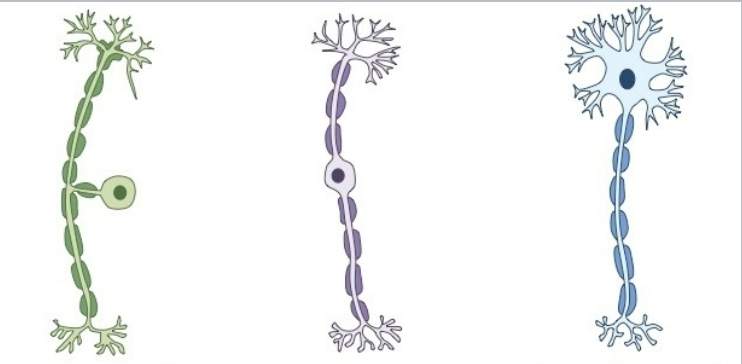
explain the flow of information between these neurons and where they are in the nervous system
incoming sensory information from the receptor to the cns, integration within the cns, outgoing motor instruction from the cns to the effector
what are the teleodendria?
the end branches of an axon
what do sensory neurons do?
the carry information from sensory receptors in/on the body to the spinal cord
what do interneurons do?
they associate sensory and motor activity within the central nervous system
what do motor neurons do?
they send signals from the brain and spinal cord to muscles
how does a neuron act using excitatory and inhibitory signals?
the neuron sums all signals together and if the excitatory exceeds the inhibitory, it acts, and vice versa

what do ependymal cells do?
they secret cerebrospinal fluid

what do oligodendroglial cells do?
they form myelin around cns axons in the brain and spinal cord
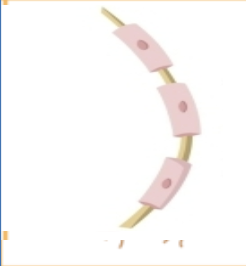
what do schwann cells do?
they form myelin around peripheral nerves by wrapping around them

what do astrocytes do?
they contribute to neuronal nutrition, structural support and repair as well as contributing to the blood brain barrier and healing scarring after injury

what do microglial cells do
they are derived from blood and use defensive functions to remove dead tissue, an immune cell that utilizes phagocytosis
does regrowth of myelin always happen?
no, it is repaired in the pns but not in the cns
what is the role of the cell membrane?
it separates the intracellular and extracellular fluids, regulates movement of substances in and out of the cell,
what does a gene do?
it encodes the synthesis of particular protiens
what does a channel do?
it allows the appropriate ions to travel freely across the cell membrane
what does a gate do?
it changes shape to allow substances to pass through while open and prevents passage when one or both sides of the gate is closed
what does a pump do?
it changes shape to carry specific substances across the cell membrane. requires atp to work