BIOL 201 Lecture Outline – Exam 1 Notes
 Note
 Call Kai
 Learn
 Practice Test
 Spaced Repetition
 Match
 Flashcards
 Knowt Play
1/193

Earn XP
Description and Tags
Vocabulary flashcards covering key terms across physiology, anatomy, body systems, body cavities, homeostasis, chemistry of life, biomolecules, cell structure, membranes, energy, histology, and tissues from the notes.
194 Terms
Physiology
The study of how body parts and systems function is called ___.
Anatomy
Study of the structure of body parts and their relationships.
Gross anatomy
Anatomy of structures visible to the naked eye (organ, organ system).
Histology
Study of tissues.
Cytology
Study of cells.
Six structural levels of organization
Chemical, cellular, tissue, organ, organ system, and organism levels of the body.
Superior
Toward the head
Inferior (Caudal)
Toward the tail (feet)
Proximal
Closer to the point of the origin (generally the trunk)
Distal
Further away from the point of the origin (generally the trunk)
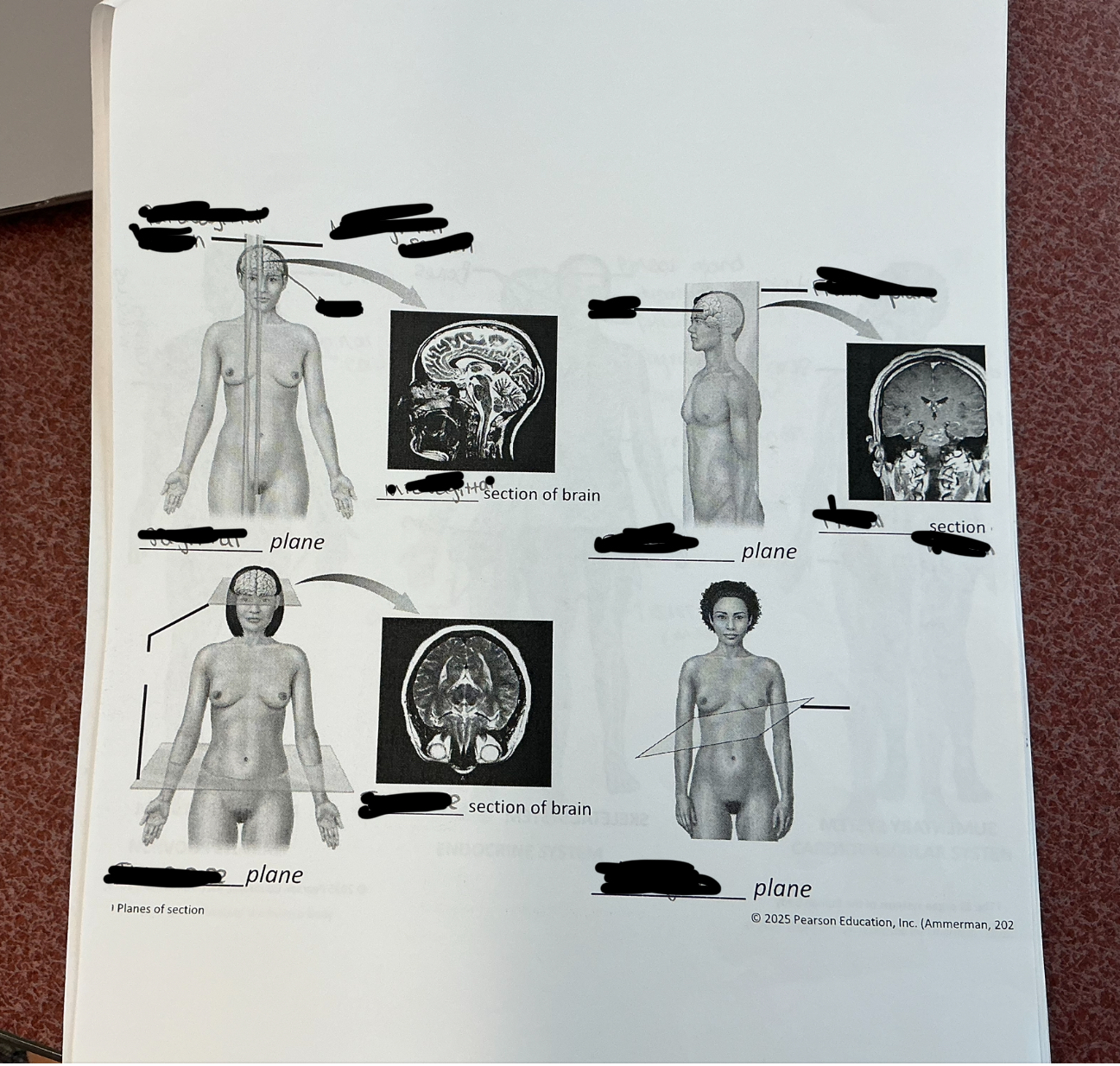
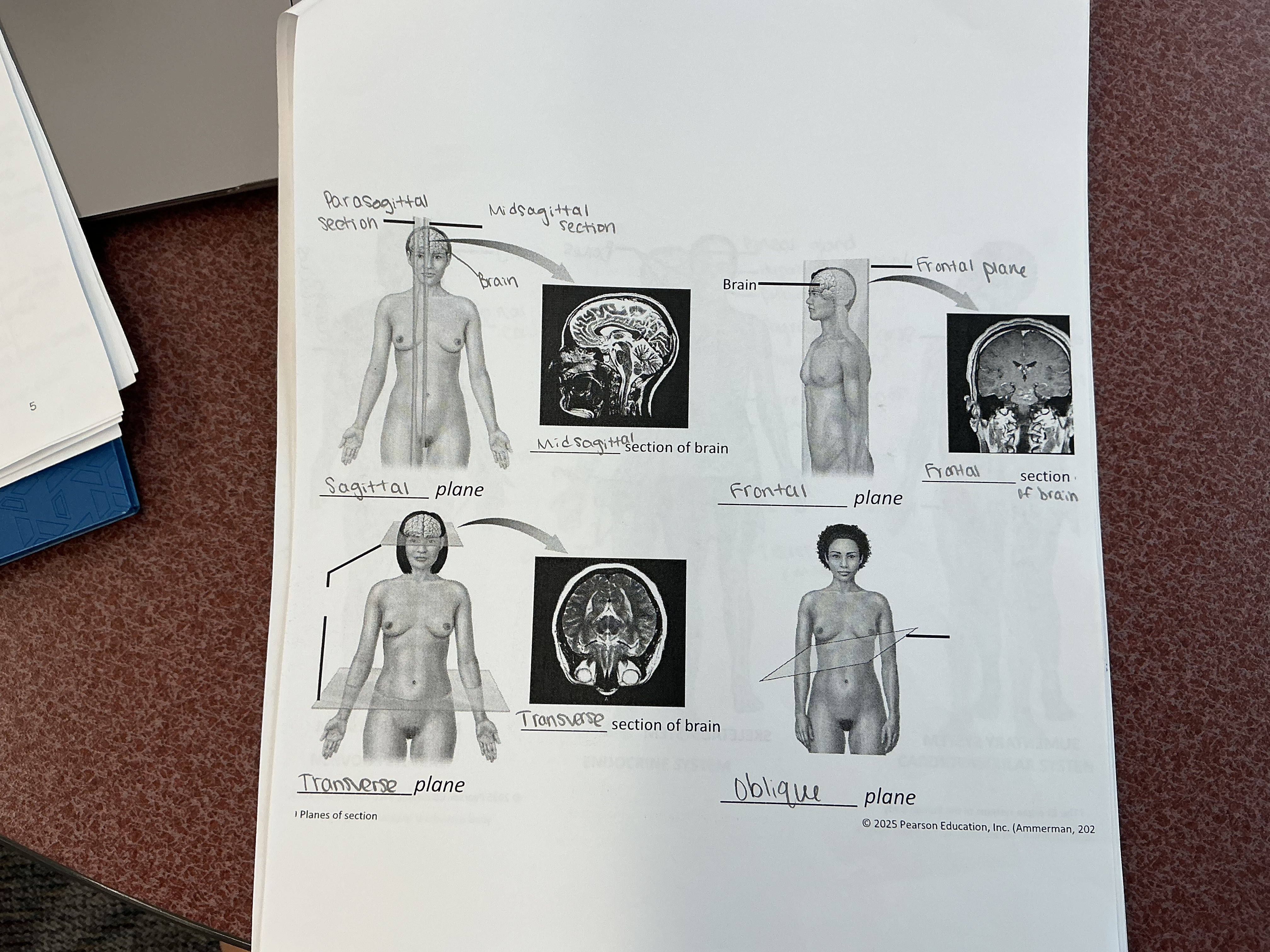
Sagittal Plane
Divides body or body part into R + L sections
Midsagittal (median) plane
Divides body or body part into equal R + L halves
Parasagittal plane
Divides the body or body part into unequal R + L sections
Frontal (coronal) plane
Divides body or body part into anterior + posterior sections
Transverse Plane
horizontal, Divides into superior and inferior parts. Appendicular into proximal
Oblique Plane
Taken at an angle, used to examine structures
Integumentary system
Skin, hair and nails; protects, regulates temperature, produces vitamin D, and retains water.
Skeletal system
Bones and joints; supports, protects internal organs, gives movement, stores calcium (minerals), and makes blood cells.
Muscular system
Skeletal muscles; responsible for movement, body openings, and heat production.
Nervous system
Brain, spinal cord, and nerves; controls body functions, sensation, movement, automatic functions, and verve impulses
Endocrine System
Pineal gland, Hypothalamus, pituitary gland, thyroid gland, thymus gland, adrenal gland, pancreas, ovaries, and testes. Regulate body functions, muscles, glands, tissues through secretion of hormones
Cardiovascular system
Blood vessels, and heart; pumps oxygen poor blood to lungs and oxygen rich blood to tissues, removes waste from tissues, transport cells, nutrients and others.
Lymphatic system
Tonsils, lymph nodes, thymus, spleen, lymphatic vessels; Returns tissue fluid to blood and supports immunity.
Respiratory system
Nasal cavity, pharynx, larynx, trachea, and lungs. Delivers oxygen to the blood, removes carbon dioxide, and maintains acid base balance of the blood.
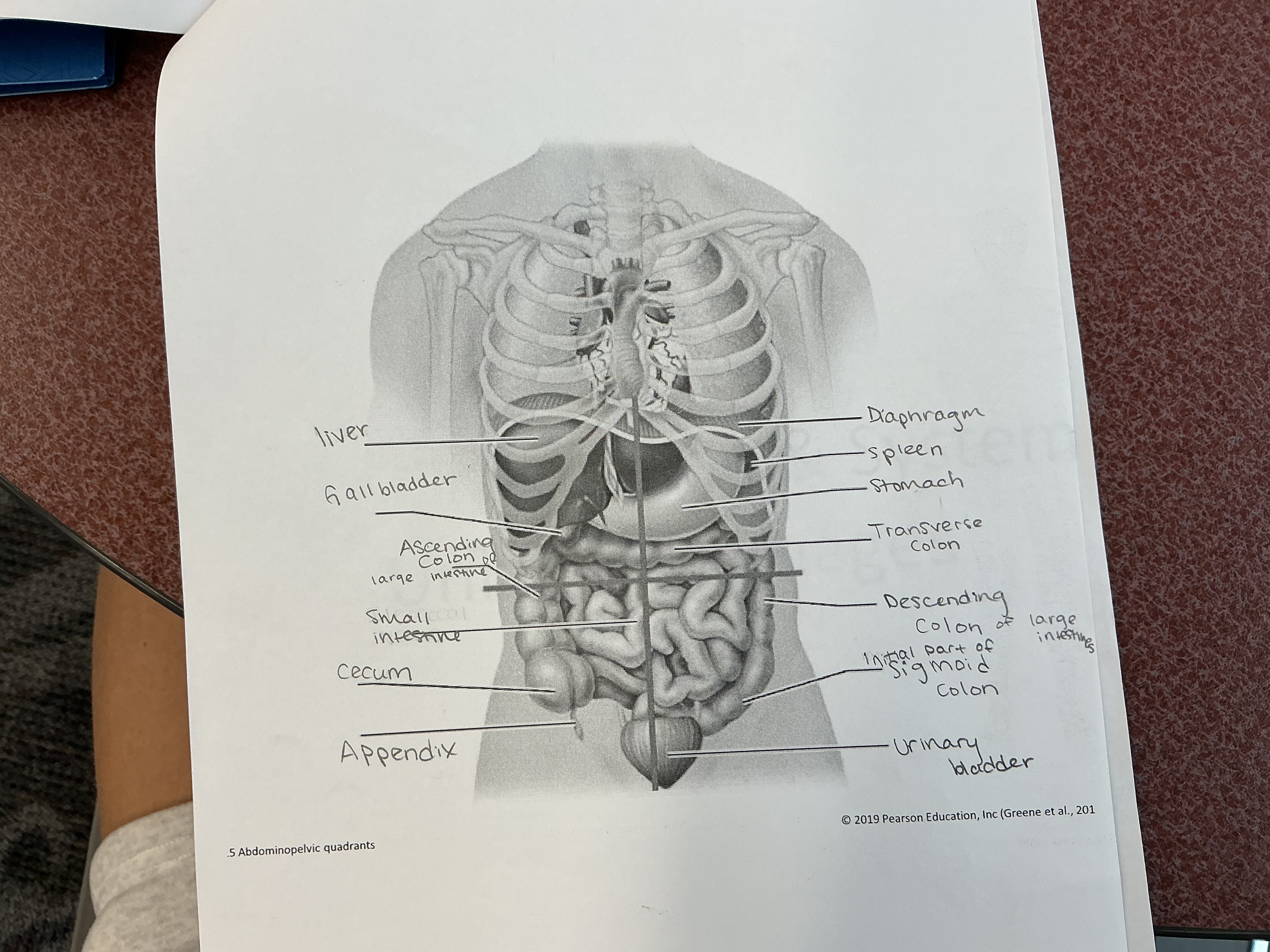
Digestive system
Mouth, salivary glands, esophagus, lives, stomach, gallbladder, pancreas, large intestine, small intestine. Digests food, absorbs nutrients, eliminates waste, maintains fluid, electrolyte and acid base balance.
Urinary system
Kidneys, ureters, urinary bladder, urethra. Removes metabolic wastes and helps regulate fluid, electrolyte balance, and acid base balance, and stimulates blood cell production.
Reproductive system (male)
Prostate gland, ductus deferents, testis, penis. Produce and transport sperm; secrete hormones; sexual functions.
Reproductive system (female)
Mammary glands, uterine tube, ovary, uterus, and vagina. Produce + transports oocytes (eggs), site of fetal development, nourishment, childbirth and lactation; secrete hormones, sexual functions.
Dorsal body cavity includes what
Cranial and vertebral (spinal) cavities housing brain and spinal cord.
Ventral body cavity includes what
Thoracic and abdominopelvic cavities; house visceral organs.
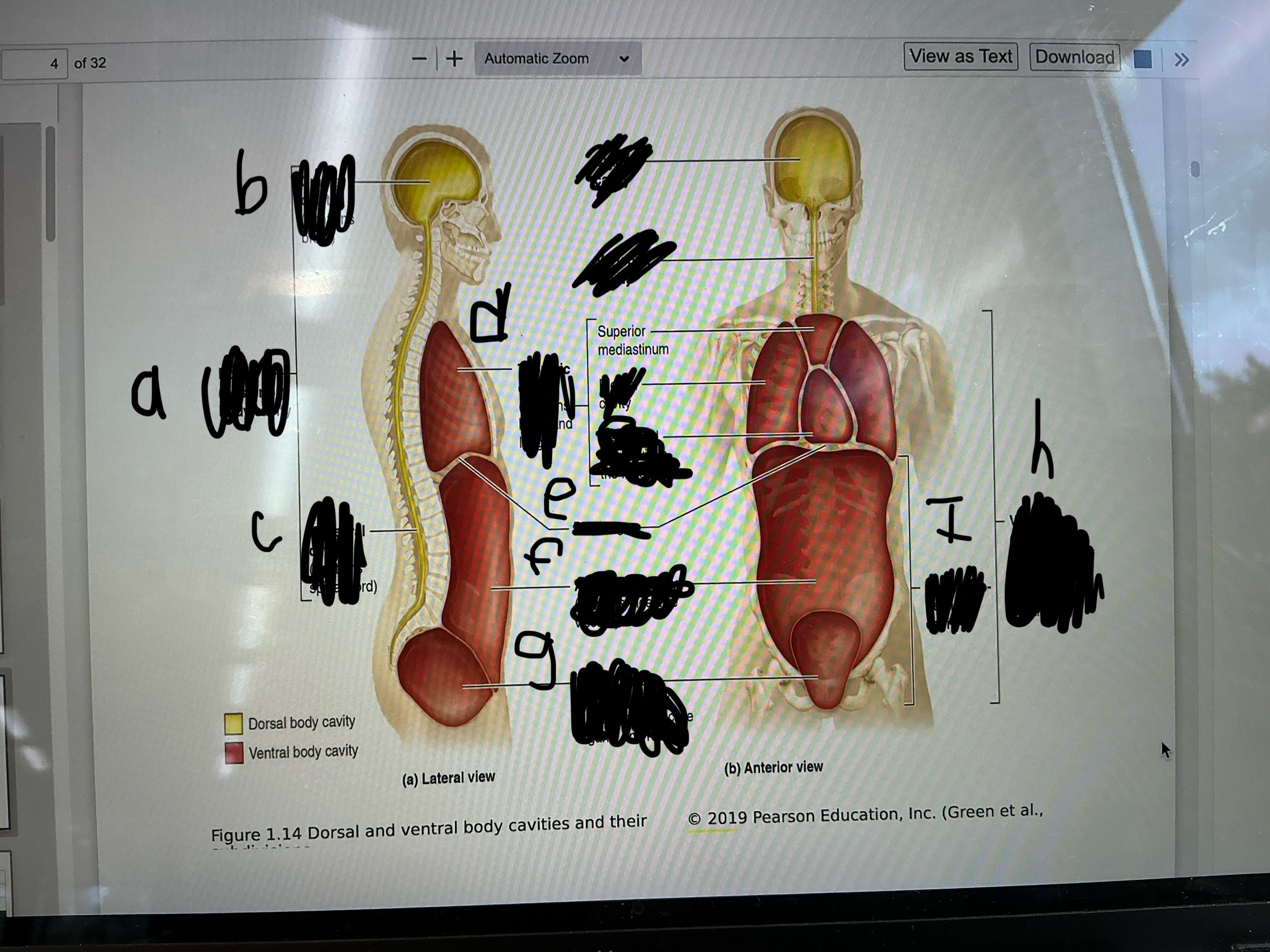
Fill in the blanks
A- Dorsal
B- cranial cavity
C- vertebral cavity
D- thoracic cavity
E- Diaphragm
F- abdominal cavity
G- pelvic cavity
H- ventral body cavity
I- abdominopelvic cavity
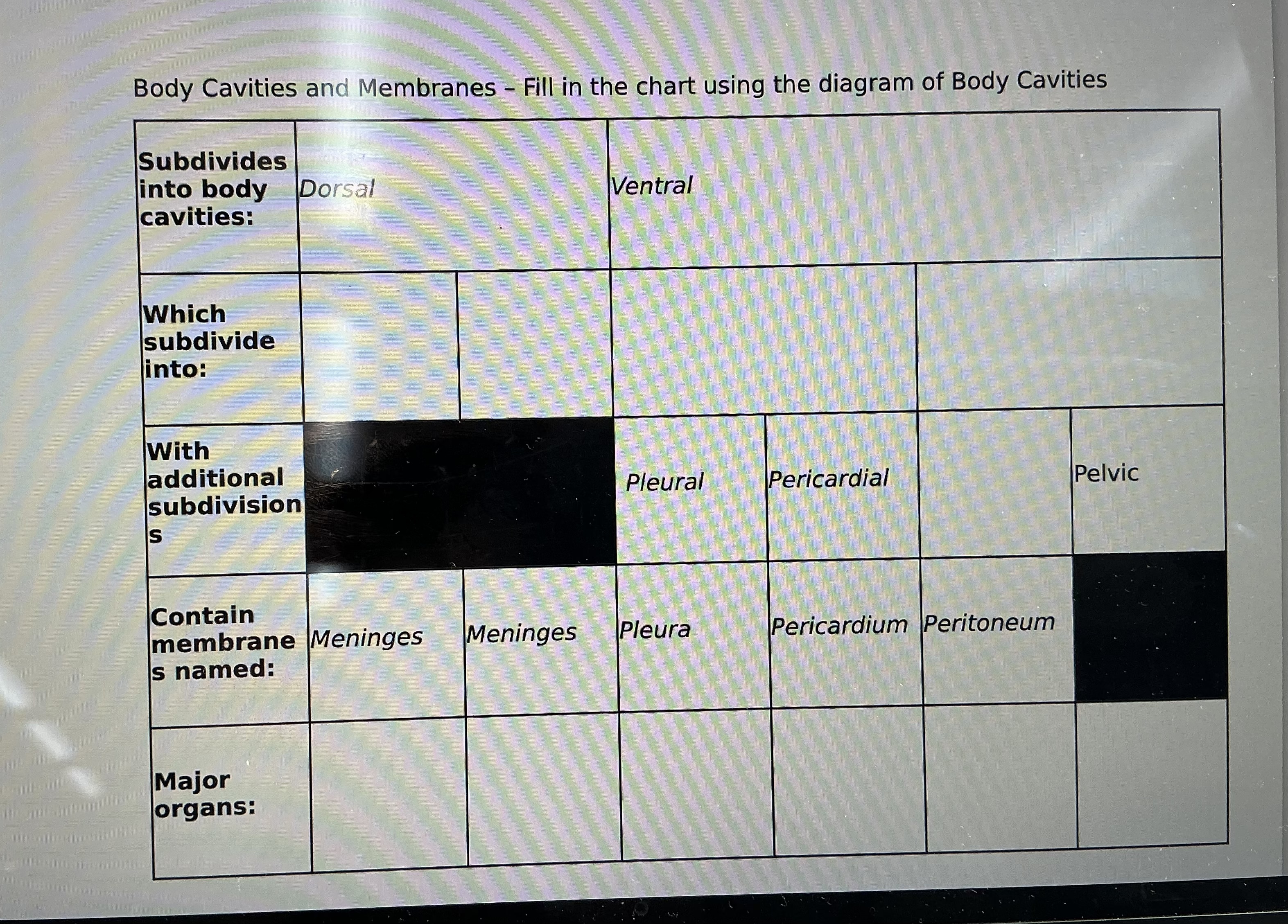
Fill in the blank boxes
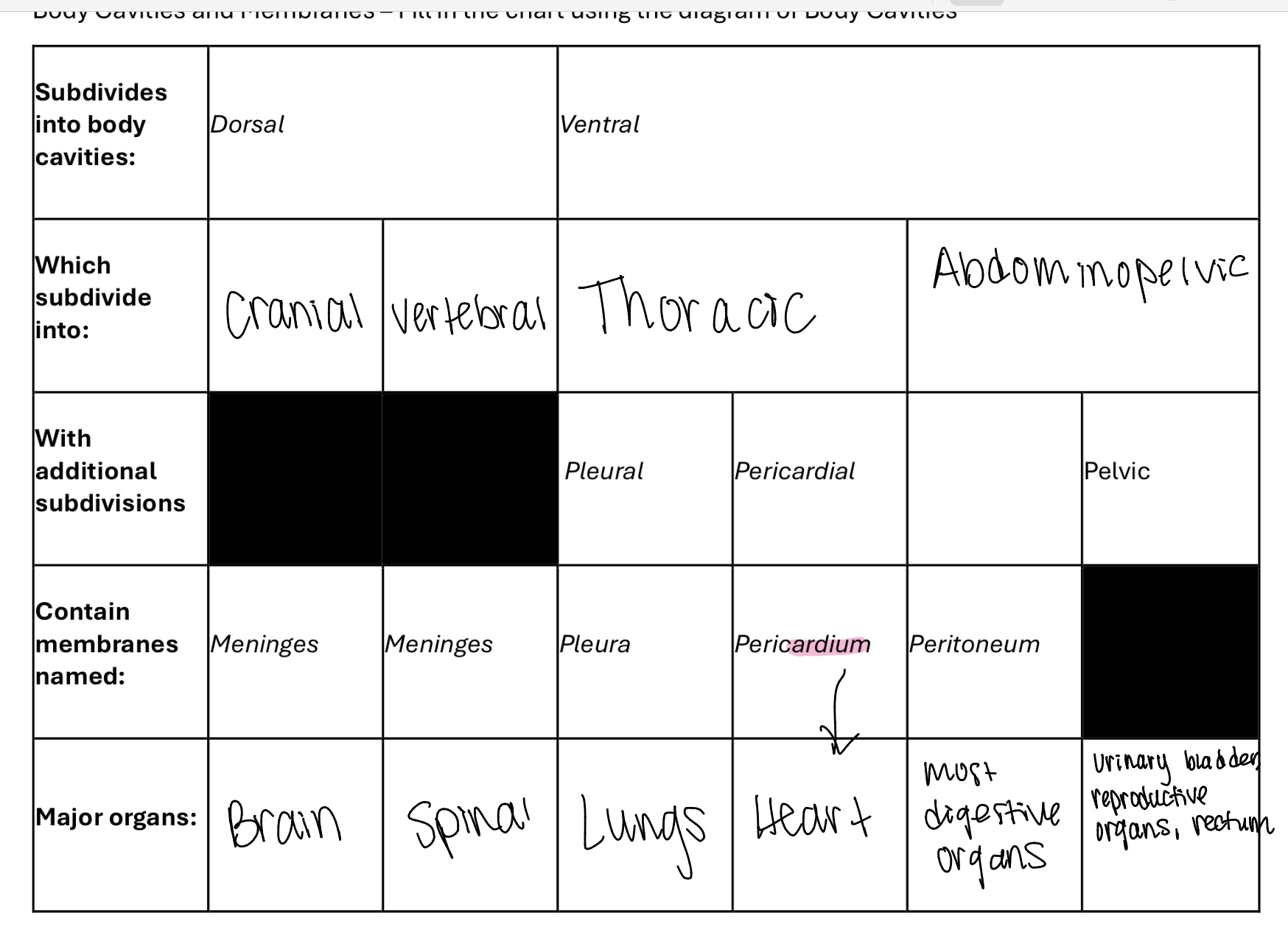
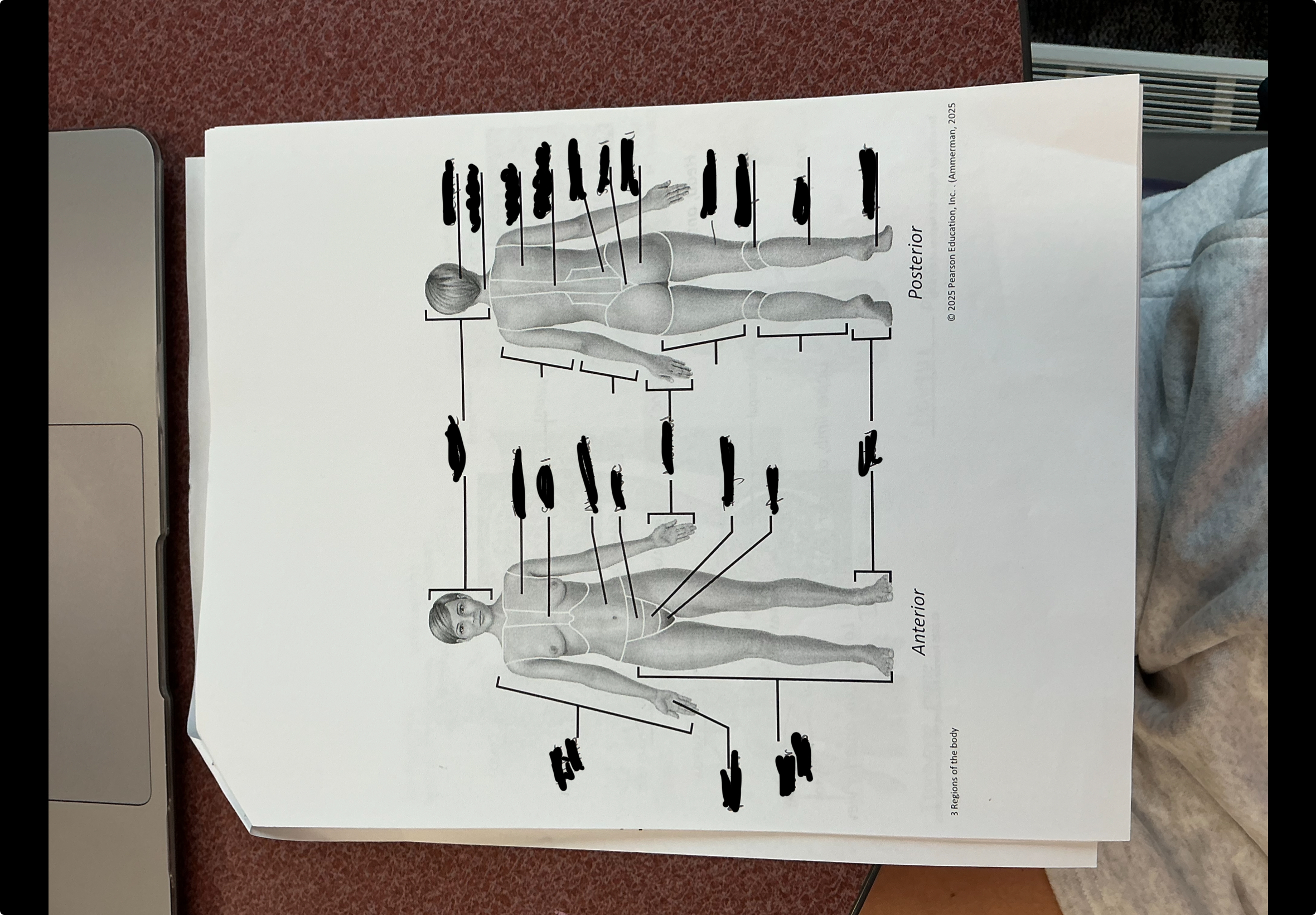
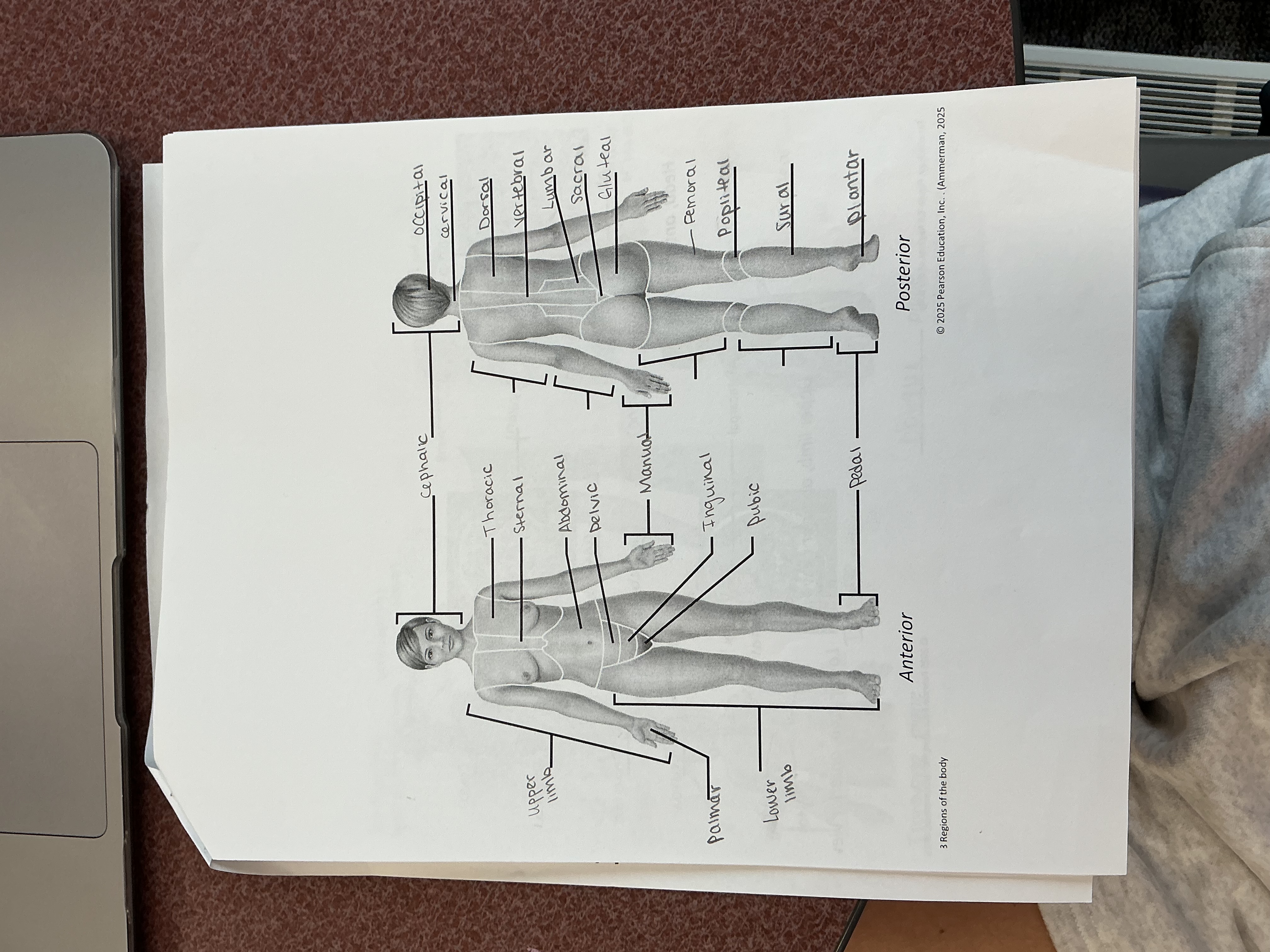
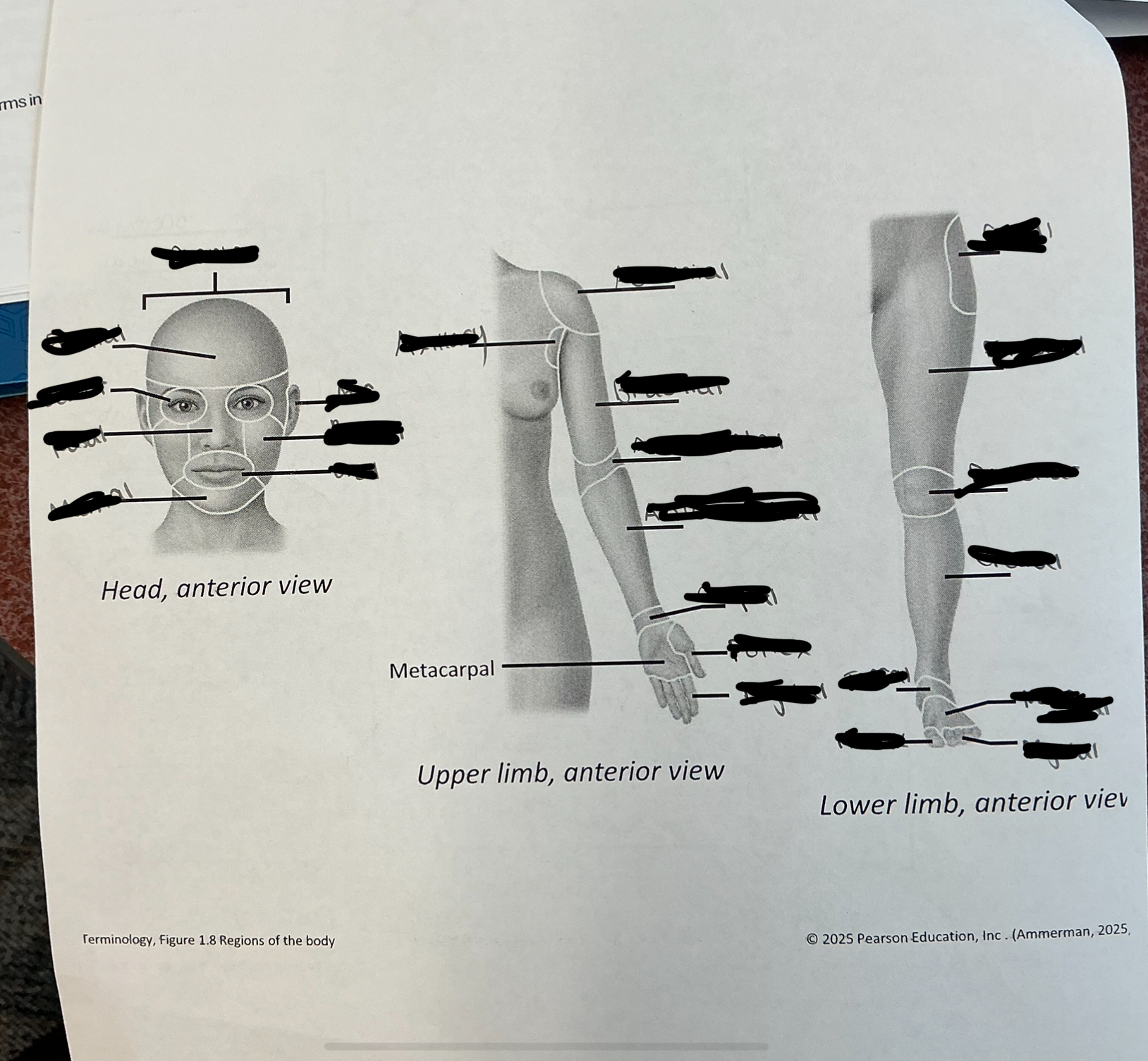
Thoracic
The chest
Sternal
The sternum
Abdominal
The abdomin
Pelvic
The pelvis
Inguinal
The groin
Pubic
The pubis
Dorsal
The back
Vertebral
The spine column
Lumbar
The lower back
Sacral
The sacrum
Gluteal
The buttocks
Cephalic
The head
Occipital
The back of the head
Cervical
The neck
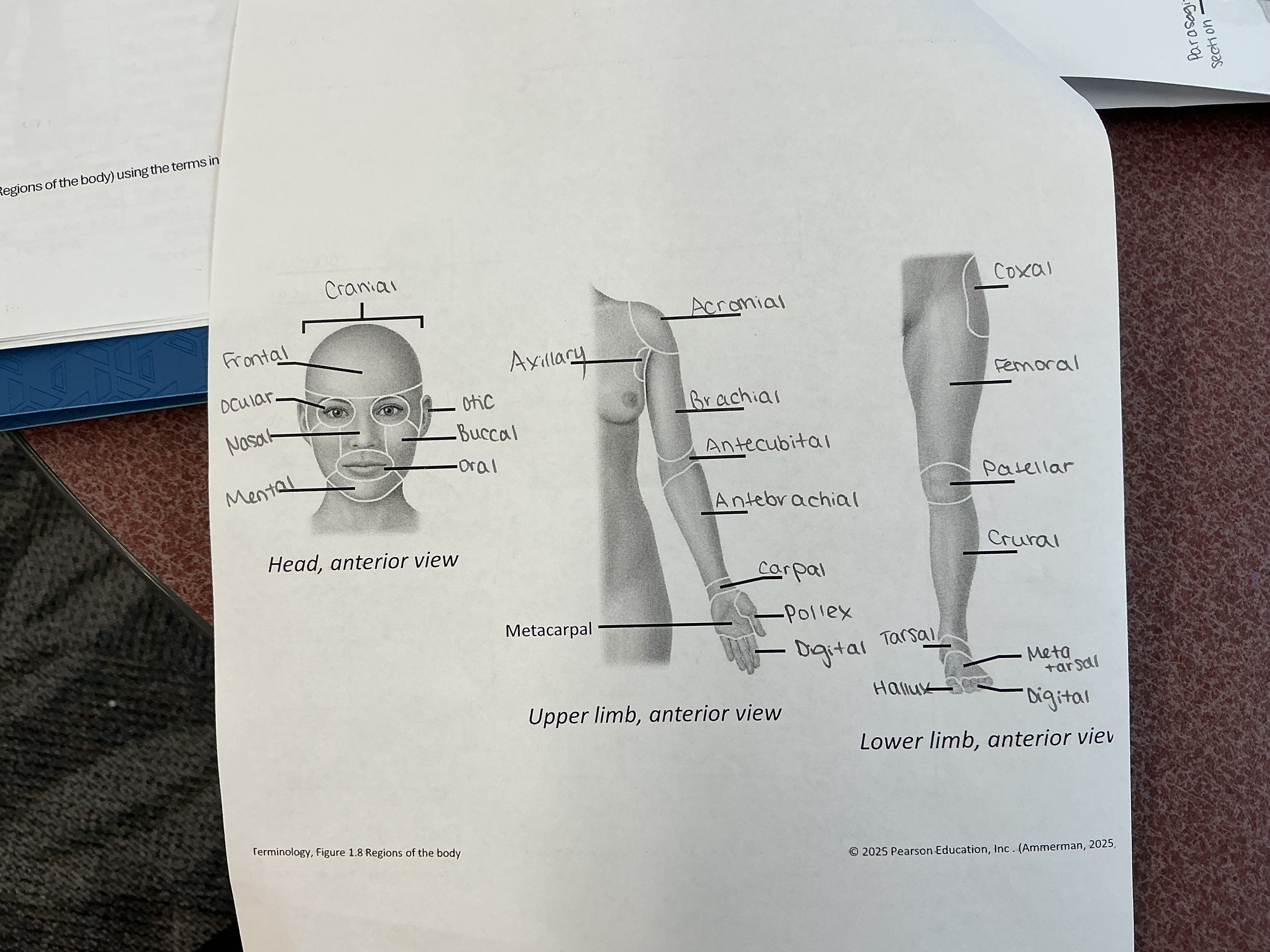
Cranial
The skull
Frontal
The forehead
Ocular
The eye
Nasal
The nose
Mental
The chin
Otic
The ear
Buccal
The cheek
Oral
The mouth
Palmar
The palm
Manual
The hand
Brachial
The arm
Antecubital
The elbow pit (anterior side)
Antebrachial
The forearm
Axillary
The armpit
Arm
The brachial
A Romain
The point of the shoulder
Forearm
The antebrachial
Carpal
The wrist
Digital
The fingers (or toes)
Metacarpals
The bones of the hand
Pollex
The thumb
Leg
The lower limb
Thigh
The femoral
Pedal
The foot
Coral
The hip
Femoral
The thigh
Metatarsal
The metatarsals (bones of the foot)
Patellar
The foot
Crural
The anterior surface of the leg- thigh
Tarsal
The ankle
Digital
The toes (or fingers)
Hallux
The Great toe
Plantar
The sole of the foot
Sural
The posterior surface of the leg
Popliteal
The posterior surface of the knee
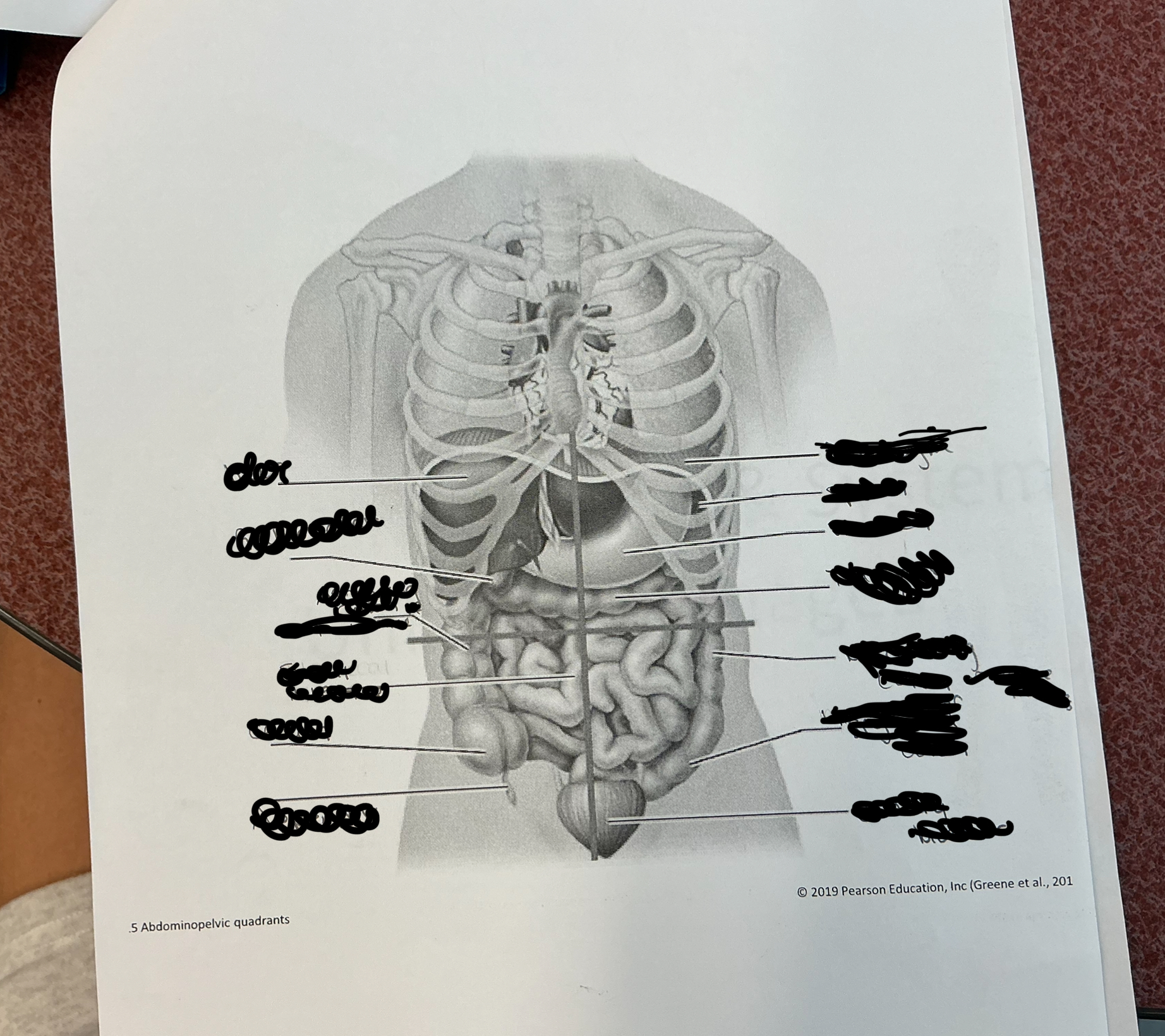
Right Upper Quadrant; includes what major organs
Gallbladder, liver, stomach, right kidney, pancreas
Right lower quadrant; includes what major organs
Appendix, reproductive, right ureter
Left upper quadrant; includes what major organs
Left kidney, liver, pancreas, spleen, and stomach
Left lower quadrant
Left ureter, reproductive organs
Meninges
Protective membranes surrounding the brain and spinal cord.
Pleura
Membranes surrounding the lungs.
Pericardium
Membrane surrounding the heart.
Peritoneum
Membrane lining the abdominal cavity and covering abdominal organs.
The maintenance of a relatively stable internal environment is known as:
- Metabolism
- Homeostasis
- Anabolism
- Catabolism
Homeostasis
Negative feedback
Counteracts a stimulus to return toward normal; stabilizes a variable.
Positive feedback
Amplifies a response; moves further from the starting state (e.g., birth contractions, blood clotting).
Regulated variable
Variable that is kept within a normal range by control mechanisms.
Set point
Normal value around which a regulated variable fluctuates.
Normal range
Acceptable range around the set point for a variable.
Stimulus
Change in the internal or external environment that triggers a response.